The 2017 Ford Focus Clutch Ecosystem: Beyond the Actuator
When diagnosing drivetrain issues in the 2017 Ford Focus, technicians and owners frequently fixate on the 2017 Ford Focus clutch actuator as the primary culprit for engagement faults, shuddering, or pedal anomalies. However, treating the actuator in isolation is a fundamental diagnostic error. The actuator—whether it is the hydraulic slave cylinder on the manual IB5/B6 transmissions or the electric stepper motors on the infamous DPS6 PowerShift dual-clutch automatic—is merely the force generator. The true mechanical translation of that force relies entirely on the clutch fork, the release bearing, and the pivot ball stud.
Wear, improper lubrication, or dimensional variances in the fork and pivot assembly will mimic actuator failure, leading to unnecessary parts replacement and persistent drivability complaints. In this expert guide, we break down the precise diagnostic procedures, measurement specifications, and best practices for addressing clutch fork and pivot issues across both major transmission platforms found in the 2017 Focus.
Manual vs. DPS6: Identifying Your Actuator and Fork Setup
The 2017 model year represents a transitional period for the Focus, meaning your diagnostic approach must first identify the exact transmission architecture.
The Manual IB5 (5-Speed) and B6 (6-Speed) Architecture
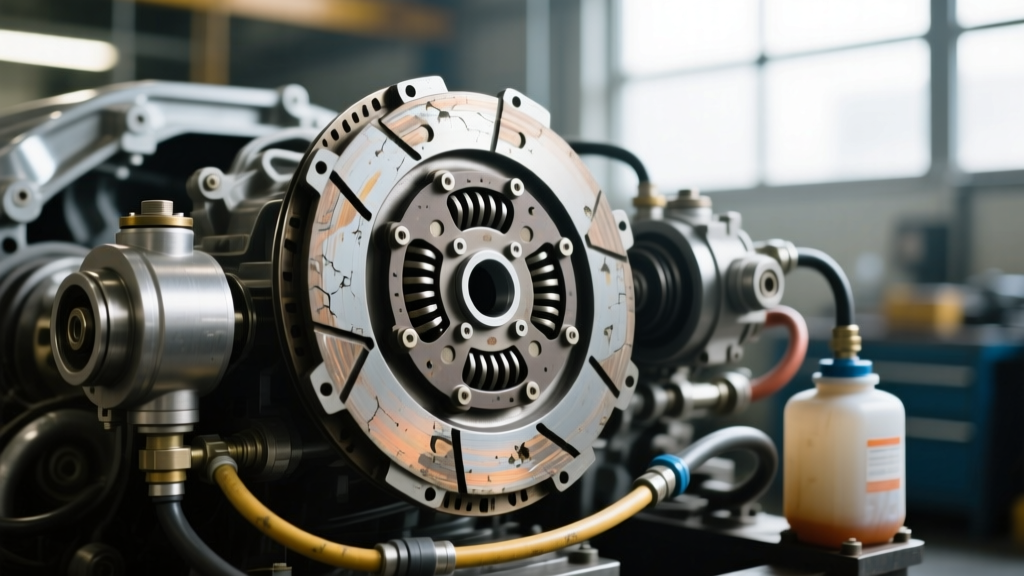
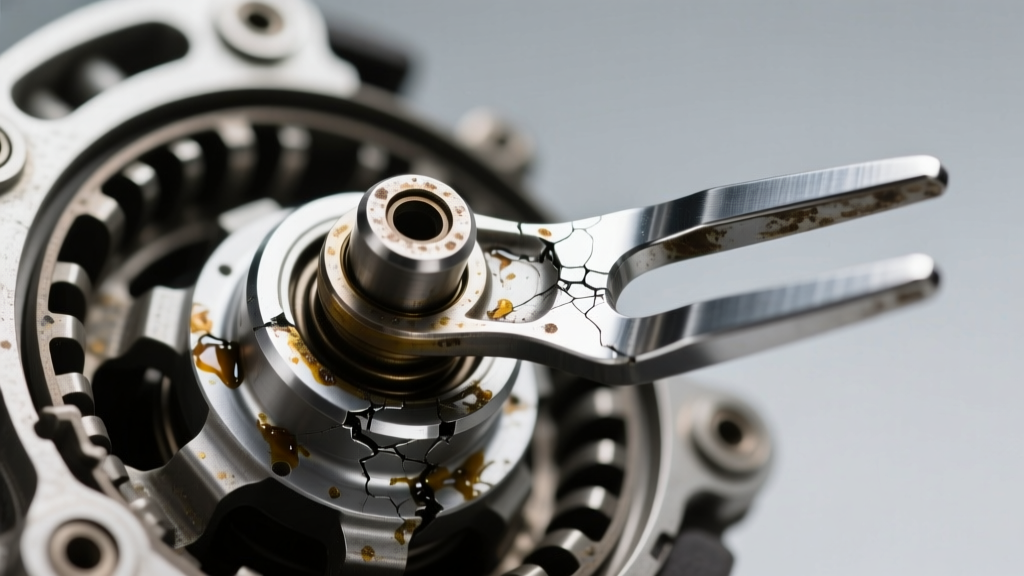
On manual Focus models, the 'actuator' refers to the external hydraulic concentric slave cylinder (CSC) or standard external slave mounted on the bellhousing. This hydraulic actuator pushes a hardened steel rod against the clutch fork pad. The fork pivots on a spherical stud (pivot ball) pressed or threaded into the bellhousing. Over time, the friction between the fork's internal pivot ring and the ball stud creates a groove. This alters the fulcrum geometry, resulting in a loss of hydraulic stroke efficiency and premature wear on the actuator pushrod.
The DPS6 PowerShift Dual-Clutch Architecture
If your 2017 Focus is equipped with the DPS6 automatic, there is no traditional hydraulic clutch pedal. Instead, the vehicle utilizes two external electric clutch actuators (stepper motors). These actuators push directly against dual clutch levers (forks) that engage the odd and even clutch packs. The pivot shafts and lever pads on the DPS6 are notorious for wearing down. When the lever pad wears, the electric actuator must extend further to achieve clutch engagement. Eventually, the actuator reaches its maximum programmed travel limit, triggering limp mode and diagnostic trouble codes (DTCs) such as P090C (Clutch Actuator Circuit Low) or P287A (Clutch B Position Learning).
Core Symptoms of Fork and Pivot Degradation
Before pulling the transmission, identify these hallmark symptoms that point toward mechanical linkage wear rather than internal clutch disc or pressure plate failure:
- Shifting Pedal Geometry (Manual): The clutch engagement point slowly migrates toward the very top of the pedal travel, indicating the fork pivot has worn a groove, effectively shortening the throw distance.
- Audible Squeaking or Clicking (Manual): A rhythmic metallic squeak synchronized with pedal depression, originating from the bellhousing. This is the dry, worn clutch fork rubbing against the pivot ball without high-temperature molybdenum grease.
- DPS6 Low-Speed Shudder and Hesitation: The electric actuators cannot modulate the clutch lever smoothly due to physical slop in the worn pivot bushings, causing violent chattering at 5-15 MPH.
- Actuator Over-Travel Codes (DPS6): The TCM commands maximum actuator extension but fails to see the expected input shaft RPM drop, resulting in adaptive learning failures.
Diagnostic Teardown and Precision Measurement
Once the transmission is separated from the engine block, a meticulous visual and physical inspection of the fork and pivot assembly is mandatory. Do not reuse a fork that shows any visible polishing or grooving on the pivot contact points.
| Component | OEM Specification / Baseline | Critical Wear Limit | Mandatory Action |
|---|---|---|---|
| Manual Fork Pivot Pad | Smooth, flat contact surface | > 1.0mm groove depth | Replace Fork Assembly |
| Pivot Ball Stud (Manual) | Spherical, no flat spots | Any visible flat-spotting or galling | Press out and replace stud |
| DPS6 Clutch Lever Pad | Flush with lever housing | > 1.5mm material loss | Replace Lever & Reseal Actuator |
| Hydraulic Actuator Pushrod | No lateral play | Visible scoring or bending | Replace Actuator (CM-1506-B) |
Expert Best Practices for Reassembly and Lubrication
The most common cause of repeat clutch fork failures is improper lubrication during reassembly. Standard chassis greases (like lithium-based NLGI #2) will melt under the extreme friction and heat generated inside the bellhousing, migrating onto the clutch friction disc and causing catastrophic slipping.
The Molybdenum Rule
You must use a high-temperature, high-molybdenum disulfide (moly) grease. Molykote BR2 Plus or Motorcraft XL-3 (Moly Grease) are the industry standards. Apply a thin, even film to the pivot ball stud and the internal contact ring of the clutch fork. Do not pack the area; excess grease will eventually spin off and contaminate the flywheel.
Crucial Torque Specifications
Proper clamping force ensures the bellhousing and pivot stud remain perfectly aligned with the crankshaft pilot bearing. Misalignment causes the fork to bind laterally on the pivot ball.
- IB5/B6 Bellhousing to Engine Block Bolts: 33 - 38 lb-ft (45 - 52 Nm)
- Pivot Ball Stud (if threaded/removable type): 18 lb-ft (24 Nm) with medium threadlocker
- DPS6 Electric Actuator Mounting Bolts: 89 lb-in (10 Nm) - Do not overtighten, as the aluminum actuator housing cracks easily.
- Hydraulic Actuator (Slave) Mounting Nuts: 15 lb-ft (20 Nm)
DPS6 Actuator Adaptation: The Software Side of Mechanical Wear
If you are servicing the clutch levers or replacing the electric actuators on a DPS6-equipped 2017 Focus, mechanical installation is only 50% of the job. The Transmission Control Module (TCM) relies on learned clutch touch-points. If you replace worn levers and forks without resetting the adaptations, the TCM will continue to push the new actuators to the old, over-extended limits, immediately burning out the new stepper motors.
You must use an advanced OBD2 diagnostic tool like FORScan or the Ford IDS (Integrated Diagnostic System) to perform the 'Clutch Adaptation Reset' and 'Touch Point Learning' procedures. This forces the TCM to physically stroke the new actuators, measure the exact millimeter of travel required to engage the fresh clutch levers, and update its internal lookup tables.
Part Sourcing and Cost Considerations
When replacing the hydraulic actuator or clutch fork on the manual models, avoid ultra-cheap aftermarket alternatives. The internal seals of budget hydraulic actuators frequently fail under the high-pressure spikes generated when a binding clutch fork restricts movement.
Expert Tip: Always source the Motorcraft CM-1506-B hydraulic actuator or OEM-equivalent LUK components for the 2017 Focus manual. According to parts data from RockAuto, a genuine Motorcraft hydraulic slave cylinder costs between $65 and $90, while a complete LUK clutch kit (which includes a new fork and pivot hardware in some applications) ranges from $180 to $240. Skimping on a $30 pivot ball stud will cost you 6 hours of labor to drop the transmission again.
For the DPS6, replacement electric actuators (Motorcraft AU5Z-7B546-A / B) are significantly more expensive, often exceeding $400 per side. However, many specialized shops documented by Transmission Digest have found that simply replacing the worn external clutch levers, resealing the actuator shafts, and performing a TCM adaptation reset can cure the notorious DPS6 shudder for a fraction of the cost of full actuator replacement.
Final Diagnostics: The Hydraulic Bleed Sequence
For manual transmissions, air trapped in the hydraulic actuator circuit will mimic the symptoms of a worn pivot ball by introducing a spongy, unpredictable pedal feel. The 2017 Focus utilizes a 7mm bleeder valve located directly on the external slave cylinder. Because the hydraulic line routes upward before descending to the transmission, gravity bleeding is highly ineffective.
Use a pressure bleeder set to 15-20 PSI on the master cylinder reservoir. Have an assistant depress the clutch pedal fully, open the 7mm bleeder, and allow the fluid to rush out for exactly 3 seconds before closing. Repeat this 15 to 20 times until zero micro-bubbles are visible in the catch hose. Only after confirming a rock-solid hydraulic stroke should you evaluate the mechanical engagement of the fork and pivot assembly.
Summary
Diagnosing the 2017 Ford Focus clutch actuator requires a holistic view of the mechanical linkage. Whether you are dealing with the hydraulic slave and pivot ball of the B6 manual, or the electric stepper motors and levers of the DPS6, the fork and pivot interface is the critical wear point. By adhering to strict measurement limits, utilizing high-temp moly lubricants, and performing mandatory software adaptations, you can permanently resolve clutch chatter, engagement faults, and actuator over-travel codes.
For further OEM technical service bulletins regarding drivetrain adaptations, technicians should consult the official Ford Service Content portal to ensure all software calibrations are up to date for the 2017 model year TCM modules.