The Toyota FJ Cruiser remains an undisputed legend in the off-road community, but its robust full-time 4WD system requires meticulous, often misunderstood maintenance. While most owners religiously service the front and rear axle differentials, the center differential is frequently overlooked. Because the center diff is integrated directly into the transfer case assembly, diagnosing drivetrain issues requires a deep understanding of how FJ Cruiser differential oil interacts with both the Torsen limited-slip mechanism and the transfer case chain drive.
If you are experiencing driveline whine, cornering bind, or erratic dashboard warning lights, the root cause often traces back to sheared gear oil or incorrect friction modifiers. In this 2026 diagnostic guide, we break down the exact symptoms of center differential failure, the engineering behind the FJ Cruiser's AWD/4WD system, and the precise specifications needed to save your transfer case from a catastrophic $2,500+ replacement.
The Anatomy of the FJ Cruiser Center Differential
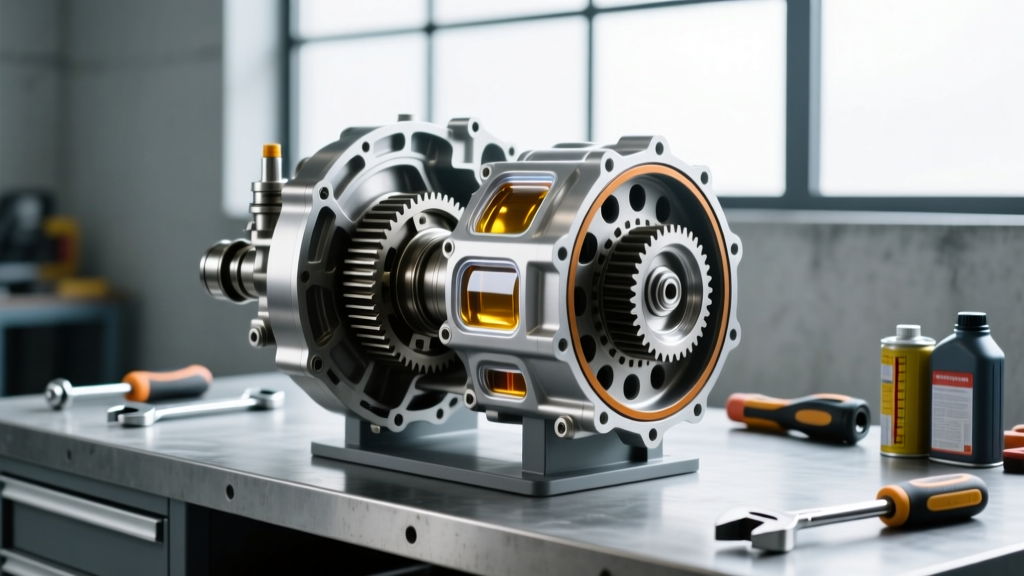
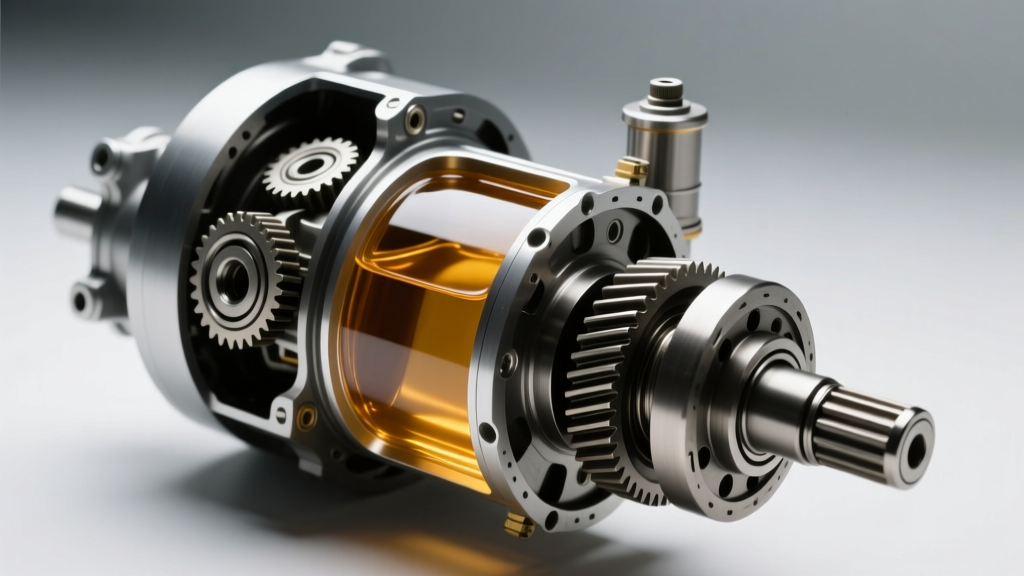
Unlike the front and rear "pumpkins," the FJ Cruiser's center differential does not have its own standalone housing. It is housed inside the transfer case, sharing a common fluid sump with the drive chain and output shafts. To diagnose issues accurately, you must first identify which transfer case your FJ Cruiser utilizes:
- VF2B (2007-2009 Automatic): Features an open center differential. It relies heavily on Toyota's A-TRAC (Active Traction Control) brake-vectoring system to manage slip. Uses standard 75W-90 GL-5 gear oil.
- VF4B (2007-2009 Manual) & VF4BM (2010+ Automatic): Equipped with a Torsen Type III torque-sensing limited-slip center differential. This mechanical marvel provides a torque bias ratio of up to 4.5:1, sending power to the axle with the most grip without needing electronic intervention.
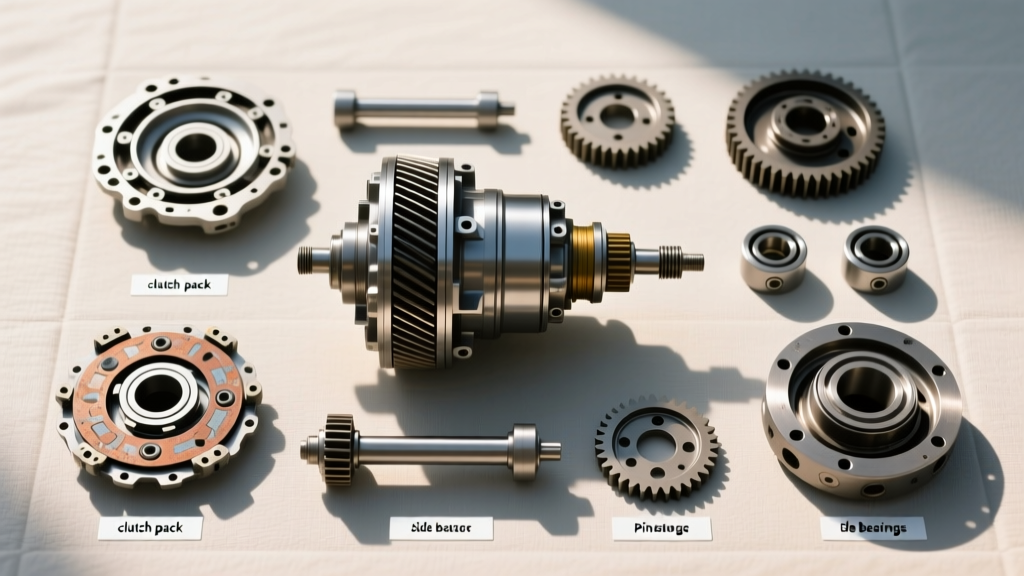
Expert Warning: The Torsen Type III center diff operates on helical gear friction, not clutch packs. Using FJ Cruiser differential oil formulated with "Limited Slip" friction modifiers (designed for clutch-type LSDs) will alter the friction coefficient of the Torsen gears, leading to severe binding and premature wear.
4 Critical Symptoms of Degraded Center Diff Oil
Gear oil degrades through mechanical shearing and thermal breakdown. When the viscosity index improvers in standard 75W-90 oil break down, the oil film can drop below the critical 9 cSt threshold required to separate the Torsen's helical gears under load. Here is how that degradation manifests in the driver's seat.
1. High-Pitched Whine During Deceleration
A distinct whine that changes pitch with vehicle speed—specifically during deceleration or coasting—is the hallmark of gear lash and inadequate oil film. As the FJ Cruiser differential oil shears down to a 70W-equivalent viscosity after 30,000 miles of heavy off-road use, the Torsen gears experience micro-welding and polishing. This whine is often misdiagnosed as a failing rear pinion bearing, but if the noise shifts noticeably when you engage the center diff lock (bypassing the Torsen mechanism), the center diff is your culprit.
2. Driveline Binding and "Hopping" in Tight Turns
When navigating tight, low-speed turns on dry pavement, the front and rear driveshafts must rotate at different speeds. If your Torsen center diff is failing to differentiate, the driveline will "wind up," causing the tires to hop or skip. While some binding can be caused by a physically seized locking collar, it is frequently triggered by contaminated fluid. If the transfer case chain is wearing, metallic particulate suspends in the oil and wedges into the Torsen gear clearances, physically jamming the mechanism.
3. The "Christmas Tree" Dashboard Effect
Modern FJ Cruisers monitor driveline health via speed sensors on the transfer case output shafts. If the center diff binds or slips erratically due to degraded fluid, the front and rear output shafts will report mismatched RPMs to the ECU. This discrepancy triggers the VSC (Vehicle Stability Control), ABS, and 4LO/4HI indicator lights to flash simultaneously. Before replacing expensive wheel speed sensors, draining and inspecting the transfer case fluid for metallic glitter is a mandatory diagnostic step.
4. Transfer Case Overheating and Thermal Breakdown
Low-speed rock crawling generates immense heat in the transfer case sump. If the fluid level is even half a quart low due to a leaking output shaft seal, the center diff runs partially dry. The resulting thermal breakdown turns the oil into a varnish-like sludge, starving the Torsen gears of lubrication and leading to catastrophic gear tooth spalling.
Diagnostic Matrix: Fluid Condition vs. Mechanical Failure
Use this diagnostic table to interpret your drained FJ Cruiser differential oil and determine the next course of action. Pricing reflects average 2026 specialty shop rates.
| Drained Fluid Condition | Accompanying Symptom | Likely Culprit | Estimated Repair Cost (2026) |
|---|---|---|---|
| Dark, smells burnt, no metal | Whine under load, no binding | Severe oil shear / Thermal breakdown | $60 - $90 (Fluid Service) |
| Glitter/Silver shimmer in oil | VSC/ABS lights, intermittent bind | Torsen gear wear / Chain stretch | $800 - $1,200 (Torsen Rebuild) |
| Large metallic flakes/chunks | Loud clunking, total AWD failure | Catastrophic gear tooth spalling | $2,200 - $3,000 (Used/Rebuilt Swap) |
| milky / Chocolate milk color | Overheating, corrosion on sensors | Water intrusion via breached breather | $150 (Flush & Breather Replacement) |
Step-by-Step Center Diff & Transfer Case Fluid Service
If your diagnosis points to fluid degradation, performing a service is straightforward but requires strict adherence to torque specifications. The transfer case and center diff share a single sump, requiring approximately 2.0 to 2.2 Liters of fluid depending on the exact model year and transfer case variant.
Required Materials & Specifications
- Fluid: Toyota Genuine 75W-90 GL-5 Gear Oil (Part # 08885-81080) or a high-quality synthetic equivalent like Amsoil Severe Gear 75W-90. Do NOT use fluids labeled "LS" (Limited Slip) with friction modifiers.
- Crush Washers: 4x Toyota 24mm Aluminum Crush Washers (Part # 90430-24003). Never reuse the old washers; doing so guarantees a slow weep that will eventually starve the center diff.
- Tools: 10mm Hex (Allen) socket or 24mm socket (depending on your specific plug style), torque wrench, fluid transfer pump.
The Service Procedure
- Preparation: Drive the FJ Cruiser for 15 minutes to bring the transfer case fluid up to operating temperature. This ensures contaminants are suspended in the oil and will drain completely.
- Remove Fill Plug FIRST: Always remove the upper fill plug before the lower drain plug. If the fill plug is seized and you drain the fluid first, you will be stranded with an immobile vehicle.
- Drain and Inspect: Remove the drain plug. Catch the fluid in a clean pan and inspect it under a bright LED light for the metallic glitter mentioned in our diagnostic matrix.
- Clean the Magnetic Plug: The OEM drain plug features a strong magnet. Wipe it clean. A small amount of fine grey paste is normal; any distinct chips indicate internal damage.
- Refill and Torque: Install the drain plug with a new crush washer. Torque to exactly 39 Nm (29 ft-lbs). Fill the transfer case until the fluid reaches the bottom of the fill hole threads. Install the fill plug and torque to 39 Nm (29 ft-lbs).
When to Seek Professional Rebuild Services
Changing your FJ Cruiser differential oil is a highly effective preventative measure, but it cannot reverse physical damage. If you have completed a fluid service using the correct OEM-spec 75W-90 GL-5 and the driveline binding or whining persists, the Torsen Type III unit requires physical teardown. Rebuilding a Torsen center diff requires specialized press tools and precise gear-shim clearances that are beyond the scope of standard driveway mechanics. For deep-dive technical discussions on teardown procedures and aftermarket gear ratios, consulting specialized communities like the IH8MUD FJ Cruiser Forum or the FJCruiserForums Differentials & Transfer Cases sub-board is highly recommended before sourcing replacement parts.
By understanding the intricate relationship between your transfer case chain, the Torsen center differential, and the fluid that protects them, you can ensure your FJ Cruiser remains trail-ready and highway-compliant for decades to come.