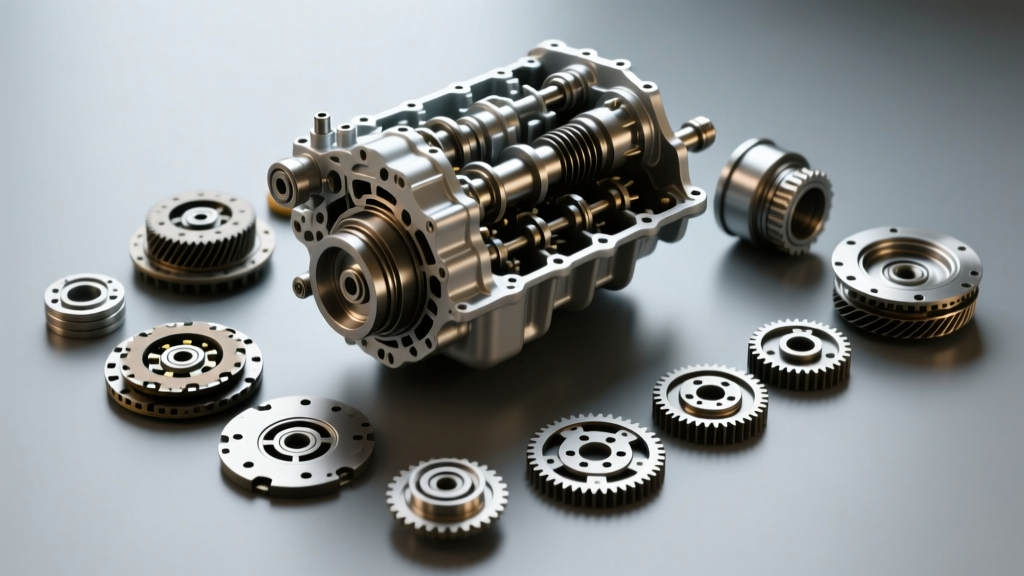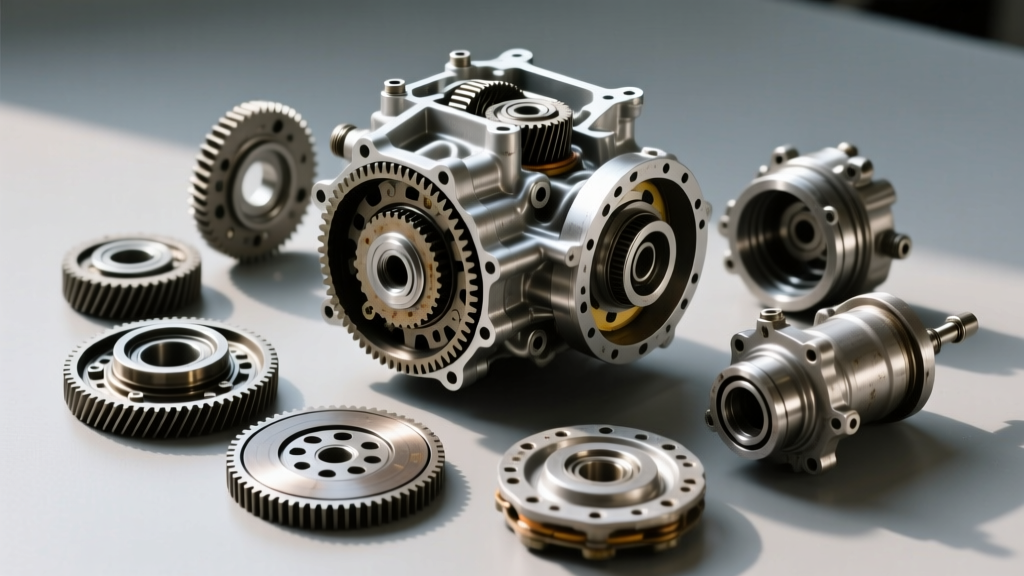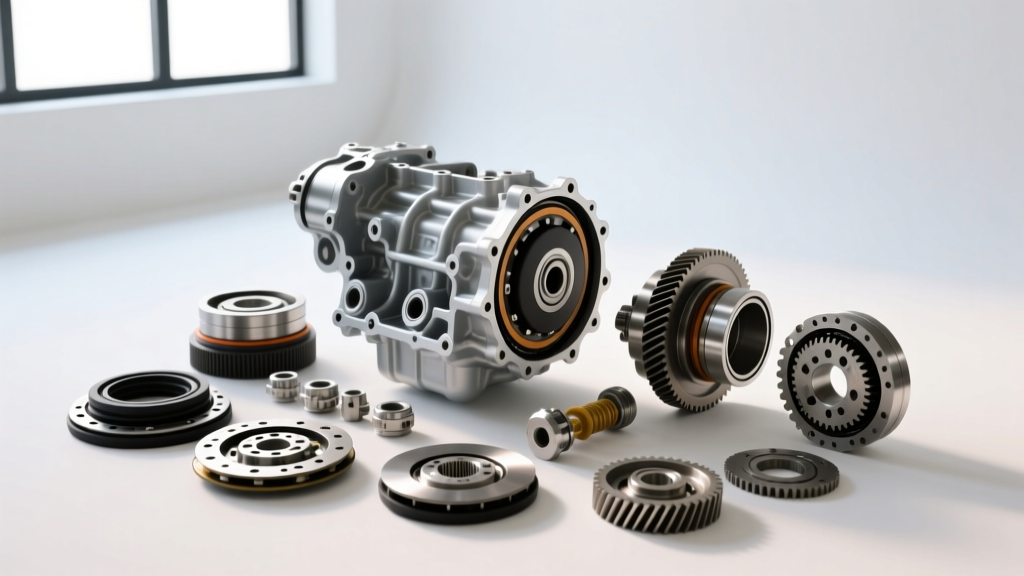
Symptom Diagnosis: Is Your GM 6-Speed Failing?
The GM 6T75 transmission, a heavy-duty 6-speed automatic designed for front-wheel-drive and all-wheel-drive crossovers, powers millions of vehicles on the road today. Found primarily in the Chevrolet Traverse, GMC Acadia, and Buick Enclave (Lambda platform), as well as select Epsilon II sedans, this unit is robust but not immune to catastrophic internal wear. When your vehicle exhibits harsh shifting, slipping, or complete loss of specific gear ranges, accurately diagnosing the root cause is the first step before seeking out a professional for a 6t75 transmission rebuild. Jumping straight to a replacement without proper diagnostic triage often leads to misdiagnosed electrical faults or overlooked torque converter issues, costing you thousands in unnecessary labor.
The 3-5-R Wave Plate Catastrophe
The most notorious mechanical failure point in the 6T70/6T75 family is the 3-5-R wave plate. Over time, the cyclical stress of clutch application causes the OEM wave plate to fatigue, crack, and eventually shatter. When this happens, you will typically experience an immediate loss of 3rd, 5th, and Reverse gears. More dangerously, the disintegrating metal sends microscopic shrapnel through the transmission's lube circuit. This debris migrates to the valve body, scoring the precision-machined spool valves and contaminating the solenoid screens. If your scan tool reveals clutch slip codes like P0733 (Gear 3 Incorrect Ratio) or P0735 (Gear 5 Incorrect Ratio) alongside metallic flakes on the magnetic drain plug, a teardown is mandatory. A qualified rebuilder will not just replace the clutches; they must install upgraded, stress-relieved wave plates (such as those engineered by Sonnax) and completely flush or replace the contaminated cooler lines.
TEHCM and Solenoid Diagnostics
Unlike older transmissions that utilized an external Transmission Control Module (TCM), the 6T75 integrates the TCM, valve body, and solenoids into a single unit housed inside the transmission pan, known as the TEHCM (Transmission Electro-Hydraulic Control Module). Common symptoms of TEHCM failure include harsh 2-3 shifts, torque converter clutch (TCC) shudder at highway speeds, and diagnostic trouble codes like P0711 (Transmission Fluid Temperature Sensor Circuit Range/Performance) or P0716 (Input/Turbine Speed Sensor Circuit Range/Performance). Because the temperature and speed sensors are hardwired into the TEHCM circuit board, internal thermistor degradation requires a complete TEHCM replacement. Finding a shop that understands the delicate nature of the TEHCM connector pins and the necessity of OEM-grade sealing sleeves is critical to preventing post-rebuild fluid leaks and electrical shorts.
Why the 6T75 Demands a Specialist Rebuilder
Handing your vehicle over to a general repair shop for a 6t75 transmission rebuild is a massive risk. The 6T75 is not a weekend warrior's rebuild project; it requires specialized tooling, precise selective shim measurements, and advanced software capabilities. The variable displacement vane pump, for instance, requires exact alignment and specific torque sequences (typically 10 Nm or 89 lb-in for the pump cover bolts) to prevent immediate cavitation and pressure loss upon startup. Furthermore, the 6T75 relies heavily on selective thrust washers and shims to maintain proper endplay. A generalist might guess on shim thickness, leading to premature clutch burnout or planetary gear binding. According to technical bulletins archived by ATSG (Automatic Transmission Service Group), improper endplay in the 6T75 is a leading cause of post-rebuild 4-5-6 clutch failure. You need a specialist who possesses a dedicated transmission dyno or, at minimum, the capability to perform rigorous line-pressure testing via a mechanical gauge port before reinstalling the unit.
The Rebuilder Interview: 5 Mandatory Questions
When vetting a transmission shop, treat the consultation like a job interview. The right shop will welcome technical scrutiny, while a subpar rebuilder will become defensive. Use these targeted questions to separate the experts from the parts-swappers:
- 1. "How do you handle the TEHCM programming?" The only correct answer: They must use a GM-approved J2534 pass-through device with an active ACDelco TDS (Technical Delivery System) subscription to flash the correct VIN and calibration files via GM's SPS2 (Service Programming System). If they say they can 'swap the chip' or 'leave your old module,' walk away.
- 2. "What is your protocol for the 3-5-R and 4-5-6 wave plates?" The expert answer: They should explicitly mention discarding the OEM wave plates in favor of upgraded aftermarket alternatives that feature modified stress-relief geometries to prevent cyclical fatigue.
- 3. "How do you clean the valve body and lube circuit?" The expert answer: Following a wave plate failure, the valve body must be disassembled, and every spool valve inspected for scoring. The transmission cooler and external lines must be flushed using a heated, pressurized solvent system, or replaced entirely if debris is trapped in the brazed-plate cooler.
- 4. "Do you replace the torque converter, and is it balanced?" The expert answer: A 6T75 rebuild is incomplete without a remanufactured torque converter featuring an upgraded billet cover and high-friction TCC lining to eliminate the notorious GM shudder.
- 5. "What fluid do you use, and what is the fill procedure?" The expert answer: They must specify ACDelco Dexron VI (or the newer Dexron ULV if adapting specific later-model valve bodies, though 6T75 strictly calls for Dexron VI). The dry-fill capacity is 9.5 liters (10.0 quarts), and they should verify the fluid level with the transmission pan temperature between 85°F and 95°F using a scan tool.
2026 6T75 Transmission Rebuild Cost Breakdown
Understanding the financial landscape of a 6t75 transmission rebuild helps you identify suspiciously low quotes that often indicate corner-cutting. In 2026, supply chain stabilization has normalized some hard-part costs, but the integration of advanced electronics keeps the baseline high. Below is a realistic cost breakdown for a professional, warranty-backed rebuild on a GM Lambda CUV (e.g., 2011-2017 Chevrolet Traverse 3.6L V6).
| Rebuild Component / Service | Part Type / Specification | Estimated Cost (2026) |
|---|---|---|
| Master Rebuild Kit (Clutches, Steels, Seals) | OEM or Premium Aftermarket (e.g., Precision) | $450 - $650 |
| Upgraded Wave Plates (3-5-R & 4-5-6) | Aftermarket Heavy-Duty (Sonnax / Superior) | $180 - $250 |
| TEHCM Replacement & SPS2 Programming | GM OEM Module + Labor for Flashing | $850 - $1,200 |
| Remanufactured Torque Converter | Billet Cover, Upgraded TCC Friction Material | $350 - $500 |
| OEM Transmission Filter & Dexron VI Fluid | Deep Pan Filter, 10 Quarts Dexron VI | $120 - $160 |
| Labor: R&R, Teardown, Rebuild, & Flush | 8.5 - 11.5 Hours @ $130-$180/hr | $1,100 - $2,000 |
| Total Estimated Out-the-Door Cost | Comprehensive Specialist Rebuild | $3,050 - $4,760 |
Note: If a shop quotes you under $2,200 for a complete 6T75 rebuild, they are almost certainly reusing the old TEHCM, skipping the torque converter replacement, and ignoring the wave plate upgrades. As highlighted by industry case studies in Transmission Digest, these 'budget' rebuilds routinely fail within 15,000 miles due to recurring electronic faults or secondary debris ingestion.
Post-Rebuild Calibration & Quality Assurance
The physical installation of the rebuilt 6T75 is only half the battle. Once the unit is bolted to the engine block (bellhousing to engine block torque specs for the 3.6L V6 are typically 50 Nm plus an additional 90 degrees of rotation), the vehicle requires a strict adaptive learning reset. The rebuilder must use a high-end bidirectional scan tool to reset the Transmission Adaptive Pressure values. The 6T75 relies on these adaptive tables to modulate solenoid current based on clutch pack wear. If the old adaptive data remains in the newly flashed TEHCM, the transmission will apply clutches with excessive line pressure, resulting in immediate, bone-jarring shifts that can physically damage the new hard parts.
Finally, a reputable shop will perform a rigorous road test protocol. This includes monitoring the TCC slip speed via live data to ensure it stays within 20 RPM of the commanded value at highway cruising speeds, verifying that the commanded gear matches the actual gear ratio, and checking for any micro-leaks around the axle seals and TEHCM harness sleeve. By combining precise symptom diagnosis with a meticulous shop selection process, you ensure your GM crossover returns to the road with the reliability it was originally engineered to deliver.