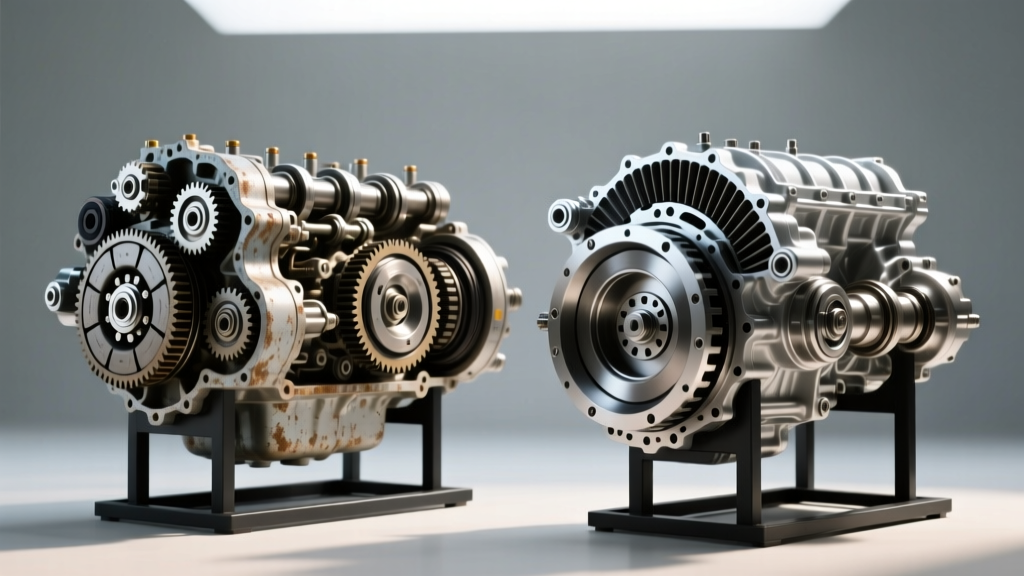
The Reality of 46RH Transmission Rebuild Timelines
When planning a 46RH transmission rebuild, accurately estimating your time commitment is just as critical as sourcing the right master overhaul kit. The Chrysler 46RH (also known as the A500 RWD) is a legendary workhorse found in 1992–1998 Dodge Rams, Dakotas, and Jeep Grand Cherokees. Unlike its electronically shifted sibling, the 46RE, the 46RH relies on a fully hydraulic governor and mechanical shift logic. While this makes the internal mechanics slightly more forgiving for DIYers, it also introduces unique time-consuming hurdles—specifically regarding the hydraulic governor assembly and valve body calibration.
Whether you are a weekend warrior tackling this in your home garage or a shop owner booking labor hours, understanding the true time variables of a Mopar A500 overhaul will save you from costly miscalculations. Below, we break down the exact time estimates, torque specifications, and expert best practices for rebuilding the 46RH.
Breaking Down the 46RH Rebuild Timeline
The total time required for a 46RH transmission rebuild is split into two main categories: Removal & Installation (R&R) and the Bench Rebuild. Professional shops utilize flat-rate manuals, while DIYers must account for learning curves, tool limitations, and parts cleaning. The table below outlines the expected time investment for both scenarios in 2026.
| Rebuild Phase | DIY Mechanic Estimate | Professional Shop Book Time |
|---|---|---|
| Removal & Installation (R&R) | 5.0 - 8.0 Hours | 3.5 - 5.0 Hours |
| Teardown & Inspection | 2.0 - 3.0 Hours | 1.0 - 1.5 Hours |
| Cleaning & Parts Prep | 2.0 - 4.0 Hours | 1.5 - 2.0 Hours |
| Sub-Assembly & Clutch Packing | 3.0 - 5.0 Hours | 2.5 - 3.5 Hours |
| Valve Body & Governor Service | 2.0 - 3.0 Hours | 1.0 - 1.5 Hours |
| Final Assembly & Fluid Fill | 1.5 - 2.0 Hours | 1.0 - 1.5 Hours |
| Total Estimated Time | 15.5 - 25.0 Hours | 10.5 - 15.0 Hours |
Step-by-Step Time Estimates & Expert Best Practices
1. Teardown and Inspection (2 - 3 Hours DIY)
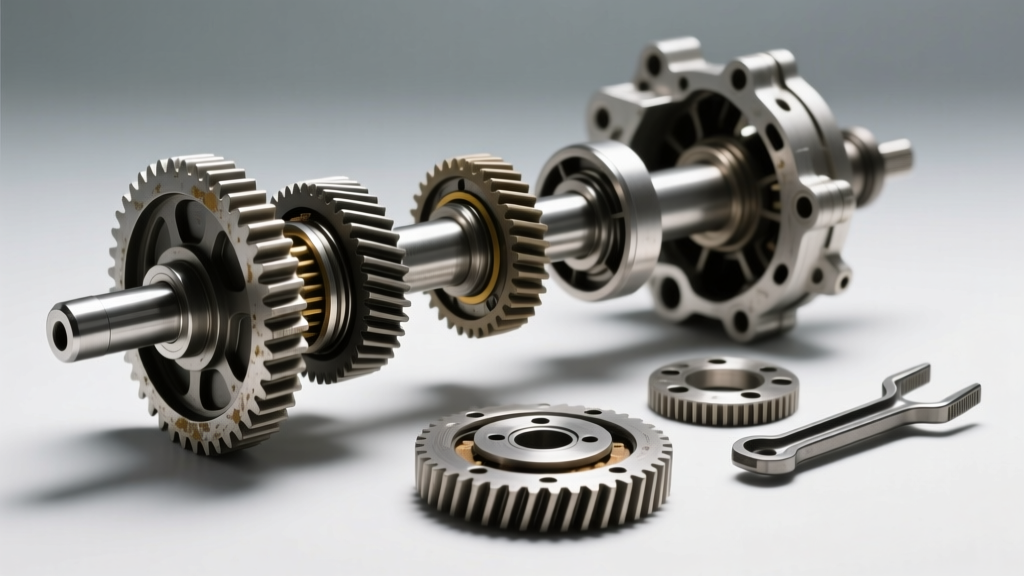
The 46RH teardown is relatively straightforward, but the overdrive (OD) unit separation requires patience. Unlike the main case, the OD section houses the OD brake and clutch packs. Expert Tip: Do not attempt to pry the OD unit off the main case with a screwdriver. The aluminum case will gouge, creating a permanent fluid leak path. Use a dedicated transmission case spreader or gently tap the perimeter with a dead-blow mallet. Document the exact order of the thrust washers and needle bearings; the A500 uses selective thickness washers to set endplay, and losing track of them will add hours to your reassembly.
2. Cleaning and Parts Prep (2 - 4 Hours DIY)
Mopar transmissions from the 90s are notorious for accumulating heavy varnish in the valve body and governor. You must thoroughly flush the cooler lines and torque converter. If you are reusing the stock torque converter, factor in time to flush it with a dedicated solvent machine. For the clutch steels, inspect them for heat bluing. If the 46RH was subjected to heavy towing (common in Dodge Ram 2500s), expect to replace all friction discs with high-energy Raybestos Pro-Series or Alto Red Eagle clutches.
3. Sub-Assembly and Clutch Packing (3 - 5 Hours DIY)
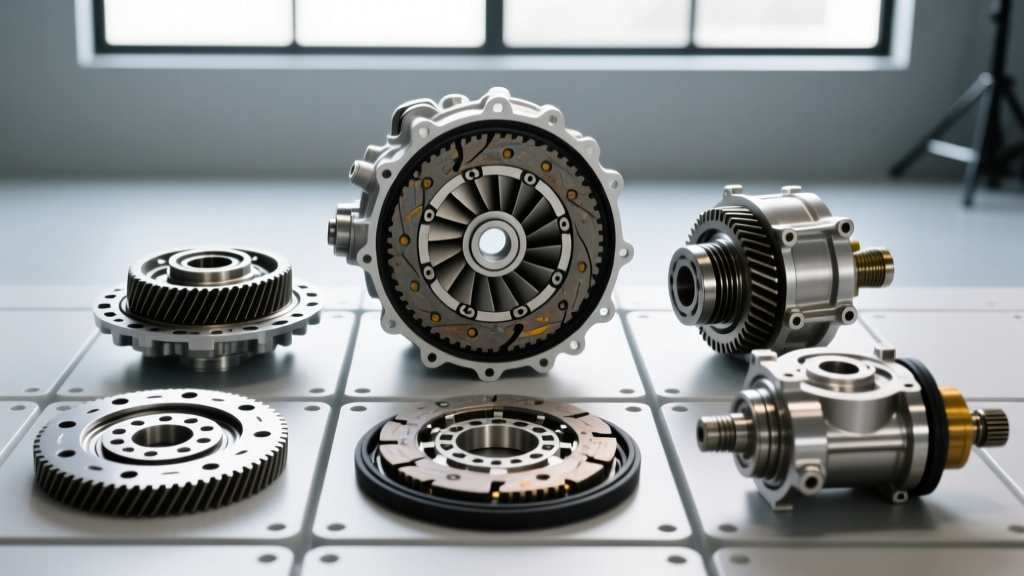
This is where precision dictates your timeline. Rushing clutch pack assembly leads to sheared O-rings and immediate failure. You must measure clearances using a dial indicator and feeler gauges.
- Overdrive Clutch Pack Clearance: 0.040" - 0.060"
- Underdrive Clutch Pack Clearance: 0.035" - 0.055"
- Reverse/Overdrive Brake Clearance: 0.030" - 0.050"
Note: Always soak the new friction discs in Chrysler-approved ATF+4 fluid for a minimum of 2 hours prior to assembly to prevent dry-start burnout.
4. Valve Body and Hydraulic Governor Service (2 - 3 Hours DIY)
Because the 46RH relies entirely on hydraulics for shift timing and pressure regulation, the valve body and governor are the heart of the transmission. A common mistake is confusing 46RH parts with 46RE parts. The 46RE uses an electronic governor pressure solenoid, while your 46RH uses a mechanical governor with weighted springs. Inspect the governor bore for scoring. If the bore is worn, you will experience late shifts and governor pressure leaks. Installing a Trans-Go shift kit specifically calibrated for the hydraulic A500/46RH will drastically improve shift firmness and extend the life of your rebuild.
Variables That Inflate Your 46RH Rebuild Time
Even with a meticulous plan, real-world variables can derail your timeline. Be prepared for the following Mopar-specific hurdles:
The Dodge Magnum V8 Exhaust Stud Interference
If you are pulling the 46RH from behind a 5.2L or 5.9L Magnum V8, the passenger-side rear bellhousing bolt is notoriously difficult to access. Over decades of heat cycling, the exhaust manifold studs frequently snap or rust-weld themselves to the bellhousing. Best Practice: Do not start the R&R process without an induction heater, a high-quality 12-point flex-head ratcheting wrench, and a backup plan for broken stud extraction. This single bolt can add 2 to 3 hours to your removal time if seized.
Rusted Crossmembers and Transfer Case Adapters
For 4x4 Dodge Rams and Dakotas, the 46RH is bolted to an NP231 or NP241 transfer case. The crossmember and skid plates on 90s Mopar trucks trap moisture and road salt. Penetrating oil and a heavy-duty hydraulic floor jack are mandatory. Budget an extra hour for cutting or drilling out rusted crossmember bolts.
Cost vs. Time: DIY vs. Professional Mopar Rebuilder
Understanding the financial implications of your time estimate is crucial. In 2026, the average independent transmission shop charges between $125 and $165 per hour for labor.
Expert Insight: A professional shop will typically book 12 to 15 hours of total labor for a 46RH R&R and bench rebuild. At $150/hour, you are paying $1,800 to $2,250 in labor alone, plus the cost of the rebuild kit, machine shop fees, and ATF+4 fluid. A DIY rebuild requires an initial tool investment (snap ring pliers, dial indicator, torque wrenches) but can save you over $2,000 if you have the mechanical aptitude and a weekend to spare.
Essential Torque Specifications for the 46RH
Improper torque is the leading cause of post-rebuild fluid leaks and case warping. Print this list and keep it on your bench:
- Bellhousing to Engine Block: 30 - 35 ft-lbs
- Torque Converter to Flexplate: 23 - 25 ft-lbs (Use Grade 8 or OEM Mopar bolts only)
- Valve Body to Case: 35 - 45 in-lbs (Do NOT use foot-pounds; you will strip the aluminum case threads)
- Oil Pan to Case: 150 - 200 in-lbs (Tighten in a crisscross pattern)
- Governor Support to Case: 12 - 15 ft-lbs
Final Thoughts on Your 46RH Overhaul
A successful 46RH transmission rebuild is a test of patience, organization, and adherence to hydraulic principles. By accurately estimating your time, preparing for Mopar-specific rust and clearance hurdles, and utilizing authoritative resources like the ATSG A500/46RH overhaul manual, you can transform a daunting project into a manageable weekend build. Always verify your parts against the specific year and application, and remember that meticulous cleaning and precise clutch pack clearances are the true secrets to a transmission that shifts like new for another 150,000 miles. For further Mopar drivetrain technical data, the Allpar technical archives remain an invaluable community resource for legacy Chrysler diagnostics.