The 4L80E Dilemma: Symptom Triage and the Rebuild Decision
The GM 4L80E is a legendary heavy-duty four-speed automatic transmission, renowned for its ability to handle massive torque loads in 3/4-ton and 1-ton trucks, vans, and high-horsepower diesel swaps. However, when a 4L80E begins to exhibit severe drivability issues, owners are immediately faced with a critical crossroad: attempt a teardown using a comprehensive 4L80E transmission rebuild manual, or hand the keys (and the drivetrain) over to a professional rebuilder. In 2026, with the rising cost of specialty tools and hard parts, making the right choice requires precise symptom diagnosis before a single bolt is turned.
Before pulling the transmission crossmember, you must triage the symptoms. Not every fault requires a full bench rebuild. Some issues can be resolved with a valve body drop or a solenoid swap, while others indicate catastrophic internal hard-part failure that demands a complete teardown.
Critical 4L80E Symptoms: When a Manual Isn't Enough
Accurate diagnosis separates a simple repair from a full-scale rebuild. Here is how to interpret the most common 4L80E failure modes:
- Harsh 1-2 Shift or Flare (Codes P0756 / P1810): Often caused by a worn accumulator pin bore in the valve body or a stuck shift valve. If the transmission fluid is clean and the shift solenoids test within spec (typically 19-24 ohms at room temperature), this can usually be fixed by dropping the pan and valve body to install a TransGo 4L80E-HD2 shift kit or a Sonnax accumulator pin repair sleeve. A full teardown is rarely required.
- Loss of 4th Gear / Overdrive (Code P0734): This is a definitive hard-part failure. The 4L80E relies on the overdrive clutch pack and the sun shell to achieve fourth gear. If you lose OD and the fluid smells burnt or contains brass-colored debris, the sun shell has likely sheared at the splines, or the overdrive clutches have disintegrated. This mandates pulling the unit and consulting your 4L80E transmission rebuild manual for a complete disassembly.
- TCC Shudder and Slip (Codes P0741 / P1870): Torque Converter Clutch (TCC) shudder under light throttle at highway speeds usually points to a degraded TCC apply valve in the valve body or a failing torque converter. While a valve body repair might temporarily mask the issue, a true P1870 slip with high mileage dictates a converter replacement and a full clutch pack inspection.
Evaluating the 4L80E Transmission Rebuild Manual Route
Cracking open an ATSG or factory GM 4L80E transmission rebuild manual reveals the sheer complexity of this unit. The 4L80E features a Ravigneaux planetary gearset and requires meticulous attention to clearances and endplay. The DIY route is highly rewarding but demands specialized tooling and an environment free of contamination.
Mandatory Tooling and Specifications for DIYers
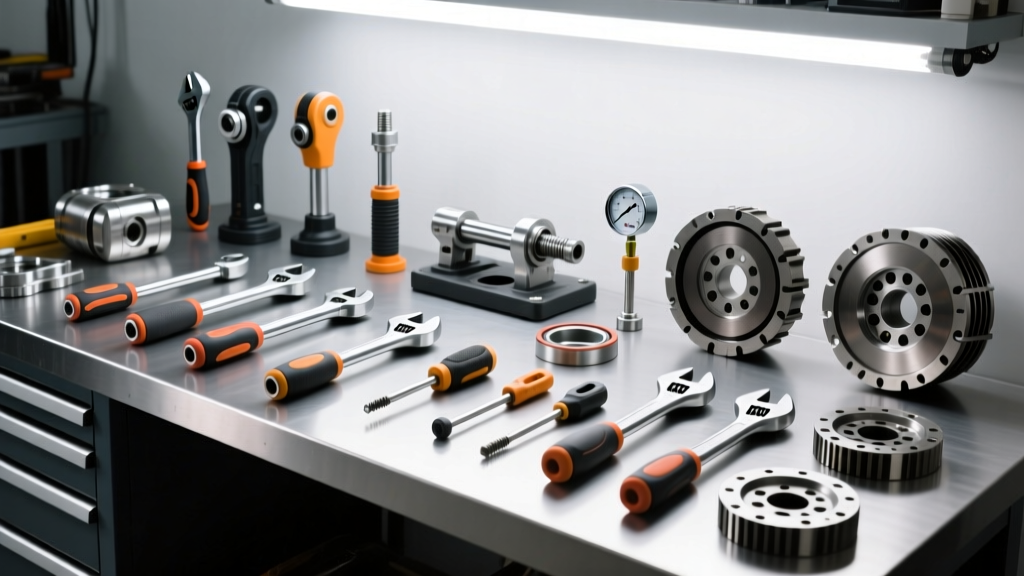
If you commit to the manual route, you cannot rely on basic hand tools. You will need a heavy-duty clutch spring compressor (the 4L80E uses heavy return springs that are dangerous to compress without the proper fixture), a dial indicator for measuring endplay, and a calibrated inch-pound torque wrench.
Consider these critical specifications that separate a successful rebuild from a premature failure:
- Endplay Clearance: Must be set precisely between 0.010" and 0.024" (0.25mm - 0.60mm) using selective thrust washers. Excessive endplay will destroy the planetary gears; too little will cause binding and overheating.
- Clutch Pack Clearances: The Direct clutch pack requires 0.040" to 0.070" of clearance, while the Forward clutch pack needs 0.030" to 0.050". Using high-energy BorgWarner frictions requires careful soaking and precise snap-ring selection.
- Fastener Torque: The valve body to case bolts must be torqued to exactly 97 in-lbs (11 Nm). The oil pump bolts require 10 ft-lbs (13.6 Nm). Over-torquing the pump will warp the stator support and destroy the front seal immediately upon startup.
Cost Breakdown: DIY Manual Route vs. Professional Rebuilder
Understanding the financial reality of a 4L80E rebuild in 2026 is crucial. While DIY saves on labor, the cost of upgraded hard parts and specialty tools quickly narrows the gap. Below is a comparative cost analysis for a heavy-duty street/tow application.
| Cost Category | DIY Manual Route (Estimated) | Professional Rebuilder (Estimated) |
|---|---|---|
| Master Rebuild Kit (Frictions, Steels, Seals) | $350 - $550 | Included in Labor/Parts Package |
| Hard Parts (Sonnax Sun Shell, Pump, Hub) | $250 - $600 | Included in Labor/Parts Package |
| Torque Converter (Billet Cover, Upgraded Stator) | $450 - $800 | $500 - $850 |
| Specialty Tools & Fixtures | $150 - $300 | $0 (Shop Equipped) |
| Fluid (13.5 Qts Dexron VI) & Filter | $120 - $150 | $120 - $150 |
| Machine Shop / Dyno Testing | $0 - $200 (if outsourced) | Included |
| Total Estimated Cost | $1,320 - $2,600 | $2,800 - $3,800 |
Note: Professional costs reflect a fully upgraded, heavy-duty 4L80E build with a multi-year warranty, not a budget 'swap-meet' refresh.
How to Vet a Professional 4L80E Rebuilder
If your symptom diagnosis points to a shattered sun shell or burnt planetary, and you lack the time or tooling to execute the procedures in a 4L80E transmission rebuild manual, finding the right professional is paramount. Not all shops understand the heavy-duty nuances of the 4L80E. Many treat it like a lighter 4L60E, which leads to catastrophic failure under load.
The Interrogation: Questions to Ask the Shop
When calling local transmission shops or searching for a specialist, ask these specific technical questions to gauge their expertise:
- "What sun shell do you use in your 4L80E builds?"
The correct answer: They should exclusively use a reinforced unit, such as the Sonnax 77733-01K heavy-duty sun shell or a billet aftermarket equivalent. If they say they reuse the OEM shell or use standard aftermarket replacements, walk away. The OEM shell is a known weak point that strips under high torque. - "How do you address the 4L80E lube circuit deficiency?"
The correct answer: The stock 4L80E suffers from poor lube flow to the rear planetary and overdrive sections. A competent builder will drill specific lube holes in the separator plate or install a shift kit (like the TransGo HD2) to increase lube circuit volume and prevent rear planetary burnout. - "Do you dyno-test or simulate line pressure before installation?"
The correct answer: Top-tier rebuilders utilize a dynamometer or a specialized valve body testing machine to verify line pressure rise, TCC apply, and shift points under simulated load before the unit ever touches your vehicle.
Expert Insight: Always verify the shop's affiliation. Looking up a shop via the Automatic Transmission Rebuilders Association (ATRA) directory ensures you are dealing with a facility that adheres to standardized rebuild protocols and offers a recognized warranty network.
Final Verdict: Making the Right Drivetrain Choice
The decision to utilize a 4L80E transmission rebuild manual for a DIY overhaul or to hire a professional rebuilder hinges entirely on your diagnostic findings and your access to precision tooling. If your issue is isolated to a valve body bore or a failed shift solenoid, keep the transmission in the truck, drop the pan, and save your money.
However, if your diagnostic scan and fluid inspection reveal internal hard-part trauma—indicated by metallic debris, burnt fluid, or a complete loss of overdrive—the teardown is unavoidable. For daily drivers, heavy haulers, or high-horsepower builds, entrusting the build to a specialist who actively upgrades the weak points (using resources from TransGo and Sonnax) provides the peace of mind and warranty protection that a garage build simply cannot match. Diagnose accurately, choose your path wisely, and keep your 4L80E shifting flawlessly for the next 200,000 miles.