The Last Multiplication: What is a Final Drive Ratio?
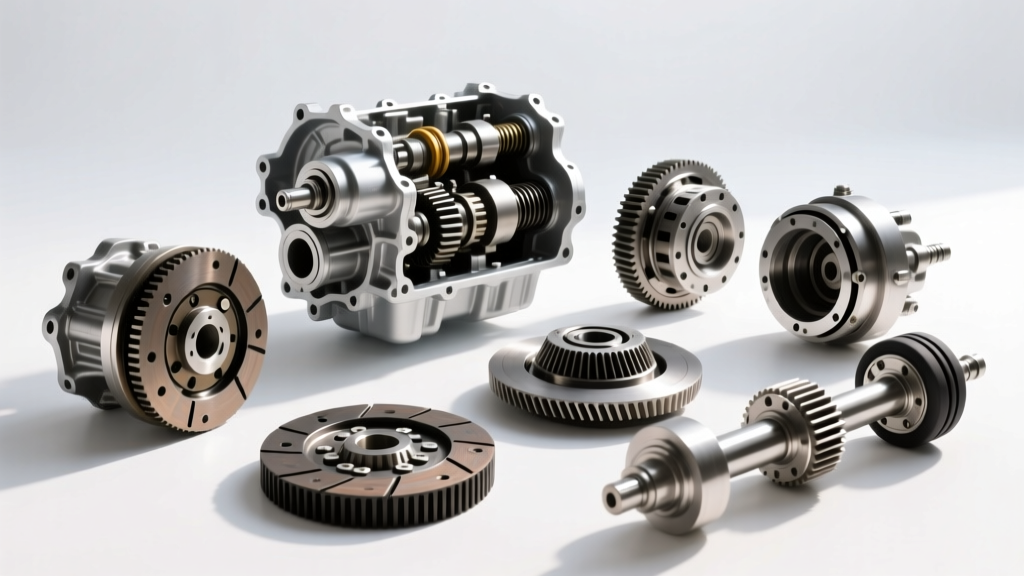
When automotive enthusiasts and mechanics discuss drivetrain performance, the conversation often gravitates toward transmission gear ratios. However, the transmission is only half of the equation. To truly understand how your vehicle multiplies engine torque before it reaches the pavement, you must understand the final drive ratio. In simple terms, the final drive ratio is the last mechanical multiplication of torque in your drivetrain, located inside the differential housing at the drive axles.
Whether you are driving a classic muscle car with a solid rear axle, a modern daily driver equipped with a ZF 8HP 8-speed automatic, or a heavy-duty truck towing a trailer, the ring and pinion gear set inside your differential dictates your baseline mechanical advantage. As we navigate the automotive landscape in 2026, where 8-speed and 10-speed transmissions (like the GM 10L90 and Ford 10R80) feature ultra-tall overdrive gears, understanding and correctly identifying your final drive ratio is more critical than ever for balancing fuel economy, towing capacity, and acceleration.
How to Find Gear Ratio: 3 Proven Methods for Your Axle
If you are wondering how to find gear ratio specifications for your specific vehicle, you do not necessarily need to tear apart the differential. Here are the three most reliable methods to identify your final drive ratio, ranked from easiest to most involved.
1. The RPO Code and VIN Decoder Method
For General Motors vehicles (Chevy, GMC, Cadillac), the easiest way to find your gear ratio is by checking the Regular Production Option (RPO) codes. These codes are typically found on a sticker inside the glovebox or under the trunk lid. Look for three-character alphanumeric codes that correspond to axle ratios:
- GU5: 3.23 Ratio
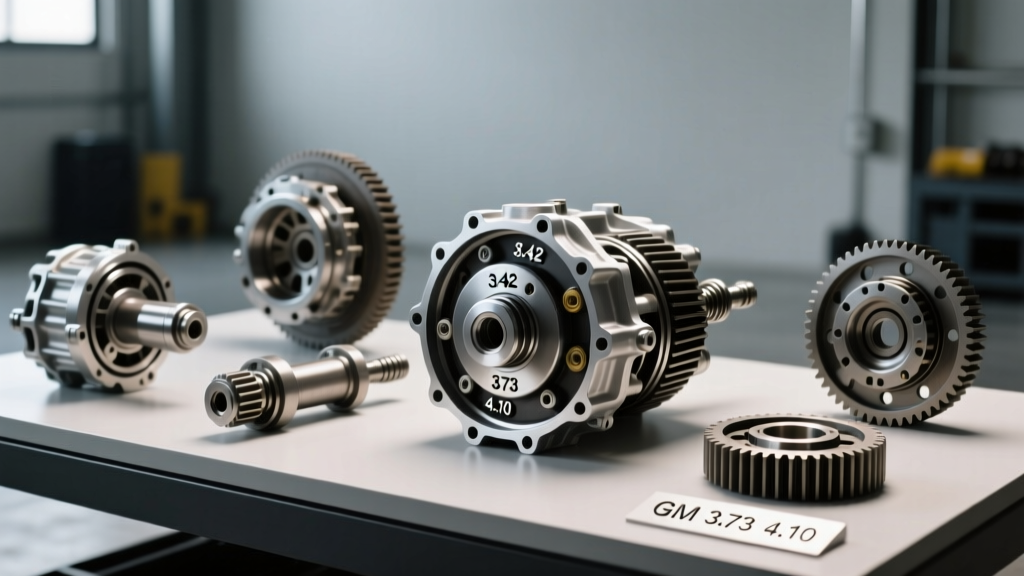
- GU6: 3.42 Ratio (Extremely common on Silverado/Sierra trucks)
- GT4: 3.73 Ratio
- GT5: 4.10 Ratio
- G80: Indicates an Eaton automatic locking differential (often paired with the above ratios)
For Ford and Chrysler vehicles, decoding the VIN via the manufacturer's online portal or a paid service like Carfax will often list the factory axle code, which directly correlates to the final drive ratio installed on the assembly line.
2. The Differential Tag and Stamp Method
If the vehicle is older, or the RPO sticker is missing, the differential itself holds the answer. On a Ford 8.8-inch or 9.75-inch rear end, look for a small metal tag attached to one of the differential cover bolts (usually at the 10 o'clock position). This tag will display a number like 3 73 (indicating a 3.73 ratio) or 3L73 (the 'L' denotes a Limited Slip differential).
On Dana 44 or Dana 60 axles, commonly found in Jeep Wranglers and heavy-duty trucks, look for a stamped ratio on the edge of the ring gear itself. You may need to wipe away grease and rotate the driveshaft to find the stamping, which often reads something like 41 11. This indicates the tooth count: 41 ring gear teeth divided by 11 pinion teeth equals a 3.73 final drive ratio.
3. The Tire Spin Calculation Method
When tags are missing and VIN decoders fail, the physical tire spin method is the ultimate failsafe. This requires no disassembly, just a floor jack, a jack stand, and a piece of chalk.
- Safely lift the drive axle so both tires are off the ground (for open or limited-slip differentials) or just one tire (if you know it's an open diff, though lifting both is safer for accurate counting).
- Put the transmission in Neutral and release the parking brake.
- Make a chalk mark on the bottom of one tire and a corresponding mark on the driveshaft.
- Rotate the tire exactly one full revolution while counting how many times the driveshaft turns.
If the driveshaft turns roughly 3 and 3/4 times, your final drive ratio is 3.73. If it turns just over 4 times, you have a 4.10 ratio. If it turns slightly less than 3 and 1/4 times, you are looking at a 3.08 or 3.23 ratio.
Real-World Drivetrain Pairings: Transmission to Final Drive
To understand how the final drive interacts with the rest of the drivetrain, it helps to look at popular factory setups. The overall crawl ratio or highway RPM is a product of the transmission's specific gear multiplied by the final drive ratio.
| Vehicle / Axle Platform | Transmission | Common Final Drive | Ring Gear Bolt Torque Spec | Primary Application |
|---|---|---|---|---|
| Jeep Wrangler Rubicon (Dana 44) | ZF 8HP50 (8-Speed Auto) | 4.10 | 85 lb-ft (with Loctite) | Off-Road / Rock Crawling |
| Chevy Silverado 1500 (GM 9.5") | GM 10L90 (10-Speed Auto) | 3.23 or 3.42 (GU6) | 74 lb-ft | Highway Cruising / Light Towing |
| Ford Mustang GT (Ford 8.8" IRS) | MT-82 (6-Speed Manual) | 3.55 or 3.73 | 70-85 lb-ft | Street Performance / Track |
| Dodge Ram 2500 (AAM 11.5") | Aisin AS69RC (6-Speed) | 3.73 or 4.10 | 115 lb-ft | Heavy Duty Towing / Commercial |
Calculating Overall Drive Ratios
The final drive ratio does not act alone. To calculate your true mechanical advantage in any given gear, you multiply the transmission gear ratio by the final drive ratio. For example, if you are driving a vehicle with a GM 6L80 transmission (First Gear ratio of 4.03) and a 3.42 final drive, your overall first gear ratio is:
4.03 x 3.42 = 13.78:1
This means the engine turns 13.78 times for every single revolution of the wheels. This massive torque multiplication is what allows a heavy truck to pull away from a stoplight or a Jeep to climb over a boulder without stalling the engine. Conversely, in top overdrive gear (e.g., 0.67 ratio in the 6L80), the math changes to 0.67 x 3.42 = 2.29:1, allowing the engine to loaf at low RPMs during highway cruising, thereby saving fuel.
Why Your Final Drive Ratio Dictates Performance
Choosing the right final drive ratio is an exercise in compromise. A numerically higher ratio (like 4.10 or 4.56) provides immense low-end torque multiplication. This is ideal for off-roading, towing heavy loads, or accelerating quickly with large, heavy aftermarket tires. However, the penalty is high engine RPM at highway speeds, increased fuel consumption, and excessive engine wear over long distances.
A numerically lower ratio (like 2.73 or 3.08) sacrifices off-the-line acceleration in favor of low highway RPMs and maximum fuel efficiency. This is why modern 2026 commuter cars and highway-biased trucks utilize lower numerical final drives; the wide ratio spreads of modern 8, 9, and 10-speed transmissions compensate for the sluggish takeoff by utilizing extremely aggressive first and second gears.
Upgrading Ring and Pinion Gears: Costs, Specs, and Torque
If your factory final drive ratio doesn't suit your needs—perhaps you've installed 35-inch tires on your truck and the transmission is constantly hunting for gears—you will need to swap the ring and pinion. According to the Yukon Gear Tech Guide, setting up a differential correctly requires precision measuring tools and strict adherence to torque specifications.
Real-World Pricing and Part Numbers
- Ring and Pinion Set: A high-quality set, such as the Yukon Gear YG F8.8-373 (3.73 ratio for Ford 8.8-inch axles), typically costs between $250 and $350.
- Master Bearing Kit: Never reuse old bearings. A Spicer 5760X master kit (including Timken bearings, crush sleeve, pinion nut, and shims) runs about $120 to $160.
- Labor Costs: Professional installation ranges from $600 to $1,200 per axle, depending on shop rates and whether it's a solid axle or complex Independent Rear Suspension (IRS).
Critical Setup Specifications
Installing a final drive gear set is not simply bolting parts together. It requires setting the pinion depth and backlash. Backlash (the amount of rotational play between the ring and pinion teeth) must typically be set between 0.006" and 0.010" using a dial indicator. If backlash is too tight, the gears will overheat and bind; if it is too loose, the gears will chatter and strip teeth under load.
Furthermore, the pinion nut requires massive torque to crush the new crush sleeve and achieve the correct pinion bearing preload. While the nut itself might require 150 to 250 lb-ft of torque to turn, the actual goal is a rotational preload measured in inch-pounds. According to Dana Spicer engineering guidelines, a typical final drive pinion bearing preload should measure between 15 and 25 in-lbs of rotational drag for new bearings. Over-crushing the sleeve will destroy the bearings within 500 miles, requiring a complete teardown and a new crush sleeve.
Finally, always use the correct fluid. Most modern limited-slip differentials require a 75W-90 or 75W-140 full synthetic gear oil paired with a specific friction modifier (such as ACDelco 10-9003 or Ford XL-3) to prevent the clutch packs from chattering during tight cornering. Understanding your final drive ratio, how to calculate it, and how to maintain it is the cornerstone of true drivetrain expertise.