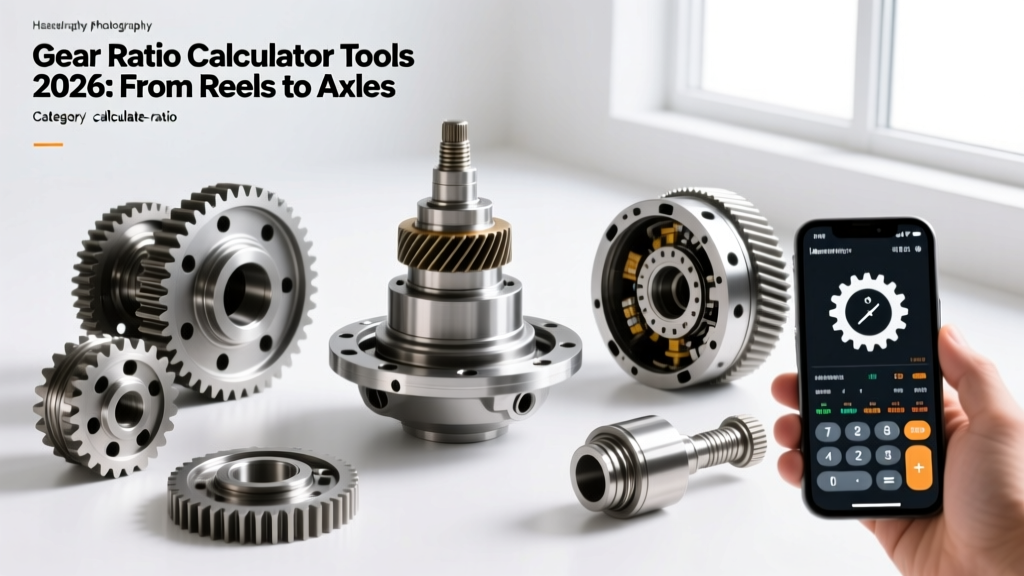
Upgrading your vehicle’s tires or changing its primary use case is one of the most common modifications in the automotive world. However, bolting on a set of 35-inch mud-terrains to a rig with a factory 3.21 axle ratio will quickly result in sluggish acceleration, excessive transmission hunting, and poor fuel economy. To restore your drivetrain's performance, you need to understand how to gear ratio calculator tools to find the optimal ring and pinion setup. Differential gear ratio selection is not just about picking the deepest number you can find; it is about balancing highway drivability, low-end torque, and the specific overdrive characteristics of your transmission.
The Core Math: Understanding Final Drive
Before inputting numbers into a calculator, you must understand the concept of the Final Drive Ratio (FDR). Your vehicle's overall gearing is a multiplication of the transmission's output gear and the differential's axle ratio. For example, if your transmission is in an overdrive gear of 0.70:1 and your differential is set to 4.10:1, your final drive ratio at highway speed is 2.87:1 (0.70 x 4.10). This final number dictates exactly how many times the engine must rotate to turn the wheels one complete revolution.
When learning how to gear ratio calculator formulas, the foundational equation for highway cruising RPM is:
RPM = (MPH x Final Drive Ratio x 336) / Tire Height (inches)
The number 336 is a mathematical constant used to convert miles per hour and inches into revolutions per minute. By manipulating this formula, you can determine the exact axle ratio required to keep your engine in its optimal efficiency or power band at your preferred highway speed.
Step-by-Step: Using the Calculator for Your Build
Modern online tools, such as the popular 4lo.com Gear Calculator, simplify this math. To get an accurate recommendation for your differential selection, you must input precise, real-world data—not just the marketing numbers printed on a tire's sidewall.
1. Measure Actual Tire Height
A tire advertised as a '35-inch' might only measure 33.5 inches under the weight of the vehicle and at recommended tire pressures. Measure from the ground to the exact center of the wheel hub, then multiply by two. Use this true diameter in the calculator.
2. Identify Your Transmission Overdrive
Determine the ratio of your transmission's highest (tallest) gear. If you are driving a truck with a 6L80 transmission, your 6th gear is 0.67:1. If you are in a Jeep with a ZF 8HP, your 8th gear is 0.67:1. This number drastically alters your differential selection.
3. Set Your Target RPM and Speed
For modern gasoline V8 engines, a highway cruising RPM between 1,800 and 2,200 at 70 MPH is the sweet spot for balancing fuel economy and preventing engine lugging. For older diesels or inline-six engines, you may target 2,000 to 2,400 RPM.
Real-World Differential Selection Scenarios
Below is a comparison chart demonstrating how differential selection changes based on vehicle use case, assuming a standard 70 MPH highway cruise and a 0.70:1 transmission overdrive (common in older 4-speed and 6-speed automatics).
| Use Case | Tire Size (Actual) | Target RPM (70 MPH) | Ideal Axle Ratio | Drivetrain Feel |
|---|---|---|---|---|
| Daily Driving / Commuting | 31.5 inches | 1,900 RPM | 3.73:1 | Smooth, efficient, factory-like. |
| Weekend Off-Road / Light Tow | 33.0 inches | 2,100 RPM | 4.10:1 | Punchy acceleration, acceptable highway drone. |
| Heavy Towing / Overlanding | 35.0 inches | 2,300 RPM | 4.56:1 | High torque multiplication, keeps trans out of tow/haul hunting. |
| Dedicated Rock Crawling | 37.0+ inches | N/A (Trail Focused) | 4.88:1 or 5.13:1 | Extreme low-speed control, poor highway manners. |
Transmission Synergy: Why Modern Gearboxes Change the Rules
One of the most critical mistakes beginners make when learning how to gear ratio calculator tools is ignoring the transmission's internal spread. The gap between first gear and overdrive dictates how aggressive your differential selection needs to be.
The 4L60E vs. The ZF 8HP70
Consider the legendary GM 4L60E transmission. Its first gear is 3.06:1 and its 4th gear overdrive is 0.70:1. If you put 35-inch tires on a 4L60E-equipped truck, you will almost certainly need a 4.56:1 or 4.88:1 ring and pinion just to get the heavy vehicle moving from a dead stop without burning up the clutch packs.
Now, compare that to the modern ZF 8HP70 8-speed automatic found in late-model Rams and Jeeps. The ZF 8HP features a massive 4.71:1 first gear and a 0.67:1 8th gear. Because the first gear is so deep, the transmission provides immense low-end torque multiplication on its own. Consequently, a ZF 8HP vehicle with 35-inch tires can often run a much milder 4.10:1 or even 3.92:1 axle ratio, relying on the transmission's deep first gear for off-road crawling and the 8th gear for highway efficiency. Always consult Sonnax Transmission technical documents to understand your specific gearbox's torque limits and gear spreads before selecting extreme axle ratios that might overload a weak carrier.
Hardware Realities: Ring and Pinion Swaps
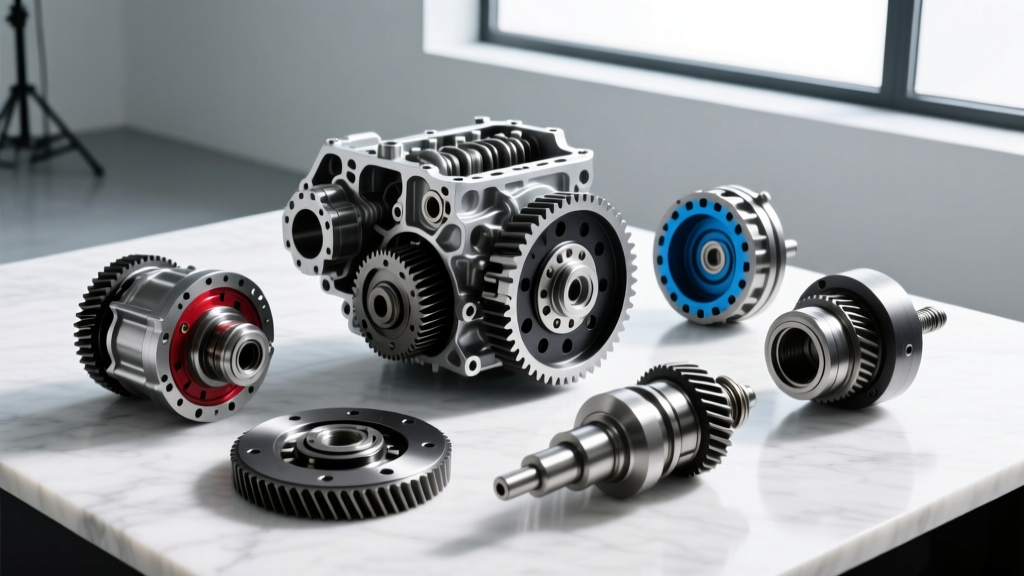
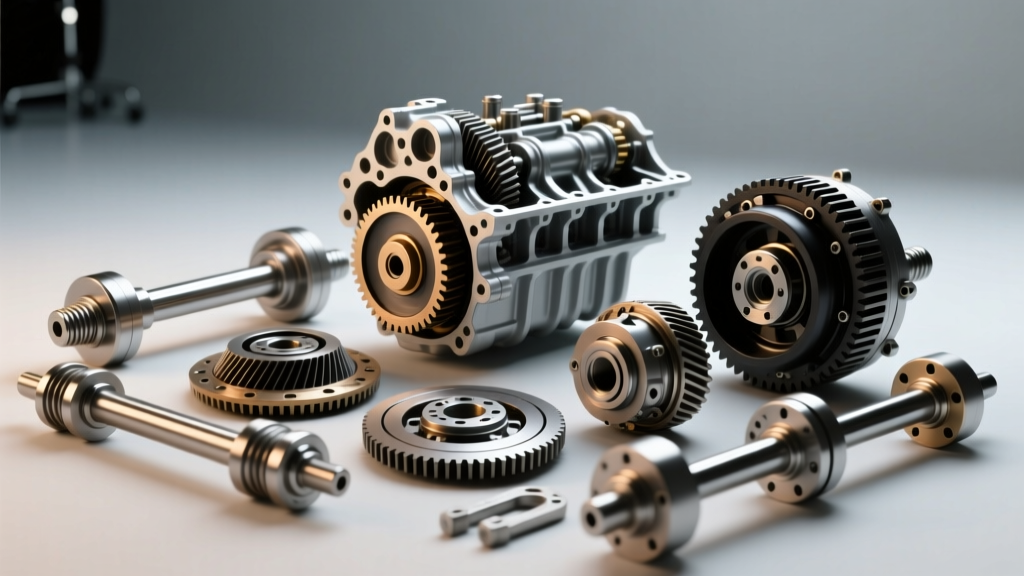
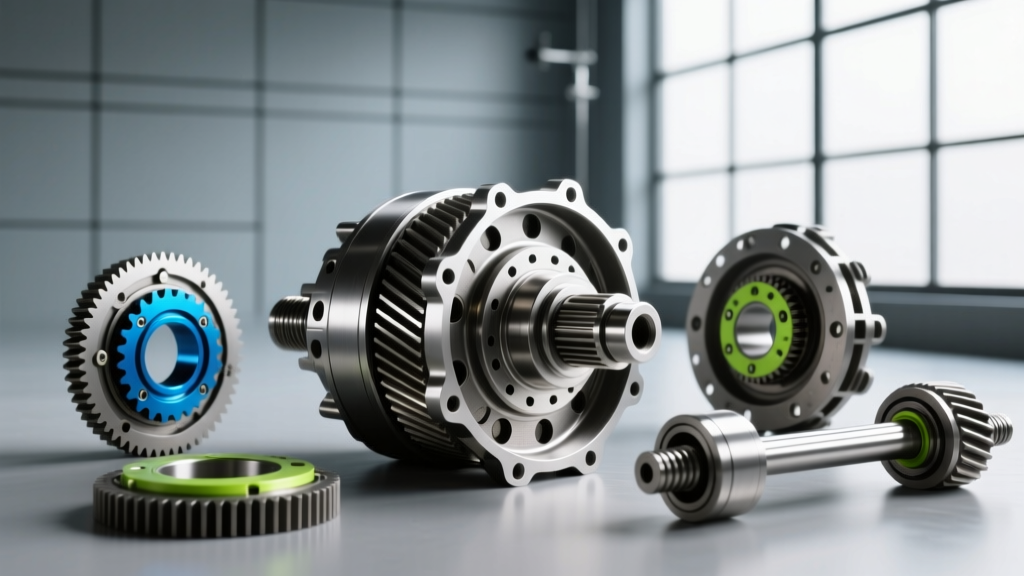
Once the calculator gives you your target number (e.g., 4.56:1), you must source the physical hardware. Premium manufacturers like Yukon Gear & Axle or Motive Gear offer precision-cut ring and pinion sets. Expect to pay between $250 and $450 for the gear set itself, and an additional $150 to $250 for a Master Install Kit, which should always include Timken or SKF bearings, shims, crush sleeves, and high-quality seals.
Critical Torque Specifications and Setup
Installing a differential gear set is not a simple bolt-on job; it requires precision measuring tools. If you are setting up a standard Dana 44 differential, the ring gear bolts (typically 7/16"-20 UNF) must be torqued to exactly 75-85 lb-ft using a high-strength threadlocker like Loctite 272. For a Ford 8.8-inch differential, the 1/2"-20 ring gear bolts require 85-100 lb-ft of torque.
Furthermore, pinion bearing preload must be set using an inch-pound torque wrench. A new crush sleeve setup generally requires 25-35 in-lbs of rotational preload, while a solid spacer setup (highly recommended for off-road use) targets 15-25 in-lbs. Backlash—the tiny amount of play between the ring and pinion teeth—must be dialed in between 0.006" and 0.010" using a dial indicator. Failure to hit these microscopic tolerances will result in catastrophic gear whine or total differential failure within the first 500 miles.
Reading the Gear Pattern: The Final Verification
Even if the calculator was used perfectly and the torque specs were followed, the physical gear pattern must be verified using yellow zinc oxide marking compound. You must paint three to four teeth on both the drive (convex) and coast (concave) sides of the ring gear. After rotating the assembly under light brake pressure, inspect the marks:
- Ideal Pattern: The mark is centered evenly from the heel (inner edge) to the toe (outer edge) of the tooth, sitting slightly toward the toe under load.
- Too Deep (Pinion needs to move out): The pattern is biased heavily toward the heel of the tooth.
- Too Shallow (Pinion needs to move in): The pattern is pushed to the extreme toe edge, risking tooth breakage under heavy torque.
Conclusion
Mastering how to gear ratio calculator tools is the first step in a successful drivetrain build. By accurately measuring your true tire height, understanding your transmission's overdrive ratio, and targeting a realistic highway RPM, you can select a differential gear ratio that perfectly matches your vehicle's purpose. Whether you are towing a heavy trailer across the country with a 4.56 setup or daily driving on 33s with a 4.10, the right mathematical foundation ensures your hardware performs flawlessly on the pavement and the trail alike.