The Drivetrain vs. Cooling Clutch Paradigm
At AutoGearNexus, our primary focus is transmission and drivetrain clutches—friction plates, torque converters, and limited-slip differentials. However, the engine cooling fan clutch shares vital viscous, electromagnetic, and mechanical principles with its drivetrain counterparts. Understanding how to tell if the fan clutch is bad requires the same analytical mindset used to diagnose a slipping automatic transmission clutch pack or a chattering manual disc. In 2026, as under-hood temperatures in modern turbocharged and high-compression V8s continue to rise, the fan clutch remains a critical, often overlooked component. A failing fan clutch doesn't just cause engine overheating; it introduces severe parasitic drag, robbing the drivetrain of up to 15-20 horsepower and creating harmonic vibrations that can mimic failing transmission bearings.
How to Tell if the Fan Clutch is Bad: Field Diagnostics
Before tearing into the root cause, you must confirm the symptom. Fan clutch failures generally manifest in two extremes: seized (locked) or free-wheeling (slipping). Here is the professional diagnostic matrix used by master technicians.
1. The Cold Spin Test (Mechanical Drag)
With the engine completely cold and off, attempt to spin the fan blade by hand. A healthy thermal viscous clutch should offer moderate resistance, spinning roughly 1 to 1.5 revolutions before stopping. If the fan spins freely for multiple revolutions, the internal silicone fluid has leaked or degraded. If it refuses to move or feels locked solid, the internal valve has jammed or the bearing has seized.
2. The Acoustic & Parasitic Load Test
A seized fan clutch creates a distinct, loud 'roaring' or 'whooshing' sound that increases linearly with engine RPM. This is often misdiagnosed as a failing water pump bearing or a slipping serpentine belt. To isolate the noise, use an automotive stethoscope on the water pump snout. If the roar peaks immediately upon cold startup and does not subside after 3-5 minutes of warming up, the clutch is locked in fail-safe mode.
3. Electronic Clutch Scan Tool Diagnostics (PWM)
For late-model trucks (e.g., 2019-2026 GM Silverado/Sierra with the 5.3L or 6.2L EcoTec3), the fan clutch is electronically controlled via a Pulse Width Modulated (PWM) signal. Using a bi-directional scan tool, monitor the 'Fan Clutch Duty Cycle' and 'Commanded Fan Speed' PIDs. If the PCM commands a 10% duty cycle (disengaged) but the actual Fan Speed RPM matches the engine RPM multiplied by the pulley ratio, the electromagnetic coil has failed or the internal mechanical lock-up spring has engaged due to a wiring fault.
Deep Dive: Failure Modes & Root Cause Analysis
To accurately diagnose the system, we must break down the specific failure modes by clutch architecture. According to diagnostic data from AA1Car, misidentifying the clutch type is the leading cause of improper replacement and recurring overheating issues.
Thermal (Viscous) Fan Clutches
These rely on a bi-metallic sensing strip and a reservoir of high-viscosity Polydimethylsiloxane (PDMS) silicone oil (typically 10,000 to 30,000 cSt).
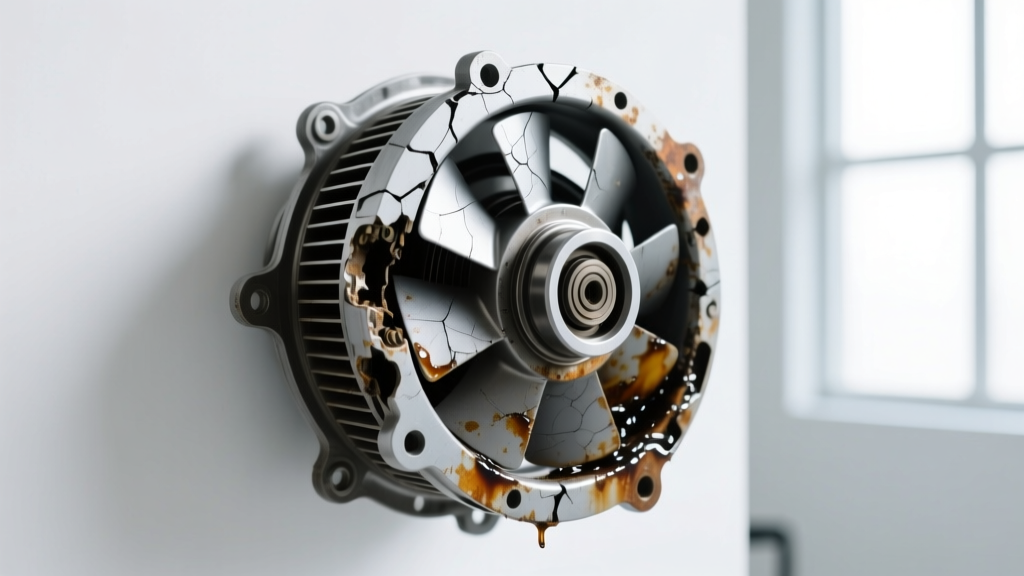
- Failure Mode: Fluid Shear & Degradation. Over 80,000 to 100,000 miles, the constant shearing action between the rotor and stator breaks down the silicone fluid's molecular chains. The fluid loses its viscosity, resulting in a clutch that slips under heavy load, causing highway towing overheating.
- Failure Mode: Bi-Metallic Strip Fatigue. The front-facing sensor strip loses its thermal calibration due to extreme heat cycling. It fails to open the internal baffle valve, starving the working chamber of fluid.
- Root Cause: Proximity to aftermarket turbo manifolds or degraded radiator shrouds that alter the ambient air temperature hitting the sensor strip.
Non-Thermal (Torque-Limiting) Clutches
Often found on older or lighter-duty applications, these lack a thermal sensor and rely purely on fluid shear to limit maximum fan speed.
- Failure Mode: Centrifugal Blowout. At high RPMs, the fluid is forced to the outer edges of the housing, disengaging the clutch. If the internal O-rings harden and crack, the fluid leaks onto the engine bay, leaving a distinct oily residue on the underside of the hood.
Electronic & Electromagnetic Fan Clutches
Standard on modern heavy-duty and half-ton trucks, these use an electromagnetic coil and a friction plate, controlled by the PCM.
- Failure Mode: Coil Burnout & Harness Chafing. The wiring pigtail often routes near the A/C accumulator or belt tensioner. Vibration causes the insulation to wear through, shorting the PWM signal to ground. The PCM detects the open circuit and triggers a fail-safe mechanical lock to prevent catastrophic engine overheating.
- Root Cause: Poor factory harness routing and exposure to under-hood ozone and heat. According to MechanicBase, checking the pigtail for continuity (expecting 2.0 to 4.0 ohms) is mandatory before condemning the clutch assembly.
Buyer's Guide: Selecting the Right Replacement
When replacing a fan clutch, matching the exact thermal profile and torque rating of the OEM unit is critical. Installing a standard-duty clutch on a vehicle designed for a severe-duty unit will result in immediate overheating under load. Below is our 2026 comparison matrix for top-tier replacements.
| Brand / Line | Part Number Example | Type / Application | Est. Price (2026) | Warranty |
|---|---|---|---|---|
| Hayden Severe Duty | 2722 (GM 5.3L/6.0L) | Thermal / Heavy Tow | $65 - $85 | Limited Lifetime |
| ACDelco Professional | 15-40333 (GM Electronic) | Electromagnetic PWM | $140 - $185 | 24 Months |
| Motorcraft OEM | YB-159 (Ford 5.0L) | Thermal / OEM Spec | $90 - $120 | 24 Months |
| Four Seasons Economy | 36982 (Universal Fit) | Non-Thermal / Light | $35 - $50 | 12 Months |
Pro-Tip: Always consult the Hayden Automotive catalog to verify the exact thread pitch and pilot diameter of your water pump snout before ordering. Many European and late-model domestic engines use a press-fit pilot rather than a bolt-on flange.
Installation Specifications & Torque Data
Improper installation is a leading root cause of premature fan clutch bearing failure. The front bearing of a fan clutch is relatively small and cannot handle the lateral runout caused by improper mounting or over-torqued fan blades.
Removal and Thread Direction
Before applying a 36mm or 47mm fan clutch wrench, you must verify the thread direction. Many older V-belt engines utilize a left-hand (reverse) thread on the water pump snout to prevent the fan from unscrewing during operation. Conversely, most modern serpentine-driven engines (like the GM LS and LT V8 families) use standard right-hand threads. Apply a penetrating oil and use a specialized pulley-holding tool to prevent damaging the water pump bearings during removal.
Crucial Torque Specifications
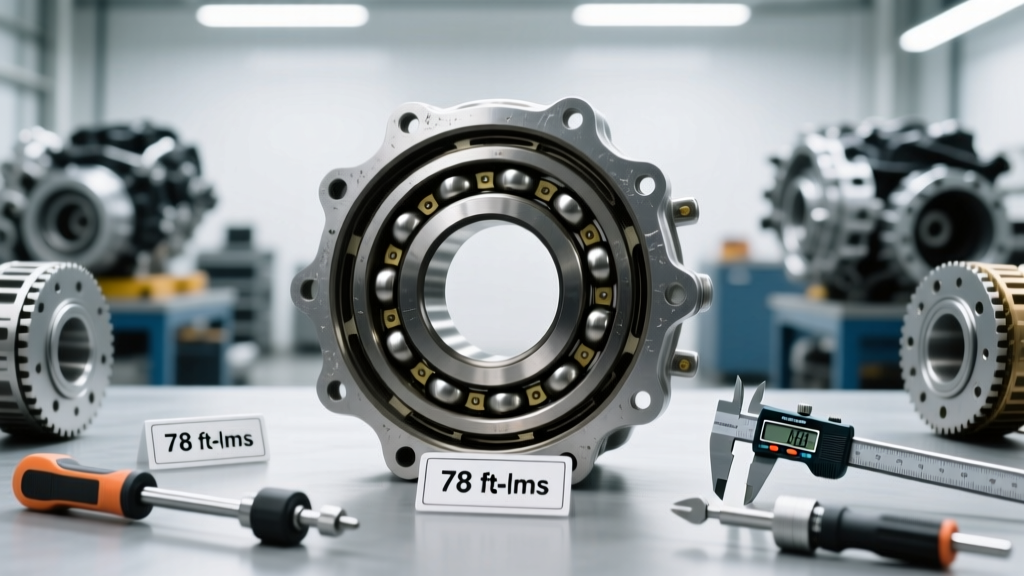
- Fan Clutch to Water Pump Mounting Nuts (M8x1.25): Torque to 15-18 lb-ft (20-24 Nm). Over-torquing will distort the clutch housing and bind the internal rotor.
- Fan Blade to Clutch Flange Bolts (Typically 5/16" or M8): Torque to 10-15 lb-ft (13-20 Nm). Always use a crisscross pattern to ensure the blade sits perfectly flush, preventing harmonic imbalance at 2,500+ RPM.
- Electronic Pigtail Connection: Apply dielectric grease to the PWM connector and secure the harness with a new zip-tie, ensuring at least 2 inches of clearance from the belt tensioner and A/C lines.
Summary: Bridging the Diagnostic Gap
While a slipping transmission clutch and a failing viscous fan clutch operate in entirely different systems, the diagnostic logic remains identical: isolate the input, measure the output, and identify the point of mechanical or hydraulic degradation. By understanding the specific failure modes—from PDMS fluid shear to PWM coil burnout—you can accurately diagnose the root cause, select the correct severe-duty or electronic replacement, and restore optimal thermal management and drivetrain efficiency to the vehicle.