The S550 Mustang Dilemma: Drivetrain Squeal vs. Accessory Noise
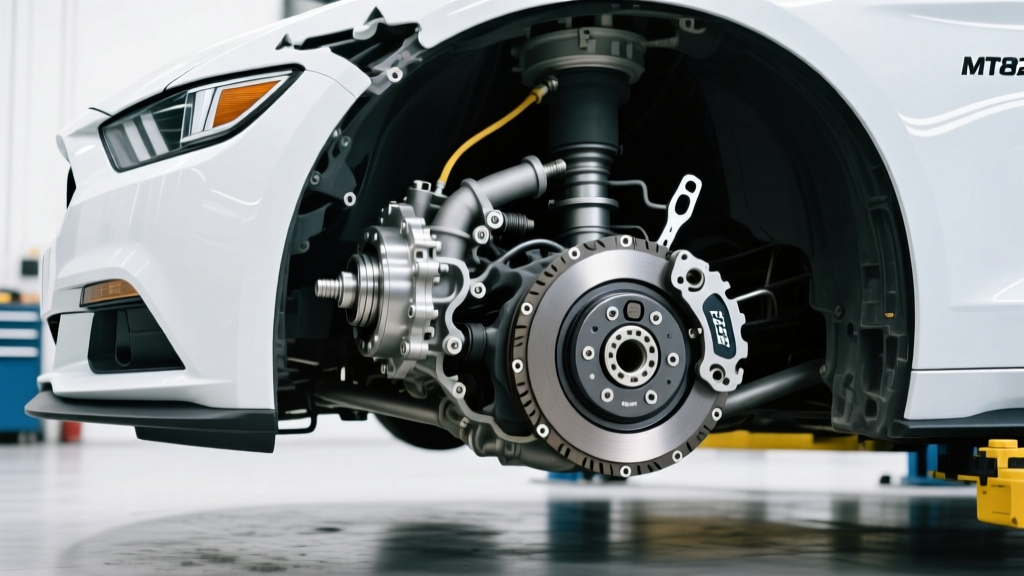
As we navigate the 2026 enthusiast market, high-mileage S550 Mustangs equipped with the 5.0L Coyote V8 and the Getrag MT82 manual transmission are incredibly common. A frequent complaint among these owners is a distinct metallic squeal or grinding noise emanating from the front of the engine bay or bellhousing. Because the acoustic pathways in the Mustang chassis can be deceptive, many DIYers and even generalist mechanics misdiagnose a failing transmission release bearing as an accessory drive issue, or vice versa. Specifically, the search for an air compressor clutch repair often begins when the actual culprit is the MT82 Hydraulic Concentric Slave Cylinder (CSC), which serves as the throw-out bearing.
Understanding the mechanical distinction between the transmission bellhousing and the front-end accessory drive (FEAD) is critical. Misdiagnosis leads to unnecessary dealership visits, wasted parts budgets, and potential catastrophic failure of the MT82 input shaft. This guide provides a definitive, model-specific diagnostic framework for the 2015-2023 Ford Mustang 5.0L platform.
Diagnostic Matrix: Isolating the MT82 CSC from the A/C Compressor
The most efficient way to separate a transmission release bearing failure from an HVAC accessory failure is through load and RPM isolation. The A/C compressor clutch is driven by the serpentine belt and engages via an electromagnetic coil, meaning its noise profile is strictly tied to engine RPM and cabin climate settings. The MT82 CSC, however, is hydraulically actuated and rides on the transmission input shaft, meaning its noise profile is tied to clutch pedal position and drivetrain load.
| Diagnostic Variable | Failing MT82 CSC (Throw-Out Bearing) | Failing A/C Compressor Clutch |
|---|---|---|
| Noise at Idle (Clutch Engaged/Pedal Up) | Silent or faint whirring | Silent (if A/C is OFF) |
| Noise at Idle (Clutch Pedal Depressed 1 inch) | Loud squeal, chirp, or marbles-in-a-can grind | No change in noise profile |
| Impact of Turning A/C ON | No change in noise profile | Immediate metallic squeal or rhythmic clicking |
| Noise Correlation to Engine RPM | Independent of RPM; dependent on pedal load | Directly scales with engine RPM |
| Physical Vibration Location | Felt through the clutch pedal and gear shifter | Felt through the chassis floorboard and dashboard |
Deep Dive: MT82 Hydraulic Concentric Slave Cylinder (CSC) Failure
Unlike older pushrod manual transmissions that utilize a mechanical fork and a standard carbon-faced throw-out bearing, the MT82 utilizes an internal Hydraulic Concentric Slave Cylinder. This unit wraps around the input shaft and pushes directly against the pressure plate diaphragm fingers. When the internal sealed bearing of the CSC wears out, or when the hydraulic fluid degrades and causes cavitation, it produces a sound remarkably similar to a slipping accessory pulley.
Symptoms and the Input Shaft Bearing Caveat
Before ordering replacement parts, you must rule out the notorious MT82 input shaft bearing failure. Early MT82 units (and some poorly assembled replacement units) suffer from an input shaft bearing that lacks adequate retention. When this bearing walks, it destroys the bellhousing bore and mimics CSC failure. If you hear a grinding noise that persists even when the transmission is in neutral with the clutch pedal fully released (input shaft spinning), you likely have an input shaft bearing failure, not a CSC failure. According to Ford Performance Parts, upgrading to the revised input shaft bearing kit is mandatory during any MT82 bellhousing removal.
OEM vs. Aftermarket Part Numbers and Pricing
- OEM Ford CSC: Part number CL8Z-7A548-A. Retail price hovers around $180 to $220.
- Ford Performance Heavy-Duty CSC: Part number M-7548-M82. Priced around $250. Features improved seal materials for high-heat track environments.
- Aftermarket Alternatives: While available on platforms like RockAuto for under $120, we strongly advise against budget CSCs for the MT82, as the labor intensity of dropping the transmission demands OEM-level reliability.
When the Diagnosis Points to Air Compressor Clutch Repair
If your diagnostic matrix confirms the noise is entirely dependent on the A/C system engaging, you are indeed looking at an air compressor clutch repair scenario. The Coyote 5.0L utilizes a specific electromagnetic clutch assembly that is prone to gap-widening and coil burnout as the vehicle crosses the 100,000-mile threshold.
Electrical and Mechanical Verification
Do not immediately replace the entire compressor assembly. The clutch can often be serviced independently, saving hundreds of dollars and avoiding the need to evacuate and recharge the refrigerant system.
- Check the Air Gap: Use a feeler gauge to measure the distance between the clutch friction plate and the pulley rotor. The specification for the Mustang 5.0L is 0.020 to 0.030 inches. If the gap exceeds 0.040 inches, the electromagnet cannot pull the plate in, resulting in a rapid, rhythmic clicking and slipping squeal. Remove the center bolt and subtract a shim to close the gap.
- Test Coil Resistance: Disconnect the electrical connector to the A/C clutch coil. Using a multimeter, measure the resistance across the coil terminals. A healthy Motorcraft coil should read between 3.5 and 4.5 ohms. A reading of infinite resistance indicates an open internal circuit, requiring a clutch coil replacement (Motorcraft part YC-2955, approx. $140).
- Inspect the Pulley Bearing: With the serpentine belt removed and the A/C OFF, spin the compressor pulley by hand. It should rotate smoothly with slight viscous drag. Any notchiness, lateral play, or grinding means the pulley bearing has failed, which will quickly shred the belt and damage the tensioner.
MT82 CSC Replacement: Torque Specs and Assembly
If the fault lies with the transmission, dropping the MT82 requires strict adherence to torque specifications to prevent bellhousing misalignment, which will instantly destroy your new CSC and input shaft. Always use a transmission jack and secure the engine with an overhead support bar.
- Driveshaft to Differential Flange: 82 lb-ft (Mark alignment before removal)
- Transmission Crossmember to Chassis: 66 lb-ft
- Transmission Mount to Crossmember: 37 lb-ft
- Bellhousing to Engine Block (Upper/Lower Bolts): 37 lb-ft
- Clutch Pressure Plate to Flywheel: 22 lb-ft (Star pattern sequence)
- Flywheel to Crankshaft (M82 Spec): 59 lb-ft plus an additional 90-degree turn
- CSC to Bellhousing Retaining Nuts: 89 lb-in (Inch-pounds, do NOT over-torque)
Crucial Assembly Note: The MT82 CSC is self-adjusting but requires a specific bleeding procedure. You must use Motorcraft Dual Clutch Transmission Fluid (XT-11-QDC) for the hydraulic line if your specific model year utilizes the integrated hydraulic reservoir, though most S550s share the DOT 4 brake fluid reservoir. If bleeding the hydraulic clutch line, ensure the slave cylinder is fully depressed and held while opening the bleed nipple to prevent air trapping in the concentric collar.
2026 Market Context and Final Bed-In
As the S550 generation ages, the aftermarket has seen a flood of lightweight flywheels and aggressive ceramic clutches. While these offer performance benefits, they drastically accelerate CSC wear due to increased diaphragm spring pressure and higher harmonic vibrations. If you are upgrading your clutch assembly, inspect the MT82 input shaft splines for galling. A lack of high-temperature synthetic spline grease during assembly will cause the clutch disc to bind on the input shaft, leading to erratic engagement that feels exactly like a failing hydraulic bearing.
Whether your diagnostic path leads to a shim adjustment for an air compressor clutch repair or a full bellhousing teardown for an MT82 CSC replacement, methodical isolation of the noise source is your best defense against unnecessary parts swapping. Always verify rotational masses and hydraulic pressures before committing to a teardown, ensuring your Coyote Mustang remains reliable on both the street and the track.