The Hidden Clutch Under Your Hood: What is a Fan Clutch?
When most people hear the word 'clutch,' they immediately think of a manual transmission pedal or the internal friction packs inside an automatic gearbox like the ZF 8HP. However, one of the most critical clutch systems on your vehicle sits right at the front of the engine bay. Understanding your fan and fan clutch assembly is a perfect, beginner-friendly gateway into the broader world of clutch diagnostics.
Just like a transmission clutch connects and disconnects the engine's power from the wheels, a fan clutch connects and disconnects the engine's rotational power from the radiator cooling fan. When the engine is cold, the clutch disengages to save horsepower and reduce noise. When the engine gets hot, the clutch engages to pull air through the radiator and AC condenser. When this engagement and disengagement process fails, it can lead to parasitic power loss, deafening roaring noises, or catastrophic engine overheating.
Thermal vs. Electronic: How They Engage
To diagnose engagement issues, you first need to know which type of clutch your vehicle uses:
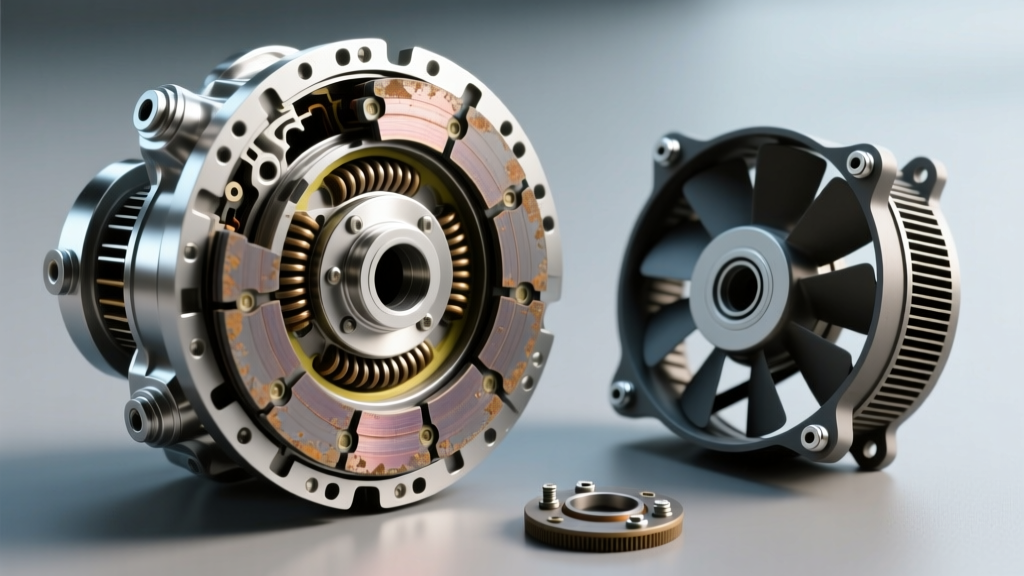
- Thermal (Viscous) Fan Clutches: These use a bimetallic coil spring on the front of the clutch that acts as a thermostat. As hot air from the radiator hits the spring, it expands and opens a valve. This allows a highly viscous silicone fluid (often 10,000 to 20,000 cSt) to flow into the working chamber, creating fluid shear that 'locks' the fan to the water pump shaft.
- Electronic (PWM) Fan Clutches: Found on modern vehicles like the GM Silverado 5.3L (L83/L86) or Ford F-150 EcoBoost, these lack a bimetallic strip. Instead, the Powertrain Control Module (PCM) sends a Pulse Width Modulated (PWM) electrical signal to an electromagnetic coil inside the clutch, engaging it precisely based on engine coolant temperature, AC pressure, and vehicle speed.
Diagnosing Disengagement Failures (Stuck Locked)
When a fan clutch fails to disengage, it remains locked to the water pump shaft at all times. This means the fan is spinning at engine RPM even when you are cruising down the highway at 70 MPH and the engine is perfectly cool.
The Symptoms of a Stuck-Locked Clutch
- The 'Airplane' Roar: The most obvious symptom is a massive, deafening rushing air noise that scales with engine RPM. It sounds like a small airplane taking off.
- Parasitic Horsepower Loss: A locked mechanical fan can consume anywhere from 10 to 20 horsepower at higher RPMs. You will notice sluggish acceleration and a drop in fuel economy (often 1-3 MPG).
- Premature Water Pump Failure: The constant heavy rotational mass and radial load will destroy your water pump shaft bearings prematurely.
Common Causes for Thermal Clutches
For thermal clutches, a stuck-locked condition usually means the internal valve is jammed open, or the silicone fluid has degraded and lost its shear properties, causing the clutch to act like a solid mechanical link. According to Hayden Automotive's technical resources, severe front-end impacts or bent fan blades can also physically jam the internal mechanism.
Common Causes for Electronic (PWM) Clutches
Electronic clutches are designed with a 'fail-safe' default. If the PCM loses communication with the clutch, or if the wiring harness chafes and breaks (a very common Technical Service Bulletin issue on GM trucks where the harness rubs against the alternator bracket), the clutch will default to a fully locked state to prevent the engine from overheating.
Diagnosing Engagement Failures (Stuck Free)
The opposite failure is when the clutch refuses to engage. The fan free-spins independently of the water pump shaft, moving almost zero air. This is incredibly dangerous for your engine, especially in stop-and-go traffic or when towing.
The Symptoms of a Stuck-Free Clutch
- Overheating at Idle: Your engine temperature gauge will climb rapidly when stopped at a red light or idling in a driveway, but will drop back to normal once you reach highway speeds (because ram-air is forcing its way through the radiator).
- Poor AC Performance: The AC condenser sits in front of the radiator. Without the fan pulling air across it at low speeds, your AC will blow warm air at idle.
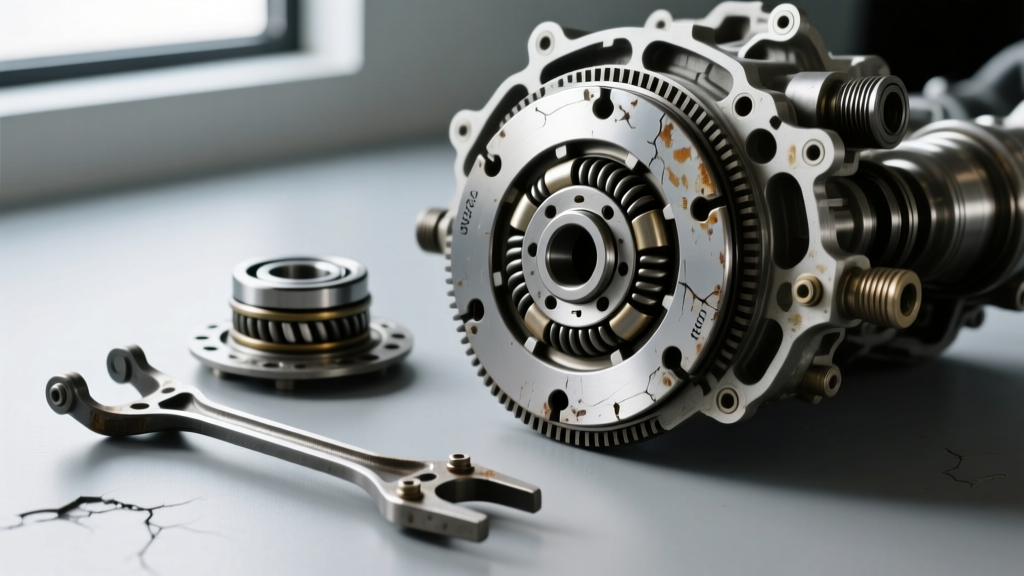
- The 'Spin Test' Failure: With the engine off and completely cold, you should be able to spin the fan blade by hand. It should offer a slight, smooth resistance (like stirring thick syrup). If it spins freely with zero resistance like a bicycle wheel, the internal fluid has leaked out or the clutch is completely dead.
Beginner’s Troubleshooting Chart: Testing Your Fan Clutch
Use this structured diagnostic framework to pinpoint your exact issue. Always prioritize safety and keep your hands clear of moving parts.
| Diagnostic Test | How to Perform | Passing Result | Failing Result |
|---|---|---|---|
| Cold Spin Test | Engine OFF, completely cold. Spin fan by hand. | Smooth, viscous resistance. | Spins freely (leaked) or won't budge (seized). |
| Infrared Thermometer | Measure air temp directly behind the radiator core. | Clutch engages (roar starts) around 170°F - 190°F. | Clutch never engages despite high temps. |
| PWM Voltage Test | Back-probe the control wire with a multimeter (Engine ON). | Voltage fluctuates (PWM signal) as engine warms. | 0V (broken wire) or constant 12V (module failure). |
| Visual Inspection | Check for fluid slung on the radiator or clutch body. | Clean and dry exterior. | Thick, oily residue (silicone fluid leak). |
Step-by-Step Replacement & Torque Specifications
Replacing a fan clutch is a straightforward job, but it requires specific tools and adherence to torque specifications to avoid damaging the water pump. For most V8 applications (like the GM LS or Ford Coyote), you will need a specialized Fan Clutch Wrench Set (such as the Lisle 43150 or OTC 4587) to hold the water pump pulley while breaking the large nut loose.
Crucial Removal Tips
- Thread Direction: Most fan clutch nuts are standard right-hand thread (lefty-loosey). However, some older Chrysler and specific import applications use left-hand threads. Always check your factory service manual before applying 80 lbs of breaker-bar force.
- Silicone Fluid Warning: If the old clutch leaked silicone fluid onto your radiator fins, you must clean it with a dedicated degreaser and low-pressure water. Silicone fluid will bake onto the fins, permanently blocking airflow and causing chronic overheating even with a new clutch.
Real-World Part Numbers and Pricing
When sourcing replacements, avoid unbranded internet parts. Stick to OEM or premium aftermarket suppliers like GMB, Hayden, or Four Seasons.
- Hayden 2735 (Standard Rotation Thermal): Fits many GM LS-based 4.8L/5.3L/6.0L trucks. Typical price: $55 - $75.
- Four Seasons 36971 (Heavy Duty Thermal): Designed for severe-duty towing applications. Typical price: $80 - $110.
- GM OEM 15806902 (Electronic PWM): Required for newer Silverado/Sierra applications. Typical price: $180 - $260.
Installation Torque Specs
Never use an impact wrench to install the fan clutch nut; the shock loads can crack the internal ceramic seals or damage the water pump impeller shaft. Hand-tighten and use a torque wrench.
- GM LS V8 (4.8/5.3/6.0/6.2): Fan clutch to water pump shaft nut is typically torqued to 41 Nm (30 lb-ft). Use a 36mm wrench.
- Ford 5.0L Coyote: Fan clutch nut is typically torqued to 64 Nm (47 lb-ft). Use a 36mm or 40mm wrench depending on the exact year.
- Water Pump Pulley Bolts: If you removed the pulley to access the clutch, remember that the small M6 bolts securing the pulley to the water pump flange are usually torqued to just 12 Nm (106 lb-in). Over-torquing these will strip the aluminum water pump housing.
When to Upgrade: Mechanical vs. Electric Fan Swaps
If you are diagnosing repeated engagement issues on an older thermal clutch system, many enthusiasts choose to delete the mechanical fan entirely and swap to an electric fan setup. While this eliminates fan clutch failures and frees up 10-15 HP at the crank, it requires careful planning.
You must select high-CFM electric fans (like dual 11-inch Spal fans pulling 2,800+ CFM) and ensure your alternator can handle the 25+ amp continuous draw. Furthermore, you must wire the relays to trigger based on both engine coolant temperature and AC compressor engagement to prevent condenser heat-soak at idle. For daily drivers and heavy tow rigs, replacing the OEM fan and fan clutch with a premium Hayden or GMB unit remains the most reliable, hassle-free diagnostic resolution.