The Critical Link Between Fluid Levels and Axle Noise
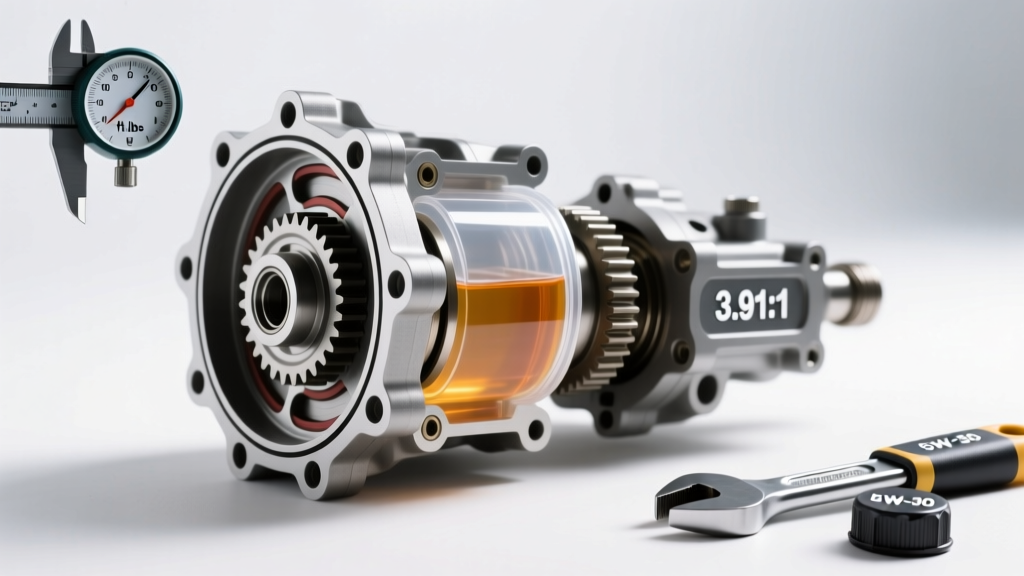
When owners and technicians search for the exact Ford F-150 rear differential fluid capacity, they are rarely doing so out of casual curiosity. More often than not, the search is triggered by a symptom: an unfamiliar whine under deceleration, a heavy clunk when shifting from reverse to drive, or a shuddering chatter during low-speed cornering. As of the 2026 model year service cycles, Ford's rear axle ecosystem—ranging from the standard 8.8-inch to the heavy-duty 9.75-inch and Tremor-spec 10.5-inch ring gears—relies heavily on precise hydrodynamic boundary lubrication to manage extreme hypoid gear sliding forces.
Diagnosing rear differential noise requires more than just a stethoscope; it requires a fundamental understanding of fluid dynamics, gear metallurgy, and factory torque specifications. Running an axle even half a quart below its engineered capacity can cause the ring gear to pull aerated, foamy oil into the pinion bearings, leading to catastrophic cavitation and high-frequency whining. This expert guide bridges the gap between factory fluid specifications and real-world acoustic troubleshooting.
Ford F-150 Rear Differential Fluid Capacity Specifications
Before tearing into a noisy axle, you must establish the correct baseline. Ford has transitioned several light-duty axles to lower-viscosity 75W-85 synthetic fluids to meet CAFE fuel economy standards, while heavy-duty towing packages and off-road trims still demand the sheer stability of 75W-140. Always verify your specific axle code (found on the driver's side door jamb sticker) before purchasing fluid.
| Axle Type | Ring Gear Size | Fluid Capacity | Factory Fluid Spec (2024-2026) | Friction Modifier Required? |
|---|---|---|---|---|
| Standard / SuperCrew | 8.8-inch | 2.4 - 2.6 Quarts (2.3L) | SAE 75W-85 (WSS-M2C942-A1) | Only if equipped with Traction-Lok (LSD) |
| Max Tow / Heavy Duty | 9.75-inch | 3.0 - 3.5 Quarts (2.8L - 3.3L) | SAE 75W-140 (WSS-M2C939-A) | Yes, for Traction-Lok / Electronic Locker |
| Tremor / HD Payload | 10.5-inch | 3.7 Quarts (3.5L) | SAE 75W-140 Synthetic | Yes, for Torsen / Locking applications |
Expert Tip: When servicing a limited-slip differential (LSD), always add 4 oz of Motorcraft XL-3 Friction Modifier Additive (EST-M2C118-A) before filling with the base gear oil. Failing to do so will result in immediate clutch-pack chatter and permanent glazing of the friction discs.
Diagnosing Rear Differential Noise by Sound Profile
Differential noise is highly directional and load-dependent. To accurately diagnose the failure point, you must isolate the noise based on throttle position, vehicle speed, and steering angle. Below is the master diagnostic framework used by drivetrain specialists.
1. Drive vs. Coast Whine (Ring and Pinion Wear)
A whine that changes pitch with vehicle speed is almost always related to the ring and pinion gear mesh or the pinion bearings.
- Whine on Acceleration (Drive): Typically indicates wear on the drive side of the gear teeth or an improper pinion depth setting. If the fluid level was previously low, the pinion bearing may have lost preload, allowing the gear mesh to shift out of the optimal contact pattern.
- Whine on Deceleration (Coast): Points to wear on the coast side of the hypoid gears. This is common in high-mileage trucks that have seen extensive engine-braking or heavy towing without adequate fluid cooling.
- Constant Howl (All Speeds): Usually a sign of pitted or spalled pinion bearings. The rollers develop microscopic flat spots, creating a harmonic resonance that transfers directly through the axle tubes to the cabin.
2. Low-Speed Clunking and Backlash Issues
A metallic 'clunk' when shifting from Park to Reverse, or when letting off the throttle at 15 mph, indicates excessive rotational backlash. While some backlash is necessary to prevent gear binding, excessive play points to worn spider gears, degraded thrust washers inside the carrier, or a stretched chain in the transfer case (if 4WD). Before condemning the differential, verify that the driveshaft U-joints and slip yoke splines are properly lubricated and within tolerance.
3. Limited-Slip Chatter (Traction-Lok & Electronic Locker)
If your F-150 shudders or 'hops' the rear tires during tight, low-speed turns (like pulling into a parking space), you are experiencing limited-slip clutch pack bind. The friction modifier in the differential fluid has depleted its polar-bonding efficacy.
The Figure-8 Test: Before dropping the differential cover, drive the truck to an empty lot and perform 10 slow, tight figure-8 turns. This forces the clutch packs to slip and circulates the fluid. If the chatter disappears, the modifier was simply dormant. If the chatter persists, drain the fluid, inspect for burnt-smelling oil (indicating glazed clutches), and refill with fresh 75W-140 and a new dose of XL-3 additive.
Step-by-Step Troubleshooting & Inspection Protocol
When noise diagnosis points to internal mechanical failure, the fluid itself becomes your primary forensic evidence. According to Ford Motor Company Maintenance Guides, regular inspection of the differential magnet is crucial for predicting catastrophic failure.
- Warm the Axle: Drive the truck for 15 minutes to bring the gear oil to operating temperature (approx. 140°F - 180°F). This suspends metallic particles in the fluid and ensures a complete drain.
- Extract and Inspect: Remove the fill plug first, then the drain plug (or drop the stamped steel cover if no drain plug is present). Catch the fluid in a clean, white-lined pan.
- Analyze the Debris:
- Fine Metallic Fuzz on Magnet: Normal wear for the first 50,000 miles. Safe to refill and monitor.
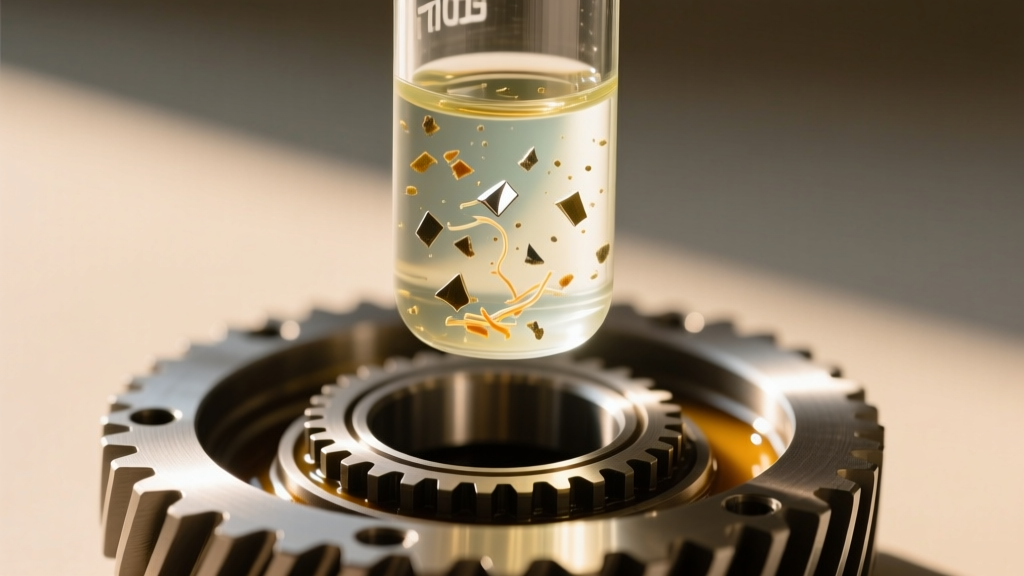
- Glitter/Silver Sheen in Fluid: Indicates advanced bearing wear or ring gear spalling. A rebuild is imminent.
- Chunky Metal Shards or Brass Colored Flakes: Brass indicates destroyed spider gear thrust washers or pinion bearing cages. The differential requires a complete teardown and likely a new carrier.
Torque Specs and Reassembly Best Practices
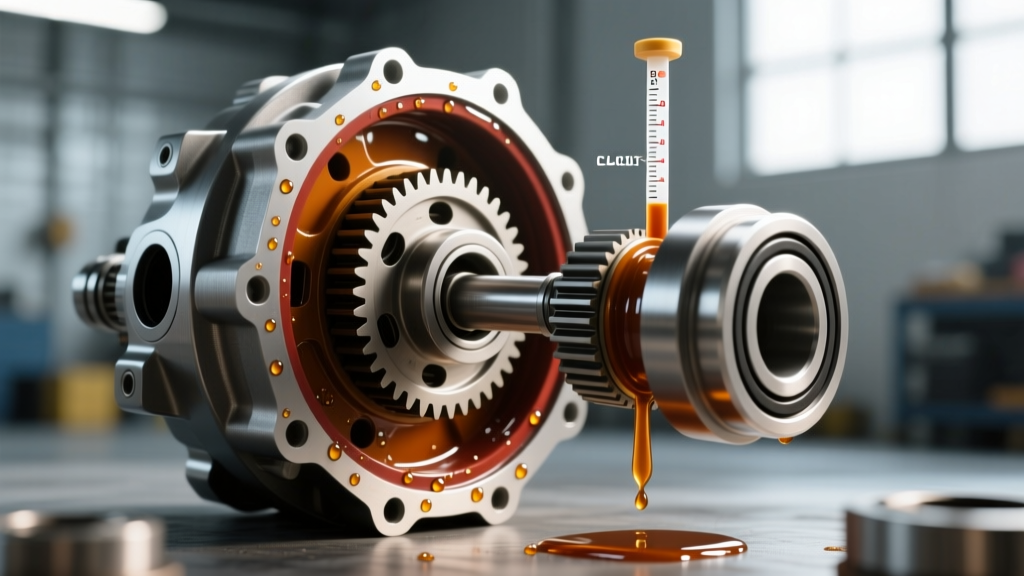
If your troubleshooting leads to a fluid service or a gear swap, adhering to exact torque specifications is non-negotiable. Over-torquing the differential cover on an 8.8-inch axle will warp the stamped steel, leading to persistent seepage that mimics a rear main seal leak. Always reference the latest Motorcraft Axle Lubricants documentation for chemical compatibility.
| Fastener / Component | Axle Type | Torque Specification | Expert Notes |
|---|---|---|---|
| Differential Cover Bolts | 8.8-inch | 28 lb-ft (38 Nm) | Use a criss-cross pattern. Apply RTV silicone only if the gasket surface is pitted; otherwise, use a reusable rubber gasket. |
| Differential Cover Bolts | 9.75-inch / 10.5-inch | 33 lb-ft (45 Nm) | These axles often use a 12-bolt pattern. Ensure no RTV beads fall into the gear sump during curing. |
| Fill / Drain Plug | All Axles | 22 lb-ft (30 Nm) | Wrap Teflon tape on NPT threads; do not use tape on straight O-ring plugs. |
| Pinion Nut (Crush Sleeve) | All Axles | 250+ lb-ft (Yield) | WARNING: Never reuse a crush sleeve. Torque is measured by rotational drag (in-lb), not just nut torque. Requires specialized holding tools. |
When to Rebuild vs. Replace the Axle Assembly
In the modern repair landscape, the decision to rebuild a noisy differential or swap in a remanufactured unit comes down to labor economics and tooling. Setting pinion depth and bearing preload requires a dial indicator, an inch-pound torque wrench, and a bearing puller setup. If the ring and pinion are severely spalled, or if the carrier bearings have spun in their bores, the cost of specialized machining often exceeds the price of a factory-remanufactured axle assembly from a trusted supplier. For daily-driven F-150s used for standard towing and commuting, a remanufactured drop-in axle with a 3-year warranty often provides a faster, more reliable return to the road than a backyard gear setup.
Ultimately, maintaining the correct Ford F-150 rear differential fluid capacity with the proper viscosity and friction modifiers remains the most cost-effective way to silence axle noise before it starts. Treat your gear oil as a vital wear component, not just a lifetime fill, and your drivetrain will easily surpass the 200,000-mile mark.