The True Rear Differential Replacement Cost F150 Owners Face
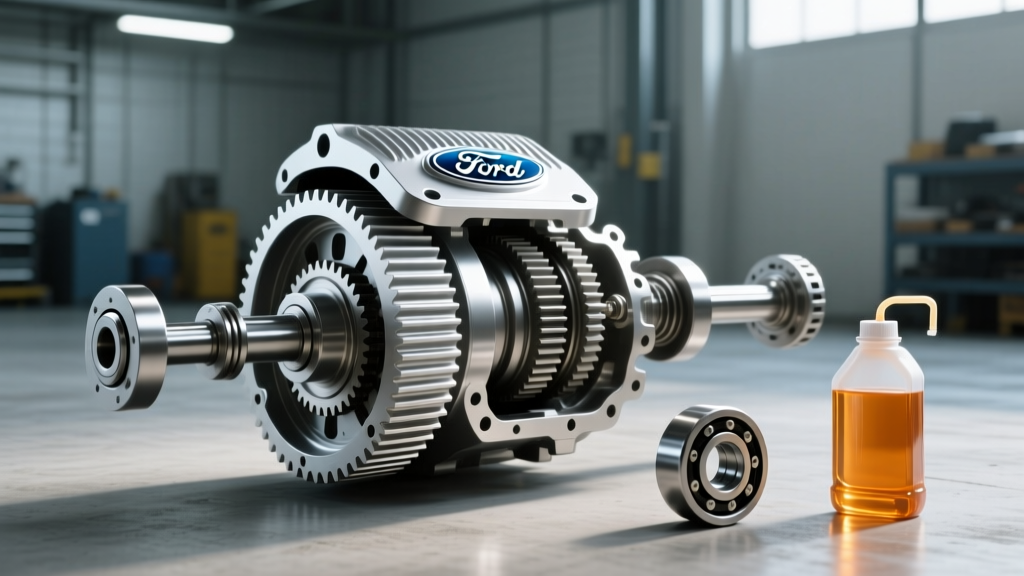
When towing heavy loads through mountain passes or hauling fifth-wheel campers in peak summer heat, the Ford F-150's rear axle is subjected to extreme thermal stress. The hypoid gear sets inside the 8.8-inch, 9.75-inch, and Sterling 10.5-inch differentials generate immense friction. When gear oil exceeds its thermal breakdown threshold, the lubricating film collapses, leading to rapid wear on the ring and pinion, bearing seizures, and ultimately, total axle failure. When evaluating the rear differential replacement cost F150 owners encounter after a catastrophic thermal failure, the numbers are staggering. A remanufactured 9.75-inch rear axle assembly from a Ford dealer typically ranges from $2,800 to $3,600, while professional installation labor adds another $800 to $1,200. This means a simple fluid breakdown can result in a $4,800 repair bill.
Fortunately, this catastrophic expense is almost entirely preventable. By understanding the thermodynamics of the differential housing, upgrading to high-capacity finned covers, and utilizing the correct shear-stable synthetic gear oils, you can drop differential operating temperatures by 30°F to 50°F. This technical deep-dive explores the engineering behind differential cooling, exact torque specifications, and the fluid dynamics required to keep your F-150's axle alive under maximum Gross Combined Weight Rating (GCWR) conditions.
Thermodynamics and the Flaws of Stock Stamped Covers
The factory differential covers equipped on most F-150s are constructed from stamped steel. While cost-effective for mass production, stamped steel is a poor conductor of heat compared to cast aluminum. Furthermore, the internal geometry of a stock cover offers minimal surface area for convective cooling and creates turbulent, inefficient fluid flow paths inside the housing.
Under heavy load, the sliding friction of the hypoid ring and pinion gears pushes localized gear oil temperatures well past 250°F (121°C). Standard conventional 80W-90 fluids begin to oxidize and form sludge at these temperatures, while even standard synthetic 75W-85 fluids can suffer from viscosity shear. Without adequate heat dissipation through the differential cover, the heat remains trapped in the gear oil, accelerating the degradation of the limited-slip friction modifiers and the extreme pressure (EP) additives, such as zinc dialkyldithiophosphate (ZDDP), which protect the gear teeth.
High-Capacity Finned Cover Upgrades: A Data Comparison
Upgrading to an aftermarket cast-aluminum differential cover serves three critical functions: it increases the overall fluid capacity (acting as a larger thermal sink), utilizes external cooling fins to maximize convective air transfer, and often incorporates internal baffles to direct oil flow over the hottest components. Below is a comparison of popular options for the widely used Ford 9.75-inch semi-floating rear axle found in the F-150 Max Tow and Heavy Duty Payload packages.
| Cover Type | Material | Fluid Capacity | External Fins | Magnetic Drain Plug | Avg. Cost (2026) |
|---|---|---|---|---|---|
| OEM Stamped Steel | Steel | ~2.0 Quarts | No | No | N/A (Stock) |
| Mag-Hytec (Part: F975) | A380 Cast Aluminum | ~3.5 Quarts (+1.5) | Yes (Deep Fin) | Yes (Neodymium) | $260 - $290 |
| Ford Performance (M-4033-G2) | Cast Aluminum | ~2.8 Quarts (+0.8) | Yes (Shallow) | No | $175 - $210 |
| Differential Gear (DG-F975) | Cast Aluminum | ~3.2 Quarts (+1.2) | Yes (Directional) | Yes | $220 - $240 |
Expert Insight: When selecting a cover, prioritize models with a magnetic drain plug and a dipstick or fill-hole leveler. The neodymium magnet captures microscopic ferrous metal shavings generated during the initial break-in period of the ring and pinion, preventing them from circulating and acting as an abrasive lapping compound on the bearings.
Installation Protocol and Torque Specifications
A premium differential cover will leak and fail if installed improperly. Ford's 9.75-inch and 8.8-inch axles do not use pre-cut cork or rubber gaskets from the factory; they rely on a precise bead of Room Temperature Vulcanizing (RTV) silicone sealant. Using the wrong sealant or improper torque will result in gear oil contamination from water ingress or total seal failure.
Step-by-Step Sealing Procedure
- Surface Preparation: Scrape the old RTV from the axle housing mating surface using a plastic scraper to avoid gouging the steel. Wipe both the housing and the new cover with brake cleaner (non-chlorinated) and a lint-free shop towel until completely dry.
- Sealant Selection: Use a high-temperature, oil-resistant RTV specifically designed for gearboxes. Motorcraft TA-1-B (or equivalent Permatex Ultra Black) is mandatory. Standard red RTV lacks the necessary shear resistance for continuous gear oil immersion.
- Bead Application: Apply a continuous 3mm to 5mm bead of RTV around the cover perimeter. Crucially, apply a small dab of RTV on the inside edge of every bolt hole to prevent oil from wicking up the threads and leaking past the bolt heads.
- Curing Time: Allow the RTV to skin over for 10-15 minutes before mating the cover to the housing. Once bolted in place, wait a minimum of 2 hours (preferably overnight) before filling with gear oil to allow the silicone to fully cross-link and cure.
Factory Torque Specifications
Overtightening the cover bolts will warp the cast aluminum flange, creating a permanent leak path. Always use a calibrated inch-pound or low-range foot-pound torque wrench in a crisscross (star) pattern.
- Ford 8.8-Inch Axle: 24-34 Nm (18-25 lb-ft)
- Ford 9.75-Inch Axle: 28-38 Nm (21-28 lb-ft)
- Sterling 10.5-Inch Axle: 35-45 Nm (26-33 lb-ft)
Active vs. Passive Differential Cooling Systems
While a finned aluminum cover provides excellent passive cooling, trucks configured for extreme duty—such as F-150s equipped with the 3.5L PowerBoost hybrid pulling 12,000 lbs in desert environments—may require active differential cooling. Active systems utilize a small 12V electric pump to draw gear oil from the housing, push it through a remote finned heat exchanger (often mounted behind the front grille), and return it to the axle.
According to data from Ford's official towing guides, sustained high-speed towing drastically reduces axle fluid life. If your F-150 is equipped with the factory Trailer Tow Package, it may already have provisions for an active axle cooler. If not, aftermarket kits from brands like Hayes or B&M utilize a PTO-driven or electric pump rated for high-viscosity fluids. When installing an active cooler, you must step up to a heavier gear oil viscosity, such as 75W-140, to compensate for the increased flow rate and external cooling lines, ensuring the hypoid gears maintain a hydrodynamic wedge under load.
Fluid Dynamics: Selecting the Correct Gear Oil
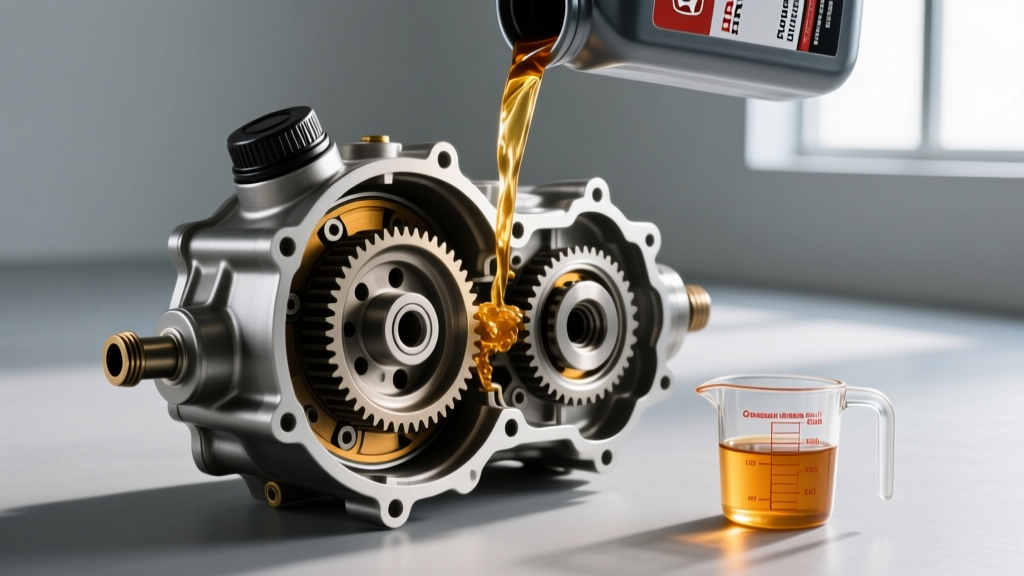
The increased volume of an aftermarket cooling cover requires careful attention to fluid selection. The F-150's rear differential fluid specification depends heavily on the axle ratio, payload package, and towing frequency.
Viscosity and Additive Chemistry
For standard duty F-150s with the 9.75-inch axle, Ford specifies 75W-85 Synthetic Hypoid Gear Oil (Motorcraft XL-1200-QT). This lower-viscosity fluid reduces parasitic drag, improving fuel economy by up to 1.5% while providing adequate protection for daily driving and light towing. However, if you frequently tow above 8,000 lbs or operate in ambient temperatures consistently exceeding 95°F (35°C), stepping up to a 75W-140 Full Synthetic is highly recommended. The thicker base oil resists viscosity shear at extreme temperatures, maintaining the protective barrier between the sliding hypoid gear teeth.
Limited-Slip Additive Warning: If your F-150 is equipped with an electronic locking rear differential (e-Locker) or a Torsen-style limited-slip differential (LSD), the friction modifier requirements differ. The Ford e-Locker generally does not require the addition of a friction modifier (XL-3), as it operates as an open diff until mechanically locked via the dash switch. However, clutch-type LSDs require exactly 4 oz of Motorcraft XL-3 Friction Modifier. Adding this modifier to an e-Locker axle can dilute the EP additives and reduce the overall load-bearing capacity of the gear oil.
Diagnostic Signs of Thermal Degradation
Before your differential reaches the point of requiring a total rebuild, it will provide warning signs of thermal distress. Learning to diagnose these early can save you thousands of dollars.
- The 'Burnt Sugar' Odor: If you smell a distinct, acrid scent resembling burnt sugar or sulfur after a long tow, the gear oil has exceeded 300°F and the sulfur-phosphorus EP additives are actively burning off. Immediate fluid replacement is required.
- Thermal Imaging Diagnostics: Using a standard FLIR thermal camera immediately after a highway run, compare the differential housing temperature to the rear brake rotors. If the differential center (the pinion bearing area) is reading 40°F+ hotter than the ambient brake rotors, your cooling system is inadequate for your load.
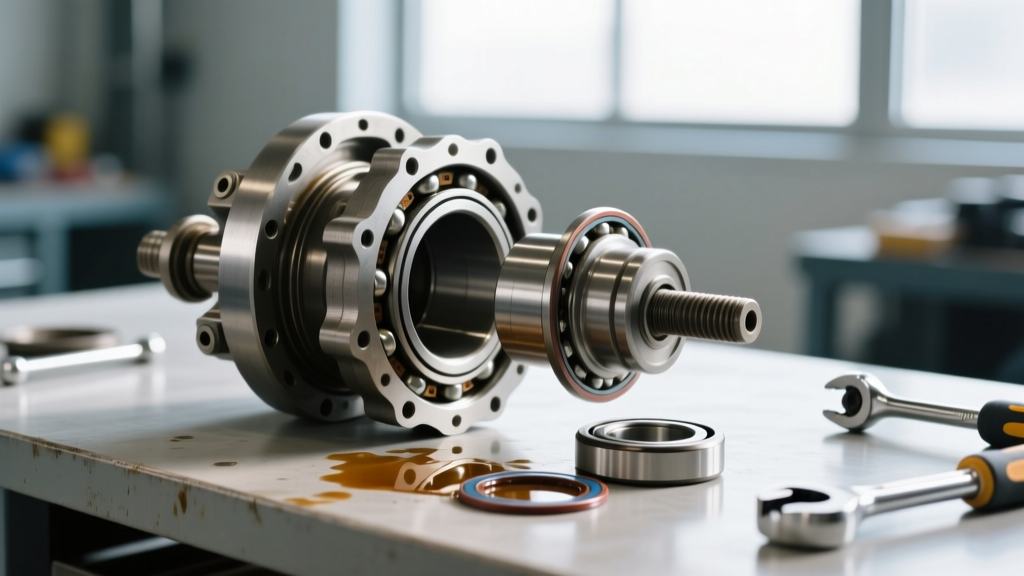
- Highway Whine: A rhythmic whining noise that changes pitch with vehicle speed (not engine RPM) indicates that the pinion bearings have suffered from thermal spalling due to oil starvation or breakdown. This is the final stage before catastrophic gear seizure.
Conclusion: The ROI of Differential Cooling
The mathematics of drivetrain maintenance heavily favor proactive cooling upgrades. Investing $250 in a high-capacity Mag-Hytec cover, $15 in premium RTV sealant, and $90 in high-quality 75W-140 synthetic gear oil totals roughly $355. When weighed against a rear differential replacement cost F150 owners frequently quote at over $4,000 for a complete axle assembly and dealership labor, the return on investment is undeniable. By optimizing your axle's thermal management, adhering to exact torque specifications, and respecting the chemistry of hypoid gear lubricants, you ensure your F-150's drivetrain survives the most punishing towing conditions year after year.