The Misdiagnosis Trap: Drivetrain Chatter vs. Engine Vibration
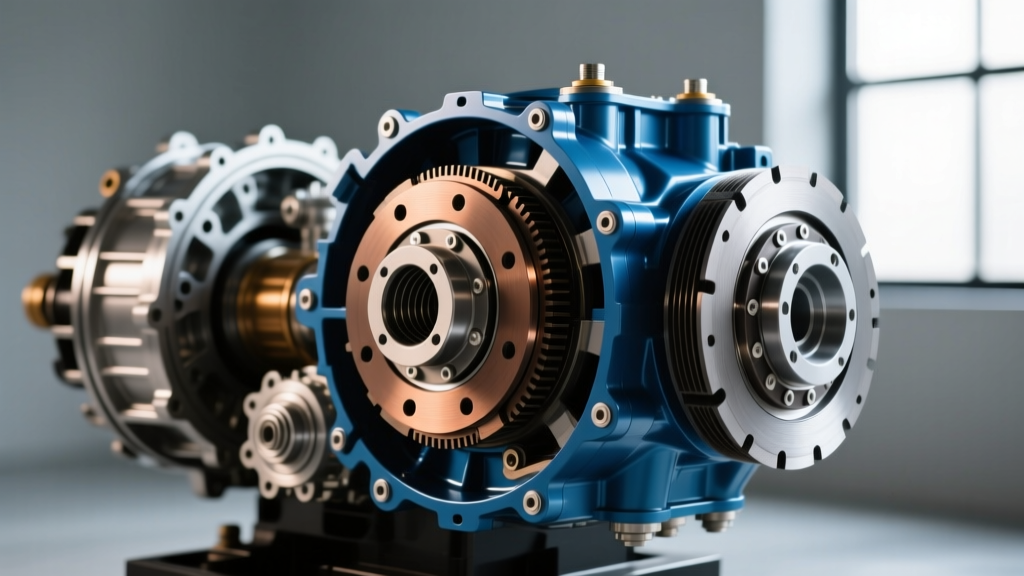
When modifying Ford F-150 trucks for high-horsepower applications—whether you are maintaining a classic 1999-2003 5.4L Triton manual or executing a modern 5.0L Coyote V8 swap with a Tremec Magnum F transmission—drivetrain vibrations are a common headache. However, a frequent error in the performance community is confusing engine harmonic vibration with true transmission clutch chatter. Before you tear into your bellhousing, you must isolate the vibration source.
True clutch chatter is a stick-slip friction phenomenon. It occurs when the friction disc grabs and releases the flywheel in rapid succession during engagement, typically between 1,200 and 1,800 RPM. This creates a violent, low-frequency shudder that resonates through the chassis and shift knob. Conversely, a failing viscous mechanical fan clutch creates a high-frequency, rotational imbalance that mimics drivetrain shudder but is entirely isolated to the engine's accessory drive. Diagnosing the difference is the first step in any performance upgrade guide.
Why You Need a Ford F150 Fan Clutch Removal Tool for Clutch Jobs
If you have confirmed the vibration is indeed drivetrain-related, accessing the clutch assembly on an F-150 requires significant clearance. For trucks equipped with mechanical cooling fans, the fan and shroud must be removed to safely support the engine from above or to pull the engine forward when dropping the transmission crossmember.
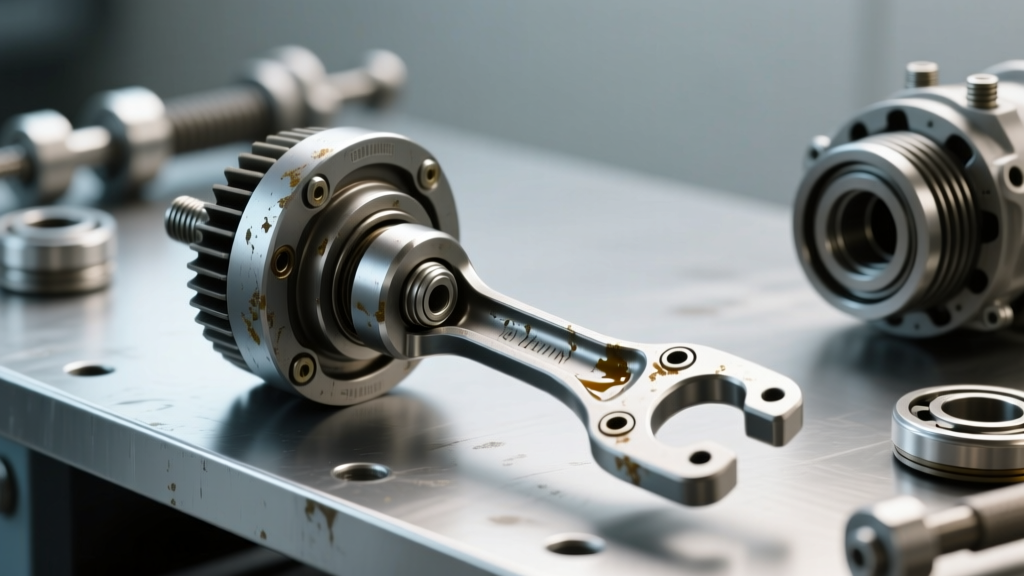
This is where a dedicated Ford F150 fan clutch removal tool becomes mandatory. The F-150's water pump pulley and fan clutch nuts (often requiring a 36mm, 47mm, or specific Ford-profile wrench depending on the engine generation) are torqued heavily from the factory and rely on reverse or standard threads that will spin the water pump shaft if not held in place.
- OTC 4521 / Lisle 12100 Fan Clutch Wrench Set: Essential for holding the water pump pulley while breaking the fan clutch nut loose. Cost: ~$45-$65.
- Clearance Protocol: Removing the fan clutch provides the necessary 4-6 inches of rearward engine clearance needed to safely maneuver an engine support bar (like the OTC 1819) without damaging the radiator core during transmission R&R.
True Clutch Chatter Diagnosis: The Runout & Flywheel Checklist
Once the transmission is on the bench, the diagnosis of clutch chatter shifts to precision measurement. In high-torque F-150 builds (600+ lb-ft), chatter is rarely caused by a 'weak' clutch; it is almost always a byproduct of improper mating surface geometry or harmonic resonance.
1. Bellhousing Concentricity (Runout)
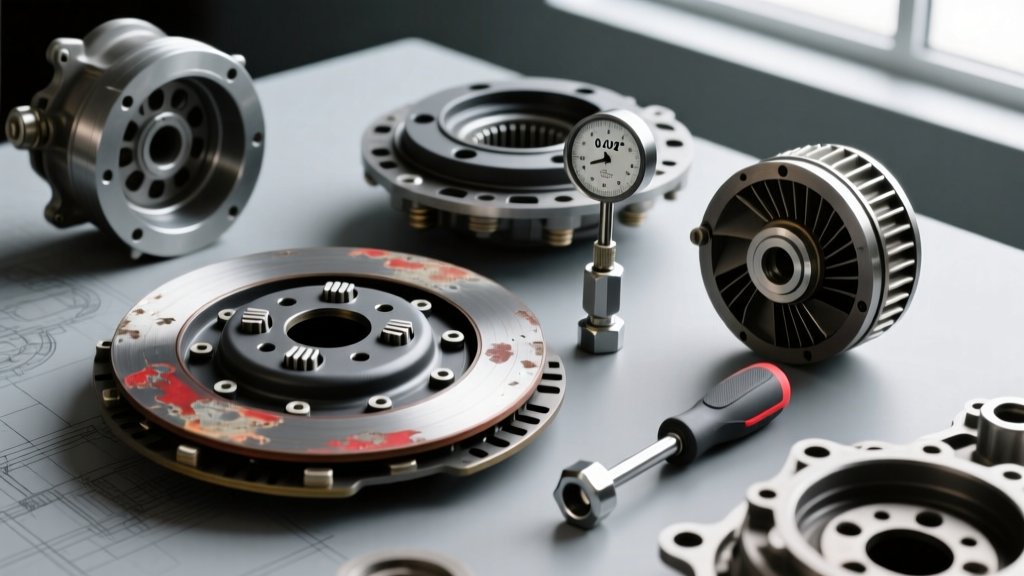
The most overlooked cause of clutch chatter in F-150 manual swaps is bellhousing runout. If the transmission input shaft is not perfectly concentric with the engine crankshaft, the clutch disc will bind on the splines during engagement, causing a violent shudder. According to Tremec Engineering guidelines, maximum allowable bellhousing runout is 0.005 inches. Use a magnetic base dial indicator on the bellhousing bore. If runout exceeds 0.005", you must install offset dowel pins (available in 0.007", 0.014", and 0.021" offsets) to correct the alignment.
2. Flywheel Face Runout and Material
A warped flywheel will cause the pressure plate diaphragm spring to pulse, translating into chassis chatter. Measure the flywheel friction surface with a dial indicator; maximum runout must not exceed 0.003 inches. For performance applications, upgrading from a standard cast-iron flywheel to a billet steel or nodular iron flywheel (like the McLeod Part #463103) provides superior thermal mass and resists the warping that leads to stick-slip chatter.
Expert Insight: Never attempt to machine a dual-mass flywheel (DMF) or a maraging steel performance flywheel on a standard automotive lathe. The metallurgical stress of improper cutting tools will induce micro-fractures, leading to catastrophic failure under high-boost EcoBoost or supercharged Coyote loads.
Performance Upgrade Path: Eliminating Chatter at 600+ HP
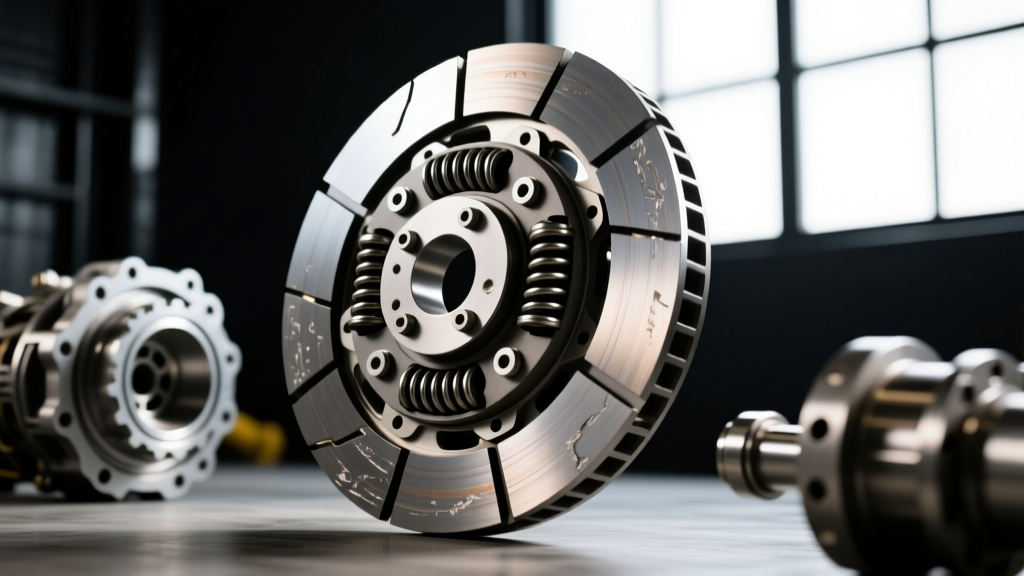
When upgrading an F-150 for drag, off-road, or heavy-towing performance, selecting the correct clutch architecture is vital to eliminating chatter. Single-disc ceramic clutches are notorious for aggressive engagement and severe chatter in street-driven trucks. For a performance street/strip F-150, a twin-disc clutch with organic/ceramic hybrid friction materials and built-in dampening springs is the definitive solution.
| Clutch System | Part Number | Torque Capacity | Chatter Propensity | Est. Price (2026) |
|---|---|---|---|---|
| OEM Ford Single Disc (Organic) | Various (OEM) | ~450 lb-ft | Low (until worn) | $250 - $350 |
| Centerforce DYAD DS (Twin-Disc) | 015355 | ~900 lb-ft | Very Low (Patented damping) | $1,150 - $1,250 |
| McLeod RXT Twin-Disc (Ceramic/Organic) | 691103 | ~1,000 lb-ft | Low-Medium (Aggressive bite) | $950 - $1,100 |
| RAM 900 Series (Triple-Disc) | 95-1000N | 1,200+ lb-ft | Medium (Strictly drag/race) | $1,600 - $1,800 |
For a street-driven F-150 producing 500-800 HP, the McLeod RXT or Centerforce DYAD DS offer the best compromise. The Centerforce utilizes patented centrifugal weights and internal dampening springs specifically engineered to absorb the harmonic frequencies that cause stick-slip chatter, making it a top-tier recommendation for heavy trucks.
Torque Specs & Installation Protocol (5.0L Coyote / MT82)
Proper fastener torque is critical to maintaining the clamping load and preventing pressure plate warpage, which directly contributes to vibration. Always use a calibrated torque wrench and follow the manufacturer's star-pattern sequence.
Critical Fastener Torques
- Flywheel to Crankshaft (5.0L Coyote): 59 lb-ft (80 Nm). Note: Always use new OEM Ford stretch bolts or ARP 254-2802 flywheel bolts (torqued to 70-80 lb-ft with ARP Ultra-Torque lube).
- Pressure Plate to Flywheel: 25-30 lb-ft (depending on manufacturer spec), tightened in a sequential star pattern to ensure even diaphragm spring loading.
- MT82 / Magnum Bellhousing to Engine Block: 35-40 lb-ft. Ensure the two alignment dowels are fully seated and undamaged before tightening.
- Driveshaft Flange to Pinion: 70-85 lb-ft. (A loose driveshaft flange can mimic clutch chatter under load; always verify driveline U-joint and flange torque during reassembly).
Final Verification: The Road Test
After reinstalling the transmission—utilizing your Ford F150 fan clutch removal tool to reassemble the front cooling accessories without damaging the water pump—perform a calibrated road test. Find a smooth, incline road surface. Engage the clutch in 2nd gear at exactly 1,500 RPM under moderate throttle (approx. 15-20% TPS).
If the chassis shudders violently, re-verify your bellhousing runout and check for degraded engine or transmission mounts (polyurethane mounts can transfer high-frequency gear rattle into the cabin, which is often mistaken for clutch chatter). If engagement is smooth and progressive, your friction material choice and geometric alignments are correctly matched to your F-150's power output.