The Complexity Gap: Transmission Clutches vs. AC Compressors
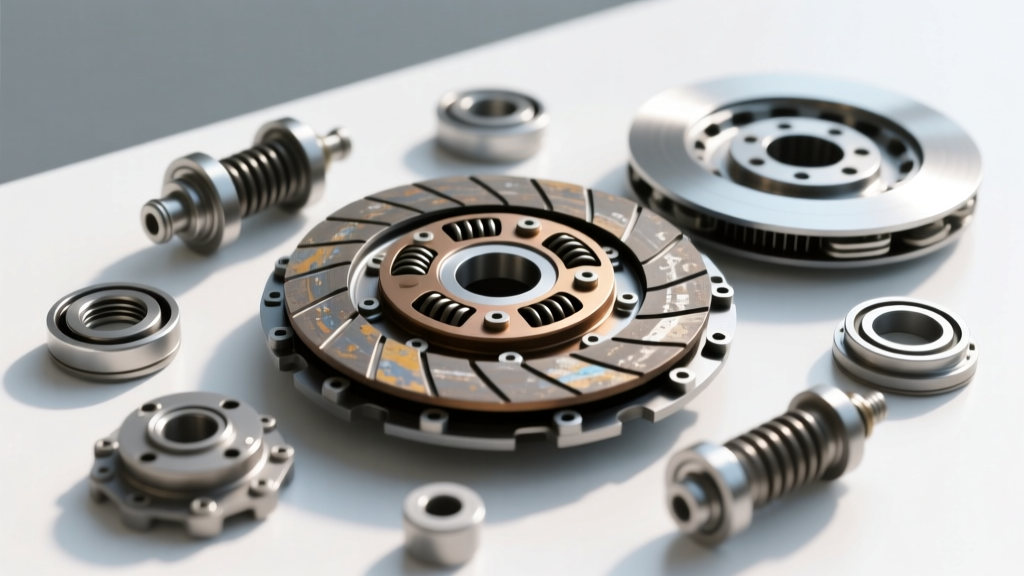
When a driver complains of a noisy or malfunctioning clutch pedal, the uninitiated might incorrectly equate the repair complexity to a standard car AC clutch repair. Replacing an air conditioning compressor clutch typically involves removing a serpentine belt, unbolting the magnetic pulley assembly, and swapping an electromagnetic coil—a straightforward job requiring basic hand tools and minimal drivetrain knowledge. In stark contrast, diagnosing and repairing manual transmission clutch fork and pivot issues demands dropping the entire gearbox, measuring tolerances to the thousandth of an inch, and understanding complex mechanical leverage systems.
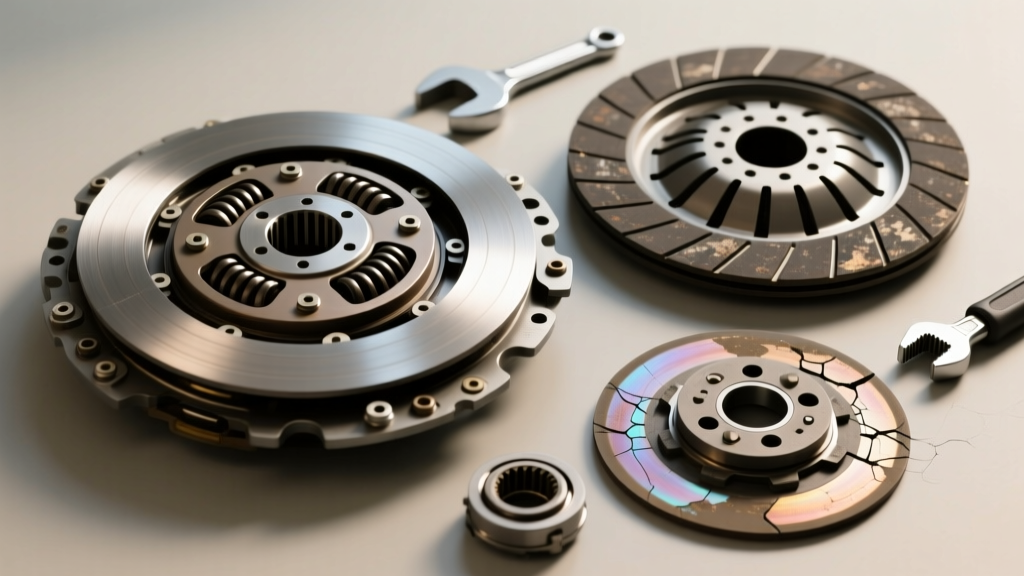
As automotive transmission specialists, we frequently see misdiagnosed clutch chatter and pedal stiffness attributed to the pressure plate or friction disc, when the true culprit lies in the release mechanism's fulcrum. The clutch fork (or release lever) and its pivot ball (or cross-shaft) endure immense shear stress and friction. When these components wear, they alter the geometry of the entire clutch actuation system, leading to cascading failures that can destroy a transmission input shaft if left unchecked.
Anatomy of the Release Mechanism and Failure Modes
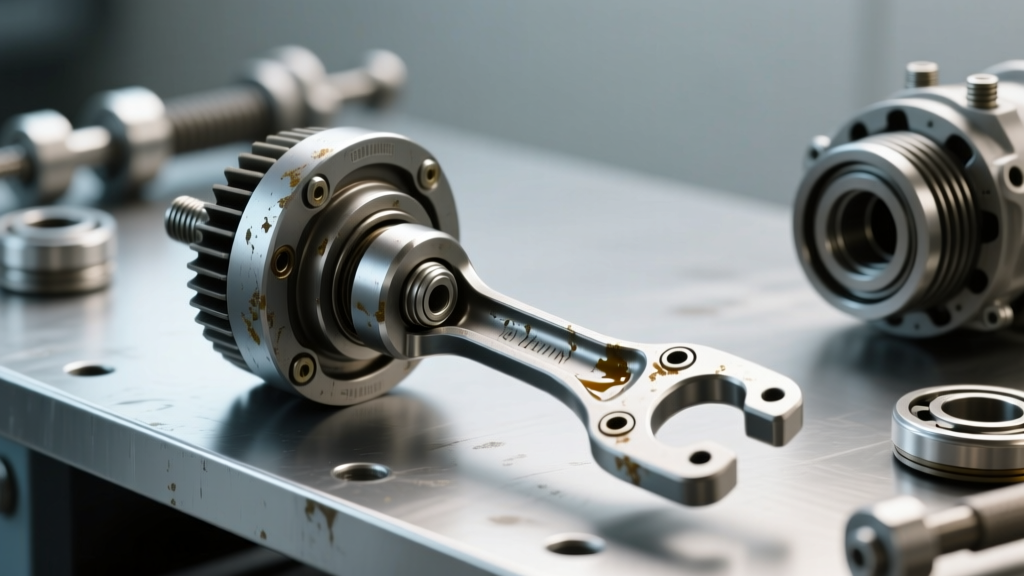
To accurately diagnose clutch fork and pivot issues, you must understand the mechanical interface. In modern manual transmissions like the Tremec T56 Magnum or the Ford MT-82, the hydraulic throwout bearing (or mechanical release bearing) pushes against the clutch fork. The fork pivots on a hardened steel ball stud threaded into the bellhousing. The fork's opposing end pushes the release bearing against the pressure plate's diaphragm spring fingers.
Common Metallurgical and Mechanical Failures
- Pivot Ball Grooving: The spherical surface of the pivot ball develops a wear trench from the constant oscillation of the fork's pivot cup. This changes the fulcrum point, reducing the mechanical advantage and causing a stiff pedal.
- Fork Pad Attrition: The pads on the fork that contact the release bearing wear down. If they wear past minimum thickness, the bearing can bind or tilt, causing asymmetric pressure plate release and severe gear rattle.
- Pivot Cup Cracking: Stamped steel forks or cast aluminum forks with steel inserts can develop micro-fractures in the pivot cup, leading to sudden catastrophic disengagement failure.
- Retainer Clip Fatigue: The spring clips holding the fork to the pivot ball lose tension over thousands of heat cycles, allowing the fork to pop off the stud during aggressive shifts.
Diagnostic Matrix: Identifying Fork and Pivot Symptoms
Because the bellhousing encloses the fork and pivot assembly, visual inspection requires transmission removal. However, expert technicians can isolate clutch fork and pivot issues from the driver's seat using the following diagnostic matrix before tearing down the drivetrain.
| Driver Symptom | Probable Fork/Pivot Fault | Verification Method (Pre-Teardown) |
|---|---|---|
| Squeaking or chirping at idle that disappears when pedal is depressed | Dry or grooved pivot ball; worn pivot cup lacking high-temp grease | Use a mechanic's stethoscope on the bellhousing inspection cover while engine idles |
| Progressively stiff clutch pedal with reduced travel | Pivot ball wear trench altering fulcrum geometry; binding fork pads | Measure pedal effort with a scale; compare to OEM baseline (typically 25-35 lbs) |
| Clutch chatter only during initial engagement in 1st gear | Asymmetric release bearing tilt due to uneven fork pad wear | Inspect release bearing for angled wear patterns post-removal |
| Grinding when shifting into reverse (incomplete disengagement) | Fork flexing or pivot stud backing out of bellhousing threads | Check for loose pivot stud play via inspection cover; verify hydraulic stroke |
The Cascading Danger of Ignoring Pivot Wear
Unlike a car AC clutch repair, where a failed component simply stops cooling the cabin, a failed transmission pivot point can cause thousands of dollars in secondary damage. When a pivot ball wears down by even 0.020 inches, the clutch fork's angle of attack changes. This forces the throwout bearing to ride at a slight tilt against the transmission input shaft bearing retainer collar (the quill).
Over time, this tilted, high-RPM friction gouges deep grooves into the aluminum or steel retainer collar. Once the collar is scored, the release bearing binds, preventing smooth clutch engagement. In extreme cases, the binding bearing can overheat, melt its internal race, and seize to the input shaft, requiring a complete transmission teardown and replacement of the main shaft and front bearing. According to Tremec Transmission Service Guidelines, replacing a scored input shaft retainer often necessitates partial gearbox disassembly to ensure no metal shavings have contaminated the gear oil.
Precision Measurement and Inspection Protocols
Once the transmission is on the bench, guesswork must be eliminated. Use digital calipers and micrometers to verify the following specifications:
1. Fork Pad Thickness
The contact points where the release bearing rides on the fork are critical. A brand-new OEM Tremec T56 Magnum fork typically measures between 0.245" and 0.255" at the pads. Service Limit: If either pad measures below 0.150", the fork must be replaced. Do not attempt to weld and resurface these pads, as the localized heat will warp the fork's stamped geometry, guaranteeing future binding.
2. Pivot Ball Spherical Diameter
Measure the pivot ball across multiple axes. A standard GM/Ford 1.000" pivot ball should not show more than 0.005" of variance across its surface. If a wear groove is visible to the naked eye or measurable with a depth micrometer, the stud is scrap. Furthermore, inspect the threads at the base of the stud for stretching or bellhousing thread pull-out, a common issue in high-horsepower drag applications.
3. Input Shaft Retainer Collar
Run your fingernail across the bearing retainer collar. If you feel any ridges or grooves where the throwout bearing slides, the collar must be replaced. A smooth, polished surface is mandatory for proper clutch fork actuation.
Expert Torque Specifications and Assembly Best Practices
Proper installation of the pivot stud and fork assembly is just as critical as the diagnosis. Relying on 'feel' when tightening the pivot ball into the bellhousing is a hallmark of amateur mechanics. Below are the OEM torque specifications and assembly protocols for popular performance manual transmissions, sourced from Ford Performance Parts and Tremec engineering bulletins:
- Tremec T56 Magnum / Magnum-F: Pivot ball stud torque is 28-32 lb-ft. Apply a medium-strength threadlocker (such as Loctite 243) to the stud threads to prevent backing out due to bellhousing harmonic vibrations. Pack the fork pivot cup with high-temperature molybdenum disulfide (moly) grease, not standard chassis lube.
- Ford MT-82 (Mustang GT / Shelby): Pivot stud torque is 23-27 lb-ft. The MT-82 uses a specific stamped steel fork (Part # JR3Z-7A548-A). Ensure the factory spring retainer clip is fully seated over the pivot ball groove. If the clip shows any deformation, replace it with a new OEM clip (Part # W715888-S437).
- GM LS-Series (T56 / TR6060): Pivot ball torque is 30 lb-ft. When installing the fork, verify that the release bearing snaps securely into the fork fingers. A common error is pinching the bearing retainer tabs, which causes the bearing to rattle at idle.
2026 Repair Economics: What to Expect
Because addressing clutch fork and pivot issues requires separating the transmission from the engine block, the labor cost dwarfs the parts cost. As of 2026, independent transmission shop labor rates average between $140 and $190 per hour. Dropping and reinstalling a manual transmission typically bills out at 5.0 to 7.0 hours, depending on the vehicle's subframe and exhaust configuration.
- Parts Cost: OEM Clutch Fork ($45 - $130), Hardened Pivot Ball Stud ($15 - $40), Retainer Clips and Hardware ($10 - $25).
- Labor Cost: $700 - $1,330 (R&R Transmission).
- Total Repair Estimate: $755 - $1,495.
While a car AC clutch repair might only set a customer back $250 to $400 and a few hours of shop time, the manual transmission release mechanism is a foundational drivetrain component. Cutting corners by reusing a grooved pivot ball or failing to torque the stud to spec will inevitably result in a comeback, a destroyed throwout bearing, and a highly dissatisfied customer. Always mandate a complete fork, pivot, and retainer inspection every time the bellhousing is opened.