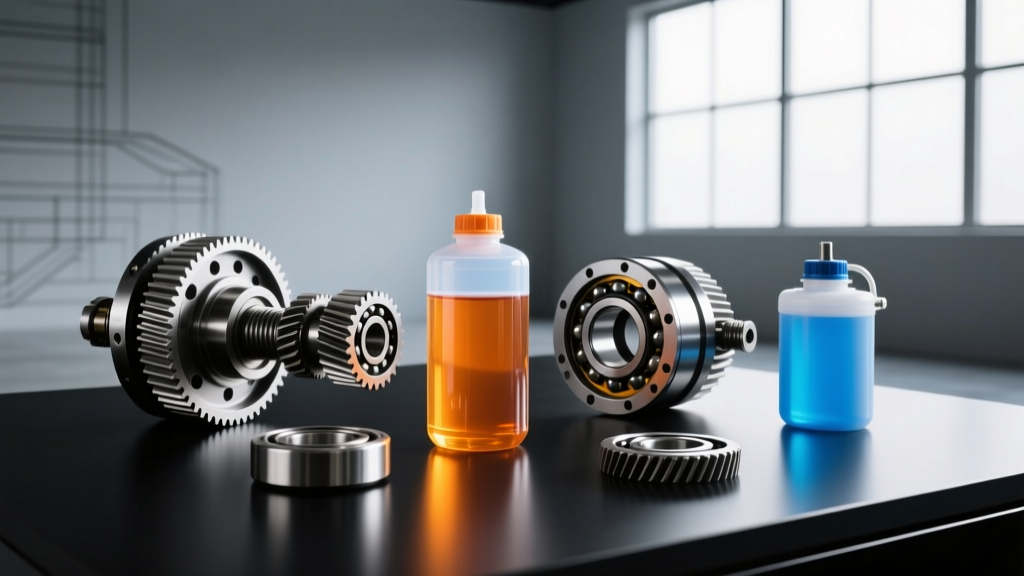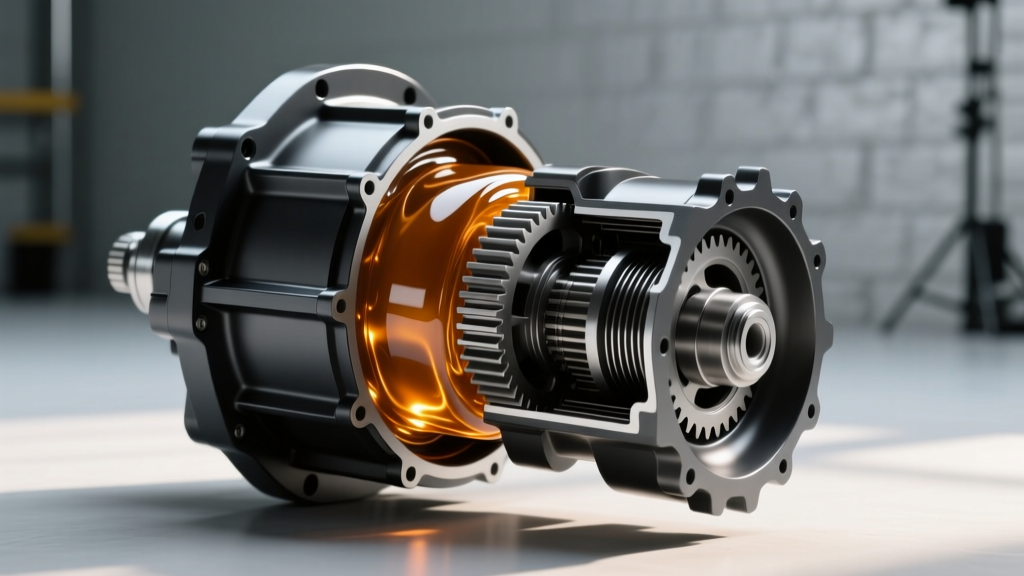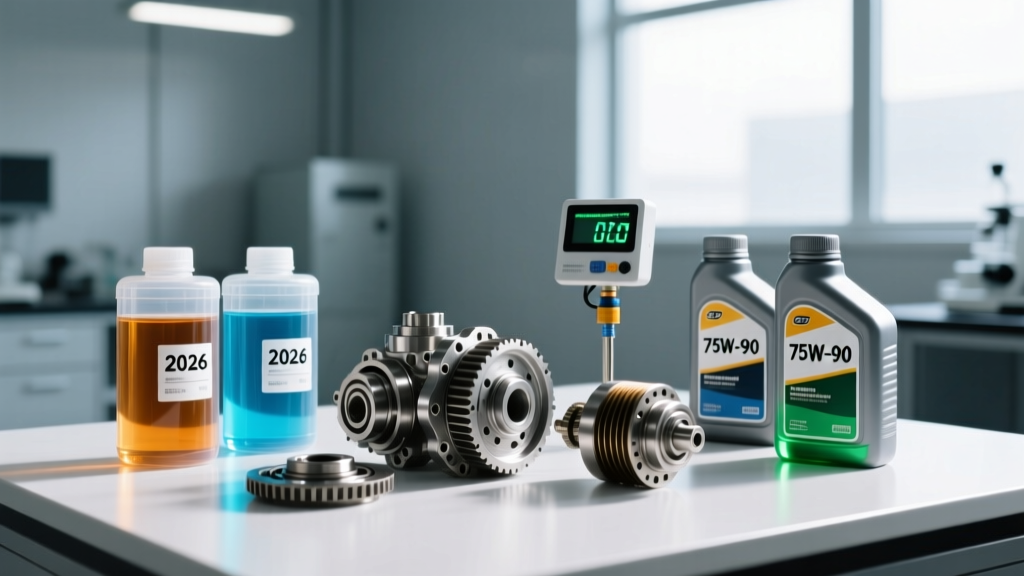
The landscape of automotive drivetrain maintenance has fractured into two distinct eras: the legacy internal combustion engine (ICE) era, defined by heavy, sulfur-rich hypoid gear oils, and the modern electric vehicle (EV) era, characterized by ultra-low viscosity, dielectric e-fluids. As we navigate the 2026 automotive market, understanding differential fluid types and specifications is no longer just about choosing the right viscosity; it is about understanding the microscopic tolerances of modern e-axles.
For DIY mechanics and fleet technicians alike, selecting the correct differential fluid requires a deep dive into additive chemistry, API classifications, and OEM dielectric requirements. Furthermore, as manufacturers push for longer service intervals and higher efficiency, the factory assembly process has become incredibly sensitive to micro-contamination. This has led to the integration of advanced manufacturing HVAC protocols—specifically clean room differential pressure monitoring—to ensure that the fluid entering your differential is entirely free of airborne particulates before the housing is sealed.
The Great Divide: Traditional Gear Oils vs. EV e-Fluids
Historically, differential fluid specifications were governed by the API (American Petroleum Institute) GL-5 standard, designed to protect the extreme sliding friction of hypoid ring and pinion gears. However, modern EV reduction gearboxes and integrated e-axles operate under entirely different physical and electrical constraints.
| Fluid Category | Typical Viscosity (SAE) | Primary Specification | Base Chemistry | Target Application |
|---|---|---|---|---|
| Conventional Hypoid | 75W-90 / 80W-90 | API GL-5 / MT-1 | PAO / Ester with Sulfur-Phosphorus EP | ICE Trucks, Off-Road, Dana 44/60 |
| Modern Synthetic | 75W-80 / 75W-85 | API GL-4 / GL-5 | Group III/IV Synthetic | AWD Couplings, Transaxles |
| EV Integrated e-Fluid | 70W-75 / ATF Equivalent | JASO GLV-1 / OEM Dielectric | Highly Refined Group IV with Copper Corrosion Inhibitors | Tesla, Hyundai E-GMP, Rivian e-Axles |
In traditional differentials, Extreme Pressure (EP) additives like zinc dialkyldithiophosphate (ZDDP) and sulfur-phosphorus compounds create a sacrificial film on the gear teeth to prevent welding under high torque. However, in EV drivetrains where the differential is often integrated with the electric motor (sharing the same fluid bath), these traditional EP additives are highly corrosive to the copper windings of the motor stator. Therefore, 2026 EV e-fluids rely on advanced, non-corrosive friction modifiers and possess strict dielectric breakdown voltage specifications to prevent electrical arcing.
Micro-Contamination and Clean Room Differential Pressure Monitoring
Why does the factory environment matter to the end-user? Because the failure rate of early-production EV reduction gears was often traced back to micro-silica and metallic dust ingestion during the assembly and fluid-fill process. Modern e-axle bearings operate with clearances measured in single-digit microns. A single particle of airborne factory dust can cause spalling on the bearing race, leading to catastrophic high-frequency whine and eventual seizure at 80,000 RPM.
To combat this, top-tier OEM assembly plants (such as Hyundai's Metaplant and Tesla's Giga facilities) now perform the final differential assembly and fluid filling in ISO Class 7 or Class 8 controlled environments. Maintaining these environments requires rigorous ISO 14644 cleanroom standards, which rely heavily on clean room differential pressure monitoring.
How the Pressure Cascade Protects Your Drivetrain
Clean room differential pressure monitoring involves using high-accuracy differential pressure transmitters (such as Dwyer Magnesense or Setra Model 264 sensors) to measure the air pressure inside the assembly room relative to the surrounding factory floor.
- Positive Pressure Cascade: The clean room is maintained at a positive pressure differential of +15 to +30 Pascals (Pa) compared to adjacent spaces.
- Contamination Exclusion: This positive pressure ensures that when doors open or seals shift, air flows out of the clean room, preventing unfiltered, particulate-laden factory air from rushing in.
- Interlock Systems: If the clean room differential pressure monitoring system detects a drop below the 15 Pa threshold (due to a clogged HEPA filter or door breach), the automated fluid-fill robots are instantly halted. The differential housings remain sealed until the pressure cascade is restored, guaranteeing that no contaminants are trapped inside the gearbox when the e-fluid is injected.
This meticulous manufacturing process means that the fluid inside a brand-new 2026 EV e-axle is surgically clean. As a consumer or technician, opening that fill plug in a dusty, uncontrolled home garage introduces a level of contamination the factory spent millions of dollars to prevent.
Buyer's Guide: Selecting the Right Differential Fluid
When it is time to service your differential, matching the fluid to the specific metallurgy and electrical environment of your drivetrain is critical. Here is a breakdown of the top-tier fluids available on the market today.
1. Conventional & Heavy-Duty ICE Applications
For solid-axle trucks, off-road rigs, and traditional ICE vehicles, you need high film strength and extreme shear stability.
- Amsoil Severe Gear 75W-90 (Part # SVGQT): Priced around $13.50 per quart. This is a synthetic PAO-based fluid loaded with robust sulfur-phosphorus EP additives. It exceeds API GL-5 and is ideal for Dana 44, Dana 60, and Ford 10.5-inch axles subjected to heavy towing or rock crawling.
- Mobil 1 Synthetic Gear Lubricant 75W-90 (Part # 104361): Priced around $10.00 per quart. A staple for OEM factory fills in performance ICE vehicles (like the Corvette and Mustang). It offers excellent low-temperature flow for cold climates while maintaining the API GL-5 protection required for hypoid gear sliding.
2. Modern EV & Hybrid e-Axle Applications
If you are servicing an integrated EV drive unit, using GL-5 gear oil will destroy the motor windings and degrade efficiency. You must use a dedicated, low-viscosity, dielectric e-fluid.
- Castrol ON EV Drivetrain Fluid: Specifically engineered for thermal management and electrical insulation. It provides the necessary copper corrosion protection (ASTM D130) and ensures the dielectric strength remains intact even as the fluid shears through the reduction gears. Expect to pay $18.00 - $22.00 per liter.
- Fuchs Titan Gear E-Drive: An OEM-approved fluid for several European EV platforms. It utilizes a specialized ester base that aids in heat dissipation from the e-motor stator directly into the fluid, acting as a liquid coolant as well as a lubricant.
Service Intervals, Capacities, and Torque Specifications
A major point of confusion in the 2026 aftermarket is the concept of "lifetime" fluids. While many OEMs claim their differential fluid is filled for life, independent tribology labs recommend a drain and fill interval based on shear degradation and thermal cycling.
Recommended Service Intervals
- Heavy-Duty / Towing (ICE): Every 30,000 to 50,000 miles. High heat breaks down the EP additive packages, leading to gear wear.
- Standard ICE Commuter: Every 60,000 to 100,000 miles.
- EV Integrated e-Axles: Every 60,000 miles. While EVs don't generate the same exhaust-heat soak, the high-RPM shearing of the reduction gears (often spinning at 15,000+ RPM) permanently degrades the viscosity index improvers in the e-fluid, reducing its ability to cool the motor.
Critical Torque Specs & Fill Data
Over-torquing aluminum differential housings is a common DIY failure. Always use a calibrated torque wrench and replace crush washers or apply the correct RTV sealant.
- Tesla Model 3 / Y Rear Drive Unit: Capacity is approximately 1.6 Liters. Fill plug torque spec is 28 Nm (21 lb-ft). Note: Tesla requires a specific bead of Loctite 5900 or equivalent flange sealant on the fill plug threads to prevent weeping.
- Ford 8.8 IRS (Mustang / Explorer): Capacity is roughly 1.1 Quarts. Fill/Drain plug torque is 35 Nm (26 lb-ft). Requires 75W-85 Synthetic Gear Oil (API GL-5).
- Dana 44 HD (Jeep Wrangler / Gladiator): Capacity is 2.0 Quarts. Fill plug torque is 45 Nm (33 lb-ft). If equipped with an electronic locker, ensure the fluid level reaches the bottom of the fill hole, but do not overfill, as foaming can cause the locker solenoid to overheat.
Final Thoughts on Drivetrain Fluid Technology
The evolution from thick, sulfur-smelling 80W-90 gear oils to highly refined, dielectric EV e-fluids represents one of the most significant shifts in automotive tribology. As a technician or enthusiast, understanding these specifications ensures you protect your drivetrain from premature wear and electrical degradation. Furthermore, recognizing the immense engineering hurdles OEMs overcome—utilizing technologies like clean room differential pressure monitoring to guarantee factory-fill purity—should inspire a commitment to cleanliness and precision every time you crack open a differential fill plug in your own garage.
Always consult your vehicle's specific 2026 service manual for the exact OEM part number and dielectric requirements before performing any drivetrain service.