The Financial Reality of Electronic Locker Maintenance
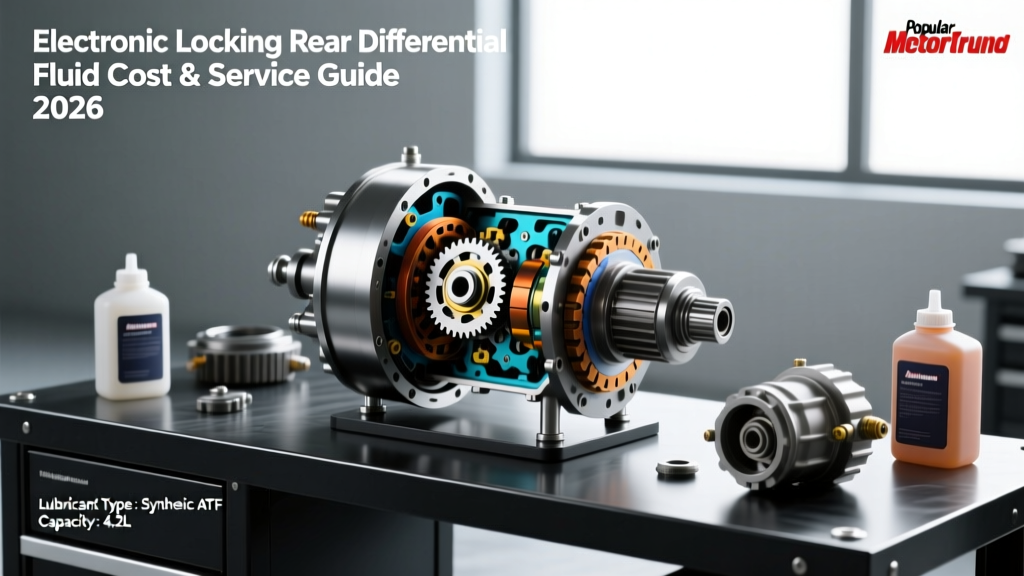
When outfitting a truck or SUV for severe off-road duty or heavy towing, an electronic locking rear differential is a game-changer. Unlike mechanical limited-slip differentials (LSDs) that rely on clutch packs, electronic lockers—such as the Ford E-Locker found in the F-150 Tremor and Super Duty, or the aftermarket Eaton eLocker—use an electromagnetic actuator to engage a dog clutch, providing 100% axle lockup at the flip of a switch. However, this advanced electromechanical integration makes preventive maintenance non-negotiable. Neglecting differential fluid service doesn't just wear your ring and pinion gears; it can destroy the sensitive electronic actuator housed within the axle assembly.
In this 2026 preventive maintenance guide, we break down the exact costs of servicing an electronic locking rear differential, compare dealership versus DIY pricing, and outline the specific fluid requirements needed to protect both the hypoid gears and the electromagnetic engagement system.
2026 Service Pricing Breakdown: Dealership vs. Independent vs. DIY
The cost of a rear differential fluid change has risen over the last few years, primarily due to the increased price of full-synthetic 75W-140 and 75W-90 gear oils required for modern high-torque axles. Furthermore, electronic lockers often reside in larger, deep-sump axle housings (like the Dana 60 or Ford 10.5-inch Sterling), which require higher fluid volumes.
| Service Route | Estimated Cost (2026) | What is Included | Pros & Cons |
|---|---|---|---|
| OEM Dealership | $350 - $480 | OEM Fluid, New Gasket/RTV, Multi-point Inspection, Software Reset (if required) | Pros: Factory specs guaranteed. Cons: Highest labor rate, often overfills or underfills. |
| Independent 4x4 Shop | $220 - $320 | Premium Synthetic (Amsoil/Red Line), Gasket, Cover Cleaning, Magnet Inspection | Pros: Better attention to detail, off-road expertise. Cons: Requires booking in advance. |
| DIY (Driveway) | $110 - $160 | Fluid of choice, RTV/Gasket, Brake Cleaner, Basic Hand Tools | Pros: Cheapest, total quality control. Cons: Messy, requires proper torque wrenches. |
For a DIY service on a Ford Sterling 10.5-inch axle with an electronic locker, expect to purchase roughly 3.5 to 4 quarts of Motorcraft SAE 75W-140 Synthetic Rear Axle Lubricant. At approximately $28 per quart in 2026, the fluid alone will cost over $100. Add a $15 tube of high-temp RTV silicone or a $25 Lube-Locker reusable gasket, and your baseline material cost is set.
The Friction Modifier Myth for Electronic Lockers
One of the most common and costly mistakes made during differential service is the improper use of friction modifiers. If you are servicing a traditional clutch-type limited-slip differential (like the Ford 8.8-inch Trac-Lok), a friction modifier additive is mandatory to prevent clutch chatter.
Electronic lockers do not use clutch packs for locking. Systems like the Eaton eLocker and the OEM Ford E-Locker rely on electromagnetic coils and heavy-duty steel dog clutches. Adding a limited-slip friction modifier to an electronic locking rear differential is entirely unnecessary and can actually be detrimental. The modified fluid can become too slippery, causing the dog clutch engagement mechanism to slip or delay engagement when the electromagnetic coil is energized. Always stick to a high-quality, straight GL-5 synthetic gear oil without limited-slip additives unless explicitly stated otherwise in your specific OEM service manual. For deeper technical insights on locker mechanisms, refer to the Eaton Automotive Differentials Catalog.
Axle Platform Capacities and OEM Fluid Equivalents
Knowing your exact axle platform is critical for purchasing the right amount of fluid. Overfilling can cause gear oil to blow past the axle seals due to thermal expansion, while underfilling will starve the pinion bearing and the electronic actuator housing.
| Axle Platform | Common Vehicles | Fluid Capacity | Recommended Viscosity & OEM Part |
|---|---|---|---|
| Ford 10.5" Sterling | F-150 Tremor, Raptor, Super Duty (E-Locker) | 3.5 - 3.8 Quarts | 75W-140 Synthetic (Motorcraft XL-14) |
| Dana 60 (Eaton eLocker) | Ram Power Wagon, GMC Sierra AT4X, Aftermarket | 3.0 - 4.0 Quarts | 75W-90 or 75W-140 GL-5 (Amsoil Severe Gear) |
| Dana 44 (Eaton eLocker) | Jeep Wrangler Rubicon (Front/Rear), Bronco | 1.5 - 2.0 Quarts | 75W-85 or 75W-90 GL-5 (Mopar 68218655AB) |
Preventive Maintenance Procedure: Torque Specs and Drain Techniques
When servicing an electronic locking rear differential, the physical procedure requires more care than a standard open differential. The internal wiring harness that feeds the electromagnetic actuator often routes through the differential cover or the upper axle tube. Aggressive scraping with a metal putty knife can easily sever the actuator wiring, turning a $150 fluid change into a $1,200 electronic locker replacement job.
The Cleaning and RTV Protocol
Instead of metal scrapers, use a plastic gasket scraper and a generous amount of brake cleaner to dissolve the old RTV sealant. Once the cover is off, inspect the internal wiring loom for any signs of chafing against the ring gear. Clean the differential cover thoroughly, paying special attention to the internal magnet. In electronic lockers, the magnet is your first line of defense against catastrophic failure; it captures metallic particulate before it can circulate and short out the electromagnetic engagement solenoid.
When reinstalling the cover, apply a continuous 3mm bead of high-temp RTV silicone (such as Permatex Ultra Black). Allow it to cure for at least one hour before filling with fluid to prevent the silicone from being pushed into the oil galleries.
Precise Torque Specifications
Stripping the fill or drain plug on a cast-iron or aluminum differential housing is a common DIY disaster. Use a calibrated torque wrench for all fasteners:
- Ford Sterling 10.5" Cover Bolts: 33 Nm (24 lb-ft)
- Ford Sterling 10.5" Fill Plug: 47 Nm (35 lb-ft)
- Dana 60 Cover Bolts: 27 Nm (20 lb-ft)
- Dana 44 Fill/Drain Plugs: 33 Nm (24 lb-ft)
Always remove the fill plug before draining the fluid or removing the cover. If the fill plug is seized or stripped, you do not want to be left with an empty differential and no way to refill it. For comprehensive OEM maintenance schedules and torque charts, consult the Ford Official Maintenance Guide.
Diagnosing Fluid Degradation in Electromagnetic Systems
How do you know if your electronic locker fluid has degraded to the point of causing electrical issues? As hypoid gears wear, they shed microscopic iron particles. In a standard differential, this simply turns the oil black. In an electronic locking rear differential, this metallic sludge can become suspended in the gear oil.
If the fluid becomes heavily saturated with conductive metallic particles, it can create parasitic electrical paths between the electromagnetic coil terminals and the grounded axle housing. This results in a 'voltage drop' scenario where the locker switch on your dashboard illuminates, but the internal coil doesn't receive the full 12V required to pull the dog clutch into engagement. If you drain your differential and the fluid looks like metallic glitter paint, it is highly recommended to flush the housing with a quart of cheap GL-5 oil before filling with your premium synthetic, ensuring the electromagnetic sensor area is completely clear of conductive debris.
When to Service: Mileage Intervals and Severe Duty Adjustments
Most OEMs list the rear differential fluid as a 'lifetime' fill under normal driving conditions. However, 'lifetime' is a relative term that rarely extends past 100,000 miles before severe gear wear begins. For preventive maintenance, follow this schedule:
- Normal Highway/Comuting: Every 60,000 to 80,000 miles.
- Towing/Heavy Payload: Every 30,000 to 50,000 miles.
- Off-Road/Water Fording: Immediately after any water submersion, or every 15,000 miles. Water ingress will rapidly emulsify the gear oil, destroying the dielectric properties of the fluid and instantly corroding the electronic locker's internal copper windings.
By adhering to these precise fluid specifications, torque settings, and service intervals, you ensure that your electronic locking rear differential remains a reliable traction-aiding asset rather than a stranded liability. Proper maintenance is the cheapest insurance policy your drivetrain can have.