The Diagnostic Dilemma: Main Clutch vs. Auxiliary PTO
When a heavy-duty truck operator reports a whirring, grinding, or squealing noise that changes in pitch upon clutch pedal depression, the immediate suspect in a manual transmission rig is the throw-out bearing (release bearing). However, in modern commercial vehicles like the Peterbilt 389 or Kenworth W900 equipped with auxiliary power take-off (PTO) systems, the diagnostic path is rarely straightforward. Auxiliary drivetrain components, particularly electric-over-air PTO clutches, can generate acoustic signatures that perfectly mimic a failing main transmission release bearing. Misdiagnosing this issue can lead to an unnecessary transmission drop, costing upwards of $2,500 in wasted labor. This model-specific repair guide bridges the gap between heavy-duty manual transmission diagnostics and auxiliary drive isolation, utilizing the electric pto clutch diagram to pinpoint the exact source of drivetrain noise.
Isolating the Circuit: Using the Electric PTO Clutch Diagram
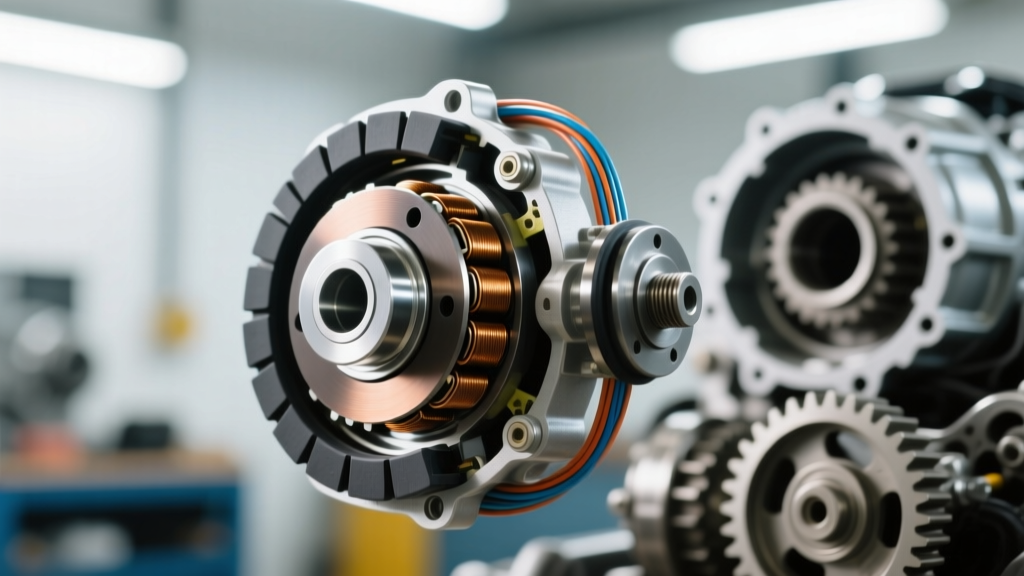
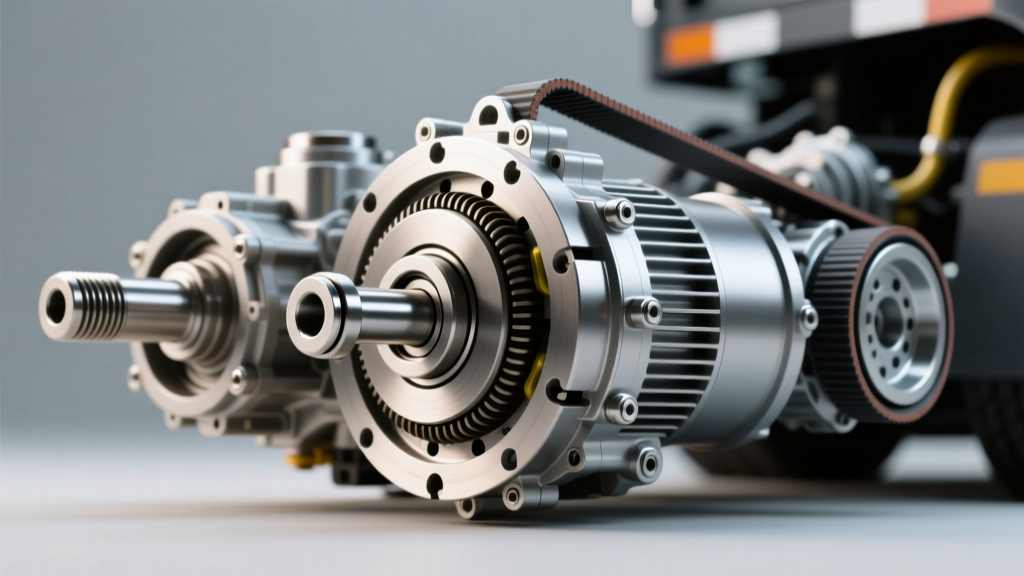
Before unbolting the SAE #1 bellhousing, a senior technician must rule out auxiliary drive interference. Many heavy-duty applications utilize a Chelsea or Muncie PTO with an electric-over-air engagement clutch. If the PTO clutch solenoid is receiving a parasitic ground or a failing relay is causing partial engagement, the internal PTO throw-out bearing will drag against the PTO clutch plate, creating a high-pitched whine that travels up the driveline and resonates through the transmission bellhousing.
Step-by-Step Electrical Isolation
- Locate the Schematic: Pull the OEM wiring schematic for the auxiliary PTO circuit. You will need the specific electric pto clutch diagram for your chassis (e.g., PACCAR MX-13 PTO integration).
- Identify the Solenoid Relay: Trace the 12V trigger wire from the dashboard PTO switch to the air solenoid pack mounted on the frame rail.
- Perform the Parasitic Draw Test: With the engine off and the key in the 'ON' position (PTO switch disengaged), use a multimeter to probe the PTO clutch solenoid connector. Any voltage reading above 0.5V indicates a short or a failing dash switch that is partially engaging the PTO clutch.
- Physical Disconnect: Disconnect the main air supply to the PTO unit and unplug the electrical harness. Start the engine and depress the clutch pedal. If the noise disappears, the fault lies within the PTO assembly, not the main Eaton Fuller transmission.
For deeper electrical tracing, referencing Chelsea PTO technical resources provides the exact pinouts and resistance values for standard 12V/24V PTO engagement solenoids, which typically read between 12 and 18 ohms when healthy.
Noise Profile Comparison: Throw-Out Bearing vs. PTO vs. Input Shaft
If the electric pto clutch diagram isolation confirms the PTO circuit is completely dormant and mechanically disengaged, the noise is likely originating from the main clutch assembly or the transmission input shaft. Use the table below to differentiate the acoustic signatures.
| Symptom / Condition | Main Throw-Out Bearing (Release) | Electric PTO Clutch Bearing | Transmission Input Shaft Bearing |
|---|---|---|---|
| Clutch Engaged (Pedal Up) | Silent or slight rattle | Silent (if disengaged) | Growling or whining in neutral |
| Clutch Disengaged (Pedal Down) | Loud squeal or grinding | Whirring (if dragging/shorted) | Noise changes pitch or stops |
| Light Pedal Pressure (Free Play) | High-pitched squeak (dry pivot) | No change | No change |
| Location of Vibration | Felt in clutch pedal / firewall | Felt in chassis frame rail | Felt in gear shifter / floor pan |
Anatomy of Failure: Eaton Fuller RTLO-18918B
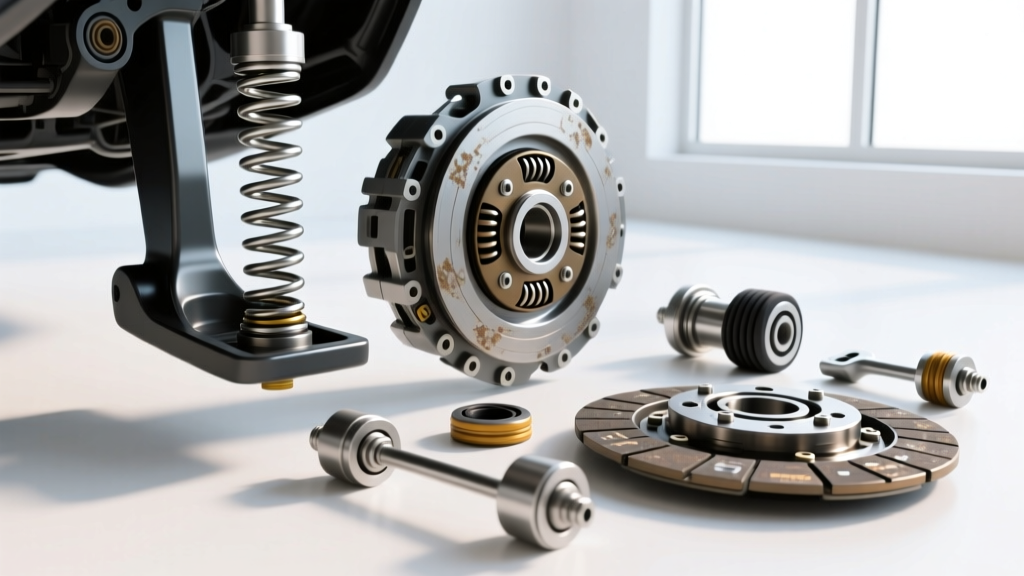
In the heavy-duty sector, the term 'throw-out bearing' encompasses both the release bearing and the clutch brake assembly. The Eaton Fuller RTLO-18918B 18-speed manual transmission relies on a synchronized clutch brake to halt the input shaft's rotation, allowing for smooth gear engagement from a standstill. According to Eaton Fuller manual transmission guidelines, improper clutch pedal adjustment is the leading cause of premature release bearing and clutch brake failure.
Common Failure Modes and Edge Cases
1. Glazed Clutch Brake Friction Material: If the clutch pedal free-travel is set too tight, the clutch brake remains in constant, light contact with the flywheel housing. This generates immense heat, glazing the friction material (Part # K-3358) and causing a severe shudder and grinding noise when the pedal is fully depressed.
2. Pitted Release Bearing Races: The release bearing (Part # K-2939) rides on the transmission input shaft bearing retainer collar. If the collar becomes scored due to lack of high-temperature grease, the bearing will bind, leading to catastrophic failure and potential damage to the clutch fork (Part # K-3431).
3. Broken Clutch Fork Pivot Pins: A worn pivot ball will cause the clutch fork to wobble, resulting in uneven pressure on the release bearing and a rhythmic 'clacking' noise timed with engine RPM.
Model-Specific Repair Guide: Teardown and Specifications
Once the electric pto clutch diagram has ruled out the PTO and acoustic profiling confirms a main throw-out bearing failure, the transmission must be removed. Below are the exact specifications for a Peterbilt 389 equipped with the PACCAR MX-13 and Eaton Fuller RTLO-18918B.
Required Tools and Part Numbers
- Release Bearing Assembly: Eaton K-2939 (Approx. $180 - $240)
- Clutch Brake Assembly: Eaton K-3358 (Approx. $90 - $130)
- Clutch Fork & Pivot Kit: Eaton K-3431 (Approx. $150 - $200)
- Input Shaft Bearing Retainer Sleeve: Check for scoring; replace if grooved depth exceeds 0.015 inches.
- High-Temp Synthetic Grease: NLGI Grade 2 (Molybdenum Disulfide fortified).
Teardown and Torque Specifications
Support the transmission using a heavy-duty air-hydraulic jack. Remove the driveline and air lines. When unbolting the SAE #1 bellhousing, use a 1-1/4 inch crowfoot wrench for the top bolts. The torque specification for the SAE #1 bellhousing to engine block bolts is 150 to 180 lb-ft. Upon reassembly, apply a medium-strength threadlocker to the lower bellhousing bolts to prevent vibration-induced backing out.
Inspect the clutch fork pivot ball. The torque spec for the pivot ball stud into the bellhousing is 45 to 55 lb-ft. If the ball shows any flat spotting, replace it immediately. A worn pivot ball alters the geometry of the clutch fork, reducing the effective squeeze of the clutch brake and accelerating release bearing wear.
Adjusting the Clutch Brake Squeeze (Critical Step)
Reinstalling the throw-out bearing and clutch brake is only half the battle. The Eaton Fuller system requires precise adjustment to function correctly and prevent a recurrence of the noise. The 'squeeze' refers to the distance the clutch brake is compressed between the release bearing and the flywheel housing when the pedal is fully depressed to the floor.
- Set the Free Travel: Adjust the clutch linkage or electronic pedal sensor to achieve exactly 1.5 to 2.0 inches of free play at the clutch pedal pad before the release bearing makes contact with the clutch fingers.
- Measure the Squeeze: With the pedal fully depressed to the floor, measure the gap between the clutch brake friction ring and the transmission bearing retainer. The ideal 'squeeze' gap must be between 1/2 inch and 9/16 inch.
- Verify Internal Clearance: If the squeeze is less than 1/2 inch, the clutch brake will not fully engage, making it difficult to shift into first gear or reverse from a stop. If the squeeze exceeds 9/16 inch, the release bearing will over-travel, potentially damaging the clutch pressure plate fingers and causing the exact whirring noise you are trying to fix.
Cost Analysis and Final Verdict
Diagnosing throw-out bearing noise in a heavy-duty environment requires patience and a systematic approach. By utilizing the electric pto clutch diagram to eliminate auxiliary drive variables, you save the customer from catastrophic misdiagnosis costs. While the parts for an Eaton Fuller release bearing and clutch brake kit are relatively inexpensive (totaling roughly $350 to $550), the labor to drop a heavy-duty manual transmission ranges from $1,800 to $2,800 depending on shop rates and chassis configuration. Always replace the clutch brake, release bearing, and pivot fork as a complete assembly, and strictly adhere to the 1/2 inch squeeze specification to ensure a quiet, durable repair that keeps the rig on the road.