The Core Question: How Does a Double Clutch Gearbox Work?
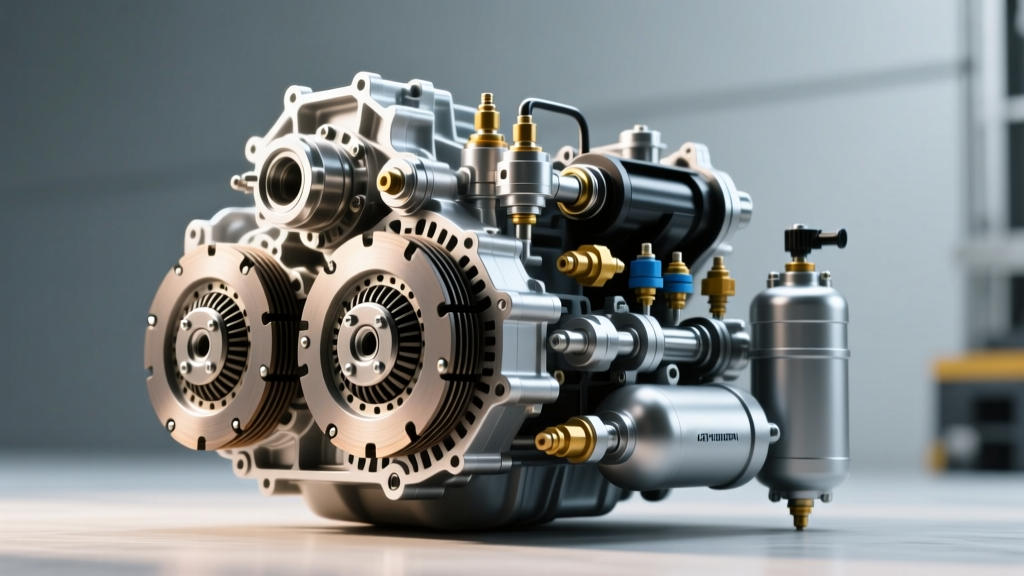
To accurately diagnose premature wear or catastrophic failure in modern dual-clutch transmissions, one must first answer a fundamental engineering question: how does a double clutch gearbox work? Unlike traditional torque-converter automatics or single-plate manual transmissions, a Dual-Clutch Transmission (DCT) essentially marries two manual gearboxes into a single housing, operating via a sophisticated mechatronic brain.
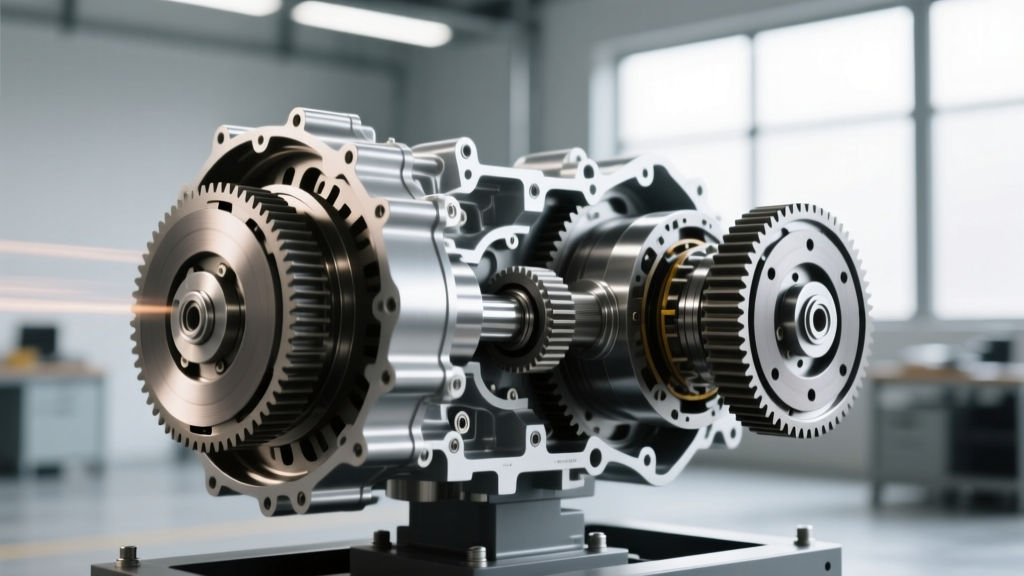
At the heart of the DCT are two concentric input shafts. The solid inner shaft typically handles the odd gears (1, 3, 5, 7), while the hollow outer shaft manages the even gears (2, 4, 6, R). Each shaft is actuated by its own dedicated clutch pack—designated K1 and K2. When you are accelerating in 1st gear, the K1 clutch is engaged, but the mechatronic unit has already pre-selected 2nd gear on the K2 shaft. The shift occurs in milliseconds by simultaneously releasing K1 and applying K2, resulting in zero interruption of torque delivery to the drive wheels. For a deeper look into the foundational architecture of these systems, the Wikipedia entry on Dual-Clutch Transmissions provides an excellent historical and mechanical overview.
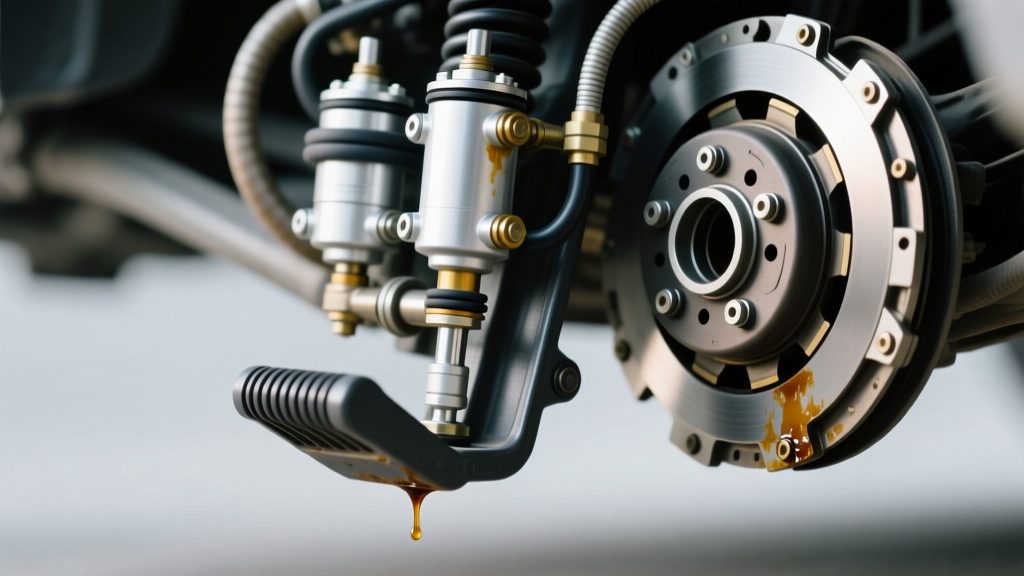
However, this mechanical brilliance introduces unique wear vectors. Because the clutches are physically dragging and slipping during low-speed creep and launch phases, friction material degradation is inevitable. Understanding how these clutches wear is the key to accurate clutch system diagnostics.
Dry vs. Wet DCT Architectures: Divergent Wear Profiles
Before pulling diagnostic codes, you must identify whether the vehicle utilizes a dry or wet clutch system, as the lifespan indicators and failure modes are vastly different.
Dry DCT Systems (e.g., VW DQ200, Ford DPS6)
Dry DCTs use organic friction plates similar to a traditional manual transmission clutch. They are highly efficient but rely entirely on ambient air for cooling. In heavy stop-and-go traffic, the continuous micro-slipping required to modulate launch speeds generates immense heat. This leads to friction material glazing, thermal warping of the clutch diaphragm springs, and eventual mechatronic actuator burnout due to overworked solenoids.
Wet DCT Systems (e.g., VW DQ250/DQ500, Porsche PDK, BorgWarner DQ381)
Wet clutches operate submerged in a specialized, low-viscosity transmission fluid. According to BorgWarner's DCT technology documentation, the fluid acts as both a lubricant and a thermal sink, allowing wet clutches to handle significantly higher torque loads (up to 1,000 Nm in heavy-duty applications) without glazing. Wear in wet systems is typically characterized by the gradual shedding of sintered bronze or carbon friction material, which eventually contaminates the mechatronic valve body and clogs the fluid pickup filter.
DCT Clutch Wear & Lifespan Matrix
The table below outlines real-world lifespan expectations and primary failure indicators for common DCT platforms as of 2026 market data.
| Transmission Model | Clutch Type | Avg. Clutch Lifespan | Primary Wear Indicator | Avg. Replacement Cost (2026) |
|---|---|---|---|---|
| VW DQ200 (7-spd) | Dry | 60,000 - 90,000 miles | Low-speed shudder, actuator failure | $900 - $1,400 |
| VW DQ250 (6-spd) | Wet | 100,000 - 150,000 miles | Mechatronic adaptation limits, micro-slip | $2,200 - $3,500 |
| VW DQ500 (7-spd) | Wet | 150,000+ miles | Fluid contamination, DMF rattle | $3,500 - $5,500 |
| Porsche PDK (ZF) | Wet | 100,000 - 130,000 miles | Launch control slip, distance sensor faults | $4,500 - $7,000 |
| Hyundai D8LF1 (8-spd) | Wet | 110,000 - 140,000 miles | Harsh 1-2 shifts, clutch drag | $1,800 - $2,800 |
4 Critical Diagnostic Signs of DCT Clutch Wear
Unlike a manual transmission where the driver physically feels the pedal engagement point rising, DCT clutch wear is managed and masked by the Transmission Control Module (TCM). By the time the driver notices physical symptoms, the mechatronic unit has often exhausted its software compensation limits.
1. Low-Speed Creep Shudder (10-15 MPH)
The most common physical symptom of DCT clutch wear is a high-frequency vibration or "shudder" during light throttle application from a stop. As the organic or sintered friction material wears unevenly, the coefficient of friction fluctuates. The TCM attempts to modulate hydraulic pressure to maintain a smooth slip, but the physical surface irregularities cause rapid grab-and-release cycles, felt as shudder in the chassis.
2. RPM Flare and Micro-Slip Under Load
If you observe the tachometer rising 100-200 RPM without a corresponding increase in vehicle speed during heavy acceleration (typically in 3rd or 4th gear), the clutch packs are slipping. In wet DCTs, this indicates that the friction material has worn down to the steel core plates, or the hydraulic line pressure solenoid is failing to maintain the requisite 18-22 bar of clamping force.
3. Harsh or Delayed 1-2 and 2-1 Shifts
As the clutch packs wear, the physical volume of the hydraulic piston cavity changes. The TCM must continuously relearn the "kiss point" (the exact millimeter where the friction plates make contact). When the wear exceeds the physical stroke limit of the hydraulic actuator piston, the shifts become abruptly harsh (as the TCM over-pressurizes to prevent slip) or severely delayed.
4. Thermal Throttling and Limp Mode
Modern DCTs feature internal clutch temperature sensors. If the friction material is severely degraded, it requires excessive hydraulic pressure to prevent slip, generating abnormal heat. The TCM will trigger a thermal protection mode, severely limiting engine torque output and forcing the clutches to fully lock or fully open, eliminating the ability to creep in traffic.
Reading the Data: Mechatronic Adaptation Limits
True DCT diagnostics requires interfacing with the TCM via OBD-II bidirectional scan tools (such as VCDS, OBDeleven, or OEM dealer software). You must evaluate the Clutch Adaptation Values. For example, in the ubiquitous VAG DQ250 6-speed wet DCT, you will monitor Measured Value Blocks (MVB) 95, 96, and 98.
- Clutch Stroke (Touch Point): A brand-new DQ250 clutch pack typically has a touch-point adaptation value between 9.0mm and 11.0mm. As the friction material wears, the hydraulic piston must travel further to engage the clutch.
- The Danger Zone: If the adaptation value exceeds 14.5mm or drops below 7.5mm, the TCM will throw a fault code (e.g., P17BF or P17C1 - Clutch Position Sensor / Adaptation Limit Reached). At this stage, software recalibration will fail; physical clutch pack replacement is mandatory.
- Clutch Slip RPM: Monitoring live data for clutch slip (Engine RPM minus Transmission Input Shaft RPM) should read near 0 RPM under steady load. Consistent slip greater than 15 RPM indicates terminal wear.
Expert Diagnostic Tip: Before condemning a DCT clutch pack for shudder or harsh shifts, always perform a forced basic settings adaptation (e.g., VCDS Basic Settings Group 060). This forces the mechatronic unit to physically stroke the clutches and remap the hydraulic touch-points. If the adaptation aborts with an "Out of Limits" error, you have confirmed mechanical wear rather than a simple software glitch.
Real-World Replacement: Specs, Fluids, and Costs
Replacing a DCT clutch pack is not a simple "unbolt and swap" procedure like a traditional manual clutch. It requires precise metrology, specialized alignment tools, and strict adherence to torque specifications. For context on the engineering tolerances required in high-performance wet DCTs, ZF's DCT engineering documentation highlights the necessity of exact hydraulic clearances.
Critical Torque Specs & Measurements (VW DQ250 / DQ500 Reference)
- Dual-Mass Flywheel (DMF) to Crankshaft: 60 Nm + 90 degrees of rotation. (Always replace DMF bolts; they are torque-to-yield).
- Clutch Pack to Flywheel: 18 Nm + 45 degrees. Use the OEM spline alignment mandrel (e.g., VW tool T10374) to prevent binding the concentric input shafts.
- Transmission Bellhousing to Engine Block: 45 Nm for M10 bolts, 65 Nm for M12 bolts.
- DMF Runout Limit: Maximum 0.5mm lateral runout. Exceeding this will cause immediate clutch drag and mechatronic valve body damage due to harmonic vibration.
Fluid Specifications and Capacities
Wet DCTs require highly specific fluids that balance friction modulation with gear lubrication. Standard ATF will destroy the friction coefficient of DCT clutches.
- OEM Fluid: VW/Audi G 052 182 A2 / G 052 512 A2 (or Pentosin FFL-2 / FFL-4 equivalents).
- Service Fill Capacity (DQ250): Total dry fill is ~7.2 Liters, but a standard drain-and-fill service requires exactly 5.0 to 5.5 Liters. Overfilling causes aeration in the mechatronic hydraulic circuit, leading to immediate shift faults.
- Filter Replacement: The external DCT filter (Part # 02E 305 051) must be replaced at every 40,000-mile fluid service interval to prevent sintered clutch debris from scoring the mechatronic solenoid bores.
Summary: Prolonging DCT Lifespan
Understanding how a double clutch gearbox works reveals that its greatest enemy is low-speed, high-heat slip. To maximize the lifespan of your DCT clutch packs, avoid "riding" the brake pedal while in gear on inclines—use the parking brake or Auto-Hold function to allow the clutches to fully disengage. Furthermore, strictly adhere to 40,000-mile wet-clutch fluid service intervals. By monitoring mechatronic adaptation limits via OBD-II before physical shudder begins, you can plan for clutch pack replacements proactively, avoiding the catastrophic collateral damage that occurs when friction plates disintegrate into the valve body.