The Great Automotive Debate: Powertrain vs. Drivetrain Defined
Walk into any dealership service lounge or browse an automotive forum, and you will inevitably encounter a heated debate over warranty terminology. For everyday drivers and even some service advisors, the terms "powertrain" and "drivetrain" are often used interchangeably. However, when a catastrophic mechanical failure occurs and you are staring at a $4,500 repair bill, understanding the exact engineering and legal distinctions between these two systems is critical.
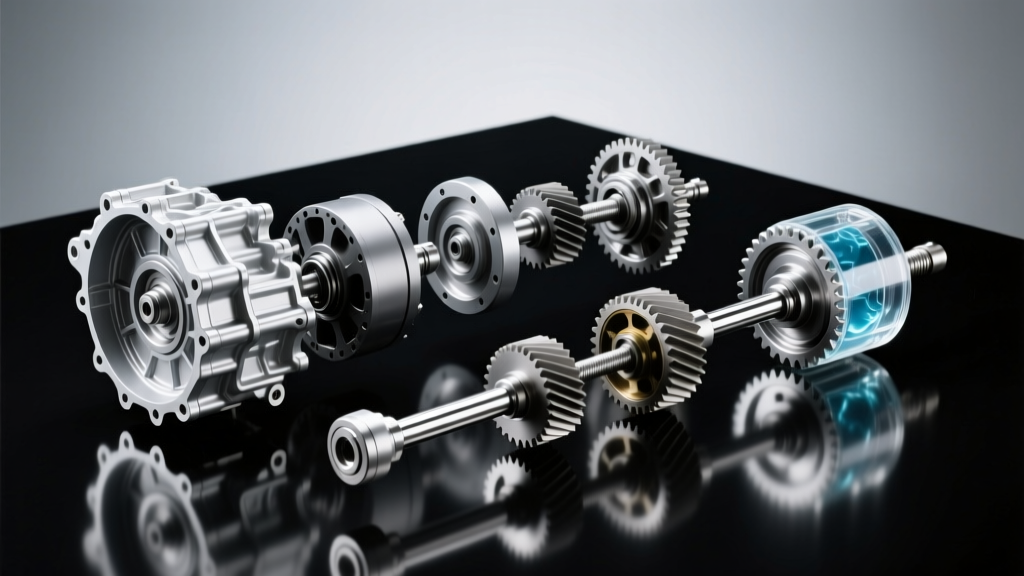
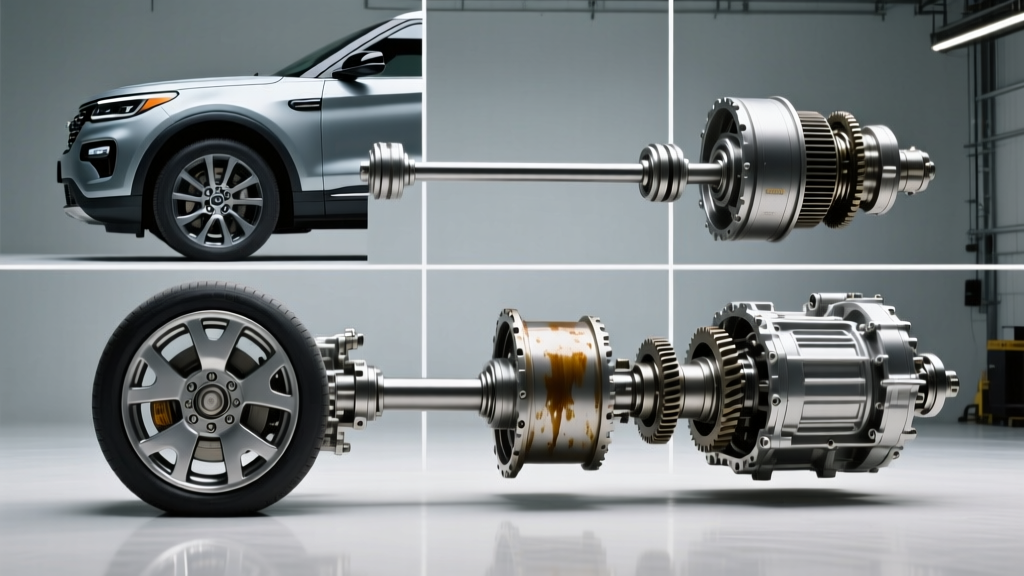
At its core, the powertrain encompasses every component involved in generating power and delivering it to the road. This includes the engine (block, cylinder heads, internal rotating assembly, fuel delivery, and emissions systems) plus the drivetrain. The drivetrain, by strict mechanical definition, consists only of the components that transfer power from the engine's flywheel or flexplate to the drive wheels. It begins at the transmission bellhousing and ends at the wheel hubs.
This distinction becomes incredibly important when reviewing your vehicle's bumper-to-bumper coverage or purchasing an extended protection plan. So, when asking what does drivetrain warranty cover, you are specifically asking about the mechanical linkage of propulsion, excluding the engine that creates it.
Decoding the Fine Print: What Does Drivetrain Warranty Cover Exactly?
While a standard factory powertrain warranty (typically 5 years/60,000 miles) covers almost everything from the engine's oil pump to the rear differential's ring gear, a strict drivetrain-only warranty is narrower. These are often found on high-mileage used vehicles, specific Certified Pre-Owned (CPO) tiers, or aftermarket third-party protection plans.
According to the Federal Trade Commission's guidelines on automotive warranties, the exact coverage depends entirely on the contract's definitions, but a standard drivetrain warranty generally covers the following mechanical hard parts:
| Component Category | Specific Covered Parts | Drivetrain Warranty | Powertrain Warranty |
|---|---|---|---|
| Transmission | Planetary gearsets, torque converter, clutch packs, valve body, transmission case. | Covered | Covered |
| Electronic Controls | TEHCM, TCM, Mechatronic units, shift solenoids, wiring harnesses. | Often Excluded* | Covered |
| Driveshafts & Joints | Propeller shafts, CV axles, U-joints, CV joints, center support bearings. | Covered | Covered |
| Differentials | Ring and pinion gears, spider gears, limited-slip clutch packs, carrier bearings. | Covered | Covered |
| Transfer Cases (4WD/AWD) | Chain drive, planetary gears, shift motor, encoder motor, viscous couplers. | Covered (Mechanical) | Covered |
| The Engine | Block, heads, pistons, crankshaft, camshafts, timing chain, oil pump. | Excluded | Covered |
*Note: Many third-party drivetrain warranties attempt to exclude electronic control modules, classifying them as "electrical" rather than "mechanical drivetrain" components. Always read the exclusions list.
Case Studies in Coverage: ZF 8HP and GM 6L80 Transmissions
To truly understand how warranty adjusters evaluate claims, we need to look at real-world failure modes of modern transmissions. The line between a "covered mechanical failure" and an "excluded electronic/maintenance issue" is where most claims are denied.
The ZF 8HP Mechatronic Dilemma
The ZF 8HP (found in millions of vehicles from the BMW F-Series to the Dodge Charger and Jaguar F-Type) is an engineering marvel, but it is not immune to failure. A common issue around the 80,000-mile mark is a leak originating from the Mechatronic unit's sealing sleeve or the integrated plastic transmission oil pan cracking.
If you have a strict drivetrain warranty, the physical replacement of the transmission pan and Mechatronic sleeve (which requires dropping the valve body and resetting adaptation values) is usually covered as a mechanical seal failure. However, the ZF 8HP requires specific ZF LifeguardFluid 8. If the warranty adjuster pulls a fluid sample and finds it burnt or contaminated with non-OEM fluid, the claim will be instantly denied for improper maintenance. Furthermore, the electronic TCM (Transmission Control Module) integrated into the Mechatronic unit may be excluded if the failure is deemed an electrical short rather than a mechanical valve-body wear issue.
GM 6L80 and the TEHCM Classification
General Motors' 6L80 (RPO MYC) is a robust 6-speed automatic, but it suffers from a well-documented failure: the Transmission Electronic Hydraulic Control Module (TEHCM). The TEHCM houses the solenoids and the TCM. When it fails, the vehicle defaults to "limp mode." Because the TEHCM is an electro-hydraulic component, some basic drivetrain-only warranties classify it as an "electronic control module" and deny the $1,200+ replacement cost, arguing that only the physical gearsets and clutch packs are covered. Under a comprehensive factory powertrain warranty, the TEHCM is unequivocally covered. This highlights why understanding what does drivetrain warranty cover requires scrutinizing the contract's definition of electronic versus hydraulic components.
AWD vs. 4WD: How Drivetrain Layout Affects Your Claim
Your vehicle's specific drivetrain layout heavily influences which components are at risk and how they are categorized by warranty providers.
- Part-Time 4WD (e.g., GM Silverado with BorgWarner 4406 Transfer Case): These systems utilize a physical transfer case with a chain-driven front output shaft. A stretched transfer case chain or a failed encoder motor is a classic drivetrain warranty claim. However, if the failure was caused by "binding" due to driving on dry pavement in 4-High, the adjuster will deny the claim citing owner abuse.
- Symmetrical AWD (e.g., Subaru WRX): Subaru's system uses a center differential (viscous coupler in manuals, multi-plate clutch in automatics) rather than a traditional transfer case. If the center differential fails due to mismatched tire tread depths (which causes the clutch pack to overheat and bind), the warranty provider will almost universally deny the claim, as tire maintenance is the owner's responsibility.
Maintenance Mandates: Protecting Your Drivetrain Claim
Warranty providers require strict adherence to maintenance schedules to honor drivetrain claims. As an expert tip, never rely on the dealership to keep perfect records; maintain your own digital and physical dossier.
Expert Wrenching Tip: If you are servicing your own rear differential, such as the ubiquitous GM 8.6-inch 10-bolt, ensure you are using the correct torque specifications. The differential cover bolts must be torqued to exactly 22 lb-ft (30 Nm) in a crisscross pattern. Over-torquing can warp the cover, leading to seepage. If a warranty adjuster sees aftermarket RTV silicone applied haphazardly instead of a proper gasket or OEM sealant, they may use it as an excuse to deny a subsequent bearing failure claim, citing "improper service procedures."
Similarly, modern 10-speed transmissions like the Ford/GM 10R80 require ultra-low viscosity fluids like MERCON ULV. Using standard MERCON LV or Dexron VI will alter the hydraulic pressure profiles, leading to valve body cross-leakages and premature clutch pack wear. A fluid analysis revealing the wrong chemistry is the fastest way to void your drivetrain coverage.
The True Cost of Uncovered Drivetrain Failures
If your claim is denied because you misunderstood the difference between a powertrain and a drivetrain warranty, or because of a maintenance loophole, the out-of-pocket costs are severe. According to data compiled by Edmunds automotive experts, drivetrain components represent some of the most labor-intensive repairs on a vehicle.
- CV Axle Replacement (FWD/AWD): $400 - $900 per side. (Usually covered, but torn boots from lifted suspensions may be denied).
- Rear Differential Rebuild (e.g., Ford 8.8-inch): $1,500 - $2,500. Includes new ring and pinion, master rebuild kit, and bearings.
- Transfer Case Replacement (OEM Remanufactured): $2,000 - $3,500 plus programming and fluid.
- Complete Transmission Overhaul (e.g., ZF 8HP or GM 8L90): $4,500 - $7,000+. This includes the removal, teardown, hard-part replacement, and the mandatory use of OEM-specific fluids and filter kits.
Final Verdict: Read the Definitions, Not the Headlines
When shopping for a used vehicle or an extended protection plan, do not let the salesman's vocabulary dictate your financial security. If a contract advertises a "Drivetrain Warranty," demand to see the exact definitions page. Verify whether electronic control modules (like the TEHCM or Mechatronic TCM), transfer case encoder motors, and CV axle boots are explicitly listed in the covered components section. By understanding the mechanical boundaries of your vehicle's propulsion system, you can ensure that when a U-joint snaps or a planetary gearset shatters, you won't be left holding the bill.