The Core Confusion: Drivetrain vs. Powertrain
When your vehicle throws a diagnostic trouble code (DTC) or begins vibrating heavily at highway speeds, the terminology used by dealership service advisors can feel like a foreign language. Two of the most frequently confused terms in automotive repair are "powertrain" and "drivetrain." While often used interchangeably by casual drivers, these terms represent distinctly different mechanical boundaries. Understanding the difference is not just a matter of semantics; it directly dictates warranty coverage, diagnostic procedures, and ultimately, your final drivetrain replacement cost.
As of 2026, with the automotive landscape split between complex internal combustion engines (ICE), hybrid architectures, and battery-electric vehicles (BEVs), knowing exactly which components are failing is critical for avoiding inflated repair invoices. Let us break down the engineering realities of these systems.
What Exactly Makes Up the Powertrain?
The powertrain is the complete, integrated system responsible for generating kinetic energy and delivering it to the road surface. If a component is directly involved in creating power or routing it to the wheels, it is part of the powertrain. Mathematically speaking: Powertrain = Engine + Drivetrain.
Engine and Internal Components
The powertrain includes the engine block, cylinder heads, pistons, crankshaft, timing chain or belt assemblies, oil pumps, and the engine control module (ECM). In modern hybrid vehicles, the powertrain also encompasses the high-voltage battery pack, power inverter, and the integrated motor-generator unit. If your timing chain tensioner fails on a BMW N20 engine, or if the oil pump screen clogs on a GM 5.3L V8, you are experiencing a powertrain failure, but not necessarily a drivetrain failure.
Defining the Drivetrain: The Muscle Behind the Movement
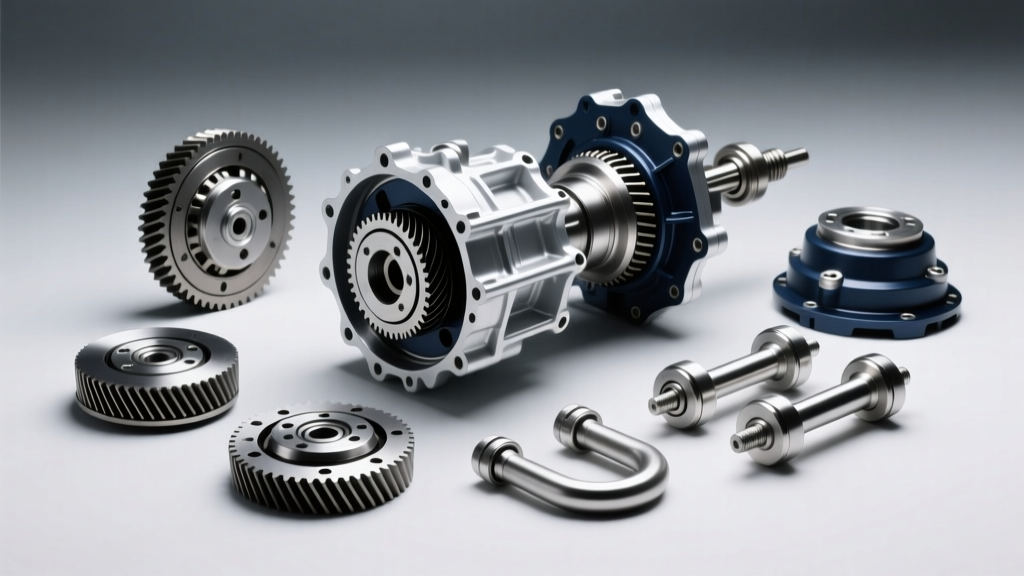
The drivetrain is a specific subset of the powertrain. It encompasses every component that transfers torque from the engine's flywheel or flexplate to the drive wheels. The engine generates the power, but the drivetrain manages, multiplies, and distributes it. If you remove the engine from the vehicle, everything left behind that connects to the wheels constitutes the drivetrain.
Transmissions and Torque Converters
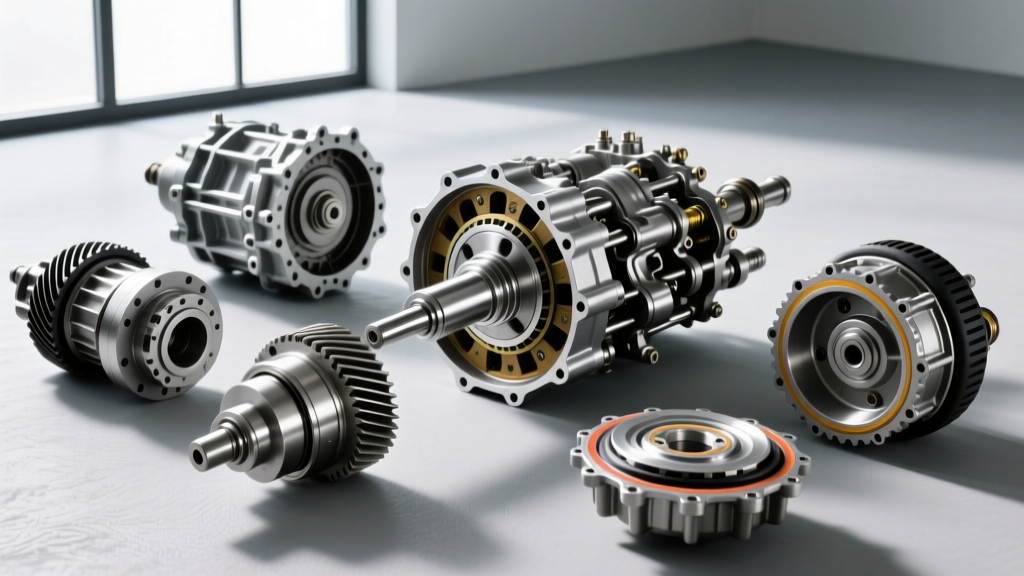
The transmission is the heart of the drivetrain. Whether it is a traditional planetary automatic, a dual-clutch transmission (DCT), or a continuously variable transmission (CVT), its job is to multiply engine torque via gear reduction. This category also includes the torque converter (in automatics), the clutch assembly (in manuals), and the transmission control module (TCM).
Driveshafts, U-Joints, and CV Axles
Once torque leaves the transmission, it must travel to the differentials and wheels. In rear-wheel-drive (RWD) and four-wheel-drive (4WD) trucks, this is handled by a tubular steel or aluminum driveshaft connected via Spicer-style universal joints (U-joints). In front-wheel-drive (FWD) and most modern all-wheel-drive (AWD) crossovers, torque is routed through constant velocity (CV) axles. These components must handle massive torsional loads while accommodating suspension articulation.
How This Distinction Impacts Drivetrain Replacement Cost
This is where understanding mechanical boundary lines saves you thousands of dollars. When a repair shop quotes a "powertrain replacement," they may be bundling engine and transmission labor, or referencing a complete crate-motor swap. If your engine is running perfectly but your transmission has suffered catastrophic clutch pack failure, you are looking specifically at a drivetrain replacement cost.
By isolating the drivetrain from the broader powertrain, you can target your repairs and avoid paying for engine-related diagnostics. Below is a realistic breakdown of average drivetrain component replacement costs for common passenger and light-duty truck applications in the current market.
| Drivetrain Component | Common Application | Average Replacement Cost (Parts & Labor) | Common Failure Mode |
|---|---|---|---|
| Automatic Transmission (Rebuilt) | GM 6L80 (Silverado/Sierra) | $2,800 - $4,200 | TEHCM failure, 1-2-3-4 clutch wave plate fracture |
| Automatic Transmission (OEM Reman) | ZF 8HP (BMW/Chrysler) | $4,500 - $7,500 | Mechatronic unit solenoid wear, clutch drum failure |
| Front CV Axle Assembly | Honda Accord / Civic (FWD) | $250 - $600 | Outer CV joint boot tear, cage and bearing pitting |
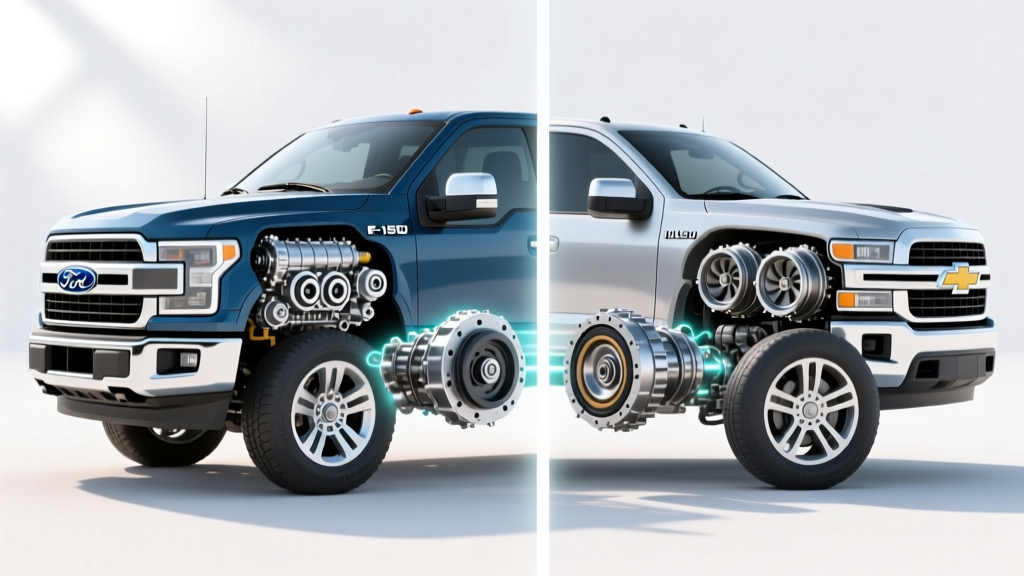
| Rear Driveshaft (Aluminum) | Ford F-150 (RWD/4WD) | $700 - $1,400 | U-joint cap wear, slip yoke spline binding |
| Rear Differential Rebuild | Jeep Wrangler (Dana 44) | $1,500 - $3,000 | Ring and pinion gear tooth shearing, bearing whine |
Warranty Nightmares: What is Actually Covered?
The distinction between these two systems becomes fiercely important when dealing with manufacturer warranties. A standard "Bumper-to-Bumper" warranty covers almost everything, but once it expires, you are left with the Powertrain Warranty.
Historically, powertrain warranties covered the engine, transmission, and drive axles. However, manufacturers have become increasingly litigious about what constitutes a "driven" component. For example, engine mounts are part of the powertrain, but if a vibration damages a driveshaft center support bearing, some manufacturers will deny the drivetrain claim, arguing the engine mount (a powertrain component) was the root cause. Always read the fine print of your specific warranty booklet, as transfer cases and electronic control modules are sometimes excluded from basic drivetrain coverage.
Real-World Case Studies: GM 6L80 vs. ZF 8HP
To truly grasp drivetrain complexity, let us examine two of the most prevalent transmissions on the road today.
The GM 6L80: A Workhorse with a Thermal Flaw
Found in millions of GM trucks and performance cars, the 6-speed 6L80 is a robust drivetrain component. However, its Achilles heel is the Transmission Electronic Hydraulic Control Module (TEHCM). Because the TEHCM is mounted inside the transmission pan, it is constantly bathed in hot transmission fluid. Over time, thermal cycling causes the solder joints on the pressure switch manifold to crack, resulting in harsh shifts or a complete loss of drive. Replacing the TEHCM requires removing the valve body, installing a new module, and performing a proprietary TCM reflash via the GM GDS2 diagnostic tool. This specific drivetrain repair typically costs between $900 and $1,400, far less than a full transmission replacement.
The ZF 8HP: The Gold Standard of Modern Drivetrains
The ZF 8HP 8-speed automatic is widely considered an engineering masterpiece, utilized by BMW, Audi, Chrysler, and Jaguar. It features four planetary gear sets and five shift elements. A critical maintenance issue for the ZF 8HP is the "lifetime fluid" myth. ZF officially states that under severe driving conditions (which includes most stop-and-go city traffic and towing), the fluid should be replaced between 80,000 and 120,000 kilometers (approx. 50,000 to 75,000 miles). The specific fluid required is ZF LifeguardFluid 8 (Part Number S671 090 312). Neglecting this drivetrain maintenance leads to mechatronic sleeve wear and bridge seal leaks, resulting in a catastrophic $6,000+ replacement bill.
Preventative Maintenance to Protect Your Wallet
Mitigating your long-term drivetrain replacement cost requires strict adherence to torque specifications and fluid intervals. Here are three expert-level maintenance rules to live by:
- Respect CV Axle Nut Torque: The front CV axle nut on a Honda Civic requires a massive 134 lb-ft (182 Nm) of torque. This is a torque-to-yield style clamp load that secures the CV joint to the wheel bearing. If an impact gun is used and the nut is over-torqued, it can stretch the threads or crush the CV joint cage, leading to premature drivetrain vibration.
- Do Not Over-Torque U-Joint Straps: When replacing U-joints on a GM 10-bolt rear differential, the strap bolts require only 18 lb-ft (25 Nm). Over-torquing these small bolts distorts the bearing caps, binding the needle bearings and causing the U-joint to fail in under 5,000 miles.
- Service Transfer Case Fluid: In AWD and 4WD systems, the transfer case is the unsung hero of the drivetrain. Many owners forget it exists. Drain and fill the transfer case with the correct OEM fluid (e.g., GM Auto-Trak II for active transfer cases) every 50,000 miles to prevent clutch pack chatter and encoder motor failure.
Final Thoughts
Understanding the boundary between the powertrain and the drivetrain empowers you as a vehicle owner. It allows you to question vague repair estimates, understand the root cause of mechanical failures, and accurately forecast your drivetrain replacement cost. Whether you are maintaining a heavy-duty truck with a traditional driveshaft or a luxury sedan with a complex ZF 8HP automatic, treating the drivetrain as a distinct, highly engineered system is the key to long-term reliability and financial sanity on the road.