The Anatomy of a 1,000 HP Dodge Challenger Drivetrain Failure
When pushing the limits of modern muscle, the Dodge Challenger drivetrain becomes the primary bottleneck between the engine and the pavement. Whether you are running a supercharged 6.2L HEMI Hellcat or a forged 392 stroker, generating over 800 rear-wheel horsepower (rwhp) exposes critical weak points in the factory power delivery system. In 2026, with the advent of ultra-sticky radial tires like the Mickey Thompson ET Street R and advanced traction control tuning, the shock loads transferred through the chassis are higher than ever before.
The factory engineers designed the Challenger platform to balance NVH (Noise, Vibration, and Harshness) with straight-line performance. This compromise relies heavily on rubber bushings, cast aluminum differential housings, and mass-produced steel alloys. When subjected to 1,000+ HP drag radial launches, this system experiences a cascading failure sequence: cradle deflection leads to CV joint binding, which snaps the halfshafts, ultimately sending shockwaves back through the driveshaft and into the transmission output shaft. Bulletproofing your setup requires addressing the entire driveline as an interconnected ecosystem.
ZF 8HP90 vs. Tremec TR-6060: Where Power Meets Its Limit
The automatic-equipped Hellcats and Redeyes utilize the ZF 8HP90 transmission. While it is an engineering marvel capable of handling roughly 663 lb-ft of crank torque stock, crossing the 900 rwhp threshold causes the A-clutch and B-clutch packs to slip under high-line-pressure shifts. Conversely, the Tremec TR-6060 6-speed manual found in earlier SRT8 and Challenger R/T models suffers from output shaft spline wear and synchro failure when subjected to aggressive, high-RPM power shifts. Upgrading these components requires targeted reinforcement rather than full replacements.
Curing Axle Hop and Snap: 300M Halfshaft Upgrades
The most common casualty of a high-horsepower Challenger build is the factory 32-spline rear axle. However, the failure rarely originates from a lack of spline count. The root cause is rear subframe (cradle) deflection. Under hard acceleration, the factory rubber cradle bushings compress, causing the entire rear differential to shift rearward by up to half an inch. This movement forces the inner CV joints to exceed their designed plunge travel, resulting in a catastrophic bind that snaps the axle shaft like a dry twig.
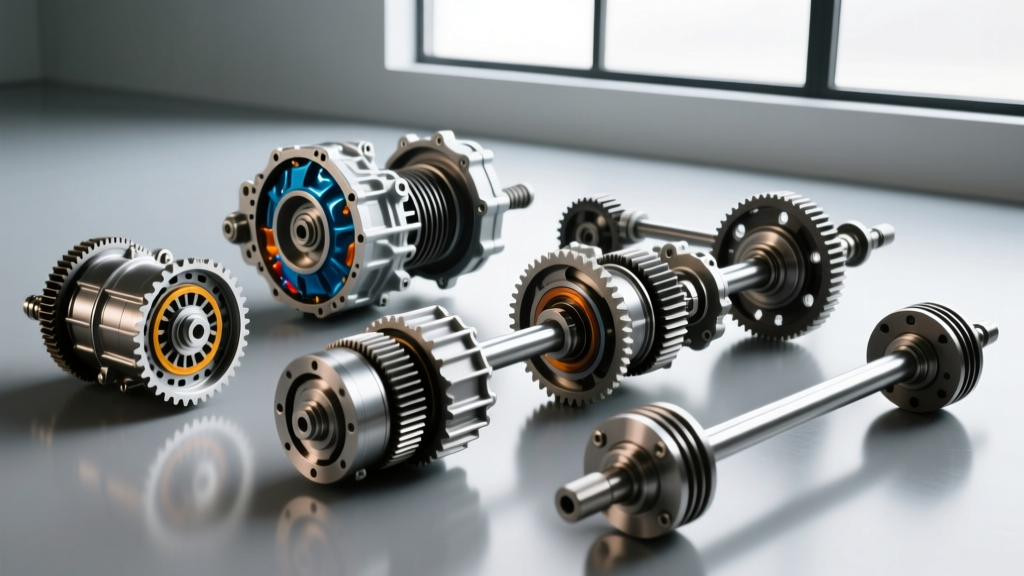
To resolve this, high-performance builders turn to aerospace-grade materials. The Driveshaft Shop offers their Level 5.6 axles (Part# CHA8000/5.6), which utilize 300M alloy steel—a material renowned for its extreme tensile strength and torsional flexibility. Unlike brittle chromoly, 300M can twist significantly under load and return to its original shape without fracturing. Furthermore, these upgraded axles feature modified inner CV housings that provide an additional 4mm of plunge travel, safely accommodating minor cradle deflection without binding.
Pro-Tip: Never mix an upgraded, ultra-stiff 300M axle with completely solid rear cradle bushings on a street-driven car. The lack of torsional compliance will transfer the shock load directly into the differential side gears, leading to stripped spider gears. A high-durometer polyurethane bushing is the ideal compromise for dual-purpose vehicles.
Rear Cradle and Differential Bushing Reinforcement
Before installing $2,000 axles, you must stabilize the differential housing. The ZF 226mm (8.9-inch) aluminum differential is robust, but its mounting points are isolated by soft rubber. Replacing these with solid aluminum or 88A polyurethane bushings (such as those from BMR Suspension or Whiteline) eliminates the rearward shift of the cradle.
Installation Note: The rear cradle mounting bolts on the Challenger are Torque-To-Yield (TTY) stretch bolts. They must be replaced during installation. The factory service manual dictates a torque sequence of 74 lb-ft followed by a 90-degree turn. Attempting to reuse the OEM bolts will result in clamping force loss and eventual bolt shear under high-torque loads.
Rotational Mass: Carbon Fiber Driveshaft Conversions
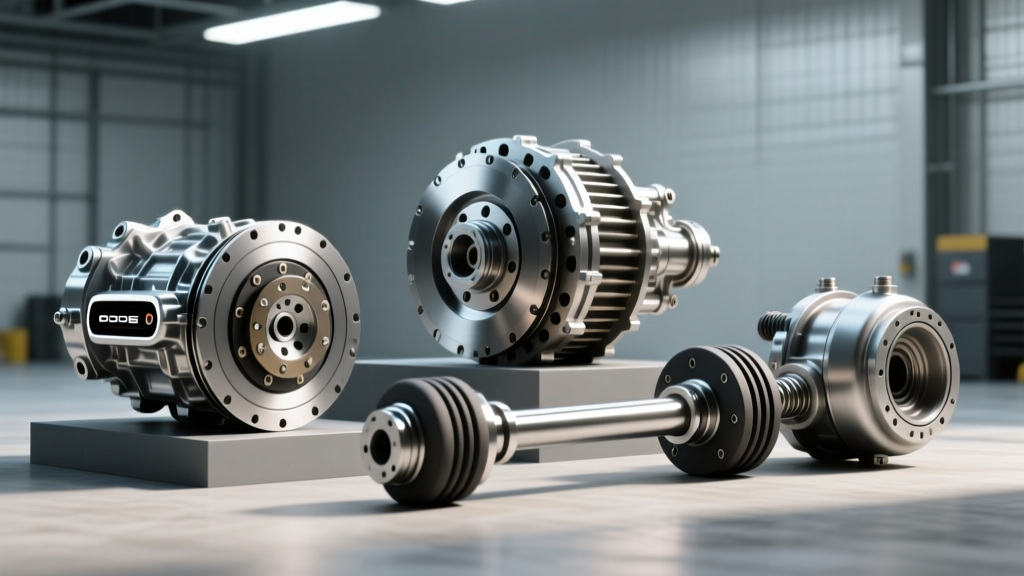
The OEM two-piece steel driveshaft weighs nearly 45 lbs and relies on a central carrier bearing that introduces harmonic vibrations at speeds exceeding 120 mph. For roll racing and high-speed track applications, converting to a one-piece carbon fiber driveshaft is mandatory. A unit like the QA1 CH112-2CB drops rotational mass to under 20 lbs, freeing up parasitic horsepower and allowing the ZF 8HP90 to spool the supercharger faster between shifts.
Carbon fiber shafts also act as a mechanical fuse; in the event of a catastrophic U-joint or differential failure, the carbon tube will shatter rather than flailing and destroying the vehicle's floorpan. When installing a carbon fiber shaft, you must align the pinion flange to the factory harmonic marks. The ZF differential pinion nut is a prevailing torque stretch nut. It requires a new, one-time-use nut torqued to 103 lb-ft (140 Nm) plus an additional 90-degree angle to properly preload the crush sleeve and differential bearings.
ZF 8HP90 Transmission Reinforcement Strategies
For automatic Challengers pushing past 900 rwhp, the transmission must be addressed. The ZF 8HP90 relies on a sophisticated mechatronic valve body to manage line pressure. Upgrading to a Sonnax Zip Kit or a custom billet valve body separator plate increases line pressure to the clutch packs, preventing the micro-slippage that glazes the friction materials.
Additionally, the factory ZF LifeguardFluid 8 degrades rapidly under the extreme heat generated by high-stall torque converters (such as a 3,200 RPM stall unit). Installing an upgraded transmission cooler, like the Mishimoto dual-pass stack-plate cooler, and utilizing high-friction coefficient synthetic fluids ensures the clutch packs bite instantly during wide-open-throttle (WOT) shifts.
2026 Challenger Drivetrain Upgrade Cost Matrix
Planning a high-horsepower build requires a realistic budget. Below is a breakdown of the necessary drivetrain modifications based on your performance goals and tire setup.
| Component Category | Recommended Upgrade | Target Application | Est. Cost (2026) |
|---|---|---|---|
| Rear Cradle Bushings | BMR Polyurethane Kit (88A) | Street / Drag (Up to 800 HP) | $280 - $350 |
| Halfshafts / Axles | DSS Level 5.6 (300M Alloy) | Drag Radial / Slicks (1,200+ HP) | $1,650 - $1,800 |
| Driveshaft | QA1 1-Piece Carbon Fiber | Roll Racing / High-Speed Track | $1,350 - $1,500 |
| Diff Bushings & Inserts | Solid Aluminum Diff Inserts | Dedicated Drag Car | $150 - $220 |
| Transmission (8HP90) | Stage 2 Clutch Pack & Valve Body | 1,000+ HP Supercharged/Turbo | $4,200 - $5,500 |
Final Torque and Maintenance Considerations
Upgrading your Dodge Challenger drivetrain is not a 'set it and forget it' endeavor. High-strength 300M axles and carbon fiber driveshafts require rigorous maintenance. After the first 500 miles of hard driving, you must re-torque the rear axle nuts to 185 lb-ft and inspect the CV joint boots for tears caused by extreme steering angles at low speeds. Furthermore, the ZF 8HP90 transmission fluid and pan filter should be serviced every 30,000 miles under severe duty cycles to remove metallic debris from the clutch steels. By treating your drivetrain as a holistic, interconnected system, you can reliably put four-digit horsepower to the pavement without fear of catastrophic mechanical failure.