Defining the Drivetrain Center in Modern Layouts
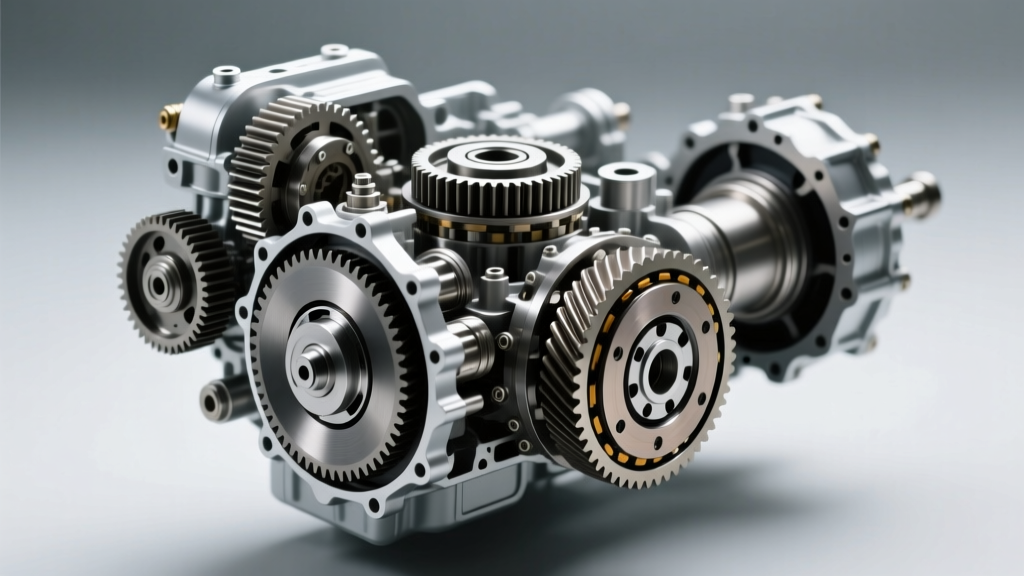
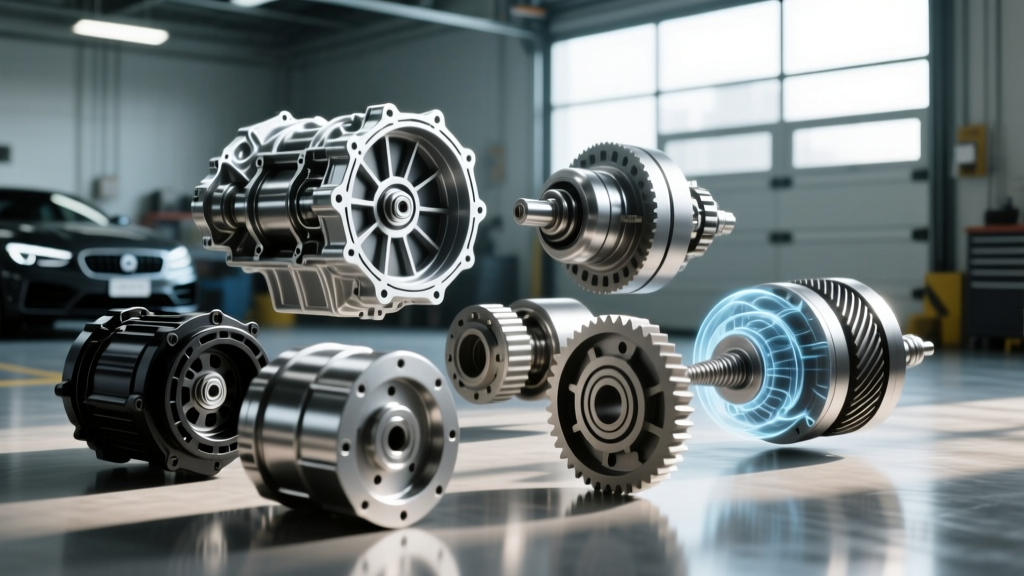
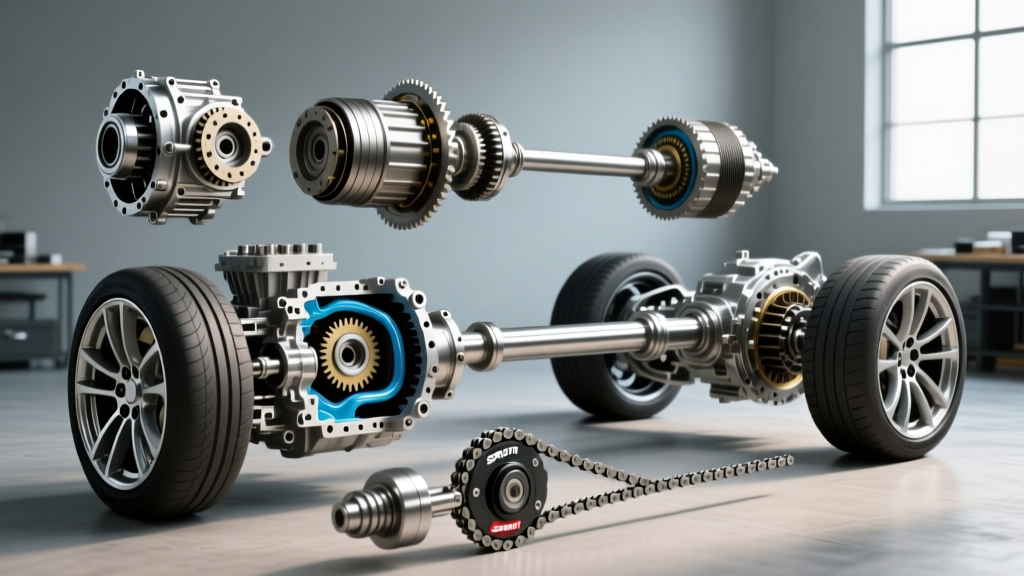
In automotive engineering, the "drivetrain center" refers to the critical midpoint components that bridge the transmission output to the rear or secondary axles. In traditional rear-wheel-drive (RWD) and four-wheel-drive (4WD) trucks, this primarily encompasses the two-piece driveshaft's center support bearing (carrier bearing) and the transfer case's center differential. In modern all-wheel-drive (AWD) architectures, it includes the torque-biasing center differentials or electronically controlled clutch packs. As of 2026, the proliferation of heavy dual-motor EVs and high-torque hybrid platforms has placed unprecedented torsional stress on these central nodes, making rigorous drivetrain center maintenance more critical than ever.
Neglecting the drivetrain center leads to catastrophic harmonic vibrations, premature universal joint failure, and transfer case binding. This guide provides master-level service protocols, precise torque specifications, and advanced Noise, Vibration, and Harshness (NVH) diagnostic strategies for automotive technicians and drivetrain specialists.
Center Support Bearing (Carrier Bearing) Service Protocols
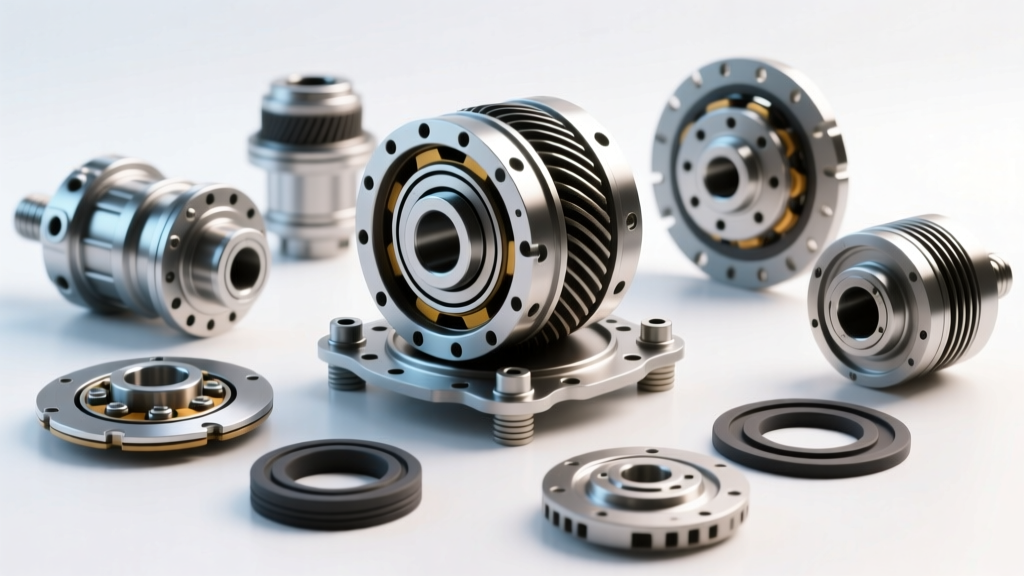
The center support bearing serves two vital functions: it maintains the concentric alignment of a two-piece driveshaft and isolates high-frequency drivetrain harmonics from the vehicle chassis via a vulcanized rubber or polyurethane dampener. When the elastomeric isolator degrades, the bearing drops out of phase, altering the operating angles of the U-joints and inducing severe second-order vibrations.
Precision Alignment and Fastener Torque
Replacing a center support bearing—such as the widely used Spicer 210-355X or Timken HB-2085-FC—is not a simple unbolt-and-swap procedure. The bearing must be perfectly aligned to prevent lateral binding. A misaligned carrier bearing by as little as 0.015 inches will destroy the bearing race within 5,000 miles.
- GM 2500/3500 HD Trucks: The center support bracket-to-frame bolts require exactly 37 lb-ft (50 Nm). Over-torquing distorts the rubber isolator, eliminating its dampening properties.
- Ford Super Duty (F-250/F-350): Center support mounting nuts are torqued to 59 lb-ft (80 Nm). Always use a new prevailing torque nut; reusing the factory nylon-insert nut risks backing out under high-torsional loads.
- Ram Heavy Duty: Requires 74 lb-ft (100 Nm) on the crossmember bracket, but the driveshaft center yoke strap bolts must be torqued to 25 lb-ft (34 Nm) with Loctite 243 (blue threadlocker).
Expert Pro-Tip: Before unbolting any two-piece driveshaft, use a bright yellow paint pen to mark a continuous line across the front yoke, the center slip yoke, and the rear pinion yoke. Maintaining the exact factory "phase" (rotational alignment) of the driveshaft tubes is mandatory. Reassembling a driveshaft 180 degrees out of phase will create a violent first-order vibration that no amount of wheel balancing can fix.
Shop pricing for a premium center support bearing replacement typically ranges from $250 to $450, depending on labor rates and whether the driveshaft requires removal from a rusted exhaust cross-over pipe. Always opt for OEM-equivalent Spicer or Timken bearings; aftermarket "white box" bearings frequently feature undersized needle rollers that fail under heavy towing loads.
Center Differential and Transfer Case Maintenance
The center differential dictates how torque is distributed between the front and rear axles. Mechanical limited-slip centers (like the Audi Torsen Type C or Subaru Viscous Coupling) rely on precise gear clearances and specific friction modifiers. Electronically controlled centers (like the BMW xDrive ATC series) utilize clutch packs that are highly sensitive to fluid degradation and shear stability.
Fluid Specifications and Thermal Fill Procedures
Using generic 75W-90 gear oil in a modern center differential or active transfer case is a guaranteed path to clutch-pack shudder and actuator motor failure. These units require highly specialized, low-viscosity fluids engineered for specific friction coefficients. Furthermore, the fill procedure often mandates strict thermal parameters.
| Application / Platform | OEM Fluid Specification | Part Number | Capacity | Fill Temperature Requirement |
|---|---|---|---|---|
| BMW xDrive (ATC400/ATC500) | TF 0870 Transfer Case Fluid | 83220397244 | 650 ml | Must be between 30°C - 40°C (86°F - 104°F) |
| GM AutoTrak II (NV246/NV263X) | AutoTrak II Fluid | 12378508 | 2.0 Quarts | Ambient; fill until level plug weeps |
| Audi Torsen Center (Quattro) | G 052 145 S2 (Synthetic 75W) | G052145S2 | 0.9 Liters | Ambient; requires vacuum fill on some transaxles |
| Jeep Quadra-Trac II (NV247) | Mopar N247 Transfer Case Fluid | 05016796AC | 1.4 Quarts | Ambient; cycle through 4LO before final top-off |
For BMW xDrive systems, failing to adhere to the 40°C temperature threshold during the fill procedure will result in an under-filled transfer case. The fluid expands significantly at operating temperatures; filling it cold to the weep hole will result in a low-fluid state once hot, triggering the infamous "4x4 System Malfunction" dash warning and eventual clutch-pack burnout. A complete transfer case service at a specialized drivetrain center typically costs between $180 and $300, a fraction of the $2,500+ cost of a replacement ATC unit.
NVH Diagnostics: Isolating Drivetrain Center Vibrations
When a customer reports a high-speed vibration (typically between 60-75 mph), technicians must systematically isolate the drivetrain center from wheel/tire imbalances. According to diagnostic frameworks outlined by AA1Car's Drivetrain NVH Library, vibrations are categorized by their frequency relative to wheel speed and driveshaft speed.
Runout and Angularity Measurements
Before condemning a center support bearing or differential, you must verify the physical geometry of the driveline. Using a magnetic-base dial indicator mounted to the differential housing or frame crossmember, measure the driveshaft runout.
- Acceptable Runout: Maximum 0.030 inches (0.76 mm) near the center support, and 0.015 inches (0.38 mm) at the slip yoke.
- U-Joint Angularity: The operating angle between the transmission output shaft and the driveshaft, and between the driveshaft and the pinion gear, must be equal and opposite. The maximum allowable angularity for standard Spicer 1350 or 1480 U-joints is 3 degrees. Exceeding this causes the needle bearings to brinell the trunnion caps, resulting in a cyclic "clunk" on load reversal.
If the center support bearing rubber is collapsed, the rear driveshaft section will sag, increasing the rear U-joint angle beyond the 3-degree threshold. This creates a second-order vibration (occurring twice per driveshaft revolution) that is felt as a high-frequency buzz in the floorboards or seat tracks. For comprehensive angle measurement protocols, technicians should consult the Spicer Technical Resources Portal, which provides exact driveline geometry charts for varying lift-kit heights and suspension modifications.
Expert Summary and Preventative Framework
Maintaining the drivetrain center requires moving beyond simple fluid swaps and embracing precision metrology. Whether you are setting the preload on a Torsen center differential, torqueing a GM carrier bearing bracket to exactly 37 lb-ft, or performing a thermally-regulated fluid fill on a BMW transfer case, the margin for error is virtually zero.
Establish a preventative maintenance framework that includes checking center support isolator integrity during every major service interval, verifying driveshaft phase markings are intact after any suspension work, and utilizing OEM-specified friction-modified fluids. By treating the drivetrain center as a highly calibrated system rather than a simple mechanical linkage, you ensure optimal torque transfer, eliminate NVH complaints, and maximize the operational lifespan of the vehicle's entire driveline architecture.