Decoding the Drive Axle Assembly
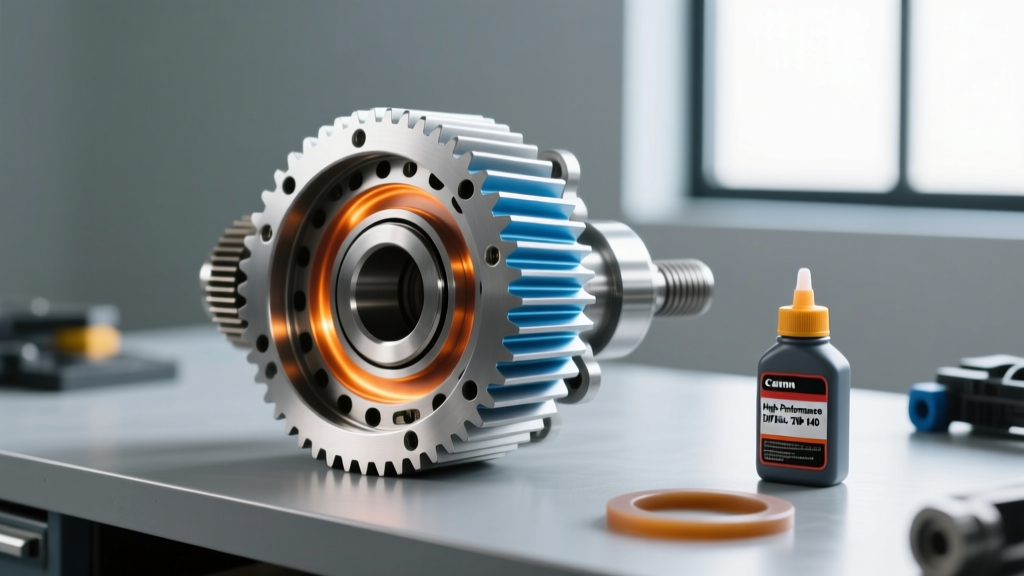
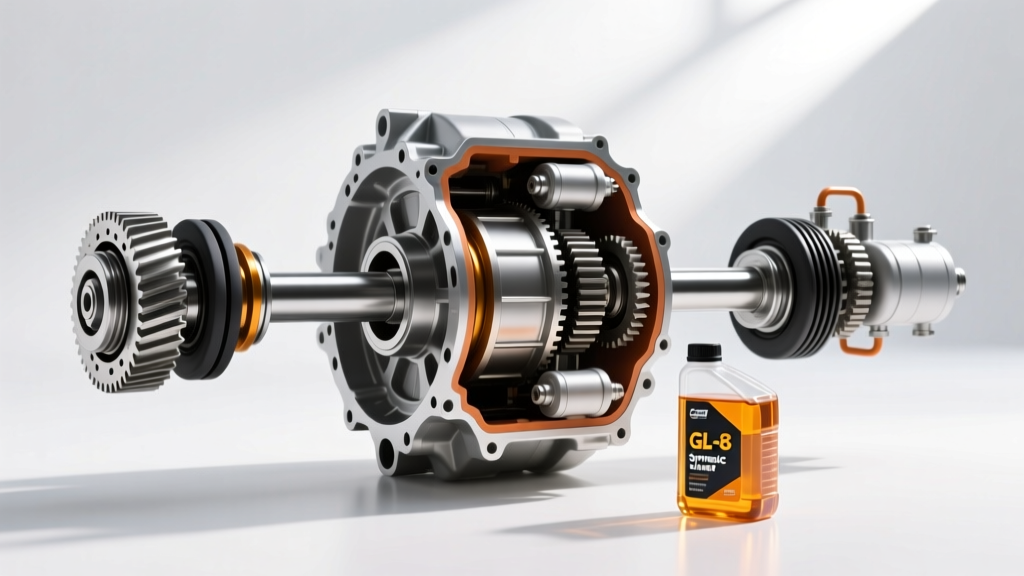
In automotive engineering, the heavy-duty assembly that contains a differential and two axles is universally known as the drive axle assembly. In rear-wheel-drive trucks and SUVs, this takes the form of a solid live axle (housing the ring and pinion, differential carrier, and left/right axle shafts). In front-wheel-drive or modern independent rear suspension (IRS) vehicles, it manifests as a transaxle or an IRS subframe. Regardless of the architecture, the core function remains identical: multiplying torque from the driveshaft and splitting it laterally to the wheels while allowing them to rotate at different speeds during cornering.
As we navigate the 2026 automotive landscape, the thermal and mechanical stresses placed on these assemblies have never been higher. Modern trucks are towing heavier loads, and high-output turbocharged engines are generating massive low-end torque. This makes selecting the correct differential fluid not just a maintenance chore, but a critical defense against catastrophic gear failure. This buyer’s guide breaks down the tribology, specifications, and top-tier synthetic gear oils required to protect your drivetrain.
The Hypoid Gear Challenge and Boundary Lubrication
To understand why you cannot use standard motor oil in a differential, you must understand hypoid gear geometry. In a typical drive axle, the pinion gear intersects the ring gear below the centerline. This offset lowers the driveshaft, reducing cabin intrusion, but it introduces extreme sliding friction alongside the rolling contact of the gear teeth. Under heavy loads, the fluid film separating the metal surfaces can collapse, entering a state known as boundary lubrication.
To prevent microwelding and pitting, gear oils rely on Extreme Pressure (EP) additives. According to the American Petroleum Institute (API), GL-5 gear oils contain high concentrations of sulfur-phosphorus compounds. When local gear temperatures spike above 300°F (150°C) under heavy sliding friction, these compounds react chemically with the iron surfaces to form a sacrificial solid film of iron sulfide and iron phosphide. This prevents metal-to-metal contact. However, this same chemistry is highly corrosive to yellow metals (brass, bronze, and copper) often found in manual transmission synchronizers, which is why API GL-4 remains the standard for transaxles with yellow metal components, while GL-5 is mandatory for solid drive axles.
Viscosity Showdown: SAE J306 Standards
The SAE International J306 Standard dictates gear oil viscosity. Unlike engine oils, gear oils use a different scale; a 75W-90 gear oil is roughly equivalent in actual kinematic viscosity to a 10W-40 engine oil. The 'W' denotes winter (cold-flow) performance, while the second number represents high-temperature shear stability. In 2026, the shift toward full synthetics (Group IV PAO and Group V Ester base stocks) has virtually eliminated the shear-thinning issues that plagued older conventional 80W-90 mineral oils.
| Viscosity Grade | Cold Flow (W) Rating | High-Temp Kinematic Viscosity (cSt @ 100°C) | Ideal Application Scenario |
|---|---|---|---|
| 75W-90 | Excellent (-40°C) | 13.5 to < 18.5 | Daily driving, fuel economy, cold climates, standard towing. |
| 80W-90 | Moderate (-26°C) | 13.5 to < 18.5 | Older conventional applications, budget fleet maintenance. |
| 75W-140 | Excellent (-40°C) | 24.0 to < 32.5 | Heavy commercial towing, track use, extreme ambient heat. |
The Limited-Slip Dilemma: Friction Modifiers
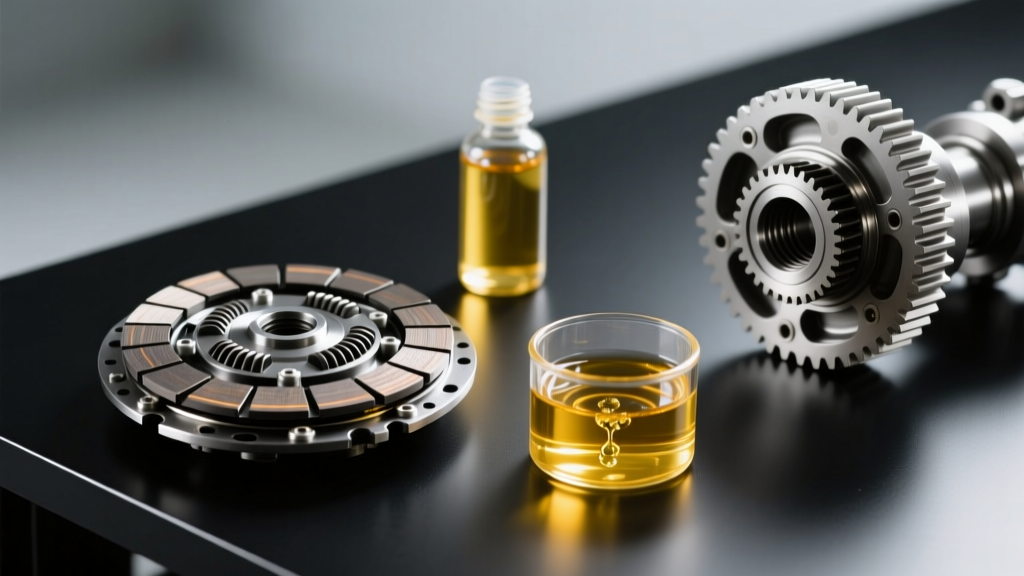
If your drive axle assembly contains a clutch-type limited-slip differential (LSD)—such as the Eaton Posi, Auburn LSD, or Ford Traction-Lok—you must address friction modifier requirements. Clutch-type LSDs rely on alternating friction and steel discs to transfer torque to the wheel with traction. Without a specialized friction modifier, the clutches will bind and release abruptly during low-speed turns, resulting in a violent 'stick-slip' chatter that can shatter the differential carrier.
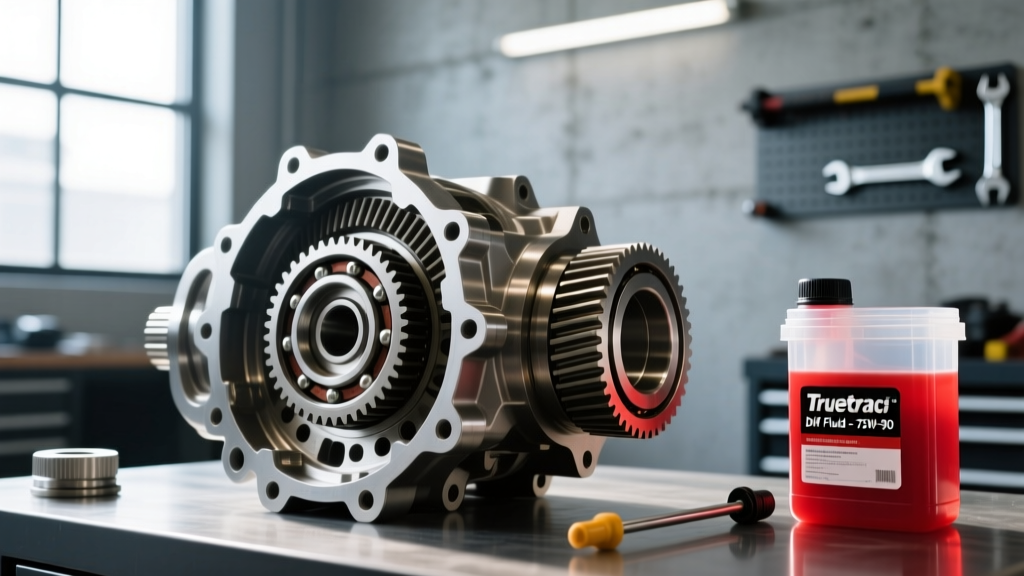
Conversely, helical gear LSDs (like the Torsen or Eaton Truetrac) and locking differentials (like the Detroit Locker or ARB Air Locker) do not require friction modifiers. Adding them to a helical unit will not cause damage, but it is a waste of money. For clutch-type units, always use the OEM-spec modifier. Top part numbers include Motorcraft XL-3 (approx. $9.50 per 4oz bottle) and GM ACDelco 10-4016 (approx. $11.00). Note that some premium synthetic gear oils come pre-blended with LSD modifiers, but seasoned drivetrain technicians recommend adding the OEM modifier separately to guarantee the exact friction coefficient required by your specific clutch pack.
2026 Synthetic Gear Oil Buyer’s Matrix
Based on current market pricing, additive packages, and shear-stability testing, here are the top-tier synthetic gear oils for your drive axle assembly in 2026.
- Amsoil Severe Gear 75W-90: Priced around $24.95 per quart. Amsoil utilizes a proprietary ester-heavy synthetic base that provides exceptional film strength under extreme shock loads. It contains heavy-duty EP additives and is highly resistant to thermal oxidation, making it the gold standard for off-road and heavy-towing applications. (Note: Requires separate LSD additive).
- Mobil 1 Synthetic Gear Lube 75W-90: Priced around $19.47 per quart. A staple in the industry, Mobil 1 offers a highly stable PAO base stock with excellent cold-flow characteristics. It is pre-formulated with a baseline limited-slip friction modifier, making it a convenient 'pour-and-go' solution for many OEM clutch-type LSDs, though severe chatter may still require a top-off of OEM modifier.
- Red Line 75W90 Synthetic: Priced around $28.50 per quart. Red Line relies on polyol ester base stocks, which possess a natural polarity that clings aggressively to gear surfaces during startup. It offers some of the lowest fluid friction coefficients on the market, translating to marginal but measurable gains in drivetrain efficiency and fuel economy.
Service Specifications: Torque, Capacities, and Procedures
Proper maintenance of the assembly that contains a differential and two axles requires strict adherence to torque specifications and fluid capacities. Overfilling can lead to fluid aeration, foaming, and subsequent overheating, while underfilling starves the pinion bearing of lubrication. Furthermore, always use a torque wrench on differential cover bolts and fill plugs; overtightening can warp thin stamped-steel covers or strip aluminum housing threads.
| Axle Assembly | Fluid Capacity (Approx.) | Fill Plug Torque Spec | Cover Bolt Torque (If Applicable) |
|---|---|---|---|
| Ford 8.8-inch (Solid) | 3.0 Pints (1.4 L) | 15 - 30 lb-ft | 28 - 38 lb-ft (12-point) |
| GM 8.6 / 9.5-inch (10/12-Bolt) | 4.2 Pints (2.0 L) | 24 lb-ft (32 Nm) | 25 - 30 lb-ft |
| Dana 44 (Solid / IRS) | 3.5 - 4.0 Pints | 25 lb-ft | 30 - 35 lb-ft |
| Ram AAM 9.25-inch | 4.4 Pints (2.1 L) | 25 lb-ft | 35 lb-ft |
The Golden Rule of Differential Service
Before you ever put a wrench on the drain plug (or pry off the differential cover), always remove the fill plug first. If the fill plug is seized, stripped, or welded shut by rust, and you drain the fluid first, you will be left with an immobile vehicle and an empty axle housing. Once the fill plug is confirmed loose, drain the old fluid, clean the mating surfaces with brake cleaner (allowing 15 minutes for flash-off), apply a continuous 3/8-inch bead of high-temp RTV silicone (like Permatex Ultra Black), and torque the cover bolts in a crisscross pattern. Wait a minimum of two hours before filling with your chosen 2026 synthetic gear oil to ensure the RTV has skinned over and will not extrude into the gear mesh.