The Olfactory Diagnostic Chart: Decoding ATF Smell and Color
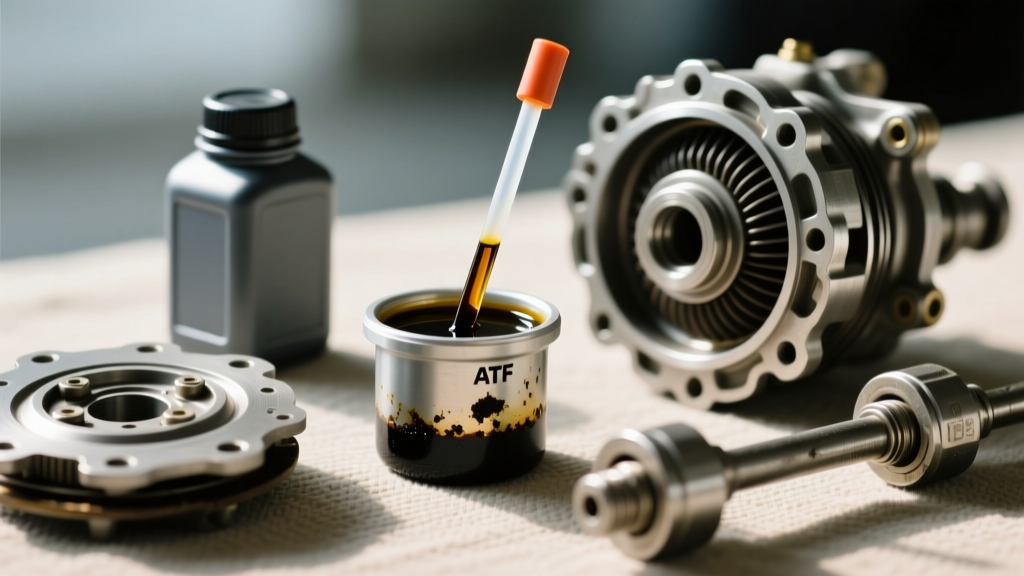
Before a single bolt is turned or a drain pan is positioned, veteran transmission specialists rely on one of the most accurate diagnostic tools available: their nose. The olfactory profile of automatic transmission fluid (ATF) provides an immediate, unfiltered history of the transmission's internal health. As of 2026, with vehicles averaging longer lifespans and tighter thermal tolerances, interpreting fluid smell and color is critical for predicting catastrophic failure in modern sealed units.
When clutch friction materials overheat, the binding resins and paper-based fibers combust, altering the chemical composition of the fluid. Similarly, severe oxidation from neglected mechatronic units creates distinct varnish odors. Below is the definitive diagnostic matrix used by rebuilders to assess ATF condition.
| Smell Profile | Visual Color | Internal Condition | Required Action |
|---|---|---|---|
| Sweet / Almond | Translucent Cherry Red | Normal; additives intact | Routine maintenance interval |
| Burnt Toast | Opaque Dark Brown / Black | Clutch friction material degradation; TCC shudder | Drop pan, inspect debris, perform flush |
| Varnish / Paint Thinner | Cloudy Amber / Copper | Severe oxidation; additive shear; valve body wear | Machine flush, inspect mechatronic sleeves |
| Rotten Eggs / Sulfur | Milky Pink / Strawberry Shake | Coolant cross-contamination via failed radiator | Immediate teardown; replace heat exchanger |
Model-Specific Failure Modes: GM 6L80 vs. ZF 8HP
To understand why fluid degrades, we must examine the specific thermal and mechanical stressors of modern transmissions. Two of the most prolific units on the road today—the General Motors 6L80 and the ZF 8HP—exhibit vastly different failure modes that directly impact fluid condition.
GM 6L80: The Burnt Toast Phenomenon
Found in millions of Silverados, Camaros, and Corvettes, the 6L80 is notorious for torque converter clutch (TCC) shudder and 3-4-5-6 clutch pack wear. When the apply oil circuit experiences a pressure drop due to worn stator support bushings, the clutches slip. This slipping generates immense localized heat, literally baking the fluid. If your dipstick pulls fluid that smells like burnt toast and shows gray metallic glitter, the friction linings are actively disintegrating. According to Sonnax Industries, addressing the stator support bushing wear is mandatory before simply changing the fluid, or the new fluid will burn within 5,000 miles.
ZF 8HP (Gen 1 & Gen 2): Varnish and Leaks
The ZF 8HP (8HP45, 8HP70) relies on incredibly tight clearances within its mechatronic valve body. When the factory LifeguardFluid 8 is subjected to extended drain intervals beyond 60,000 miles, the fluid oxidizes into a varnish. This varnish coats the solenoid pressure regulators, causing harsh shifts and adapter sleeve leaks. Furthermore, the plastic oil pan and integrated filter assembly is prone to warping under high thermal loads, leading to slow seepage that introduces moisture and accelerates fluid breakdown.
Precision Refill: How to Put in Automatic Transmission Fluid
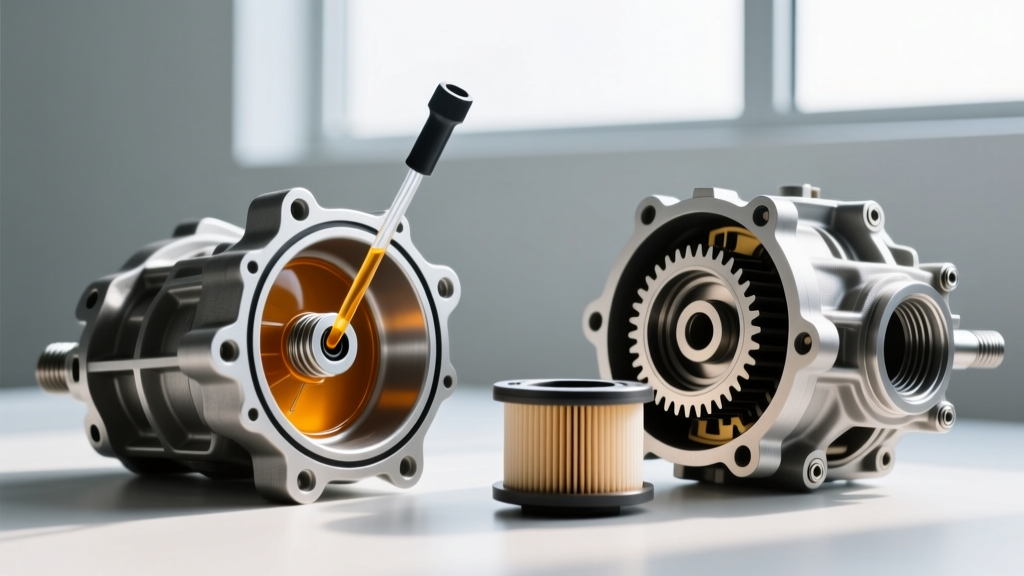
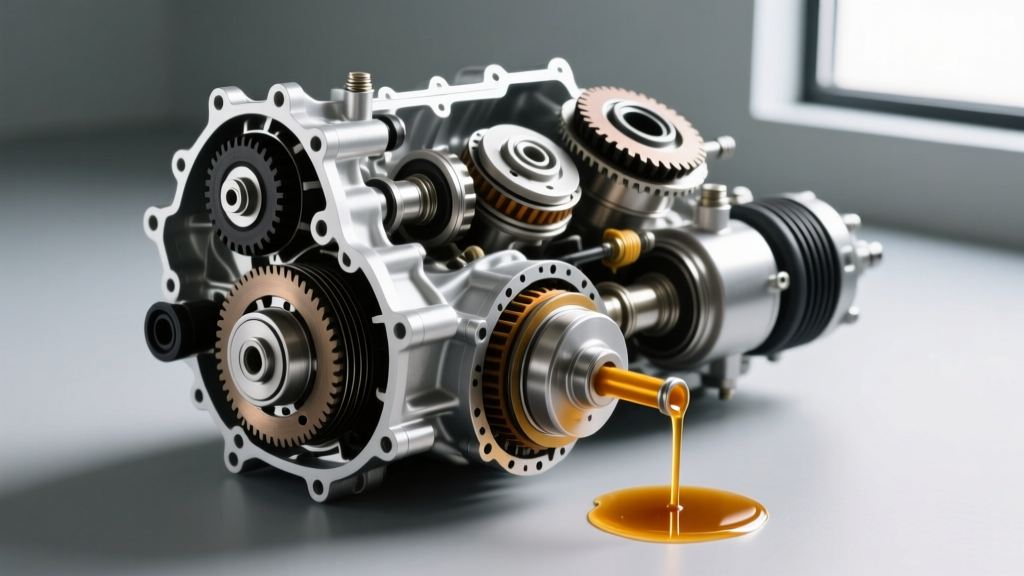
When addressing these degraded conditions, knowing exactly how to put in automatic transmission fluid is just as critical as the initial diagnosis. Modern transmissions are largely "sealed" units, meaning they lack a traditional engine-bay dipstick. Instead, they utilize a temperature-dependent overflow plug system. If you fill the transmission cold, the fluid will expand as it reaches operating temperature, blowing out the seals. If you fill it hot without reaching the exact thermal window, the unit will run starved, causing immediate cavitation and pump failure.
GM 6L80 Temperature-Dependent Fill Procedure
The 6L80 requires the fluid to be checked at a highly specific, elevated temperature range. GM mandates that the transmission fluid temperature (TFT) must be between 85°C and 95°C (185°F - 203°F) when checking the level.
- Ensure the vehicle is on a perfectly level hoist. Connect a bi-directional OBD2 scanner to monitor the TFT PID.
- Remove the 8mm hex fill plug on the passenger side of the transmission case.
- Using a specialized curved-neck funnel or a fluid transfer pump, add ACDelco Dexron VI (Part #10-9395) until it begins to weep from the fill hole.
- Cycle the gear selector through all positions, pausing for 3 seconds in each gear to fill the clutch apply cavities.
- With the engine idling and the TFT reading exactly 90°C, remove the 8mm hex fluid level plug on the bottom of the transmission pan.
- Allow the fluid to drain until it slows to a slow drip. Reinstall the level plug immediately.
ZF 8HP "Drip-Level" Fill Procedure
The ZF 8HP operates on a much cooler fill window. The fluid level must be checked when the TFT is between 30°C and 50°C (86°F - 122°F). As noted by Transmission Digest, failing to respect this lower temperature window on ZF units is the leading cause of post-service shift complaints.
- With the vehicle level and the engine off, remove the 8mm Allen fill plug on the side of the plastic pan.
- Pump ZF LifeguardFluid 8 (or Pentosin FFL-4 for Gen 3 8HP75 applications) into the fill hole until it overflows.
- Start the engine. The ZF transmission pump is driven by the engine; the fluid level will drop as the torque converter and cooler lines prime.
- Continue pumping fluid into the fill hole with the engine idling.
- Monitor the TFT via OBD2 scanner. Once the fluid temperature hits 40°C, remove the internal plastic leveling tube (if equipped on your specific pan revision) or allow the fluid to drip from the fill hole until it stops flowing.
- Reinstall the fill plug before the temperature exceeds 50°C.
Essential Tools and Torque Specifications
Proper maintenance requires adherence to exact engineering specifications. Stripping a pan bolt or over-torquing a drain plug on an aluminum casing will turn a routine fluid service into a costly extraction nightmare.
- GM 6L80 Drain/Fill Plugs: Torque to 25 Nm (18 lb-ft). Use a high-quality 8mm hex bit. Pan bolts (if dropping for filter service) are torqued to 10 Nm (88 lb-in).
- ZF 8HP Plastic Pan Bolts: Torque to 10 Nm (88 lb-in) in a crisscross pattern. Critical Note: ZF uses one-time-use aluminum stretch bolts for the plastic pan. You must replace them (Part #ZF 1068.302.001) during every service to prevent warping and leaks.
- Scan Tool: A bi-directional scanner capable of reading OEM-specific Transmission Fluid Temperature PIDs (not just generic coolant temp) is mandatory.
- Fluid Transfer Pump: Pneumatic or electric pumps with a 3/8" hose are necessary to overcome the anti-drain valves in modern fill tubes.
"The era of 'drain and fill' by guesswork is over. Modern automatic transmissions are essentially hydraulic computers. The fluid is both a lubricant and a data-transfer medium for the solenoids. If the fluid level is off by just 400 milliliters, the adaptive shift learning algorithms will fail to calibrate, resulting in harsh engagements and premature clutch wear."
Summary
Diagnosing transmission health through smell and visual inspection is the first line of defense against catastrophic drivetrain failure. Whether you are addressing the burnt friction material of a slipping GM 6L80 torque converter or the oxidized varnish of an aging ZF 8HP mechatronic unit, the subsequent refill process demands absolute precision. By utilizing temperature-dependent fill procedures, adhering to strict torque specifications, and utilizing OEM-approved fluid chemistries, you ensure the longevity and shift quality of these complex assemblies well into the future.