Decoding Honda Civic Transmission Fluid Smell and Condition
Before you wrench on your driveway, you must understand what your transmission is trying to tell you. When researching how to change automatic transmission fluid Honda Civic models require, many owners skip the diagnostic phase and jump straight to the drain plug. This is a critical error. Transmission fluid is the lifeblood of your drivetrain, and its smell, color, and viscosity provide a real-time window into the mechanical health of your clutch packs, torque converter, or CVT belt-and-pulley system.
In 2026, with the rising cost of replacement transmissions, interpreting the olfactory and visual cues of your fluid can save you thousands of dollars. A simple sniff test off the dipstick can differentiate between a routine maintenance interval and a catastrophic internal failure that a fluid change will not fix.
The Olfactory and Visual Diagnostic Chart
Use this reference table to assess your Honda Civic's transmission fluid condition before proceeding with a drain and fill.
| Smell Profile | Visual Color | Mechanical Diagnosis | Required Action |
|---|---|---|---|
| Sweet, slightly tart | Translucent Red / Amber | Normal, healthy fluid condition. | No action needed. Monitor mileage. |
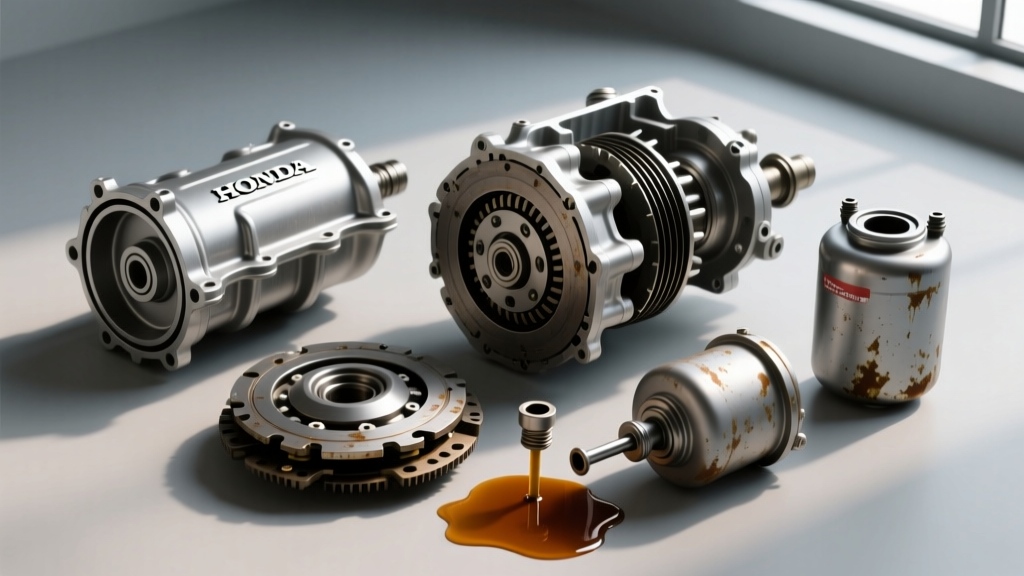
| Burnt Toast / Acrid | Dark Brown / Black | Severe overheating. Friction material (clutches or CVT belt) is burning off. | Immediate drain/fill. Inspect for slip codes. |
| Sharp Varnish / Solvent | Opaque Orange / Rust | Extreme oxidation. Fluid has lost its shear stability and anti-wear additives. | Schedule drain and fill immediately. |
| Metallic / Iron Dust | Gray / Sparkly | Bearing degradation, planetary gear wear, or CVT steel belt micro-shredding. | Drop pan, inspect magnets. Rebuild likely needed. |
| Odorless / Sweet (Coolant) | Milky Pink (Strawberry Shake) | Radiator internal breach. Coolant is mixing with ATF/CVTF. | Stop driving. Flush cooler lines, replace radiator. |
The Critical Divide: Identifying Your Civic's Transmission
The Honda Civic lineup features two vastly different automatic architectures depending on the model year. Mixing up the fluids for these systems is a fatal mistake that will destroy the transmission in under 500 miles.
9th Generation (2012–2015): 5-Speed Conventional Automatic
These models utilize a traditional torque-converter 5-speed automatic. They require Honda Genuine ATF DW-1 (Part# 08200-9008). DW-1 is specifically engineered with friction modifiers tailored to Honda's proprietary clutch materials. Using generic 'multi-vehicle' ATF from an auto parts store often leads to torque converter shudder and harsh 2-3 shifts due to incompatible friction coefficients.
10th Generation (2016–2021) & 11th Gen: Continuously Variable Transmission (CVT)
Modern Civics use a CVT that relies on a high-tension steel push-belt riding on variable-diameter pulleys. This system requires Honda Genuine HCF-2 (Part# 08200-HCF2). HCF-2 has a completely different viscosity and extreme-pressure additive package designed to prevent the steel belt from slipping under high torque loads. Never put DW-1 in a CVT, and never put HCF-2 in a 5-speed automatic.
Tools and OEM Part Numbers for the Job
To execute the service correctly, you need specific tools. Amateurs often strip the Honda transmission drain plug because they do not realize it lacks a standard hex head.
- Drive Tool: 3/8-inch square drive ratchet or breaker bar (Honda AT drain plugs use a square recess, not a hex bolt).
- Crush Washer: 18mm Aluminum Drain Plug Gasket (Honda Part# 90471-PX4-000). Never reuse the old washer; it will leak.
- Funnel: Long-neck transmission funnel with a flexible hose to reach the dipstick tube fill point.
- Fluid: 4 to 5 quarts of OEM DW-1 or HCF-2 (Expect to pay $12 to $16 per quart at dealerships in 2026).
- Torque Wrench: Capable of measuring 36 lb-ft (49 Nm).
For verified OEM part ordering, you can cross-reference your VIN on the Honda Parts Now catalog to ensure you are buying the exact fluid specification for your specific chassis code.
Step-by-Step: How to Change Automatic Transmission Fluid Honda Civic
Honda automatics and CVTs do not have a traditional serviceable pan filter like American V8s; they utilize an internal inline strainer that is generally considered a 'lifetime' component unless the transmission is being rebuilt. Therefore, the 'drain and fill' is the only approved service method.
1. Preparation and Drain
Drive the vehicle for 10 minutes to reach normal operating temperature (approx. 140°F). Warm fluid flows faster and carries more suspended particulates out of the case. Park on a perfectly level surface, engage the parking brake, and safely support the front of the Civic on jack stands.
Locate the transmission drain plug on the bottom of the casing. Insert your 3/8-inch square drive ratchet. Break the bolt loose and allow the fluid to drain completely into a catch pan. This process takes about 15 minutes.
2. Measurement and Refill
Measure the exact volume of fluid that came out. This is the golden rule of Honda transmission maintenance: put back exactly what came out.
- 5-Speed AT (2012-2015): Typically yields 2.5 to 2.7 US quarts.
- CVT (2016+): Typically yields 3.5 to 3.7 US quarts.
Wipe the drain plug clean, inspect the magnetic tip for excessive metal shavings (a fine gray paste is normal; chunky shards indicate failure), and install a new 18mm crush washer. Reinstall the plug and torque it precisely to 36 lb-ft (49 Nm).
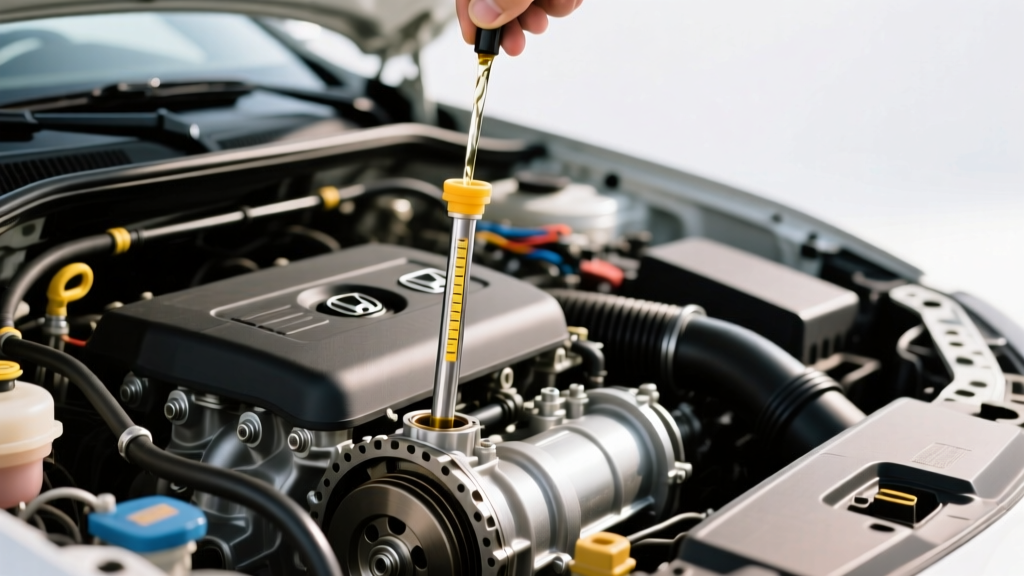
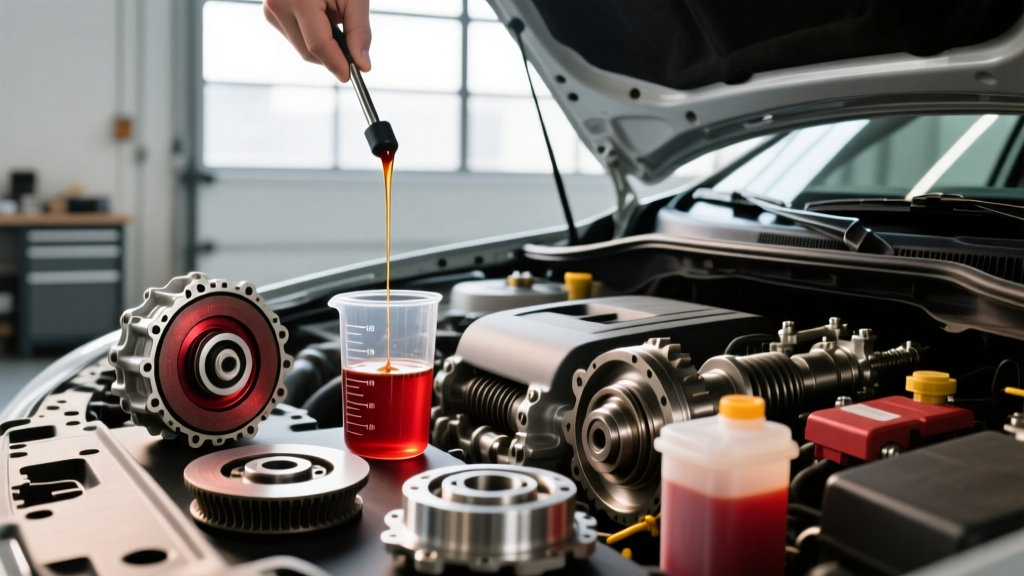
Under the hood, locate the transmission dipstick (usually marked with a yellow loop or cap near the firewall). Using your long-neck funnel, pour the exact measured amount of fresh DW-1 or HCF-2 into the dipstick tube.
3. The 3x Flush Method for Burnt Fluid
If your initial diagnostic revealed a 'Burnt Toast' smell or black fluid, a single drain and fill only replaces about 40% of the total system capacity (the rest remains trapped in the torque converter or CVT cooler). You must perform the 3x Flush Method:
- Drive the car for 15 minutes, cycling through all gears (or varying speeds in the CVT).
- Drain and refill a second time.
- Drive for another 15 minutes.
- Drain and refill a third time.
By the third cycle, you will have replaced over 85% of the degraded fluid, restoring the chemical balance without the shock of a high-pressure machine flush, which Honda explicitly warns against in their service manuals.
Sensor Interference and Post-Service Calibration
Modern Honda Civics rely heavily on the Transmission Fluid Temperature (TFT) sensor and line pressure sensors to dictate shift timing and CVT pulley clamping force. When fluid degrades into a heavy varnish or accumulates metallic clutch dust, it coats these sensors. This insulation causes the TFT sensor to read temperatures inaccurately, leading to delayed shifts or triggering a Check Engine Light (often code P0711 - TFT Sensor Circuit Range/Performance).
According to diagnostic guidelines outlined on the Honda Owners Portal, fresh fluid contains active detergents that will slowly clean the TFT sensor over the first 500 miles of driving post-service. However, if the sensor is heavily caked, it may require manual cleaning with electrical contact cleaner during the service.
Verifying the Final Level
Fluid expansion is highly temperature-dependent. To verify the final level, run the engine until the radiator cooling fan cycles on twice (indicating the engine and transmission are fully heat-soaked). Turn the engine off, wait exactly 60 to 90 seconds to allow fluid to drain back from the cooler lines into the pan, and check the dipstick. The fluid level must sit precisely between the upper and lower marks. Overfilling a Honda CVT causes aeration (whipping the fluid into a foam), which leads to immediate pump cavitation and belt slip.
Final Thoughts on Drivetrain Longevity
Understanding the nuance of transmission fluid condition elevates you from a simple parts-swapper to a true automotive technician. By interpreting the smell and color of your fluid, utilizing the correct OEM chemical formulations, and adhering strictly to Honda's 3/8-inch square drive and 36 lb-ft torque specifications, you ensure your Civic's transmission will reliably handle the daily commute for well past 200,000 miles. For further reading on general automotive fluid dynamics and maintenance intervals, resources like Car and Driver's fluid maintenance guides offer excellent baseline knowledge for multi-vehicle households.