The Anatomy of a DPS6 Burning Smell
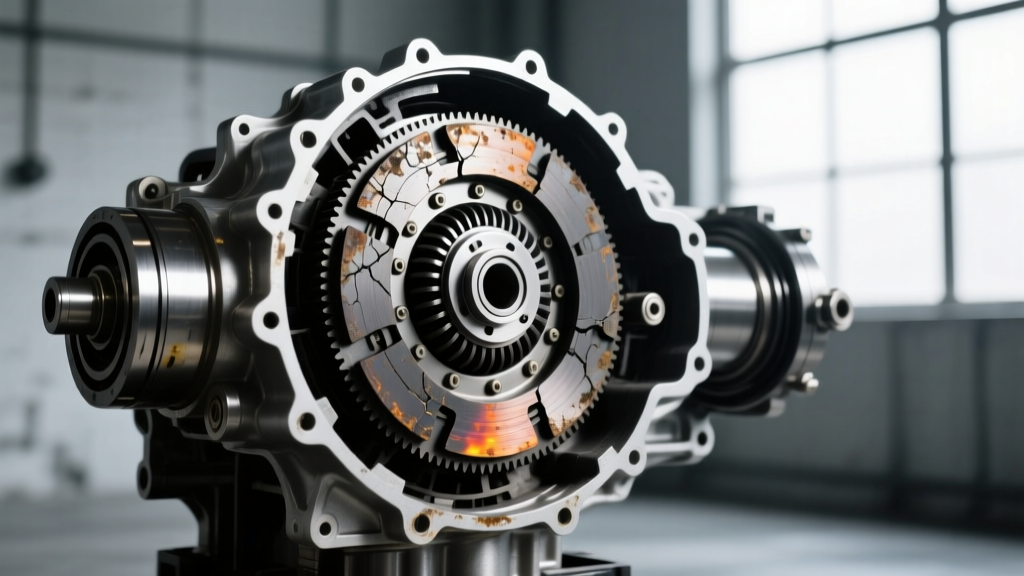
For owners and technicians working on the 2011-2018 Ford Focus and 2011-2019 Fiesta, the 6DCT250 (marketed as the DPS6 PowerShift) is a transmission that demands hyper-vigilance. Among the most alarming and immediate symptoms of impending failure is a distinct, acrid burning smell emanating from the bell housing area. Unlike wet dual-clutch transmissions (DCTs) that rely on specialized fluid for cooling and lubrication, the DPS6 utilizes two dry friction clutches. When the DPS6 clutch actuator system fails to modulate engagement precisely, these dry clutches slip continuously, generating extreme thermal loads that cook the organic friction resin.
Diagnosing a clutch burning smell in this specific transmission requires looking past the friction discs themselves. While worn clutch packs are a consumable reality, the root cause of premature thermal degradation almost always traces back to the electromechanical actuators, the Transmission Control Module (TCM), or the intricate plastic gear trains that bridge the two. In this comprehensive diagnostic guide, we will break down how to isolate the burning smell, verify actuator health, and determine the correct repair path using advanced OBD2 telemetry and physical measurements.
Thermodynamics of Actuator-Induced Clutch Slip
To understand the diagnostic path, you must understand the failure mechanism. The DPS6 uses two brushless DC servo motors (the actuators) to push mechanical levers against the clutch diaphragm springs. The TCM constantly monitors the position of these levers via integrated Hall-effect sensors. In stop-and-go traffic or during hill-hold scenarios, the TCM commands a 'micro-slip' to mimic the smooth engagement of a traditional torque converter.
However, if the DPS6 clutch actuator suffers from internal gear wear, sensor drift, or TCM calibration loss, the system miscalculates the exact 'touch point' (the precise millimeter where friction material meets the flywheel). The actuator may hold the clutch lever in a 20% to 40% engaged state while the engine is under load. Without fluid to dissipate the heat, surface temperatures on the dry clutch facings can exceed 450°F (232°C) in a matter of seconds. This results in the glazing of the friction material, the outgassing of binding resins (the burning smell), and eventual clutch shudder.
Is It the Actuator or the Friction Discs?
When a vehicle arrives at the bay with a reported burning smell and shudder, the immediate assumption is often that the clutch discs are simply worn out. However, replacing the clutch kit without diagnosing the DPS6 clutch actuator will result in a comeback within 5,000 miles. You must differentiate between mechanical wear and electromechanical miscalibration.
Key OBD2 Fault Codes to Pull
Before removing any inspection covers, connect a high-level bi-directional scan tool. Generic OBD2 readers will only show basic powertrain codes. You need access to Ford-specific TCM modules. Below are the critical Diagnostic Trouble Codes (DTCs) that link a burning smell directly to actuator failure:
| DTC | Description | Impact on Clutch & Smell Generation |
|---|---|---|
| P090C | Clutch Position Sensor 2 Circuit Low | TCM loses Clutch 2 lever tracking; defaults to aggressive slip, causing immediate overheating and burning. |
| P090D | Clutch Position Sensor 2 Circuit High | Actuator motor over-extends or sensor fails high; clutch drags continuously against the flywheel. |
| P287A | Clutch Position Sensor - Out of Range | Physical gear strip inside the actuator motor housing; lever cannot reach true bite point, causing massive slip. |
| P073E | Gear 6 Ratio Incorrect | Often a secondary result of Clutch 2 burning, glazing, and slipping under high-RPM highway loads. |
| P287B | Clutch Position Sensor 2 - Out of Range | Indicates mechanical binding in the clutch fork or a failed actuator DC motor. |
Note: Data sourced from Ford Motor Company Service Content and standard OBD2 diagnostic trees.
Advanced FORScan Diagnostics for Burning Clutches
For Ford DPS6 diagnostics, FORScan Official Diagnostic Software is an absolute necessity. It allows you to read live TCM Parameter IDs (PIDs) that generic scanners cannot access. To diagnose the burning smell without tearing down the transmission, follow this live-data procedure:
1. Monitor Clutch Touch Point PIDs
With the engine running and the vehicle in Park, access the TCM data stream and locate CL1_TP (Clutch 1 Touch Point) and CL2_TP (Clutch 2 Touch Point). These values represent the calibrated position where the TCM believes the clutch begins to transmit torque. If these values are erratic, dropping below 10.0 or spiking above 16.0 during a static engine rev test, the actuator sensors are failing. A failing sensor forces the TCM to guess the engagement point, resulting in the heavy slipping that causes the burning odor.
2. Actuator Motor Resistance Test
If the PIDs show a sluggish response or a hard fault is present, you must test the physical actuator motors. Disconnect the TCM harness (located on the side of the transmission bell housing). Using a digital multimeter, measure the resistance across the actuator motor pins. While exact pinouts vary by TCM hardware revision, a healthy DPS6 clutch actuator DC motor typically reads between 2.0 and 5.0 ohms. An open circuit (OL) confirms a burnt-out motor winding, which physically prevents the clutch from fully engaging, leaving it in a permanent state of friction-inducing slip.
Physical Inspection: Gears, Levers, and Clearances
If the electronic diagnostics point to a mechanical actuator fault, you must perform a physical inspection. The DPS6 features a lower access cover on the bell housing that allows partial visibility of the clutch actuator levers.
- Remove the Lower Inspection Cover: Use an 8mm socket to remove the lower bell housing dust cover. This exposes the clutch release levers and the actuator pushrods.
- Inspect for Plastic Debris: Look closely at the base of the actuator motors. The internal worm gears that drive the actuator pushrods are made of a composite plastic. When they strip due to heat and age, you will find small, white or yellow plastic shavings near the lever pivot points. If you see this debris, the actuator is mechanically destroyed, and the clutch has been slipping due to a lack of lever travel.
- Check Lever Return Spring Tension: Using a blunt pry bar, gently apply pressure to the clutch lever. It should have firm, consistent resistance from the diaphragm spring. If the lever feels 'mushy' or lacks tension, the clutch pack is physically collapsed or the release bearing has failed, contributing to the continuous drag and burning smell.
For broader context on transmission failure patterns and manufacturer investigations regarding these specific DCT systems, technicians frequently reference the NHTSA Vehicle Safety & Recall Database, which documents extensive consumer complaints and technical service bulletins related to DPS6 clutch actuator failures and subsequent loss of motive power.
Repair Strategies and Pricing Realities
Once you have confirmed that the DPS6 clutch actuator is the root cause of the burning smell and subsequent slip, you must decide on the repair strategy. Simply replacing the actuator motors without addressing the TCM or the heat-damaged clutches is a recipe for immediate failure.
Component Replacement Cost Breakdown
- TCM Replacement (Part #AE8Z-7Z490-B or newer revision): $850 - $1,100. The TCM houses the actuator position sensors. If the sensors are degraded, the entire TCM must be replaced and programmed via Ford's FDRS (Ford Diagnostic and Repair System).
- Actuator Motor Assembly: $250 - $400 per motor. If the internal plastic gears are stripped but the TCM sensors are healthy, the external motors can sometimes be sourced and replaced, though this requires meticulous recalibration.
- LUK Dry Clutch Kit (e.g., RepSet 624316809): $450 - $600. If the burning smell was present for more than a few days, the friction facings are glazed and the flywheel is likely heat-checked. The clutch kit is mandatory.
- Transmission R&R Labor: $1,200 - $1,800. Dropping the subframe and removing the DPS6 is labor-intensive, requiring specialized alignment tools for the dry clutch splines.
The Mandatory Touch-Point Relearn
The most critical step in resolving the burning smell after replacing the DPS6 clutch actuator or TCM is the Clutch Touch Point Relearn procedure. Using FORScan or the Ford IDS, you must command the TCM to cycle the actuators and 'feel' for the new friction material's bite point. If this software adaptation is skipped, the TCM will use the old, worn-out clutch data, immediately commanding excessive slip on the brand-new dry clutches. This will generate a burning smell and destroy the new friction material before the vehicle even leaves the service bay.
Final Diagnostic Takeaways
A clutch burning smell in a Ford DPS6 PowerShift is rarely just a simple wear-and-tear issue; it is a symptom of a breakdown in the precise electromechanical synergy required to operate a dry DCT. By leveraging advanced PID data, performing targeted resistance tests, and physically inspecting the actuator gear trains, technicians can accurately pinpoint whether the fault lies in the TCM, the DPS6 clutch actuator motors, or the mechanical clutch pack itself. Proper diagnosis not only saves the customer from unnecessary parts swapping but ensures the repaired transmission operates smoothly without the dreaded return of the burning friction odor.