The Intersection of Technique and Failure: What Is Double Clutching in a Car?
When enthusiasts and daily drivers alike experience drivetrain issues, a common question arises: what is double clutching in a car, and could it be related to the acrid, burning smell emanating from the transmission tunnel? To properly diagnose clutch system symptoms, we must first separate advanced driving techniques from catastrophic mechanical failure. Double clutching is a rev-matching technique historically used in non-synchronized heavy-duty truck transmissions or vintage racing gearboxes. The driver presses the clutch, shifts to neutral, releases the clutch, blips the throttle to match engine RPM to transmission speed, and then presses the clutch again to engage the next gear. When executed correctly, double clutching actually reduces synchro wear and clutch friction.
However, when a driver misunderstands this technique—or attempts to 'slip' the clutch to smooth out shifts in modern synchronized manual transmissions—they generate massive amounts of parasitic heat. If you are smelling a distinct, burning odor after stop-and-go traffic, steep inclines, or aggressive launches, you are not experiencing the results of proper double clutching. You are experiencing thermal degradation of the clutch friction material. In this 2026 diagnostic guide, we will break down the exact failure modes, chemical smell profiles, and step-by-step troubleshooting protocols required to diagnose a burning clutch smell.
The Science of Clutch Friction and Thermal Degradation
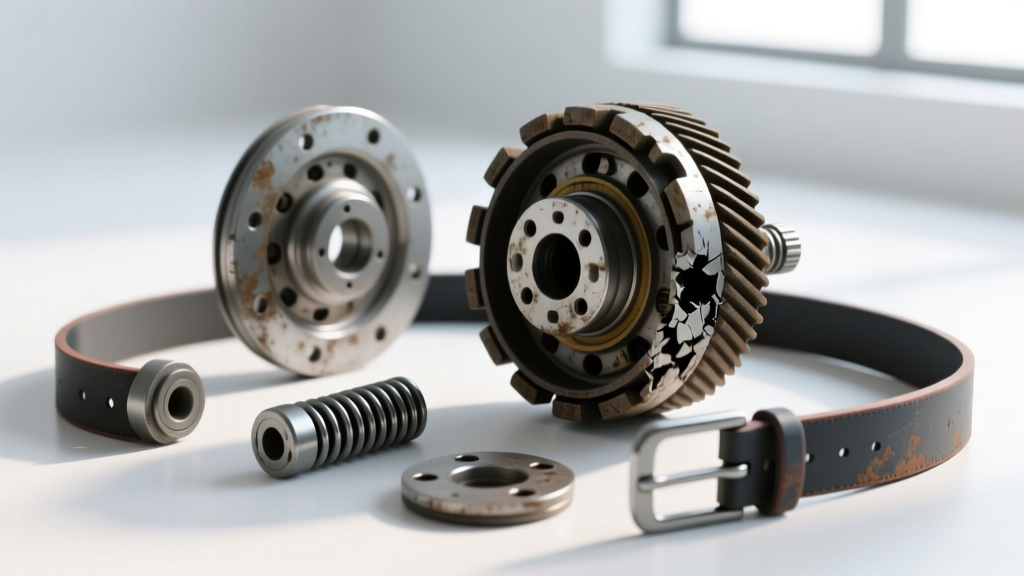
Modern OEM clutch discs (such as those manufactured by Sachs, Exedy, and LuK) utilize organic friction materials bound together by phenolic resins, fiberglass, and Kevlar compounds. These organic facings are designed to operate optimally between 150°F and 350°F (65°C - 175°C). When the clutch is slipped excessively—often mistaken by novices for 'double clutching'—the kinetic energy of the rotating flywheel is converted into thermal energy rather than mechanical grip.
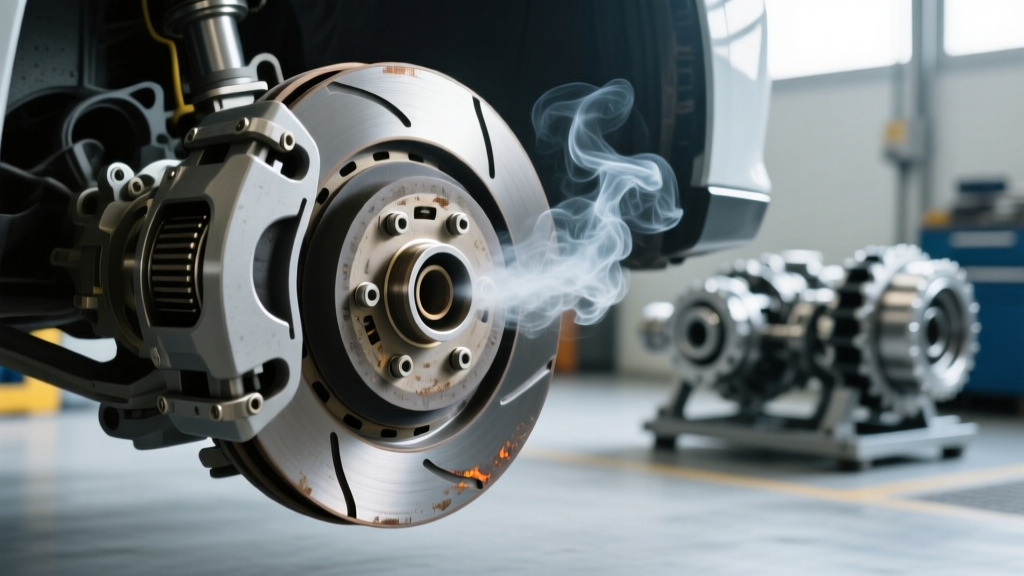
Once the friction surface exceeds 400°F (204°C), the phenolic resin binders begin to off-gas. This is the exact moment the driver notices the hallmark 'burning clutch' smell, which is often described as a mix of burning brake pads, sulfur, and scorched asbestos. If temperatures push past 650°F (343°C), the organic material undergoes carbonization, resulting in severe glazing, micro-cracking, and permanent loss of the coefficient of friction (Mu).
Diagnostic Matrix: Smell Profiles and Root Causes
Not all burning smells originating from the transmission bell housing indicate a failed clutch disc. As a diagnostic technician, you must isolate the odor profile and correlate it with specific drivetrain symptoms. Use the following diagnostic matrix to narrow down the root cause.
| Odor Profile | Visual / Physical Symptom | Probable Root Cause | Required Action |
|---|---|---|---|
| Acrid, scorched brake-dust smell | Clutch pedal engagement point is extremely high; slipping under load in 3rd/4th gear. | Organic clutch disc glazing and phenolic resin burn-off due to driver abuse or hydraulic drag. | Replace clutch disc and resurface/replace flywheel. |
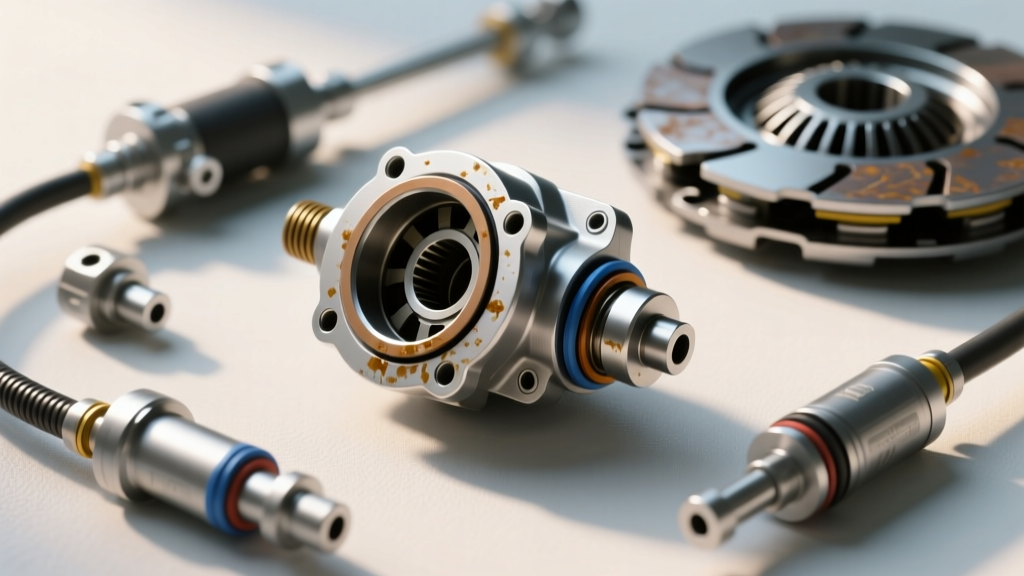
| Sweet, sharp chemical odor | Fluid weeping from the bell housing inspection cover; clutch pedal feels spongy. | Concentric Slave Cylinder (CSC) or rear main seal leak. Fluid is contaminating the friction material. | Replace CSC, flush hydraulic lines, replace contaminated clutch kit. |
| Hot metal / ozone smell | Chirping or grinding noise that changes when the clutch pedal is depressed. | Throwout (release) bearing failure or pilot bearing seizure causing extreme localized friction. | Inspect input shaft collar; replace release bearing and pilot bearing. |
| Rotten eggs / sulfur | Smell is worse under heavy load but clutch engagement feels normal. | Catalytic converter overheating due to engine misfire or extreme rich condition (not clutch related). | Perform OBD-II scan and exhaust backpressure test. |
Step-by-Step Clutch Burning Diagnosis (2026 Protocol)
If you have confirmed the smell is indeed burning friction material, you must determine why the clutch is slipping or dragging. Do not immediately tear down the transmission. Follow this diagnostic sequence to avoid unnecessary labor costs.
1. Evaluating Hydraulic Free-Play and Drag
The most common hidden cause of a burning clutch in modern vehicles is a lack of hydraulic free-play. Many modern vehicles (like the 2015-2024 Ford Mustang EcoBoost or Subaru WRX) utilize self-adjusting hydraulic clutch master cylinders (CMC). If the CMC internal bypass port becomes blocked, or if the pushrod is out of adjustment, the clutch may remain partially disengaged even when the pedal is fully released. This creates a constant, imperceptible slip that generates enough heat to burn the friction material to the rivets over a few thousand miles.
- Test: Measure the clutch pedal free-play at the pad. It should typically be between 0.5mm and 1.5mm before resistance is felt.
- Fix: Adjust the master cylinder pushrod or bleed the system using a pressure bleeder at 15-20 PSI to ensure no air is trapped in the Concentric Slave Cylinder (CSC).
2. Dual-Mass Flywheel (DMF) Resonance and Hotspotting
If your vehicle is equipped with a Dual-Mass Flywheel (common in VW/Audi MQB platforms, BMW G-chassis, and Ford PowerStroke diesels), a burning smell can also be caused by DMF internal spring failure. When the internal torsional dampeners fail, the primary and secondary masses chatter violently. This chatter creates localized 'hotspots' on the friction surface, burning the clutch disc in specific radial patterns while leaving other areas untouched.
Diagnostic Spec: When inspecting a removed DMF, measure the radial free-play and rotational backlash. For example, a Sachs DMF (Part #2290 601 009) typically allows a maximum rotational backlash of 15-20 degrees before spring lock-up. If it spins freely or exhibits severe axial runout (greater than 1.5mm at the outer edge), the DMF must be replaced. Attempting to mate a new clutch disc to a glazed, hot-spotted DMF will result in immediate clutch chatter and a return of the burning smell within 500 miles.
3. The Release Bearing and Fork Wear Check
Improper clutching habits—such as resting your foot on the clutch pedal (riding the clutch) while attempting to mimic the smooth shifts of double clutching—will destroy the release bearing. When the bearing is under constant load, it generates immense heat that transfers directly through the clutch fork and diaphragm spring fingers. This heat weakens the spring steel of the pressure plate, reducing its clamping force (measured in Newtons) and causing the clutch to slip and burn under high-torque conditions.
Expert Insight: Always inspect the tips of the pressure plate diaphragm fingers. If you see deep, polished grooves or bluing (heat discoloration) on the fingers, the release bearing was held under constant tension. This confirms the driver was 'riding' the clutch, mistaking it for advanced shifting techniques.
Real-World Replacement Costs and Torque Specifications
Once the diagnosis is confirmed, proper reassembly is critical. In 2026, the cost of clutch replacement varies wildly based on the friction material chosen and the complexity of the flywheel. Below is a breakdown of current market expectations and critical torque specifications to ensure the repair holds up to thermal stress.
Material Selection and Pricing
- Organic OEM Replacements (e.g., Exedy, LuK): $250 - $450 for the kit. Best for daily driving and smooth engagement. Susceptible to burning if abused.
- Cerametallic / Puck Style (e.g., ACT, South Bend): $600 - $950. Highly resistant to thermal fade and burning, but engagement is aggressive and can cause transmission gear rattle.
- Dual-Mass Flywheel (DMF) Replacement: $800 - $1,400 for the part alone. Never machine a DMF; it must be replaced as a sealed unit.
- Labor Costs: Expect $600 to $1,200 depending on whether the vehicle is FWD, RWD, or AWD (requiring transfer case removal).
Critical Flywheel Torque Specifications
Improper flywheel torque leads to warping, which causes uneven clamping pressure, localized slipping, and a burning smell. Always use new, OEM-grade or ARP hardware and follow the exact yield-torque sequences.
- GM LS-Series (4.8L, 5.3L, 6.2L): OEM bolts (Part #12551365) or ARP 200-2802. Torque to 74 lb-ft, then turn an additional 90 degrees. Use Loctite 272 on aftermarket bolts if not using OEM torque-to-yield.
- Ford 5.0L Coyote (Mustang GT): OEM flywheel bolts. Torque to 59 lb-ft in a star pattern. Replace bolts after a single use as they are torque-to-yield.
- Subaru EJ25 / FA20 (WRX / BRZ): Flywheel to crankshaft bolts torque to 69 lb-ft. Ensure the flywheel alignment pin is seated correctly to prevent runout.
Expert Conclusion
Understanding what is double clutching in a car is valuable for vintage racing or heavy-duty hauling, but in the context of modern synchronized manual transmissions, attempting these techniques without proper rev-matching skills often devolves into 'riding the clutch.' The resulting burning smell is the chemical cry of phenolic resins breaking down under extreme thermal duress. By utilizing the diagnostic matrix above, checking hydraulic free-play, and inspecting the flywheel for DMF failure or hotspots, you can accurately pinpoint the root cause of the burn. Never ignore a burning clutch smell; thermal damage to the friction material is cumulative, and a glazed clutch will eventually leave you stranded without drive power.
Authoritative References
- SAE J2522: Dynamometer Testing of Clutch Friction Materials - Society of Automotive Engineers (Thermal degradation thresholds and Mu coefficients).
- TREMEC TKO Owner's Manual & Technical Guide - Tremec Corporation (Synchro engagement, double clutching mechanics, and input shaft diagnostics).
- LuK Dual Mass Flywheel Diagnostic Guide - Schaeffler Group (DMF backlash tolerances, hotspotting, and torsional dampener failure modes).