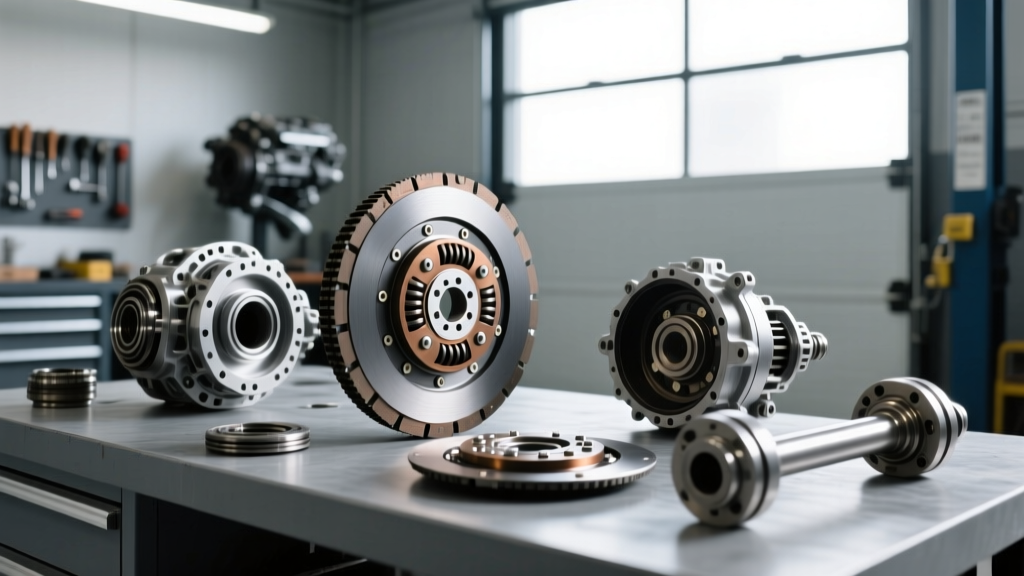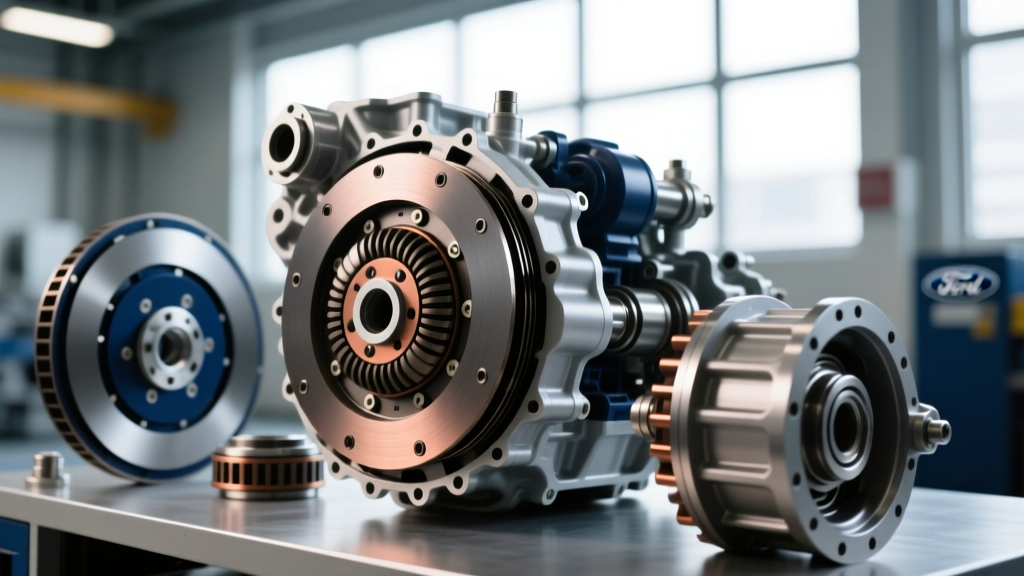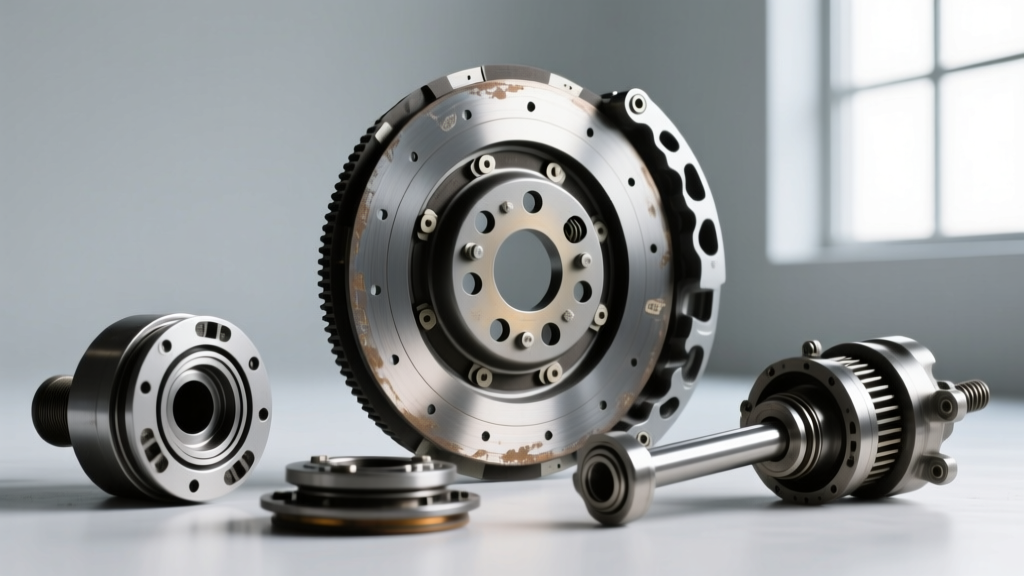
The Dodge Dart, particularly the 2013–2016 models equipped with the 1.4L MultiAir Turbo, remains a cult favorite in the compact tuner scene. However, extracting more power from this platform quickly exposes the weakest link in the drivetrain: the factory friction assembly. If you are pushing beyond stock boost levels, recognizing the early warnings of impending failure is critical. This performance-oriented guide breaks down the exact signs that indicate a dodge dart clutch replacement is no longer just a maintenance task, but an urgent necessity for a drivetrain upgrade.
The C635 Transmission Bottleneck: Why the Dart Eats Clutches
To understand failure modes, you must understand the hardware. The Dodge Dart 1.4T and 2.4L Tigershark engines are mated to the Fiat-derived C635 6-speed manual transmission. While the C635 offers crisp shift gate geometry and excellent internal synchro design, it was engineered around a specific torque ceiling. The factory single-mass flywheel and 215mm clutch disc are rated for approximately 184 lb-ft of torque. When enthusiasts introduce Stage 1 or Stage 2 ECU calibrations via platforms like HP Tuners or custom MultiAir mapping, torque output frequently swells past 220 lb-ft. The OEM clamp load simply cannot contain this energy, leading to microscopic slippage that rapidly accelerates into catastrophic friction material failure.
5 Performance-Driven Signs You Need a Dodge Dart Clutch Replacement
Forget the generic "spongy pedal" advice meant for stock commuter cars. When evaluating a modified Dart, you must look for high-load failure indicators.
1. WOT RPM Flare in 4th Through 6th Gear
The most definitive signature of a compromised friction disc is RPM flare under Wide Open Throttle (WOT) in the higher gears. Because 4th, 5th, and 6th gears have longer lever ratios, they place the highest torsional stress on the clutch assembly. If you are in 5th gear at 3,500 RPM, apply full boost, and watch the tachometer jump 200–300 RPM without a corresponding increase in vehicle speed, your friction material is glazed or the pressure plate diaphragm springs have fatigued. In a tuned 1.4T, this usually happens long before the friction material is physically worn down to the rivets; the clamp load has simply been overpowered.
2. Engagement Point Migration Under Heat
The Dart utilizes a hydraulic Concentric Slave Cylinder (CSC) actuation system. While hydraulic systems are generally self-adjusting, a failing clutch assembly will cause the engagement point to migrate. If your clutch disengages an inch off the floor when cold, but requires you to lift your foot entirely off the pedal to shift after a 20-minute aggressive canyon run, the friction disc is suffering from thermal expansion and glazing. The hydraulic fluid may also be boiling in the CSC due to heat transfer from a slipping flywheel, further altering pedal geometry.
3. Torsional Spring Rattle and NVH Spikes
The C635 transmission lacks a dual-mass flywheel (DMF). Instead, Dodge and Fiat relied on a heavily sprung hub integrated into the clutch disc to absorb engine harmonics and gear rattle. When you subject the Dart to aggressive launch control or high-boost torque spikes, these torsional dampening springs frequently collapse or shatter. If you hear a metallic "clack-clack" at idle that disappears when the clutch pedal is depressed, the sprung hub has failed. Continuing to drive in this state will send unmitigated harmonic shockwaves directly into the C635 input shaft bearings, turning a simple clutch job into a full transmission rebuild.
4. Friction Material Glazing from Stop-and-Go Heat
Performance driving isn't just about track days; it includes the aggressive stop-and-go of canyon carving or highway pulls. When a stock clutch is subjected to the 220+ lb-ft of a tuned MultiAir engine during low-speed maneuvers, it slips. This slip generates immense surface heat, baking the organic friction material into a hard, glass-like surface (glazing). Once glazed, the coefficient of friction drops permanently. You will feel this as a violent, shuddering engagement when pulling away from a stop in first gear, as the disc skips across the flywheel rather than biting smoothly.
5. Inability to Hold Peak Boost on the Dyno
If you are doing pre- and post-tuning dyno pulls, the data will reveal clutch health before your foot does. A healthy OEM Dart clutch will typically hold up to 195 lb-ft at the wheels before slipping. If your dyno graph shows a sudden, sharp drop in torque at peak boost (usually around 3,200 RPM on the 1.4T), while horsepower continues to climb or erratic spikes appear, the clutch is slipping under peak cylinder pressure. This is your cue to halt the dyno session immediately to prevent flywheel scoring.
OEM vs. Performance Clutch Torque Capacity Comparison
When planning your upgrade, selecting the right friction assembly is paramount. Below is a comparison of common setups for the Dart C635 platform, highlighting why an upgrade is necessary for tuned applications.
| Kit Type | Part Reference | Torque Capacity (lb-ft) | Clamp Load (lbs) | Best Application |
|---|---|---|---|---|
| OEM Mopar Replacement | 68081012AA | 185 - 200 | 1,450 | Stock 1.4T / 2.4L, Daily Driving |
| ACT Heavy Duty Sprung Street (HDSS) | FD2-HDSS | 290 - 310 | 2,100 | Stage 2 Tunes, Aggressive Street, AutoX |
| South Bend Stage 2 Daily | KFI18-HDSS | 260 - 280 | 1,850 | Stage 1 Tunes, Fast Street, DD Comfort |
| Exedy Stage 1 Organic | FJC011U | 230 - 250 | 1,700 | Mild Tunes, OEM+ Replacements |
Note: Always pair high-clamp-load pressure plates with a high-quality single-mass flywheel resurfacing or replacement. Mopar Official Parts and aftermarket specialists like Fidanza offer excellent single-mass alternatives if your OEM flywheel is heat-checked.
Critical Installation Specs: C635 Torque Sequence and Fluids
A performance dodge dart clutch replacement will fail prematurely if the installer ignores the specific nuances of the C635 bellhousing and hydraulic system. As an installer or a DIY enthusiast overseeing the build, adhere strictly to these parameters:
- Flywheel to Crankshaft: The C635 uses M10x1.25 stretch bolts. These must be replaced, never reused. Torque to 44 lb-ft (60 Nm), followed by a 90-degree angle turn in a crisscross pattern.
- Pressure Plate to Flywheel: M8 bolts torqued to 18 lb-ft (25 Nm). Use a star pattern, incrementally tightening in 5 lb-ft steps to prevent warping the diaphragm spring.
- Bellhousing to Engine Block: 33 lb-ft (45 Nm). Ensure the two alignment dowels are seated perfectly; a misaligned bellhousing will cause rapid input shaft bearing wear and 5th-gear synchro failure.
- Hydraulic Bleed Protocol: The Dart's CSC is notoriously difficult to bleed due to its inverted position inside the bellhousing. You must use a pressure bleeder set to 15 PSI with Pentosin Super DOT 4 or Mopar DOT 4 fluid. Gravity bleeding will leave air trapped in the CSC, resulting in gear grinding on the 1-2 and Reverse shifts.
- Break-In Procedure: Performance organic discs (like the ACT Clutch HDSS) require a strict 300 to 500-mile stop-and-go city driving break-in period. No WOT pulls, no highway on-ramp launches, and no aggressive downshifts until the resin has fully cured into the friction matrix.
Cost Breakdown: 2026 Pricing for Dart Clutch Overhauls
Budgeting for a drivetrain upgrade requires an understanding of current parts availability and labor rates. Because the Dodge Dart is out of production, OEM Mopar stock can occasionally be backordered, making aftermarket performance kits not just an upgrade, but a logistical necessity.
- OEM Mopar Replacement: $850 – $1,100 total (Parts: ~$450, Labor: ~$500). Best for stock vehicles being sold or returned to factory spec.
- Performance Upgrade (ACT/South Bend + OEM Flywheel Resurface): $1,200 – $1,600 total. This is the sweet spot for 90% of tuned Dart owners.
- Full Overkill Build (Lightweight Fidanza Flywheel + Performance Clutch + CSC Replacement): $1,800 – $2,300 total. Recommended if the car is making 250+ lb-ft and sees track duty. Always replace the CSC (Mopar 68083233AA) whenever the transmission is dropped, as the labor to replace a leaking CSC later will cost more than the part itself.
The Verdict: Don't Let a Stock Clutch Kill Your Tune
Recognizing the signs of a failing clutch in a modified Dodge Dart is about reading the data your car provides: the RPM flares, the harmonic rattles, and the thermal engagement shifts. The C635 is a robust transmission when paired with the correct friction assembly, but it will not tolerate the torque output of a modern Stage 2 MultiAir tune on stock hardware. By upgrading to a high-clamp-load, sprung-hub performance kit and adhering to precise installation torque specs, you can reliably put 250+ lb-ft to the ground and finally unlock the true potential of the Dart platform.