Diagnosing Drivetrain NVH: Dual Mass vs. Single Mass Flywheels
When a manual transmission vehicle or a heavy-duty diesel truck begins exhibiting severe noise, vibration, and harshness (NVH), the flywheel is often the primary suspect. For technicians and DIY enthusiasts alike, pinpointing the exact failure mode is critical, not only for restoring drivability but also for accurately estimating the clutch flywheel replacement cost. As of 2026, the aftermarket is flooded with both OEM-style Dual Mass Flywheel (DMF) replacements and Single Mass Flywheel (SMF) conversion kits. Making the wrong choice based on a misdiagnosis can lead to catastrophic transmission bearing failure or a wasted budget of over $2,500.
According to Schaeffler Automotive Aftermarket, the proliferation of high-torque, low-RPM diesel and turbocharged gas engines has made the DMF an essential component for protecting drivetrain harmonics. However, when these components fail, the diagnostic path diverges sharply depending on whether your vehicle utilizes a DMF or a traditional SMF architecture.
Architectural Differences: How They Manage Torsional Vibration
The Dual Mass Flywheel (DMF) Profile
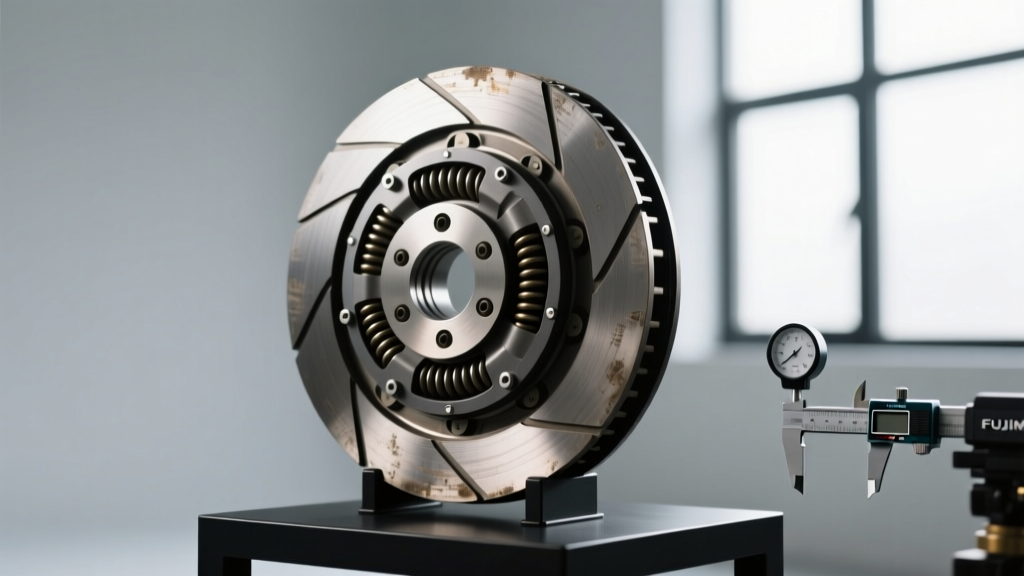
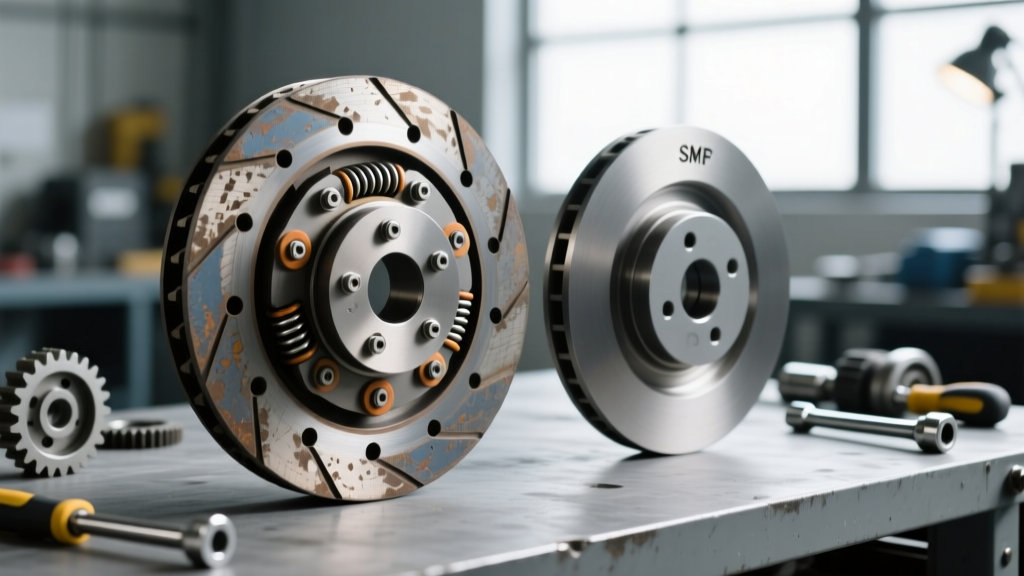
A DMF is essentially two flywheels in one. The primary mass is bolted to the engine crankshaft, while the secondary mass interfaces with the clutch assembly. Between them lies a complex system of arc springs, friction rings, and specialized high-temperature grease. This design allows the secondary mass to absorb the violent torsional spikes generated by modern engines (especially 4-cylinder turbo-diesels like the VW 2.0 TDI or the Ford 6.7L PowerStroke) before they reach the transmission input shaft.
The Single Mass Flywheel (SMF) Profile
An SMF is a solid, singular piece of cast nodular iron or forged steel. It possesses no internal dampening mechanism. Instead, the responsibility of absorbing torsional vibration is shifted entirely to the clutch disc, which features its own internal hub springs and dampers. While virtually bulletproof in terms of structural integrity, an SMF transfers significantly more NVH directly into the transmission casing.
Symptom Diagnosis & Troubleshooting Matrix
Before tearing into the bell housing, a systematic diagnosis is required. Misinterpreting a failing clutch release bearing or a worn transmission input shaft bearing as a flywheel issue will drastically inflate your clutch flywheel replacement cost with unnecessary parts and machine shop fees.
| Symptom / Test | DMF Diagnosis | SMF Diagnosis |
|---|---|---|
| Idle Rattle in Neutral | Heavy clunking or metallic rattling that changes pitch with RPM. Indicates collapsed internal arc springs. | Rare. If present, usually points to a worn clutch disc damper spring or loose transmission input shaft bearing. |
| Clutch Pedal Depression | Rattle disappears or changes significantly when the clutch is fully depressed (loading the release bearing). | Chatter or vibration felt through the pedal upon engagement, indicating hot spots or warping on the solid mass. |
| Engine Shutdown 'Clunk' | Violent shudder and loud metallic bang upon key-off as the two masses slam together without spring resistance. | Smooth, solid stop. No secondary metallic impact noise. |
| Visual / Dial Indicator | Visible grease sling inside the bell housing. Secondary mass exhibits excessive axial/radial play (>2mm). | Heat checking (micro-cracks), bluing, or runout exceeding 0.004 inches (0.10mm) on the friction surface. |
| Crank Position Sensor Codes | Common. Secondary mass wobble alters the air gap to the reluctor ring, triggering misfire or cam/crank correlation codes. | Highly unlikely. Solid mass maintains perfect alignment with the crankshaft. |
The DMF-to-SMF Conversion Debate: Savings vs. Drivability
When faced with a failing DMF, many owners are tempted by SMF conversion kits marketed as 'lifetime fixes.' While the upfront clutch flywheel replacement cost is undeniably lower, SAE International Technical Papers on drivetrain NVH warn of the long-term mechanical consequences of removing the primary harmonic damper.
The Hidden Costs of Conversion
- Transmission Bearing Wear: In lighter manual transmissions (such as the VW/Audi 02Q 6-speed or the Mazda RX-8's lightweight gearbox), the absence of a DMF sends unmitigated torsional spikes directly into the transmission. This frequently leads to premature input shaft bearing failure and synchro ring wear within 40,000 to 60,000 miles.
- Interior NVH: Diesel engines converted to SMF setups often exhibit a pronounced 'gear rattle' at idle that resonates through the shift knob and floorboards, which many drivers find unacceptable for daily driving.
- Heavy-Duty Applications: In heavy-duty trucks (e.g., Dodge Ram with the 5.9L/6.7L Cummins and NV5600/G56 transmissions), SMF conversions paired with aggressive multi-disc clutch setups are standard practice and generally safe due to the massive rotating mass and heavy-duty bearing tolerances of the transmissions.
2026 Clutch Flywheel Replacement Cost Breakdown
Understanding the financial landscape is crucial for troubleshooting and advising customers. Below is a realistic 2026 pricing matrix for a common application (e.g., Ford 7.3L PowerStroke with the ZF S6-650 manual transmission).
| Cost Category | OEM-Style DMF Replacement | SMF Conversion Kit |
|---|---|---|
| Flywheel & Clutch Kit Parts | $1,100 - $1,450 (LuK REP / Sachs) | $650 - $850 (South Bend / Valair) |
| Machine Shop Resurfacing | $0 (DMFs cannot be resurfaced) | $60 - $90 (If reusing an existing SMF) |
| Hydraulic Throwout Bearing | $120 - $180 | $120 - $180 |
| Labor (R&R Transmission) | $900 - $1,350 (6-9 hrs @ $150/hr) | $900 - $1,350 (6-9 hrs @ $150/hr) |
| Estimated Total Cost | $2,120 - $2,980 | $1,670 - $2,380 |
Note: Attempting to resurface a DMF on a lathe is a critical error. The friction surface is often riveted or bonded, and removing material alters the internal step height, leading to immediate clutch engagement failure and pressure plate over-centering.
Critical Installation Torque Specs & Best Practices
Whether you are reinstalling a DMF or performing an SMF conversion, adhering to precise torque specifications is non-negotiable. Flywheel bolts are subjected to extreme shear forces and cyclic loading.
BMW ZF GS6-37BZ (N54/N55 Engines)
- DMF to Crankshaft Bolts (M10x1.25): Replace bolts every time. Torque to 120 Nm (89 lb-ft). Do not use thread locker unless specified by the OEM TSB; rely on the factory micro-encapsulated thread treatment.
- Clutch Pressure Plate to DMF: 25 Nm (18 lb-ft) in a star pattern. Over-torquing can warp the secondary mass casting.
Ford ZF S6-650 (7.3L PowerStroke)
- DMF to Crankshaft Bolts: 112 lb-ft. Ensure the dowel pin alignment is perfectly seated before drawing the flywheel flush. Forcing it with bolts will crack the primary mass housing.
- Clutch to Flywheel: 35 lb-ft.
Final Diagnostic Verdict
Accurately diagnosing the source of drivetrain NVH is the only way to control your clutch flywheel replacement cost. If your vehicle was engineered from the factory with a DMF, the most reliable path to restoring OEM drivability and protecting your transmission synchros is to replace it with a high-quality OEM-style unit from Schaeffler (LuK) or ZF (Sachs). SMF conversions should be strictly reserved for dedicated heavy-duty towing applications, off-road vehicles, or track cars where drivetrain longevity supersedes cabin comfort and low-RPM gear rattle. Always perform a thorough bell-housing stethoscope test and check for crankshaft end-play before condemning the flywheel assembly.