The Thermodynamics of Axle Housings: Why Heat Kills Gear Oil
As of 2026, modern heavy-duty trucks like the Ford F-350 and Ram 3500 are pushing well over 1,000 lb-ft of torque from the factory. While engines and transmissions have evolved to handle these immense loads, the rear axle assembly remains a critical bottleneck for thermal management. When towing heavy fifth-wheel trailers or navigating steep off-road grades, the ring and pinion gears generate massive amounts of friction. This friction transfers directly into the gear oil, rapidly elevating sump temperatures.
Standard GL-5 gear oils rely on extreme pressure (EP) additives—typically sulfur-phosphorus compounds and zinc dialkyldithiophosphates—to prevent metal-on-metal welding under high shear. However, when differential temperatures exceed 250°F (121°C), these additives begin to oxidize and deplete. The oil's viscosity index improvers shear down, resulting in a fluid that is too thin to maintain a hydrodynamic lubricating film. This is precisely why a routine differential fluid flush is not merely a suggestion; it is a mechanical necessity. But what happens when you alter the thermal dynamics of the axle by installing an aftermarket cooling cover?
Stock vs. Aftermarket: A Thermal and Capacity Comparison
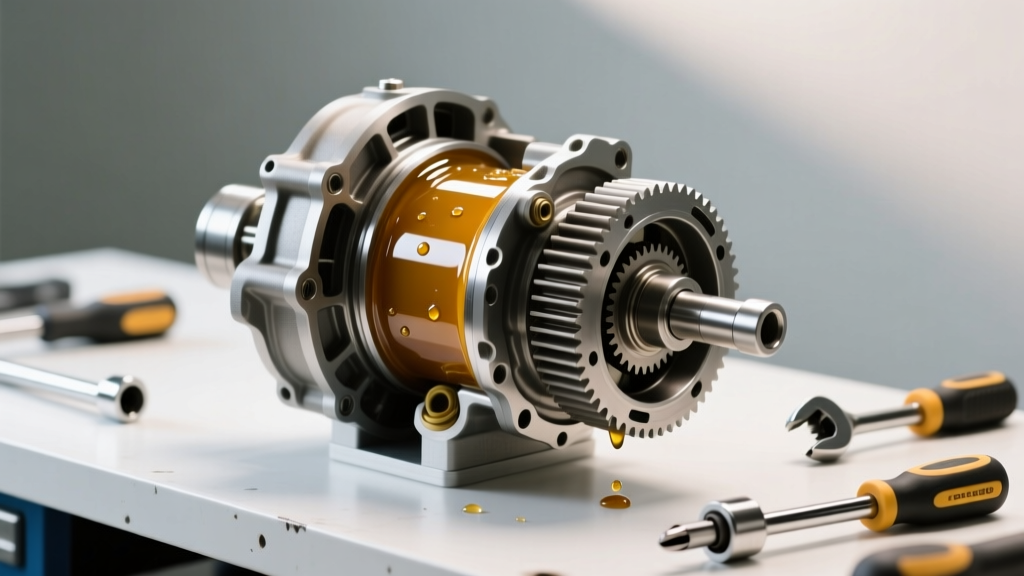
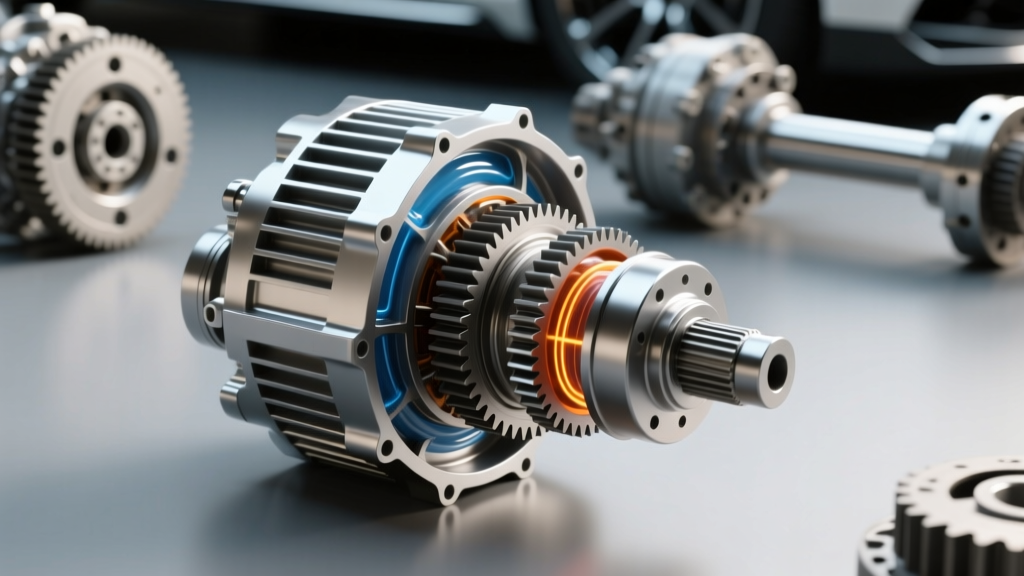
Upgrading your differential cover fundamentally changes the fluid dynamics and thermal mass of the axle housing. By increasing the overall fluid volume and adding external cooling fins, you effectively lower the operating temperature of the gear oil, thereby extending its service life. Below is a comparison of stock versus premium aftermarket covers for two of the most common heavy-duty axles on the road.
| Axle Model | Cover Type | Fluid Capacity | External Fin Surface Area | Avg. Cost (2026) |
|---|---|---|---|---|
| Dana 80 (Ford HD) | OEM Stock | 3.75 Quarts | Minimal (Smooth) | $65 (Replacement) |
| Dana 80 (Ford HD) | Mag-Hytec Finned | 5.25 Quarts | High (Deep Fins) | $285 |
| AAM 11.5 (GM/Ram) | OEM Stock | 3.40 Quarts | Minimal (Ribbed) | $55 (Replacement) |
| AAM 11.5 (GM/Ram) | PPE Billet Aluminum | 4.20 Quarts | Moderate (Finned) | $310 |
According to engineering data from Dana Spicer, a 40% increase in fluid capacity can delay the onset of critical thermal breakdown by up to 25% during sustained grade towing. The increased thermal mass means the fluid takes longer to reach destructive temperatures, while the external fins promote convective heat transfer to the ambient air.
Deep Dive: Internal Baffles and Magnetic Drain Plugs
The external fins only tell half the story. High-end covers from manufacturers like Mag-Hytec feature internal baffles designed to direct the churning gear oil toward the pinion bearings and the upper sections of the ring gear, ensuring comprehensive splash lubrication. Furthermore, these covers replace the standard flush plug with a high-strength neodymium magnetic drain plug. During a differential fluid flush, this magnet captures microscopic ferrous swarf that standard filters (which do not exist in most differentials) would miss, preventing abrasive paste from scoring the bearing races.
How a Cooling Cover Alters Your Differential Fluid Flush Protocol
It is a common misconception that differentials can be "flushed" in the same manner as an automatic transmission using a pressurized exchange machine. Because differentials rely entirely on splash lubrication and lack pressurized fluid circuits, a true differential fluid flush is actually a meticulous drain, clean, and refill procedure. Installing a cooling cover changes this protocol in three distinct ways:
- Increased Fluid Volume: You will need to purchase an additional 1.5 to 2 quarts of synthetic gear oil per axle. For a 4WD truck, upgrading both the front (e.g., Dana 60) and rear (e.g., Dana 80) means buying 3-4 extra quarts of fluid.
- Fill Level Calibration: Stock axles are filled to the bottom edge of the fill hole. However, because aftermarket cooling covers add volume behind the baffle plates, you must often fill the housing until the fluid reaches the specific internal notch or secondary fill port machined into the cover itself to ensure the pinion bearing receives adequate oil.
- Extended Service Intervals: While a stock differential towing heavy loads requires a fluid flush every 30,000 to 50,000 miles, the thermal efficiency of a baffled cooling cover paired with high-end synthetic oil can safely extend this interval to 75,000 miles under similar conditions.
Step-by-Step: Flushing and Sealing an Upgraded Cover
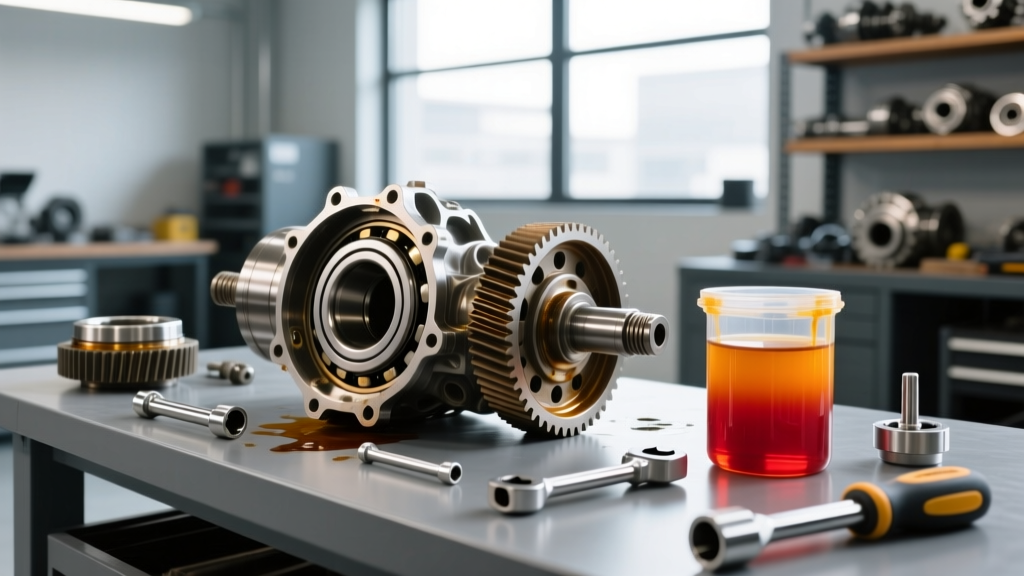
If your existing gear oil smells burnt or contains glitter-like particulates, a simple drain is insufficient. You must perform a solvent flush before installing the new cooling cover.
- Initial Drain: Remove the stock cover and drain the degraded fluid. Inspect the housing for large metal shards, which indicate catastrophic bearing or gear failure.
- Solvent Flush: If the housing is contaminated with heavy sludge, fill it with a 50/50 mix of kerosene and cheap ATF. Rotate the wheels by hand (vehicle in neutral, safely supported on jack stands) for 2 minutes to circulate the solvent.
- Evacuate and Dry: Drain the solvent mixture completely. Use compressed air to blow out the axle tubes and dry the housing mating surface.
- Gasket Application: Discard cheap cork gaskets. Apply a continuous 3mm bead of Permatex Ultra Black RTV Silicone (Part #85084) or install a reusable LubeLocker elastomeric gasket to the new cooling cover.
- Mount and Torque: Thread all bolts by hand to prevent cross-threading the aluminum cover or steel axle housing.
Torque Specifications and Fluid Selection
Proper torque is critical. Over-tightening can warp an aftermarket aluminum cover or strip the threads in the axle housing, leading to chronic leaks. Always follow a crisscross star pattern, starting from the center and working outward.
- Dana 80 Cover Bolts (3/8"-16): 35 - 45 lb-ft
- GM AAM 11.5 Cover Bolts (M8x1.25): 25 - 30 lb-ft
- Ford Sterling 10.5 Cover Bolts: 35 - 45 lb-ft
- Magnetic Drain Plugs: 25 lb-ft (Do not over-torque, as the O-ring provides the seal, not the threads).
For the refill, synthetic gear oil is mandatory for heavy-duty applications. AMSOIL Severe Gear 75W-90 is a top-tier choice for standard towing and daily driving, offering exceptional shear stability. If you are frequently towing max-capacity fifth wheels in mountainous terrain, stepping up to a 75W-140 viscosity provides a thicker hydrodynamic film at extreme temperatures, though it may incur a slight fuel economy penalty during cold-weather commuting.
Expert Insight: Never use standard GL-5 gear oil in differentials equipped with clutch-type Limited Slip Differentials (LSD) unless it is specifically labeled as LSD-compatible, or you have added the required friction modifier. Failing to do so will result in severe clutch chatter and premature wear during tight turns, regardless of how effective your cooling cover is.
ROI Analysis: Is the Upgrade Worth the Flush Cost?
Let us break down the financial reality of combining a differential fluid flush with a cooling cover upgrade in 2026. A standard shop will charge between $150 and $225 to flush and refill a rear differential using OEM parts and bulk synthetic fluid. If you opt to upgrade to a premium billet or cast-aluminum cooling cover, the parts cost will add roughly $250 to $350, plus an extra $40 for the additional high-quality synthetic fluid required to fill the increased capacity.
While the initial outlay pushes the total service cost to the $450–$600 range, the return on investment manifests in long-term axle survival. Replacing a destroyed ring and pinion set or rebuilding a Dana 80 axle due to thermal failure easily exceeds $2,500 in parts and machine shop labor. By dropping operating temperatures by 30°F to 50°F and capturing destructive swarf via the magnetic drain plug, the cooling cover pays for itself the very first time it prevents a catastrophic bearing failure on a steep mountain pass.