The Hidden Economics of Drivetrain Maintenance
When establishing a rigorous preventive maintenance schedule for your car, truck, or SUV, the drivetrain often takes a backseat to engine oil and brake fluid. However, as automotive engineering has advanced, the types of differentials installed in modern vehicles have multiplied in complexity. This evolution directly impacts your maintenance budget. A simple fluid swap on a 1990s solid-axle truck is vastly different—and far cheaper—than servicing the electronic torque-vectoring rear axle on a 2026 luxury performance SUV.
Understanding how differential architecture dictates fluid volume, chemical requirements, and labor intensity is the key to avoiding catastrophic gear failure and inflated dealership service bills. In this 2026 preventive maintenance guide, we break down the true cost of differential fluid service across the most common axle systems on the road today.
How Differential Architecture Dictates Fluid Requirements
The internal mechanics of your axle determine not just how much gear oil you need, but the specific chemical makeup required to prevent wear, overheating, and clutch-pack degradation.
Open Differentials (The Baseline)
Found in most base-model passenger cars and older 2WD trucks, open differentials utilize a simple spider gear set. Because there are no friction clutches to manage, these units require only a standard API GL-5 gear oil, typically in a 75W-90 or 80W-90 viscosity. The cost of entry here is low, and the service interval is generally long (often 60,000 to 100,000 miles under normal driving conditions).
Clutch-Type Limited Slip Differentials (LSD)
Clutch-type LSDs (like the Ford Traction-Lok or GM Eaton Positraction) use internal friction discs to bias torque to the wheel with traction. These require a specialized friction modifier additive. If you run standard GL-5 without this modifier, the clutch packs will chatter, bind, and eventually glaze or shatter, turning a $60 fluid change into a $1,200 differential rebuild. According to the AMSOIL Differential Maintenance Guide, skipping the friction modifier is the number one cause of premature LSD failure in enthusiast vehicles.
Helical / Torsen Differentials
Torsen (Torque-Sensing) differentials rely on the sliding friction of helical worm gears rather than clutch packs. They do not require friction modifiers. However, the intense sliding forces generate significant localized heat. Running a high-quality, shear-stable synthetic 75W-90 or 75W-140 is mandatory. As noted in the Red Line Oil Gear Oil Technical Guide, synthetic esters provide the necessary film strength to protect Torsen gears under high-load cornering and towing scenarios.
Electronic Torque-Vectoring & Active Diffs
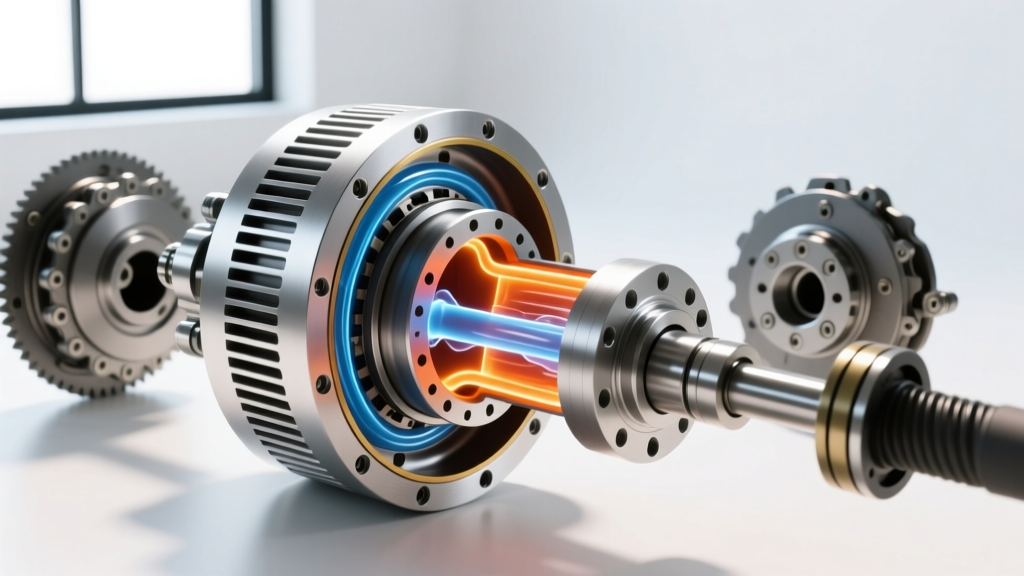
The most expensive tier includes active systems like the Audi Sport Differential or BMW M Active Differential. These units use electro-hydraulic clutch packs and planetary gearsets to overdrive individual wheels. They require highly specialized, proprietary OEM fluids (e.g., specific dual-clutch or hydraulic-compatible gear oils). These fluids are rarely available at local auto parts stores and must be sourced through the dealer network, driving up material costs significantly.
2026 Differential Fluid Service Pricing Matrix
Labor rates in 2026 average between $160 and $220 per hour at dealerships, while independent drivetrain specialists typically charge $120 to $150 per hour. Below is a cost breakdown based on differential type.
| Differential Type | Avg. Capacity | DIY Fluid Cost (2026) | Pro Service Cost (Indep.) | Dealership Cost |
|---|---|---|---|---|
| Open (e.g., GM 8.5" 10-Bolt) | 2.1 Quarts | $35 - $45 | $110 - $140 | $180 - $240 |
| Clutch LSD (e.g., Ford 8.8") | 2.5 Pints | $55 - $70 | $140 - $180 | $250 - $320 |
| Heavy Duty Towing (e.g., AAM 11.5") | 3.5 Quarts | $80 - $110 | $180 - $230 | $300 - $400 |
| Active / Torque Vectoring | 1.5 - 2.0 Liters | $90 - $150 | $250 - $350 | $450 - $650+ |
Labor Variables: Drain Plugs vs. Cover Removal
The physical design of your axle housing heavily influences labor time, which is the primary driver of professional service costs.
- Drain and Fill Plugs: Modern axles, such as the ZF-designed units found in newer European SUVs or the AAM 9.25" front axles in Ram trucks, often feature dedicated drain and fill plugs. This reduces service time to under 30 minutes. Crucial PM Tip: Always remove the fill plug before the drain plug to ensure you can actually refill the unit.
- Cover Removal (The "Drop and Clean" Method): Axles without drain plugs (like the classic Ford 8.8" or GM 10-bolt) require unbolting the rear cover. This increases labor time to 1.0 - 1.5 hours. However, this method allows the technician to scrape out metallic sludge from the magnet and inspect the ring and pinion teeth for abnormal pitting or spalling.
Sealing Hardware: RTV vs. Reusable Gaskets
If your axle requires cover removal, the sealing method impacts both cost and future serviceability. Traditional black RTV silicone (like Permatex Ultra Black, part #80003) costs less than $10 but requires meticulous surface prep and a 24-hour cure time before the differential can be driven. Upgrading to a reusable elastomer gasket, such as a LubeLocker unit (approx. $45-$60), eliminates cure times, prevents overtightening distortion, and makes the next fluid change significantly faster and cheaper.
Critical Torque Specifications for Preventive Maintenance
Overtightening differential cover bolts is a common DIY and quick-lube mistake that warps the stamped steel cover, leading to chronic leaks and potential gear oil starvation. Always use a calibrated inch-pound or low-range foot-pound torque wrench. Reference specs for common 2026-era and legacy axles include:
- GM 8.5-inch / 8.6-inch 10-Bolt: Cover bolts to 25 lb-ft (34 Nm). Use a star-pattern sequence.
- Ford 8.8-inch (Super 8.8 & Legacy): Cover bolts to 28-38 lb-ft (38-52 Nm).
- Dana 44 / Dana 60: Cover bolts to 25-30 lb-ft (34-41 Nm). Note that Dana 60s often use larger 1/2" bolts which may torque to 45 lb-ft depending on the specific housing generation.
- AAM 9.25-inch (Front Axle Drain/Fill): Plugs to 25 lb-ft (34 Nm). Do not overtighten the aluminum housings.
The True Cost of Deferred Differential Maintenance
Saving $150 by skipping a differential fluid service is a false economy. Gear oil degrades over time; the extreme pressure (EP) additives deplete, and the fluid's viscosity breaks down under high shear. When the fluid fails, the ring and pinion gears operate metal-on-metal.
A standard 75W-90 synthetic fluid change costs roughly $50 in materials. Conversely, replacing a destroyed ring and pinion gear set, along with crushed carrier bearings and scored axle shafts, routinely costs between $1,800 and $3,500 at a drivetrain specialty shop in 2026. For vehicles equipped with active torque-vectoring differentials, a complete rear axle replacement due to internal clutch-pack disintegration can exceed $6,000 due to the integration of electronic sensors and proprietary hydraulic pumps.
Final Recommendations for 2026
To optimize your maintenance budget and protect your drivetrain, identify your exact differential type using your vehicle's RPO codes, build sheet, or axle tag. If you operate a clutch-type LSD, never compromise on the friction modifier. If you tow heavy loads (over 5,000 lbs) or drive in extreme heat, step up to a 75W-140 full synthetic to maintain film strength. By tailoring your fluid selection and service intervals to the specific architecture of your axle, you ensure maximum longevity and predictable maintenance costs for the life of the vehicle.