The Psychology of Gear Oil: Applying Semantic Differential Questions to Axle Diagnostics
When master technicians evaluate the health of a ring and pinion gear set or a limited-slip differential (LSD), they rarely rely on mileage alone. Instead, they subconsciously run through a series of semantic differential questions—a diagnostic framework borrowed from behavioral science that evaluates an object's traits on a spectrum between two bipolar adjectives. Is the fluid amber or opaque? Is the odor sulfurous or acrid? Is the texture silky or gritty?
As of 2026, modern high-output turbocharged trucks and heavy-duty SUVs place unprecedented thermal and shear stress on hypoid gear sets. Evaluating your differential fluid's color and condition through these semantic differential questions is the most cost-effective preventive maintenance strategy available. A $30 drain-and-fill can save you from a $2,500 axle rebuild. This guide will teach you how to read the subtle, and not-so-subtle, warning signs hidden in your gear oil.
Spectrum 1: Visual Opacity and Color Gradients
The first semantic differential question to ask is: Where does the fluid fall on the color spectrum? Fresh API GL-5 synthetic gear oil (such as Mobil 1 75W-90 or Red Line 75W140) is a translucent, honey-amber color. As the fluid is subjected to extreme shearing forces and thermal cycling, the sulfur-phosphorus extreme pressure (EP) additives begin to deplete, and microscopic metal particulates become suspended in the oil.
The Normal Wear Gradient (Amber to Dark Brown)
A dark brown or tea-colored fluid is entirely normal for a differential with 30,000 to 50,000 miles. The extreme pressure additives naturally darken the oil as they sacrificially coat the ring and pinion gears. If the fluid is dark brown but still translucent enough to read newsprint through a thin smear on a shop towel, the axle is healthy. Continue your standard maintenance interval.
The Critical Failure Gradient (Opaque Black to Metallic)
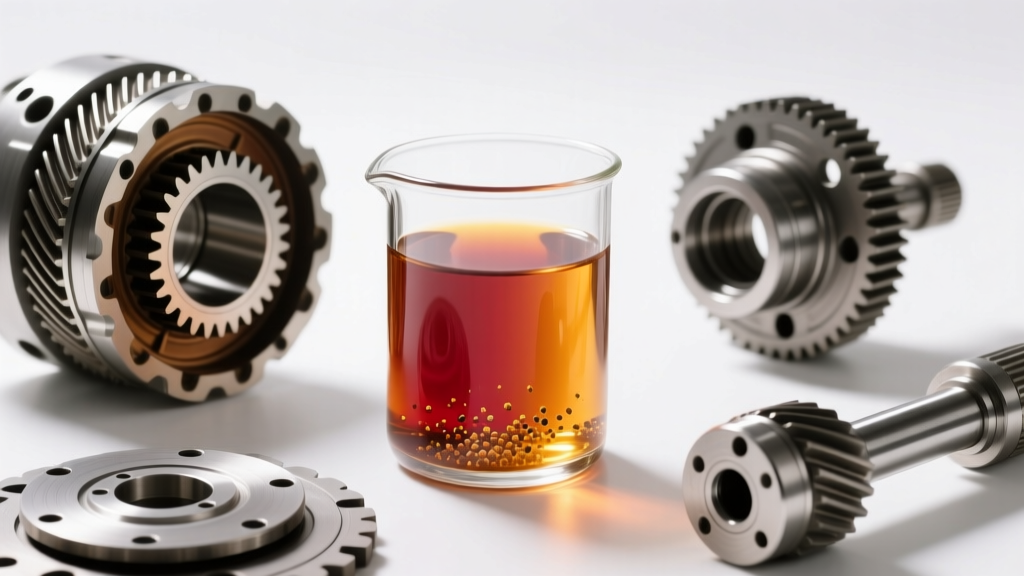
If the fluid is opaque black and leaves heavy, dark streaks on your towel, the EP additives are entirely depleted. Worse, if you see a 'glitter' effect under a fluorescent shop light, you are looking at suspended ferrous and non-ferrous metals. This indicates active wear on the carrier bearings, pinion bearings, or the hypoid gear teeth themselves. Immediate teardown and inspection are required.
The Emulsification Anomaly (Chocolate Milk)
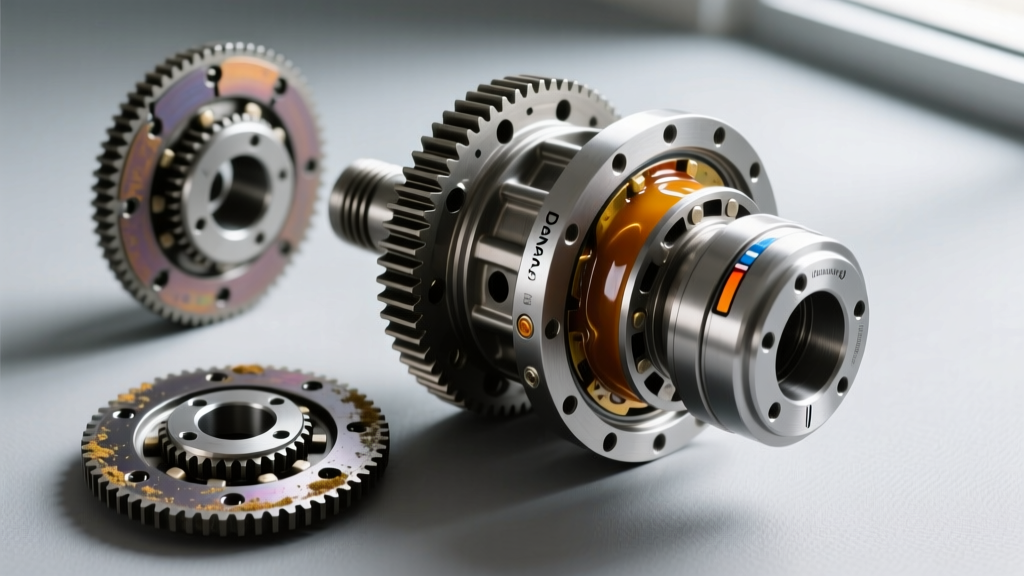
Perhaps the most alarming color condition is a milky, frothy, or 'chocolate milk' appearance. This answers the semantic differential question of dry vs. aqueous. Gear oil is highly hygroscopic when subjected to temperature swings. If you submerge a hot axle (like a Dana 44 on a Jeep Wrangler) in cold water, the rapid contraction of air inside the housing creates a vacuum, sucking water past the axle seals or through an improperly routed breather tube. Water destroys the hydrodynamic film strength of 75W-90 gear oil, leading to catastrophic metal-on-metal scoring within miles.
Spectrum 2: Olfactory and Tactile Feedback
Visuals only tell half the story. The remaining semantic differential questions require your sense of smell and touch to diagnose internal clutch pack degradation and thermal runaway.
The Olfactory Test: Sulfurous vs. Burnt
All API GL-5 gear oils have a distinct, pungent sulfur smell due to the zinc dialkyldithiophosphate (ZDDP) and sulfurized olefin EP additives. This is normal. However, if the fluid smells sharply acrid or burnt—reminiscent of scorched clutch material or burnt toast—the fluid has exceeded its thermal breakdown point (typically around 300°F to 325°F at the gear mesh). This is common in track-driven vehicles with GM 8.6" IRS differentials or heavy-duty towing applications lacking auxiliary differential coolers.
The Tactile Rub Test: Silky vs. Gritty
Place a drop of differential fluid between your thumb and forefinger and rub them together.
- Silky/Smooth: The fluid retains its viscosity and film strength.
- Gritty/Sandy: Indicates silica (dirt) ingress from a compromised axle seal, or severe bearing cage wear.
- Sludgy/Chunky: If you feel fibrous or chunky material, the friction modifier clutches inside your Limited Slip Differential (LSD) are disintegrating. This is highly common in Auburn or Eaton clutch-type LSDs that have not received regular friction modifier additives (like Motorcraft XL-3 or ACDelco P/N 88900333).
The Differential Fluid Diagnostic Matrix
Use this matrix to cross-reference your semantic differential questions with actionable mechanical conclusions.
| Spectrum Trait | Healthy State | Warning State | Critical Failure State | Likely Culprit / Action Required |
|---|---|---|---|---|
| Color / Opacity | Translucent Amber | Opaque Dark Brown | Milky / Chocolate Milk | Water intrusion via breather or seal. Flush immediately; inspect bearings for rust pitting. |
| Particulates (Visual) | None visible | Fine gray paste on magnet | Glitter / Metal flakes | Ring & pinion gear wear or bearing cage failure. Requires differential teardown. |
| Odor | Pungent Sulfur | Heavy / Earthy | Burnt / Acrid | Thermal breakdown from towing/track use. Upgrade to 75W-140 synthetic. |
| Tactile (Rub Test) | Silky / Smooth | Slight fibrous drag | Chunky / Gritty | LSD clutch pack degradation. Add friction modifier; replace clutches if chatter persists. |
Real-World Axle Scenarios and Fluid Readings
Case Study 1: Jeep Gladiator Rubicon (Dana 44 M210/M220 Axles)
A customer brings in a 2022 Jeep Gladiator used for river crossings. The rear differential fluid is a thick, mayonnaise-like emulsion. By asking the semantic differential questions regarding color and texture, we immediately identify water ingress. The fix isn't just a fluid change; it requires rerouting the axle breather lines higher into the engine bay and replacing the inner axle seals, as water has likely compromised the wheel bearing grease. A simple $60 fluid service turns into a $450 preventive seal and breather upgrade, saving the customer from a seized axle bearing on the trail.
Case Study 2: Ford F-150 8.8" Rear End (LSD Chatter)
A Ford F-150 owner complains of a 'chattering' or 'binding' sensation when turning into driveways. Pulling the differential cover reveals fluid that is dark, slightly sludgy, and lacks the distinct friction modifier scent. The clutch packs in the 8.8" Traction-Lok differential are sticking. We perform a flush using 2.5 quarts of synthetic 75W-140 gear oil and two bottles of Motorcraft XL-3 Friction Modifier. The semantic differential question of chunky vs. smooth confirmed the clutches were glazed but not destroyed, saving the cost of a full Eaton Posi replacement.
Preventive Maintenance: Torque Specs, Fluids, and Economics
Answering the diagnostic questions is only half the battle; executing the preventive maintenance correctly ensures the longevity of the drivetrain. As of 2026, the industry standard for most light-duty and half-ton truck axles is a full synthetic 75W-90 API GL-5 fluid, while heavy-duty 3/4-ton and 1-ton applications (like the Dana 60 or GM 11.5" AAM) benefit from the higher shear stability of 75W-140.
Crucial Torque Specifications and Sealing
Over-torquing differential components is a common DIY mistake that leads to stripped housings and warped covers. Adhere strictly to these specifications:
- Drain/Fill Plugs (3/8" NPT): 25 - 30 lb-ft. Always use a new crush washer or wrap the threads with PTFE tape to prevent weeping.
- Drain/Fill Plugs (1/2" NPT): 35 - 40 lb-ft.
- Differential Cover Bolts (10mm / 3/8"): 25 - 30 lb-ft. Always tighten in a crisscross star pattern to ensure even gasket compression.
- RTV vs. Gaskets: If using RTV silicone (like Permatex 82180 Ultra Black), apply a continuous 1/8" bead, allow it to skin over for 10 minutes before mating, and wait 12 hours before filling with fluid to prevent silicone extrusion into the oil pickup. Pre-cut gaskets (like Dana P/N 706-3052X) are highly preferred for faster, cleaner service.
The Economics of Differential Service
A dealership or specialized driveline shop will typically charge between $150 and $250 per axle for a drain, clean, and fill using bulk synthetic fluids. For the DIY mechanic, purchasing two quarts of premium synthetic 75W-90 ($18-$24 per quart), a bottle of LSD friction modifier ($12), and a tube of RTV ($8) brings the total cost to roughly $65 per axle. Considering that a replacement ring and pinion gear set with master rebuild bearings and labor easily exceeds $1,800, the ROI of interpreting your fluid's condition is undeniable.
Conclusion
Your differential fluid is the lifeblood of your axle assembly, holding the chemical and physical history of every mile driven. By systematically applying semantic differential questions to your gear oil's color, opacity, smell, and texture, you transition from reactive repairs to true preventive maintenance. Whether you are navigating the rock-crawling trails in a Dana 44 or towing heavy loads with an AAM 11.5, reading the fluid is the ultimate diagnostic tool. For further reading on gear oil classifications and extreme pressure additive chemistry, consult the American Petroleum Institute (API) standards, and for specific axle breather and seal tolerances, reference the Dana Spicer engineering resources.