Demystifying the Drivetrain: What Is Final Drive Gear Ratio?
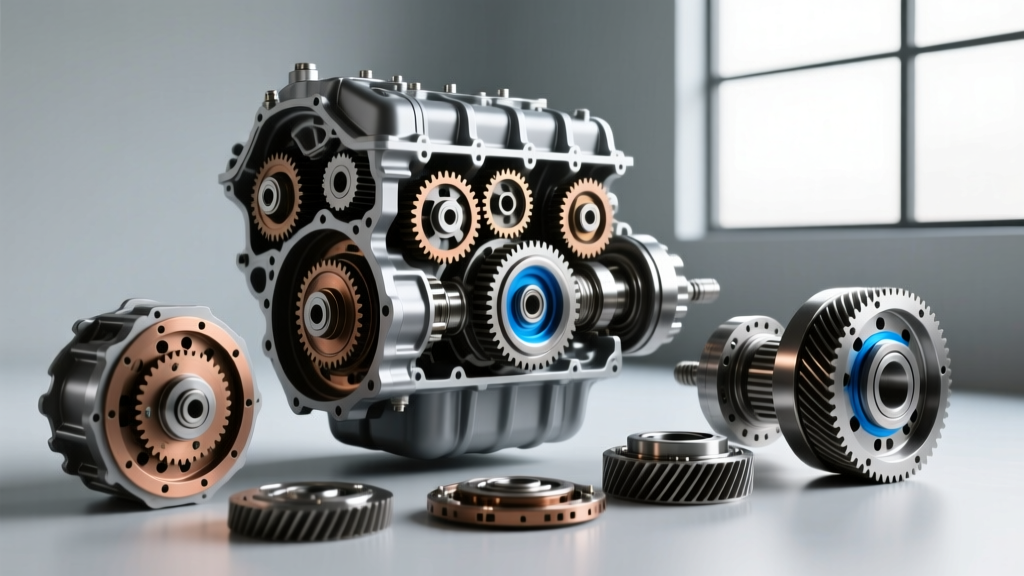
If you have ever wondered why your truck struggles to pull a heavy trailer up a grade, or why your sports car feels sluggish off the line despite having a powerful engine, the answer often lies at the very end of your drivetrain. When enthusiasts and mechanics ask, what is final drive gear ratio, they are referring to the last mechanical multiplication of torque before power reaches the wheels. This ratio is determined by the ring and pinion gears housed inside your vehicle's differential.
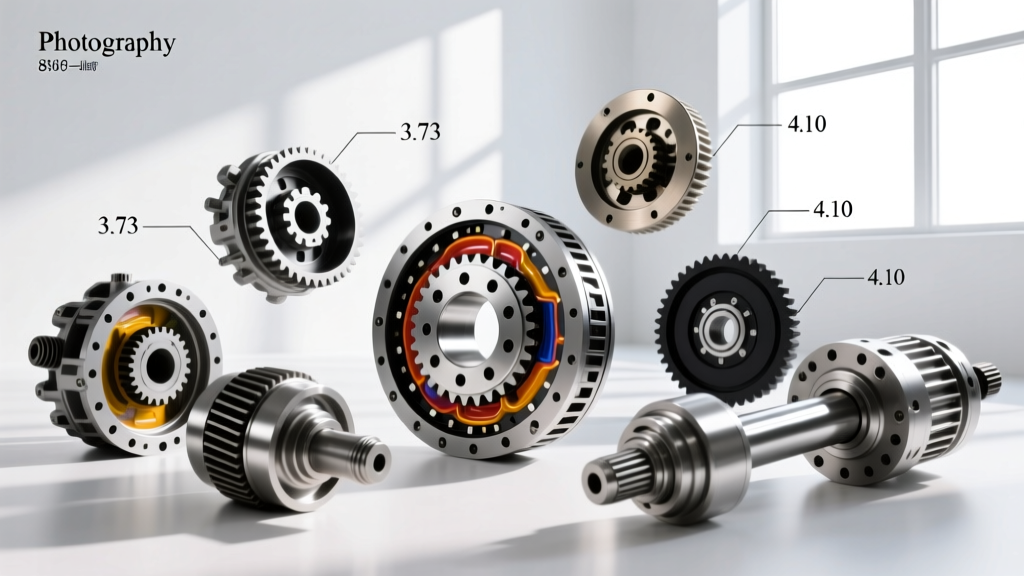
In simple terms, the final drive ratio dictates how many times the driveshaft (and the pinion gear attached to it) must rotate to turn the axle shafts (and the ring gear) exactly one time. A 4.10:1 ratio means the driveshaft spins 4.1 times for every single rotation of the tires. This final multiplication profoundly affects your vehicle's acceleration, towing capability, top speed, and highway fuel economy.
The Ring and Pinion Explained
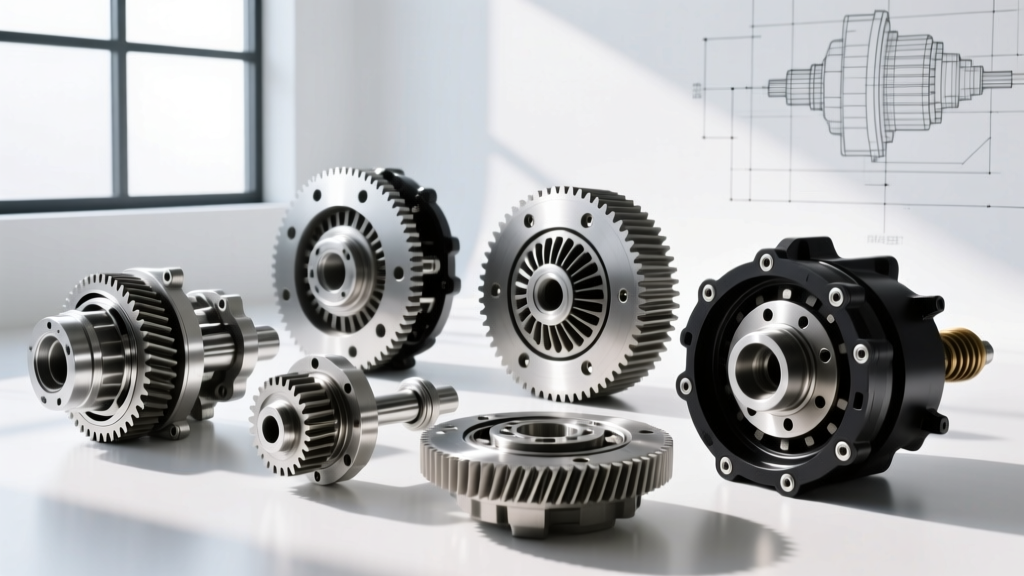
The pinion gear is a small, cone-shaped gear attached to the end of the driveshaft. It meshes with the ring gear, a large circular gear bolted to the differential carrier. Because the pinion has far fewer teeth than the ring gear, it creates a mechanical advantage, multiplying torque while reducing rotational speed. Selecting the right combination of these teeth counts is the foundation of differential gear ratio selection.
The Art of Differential Gear Ratio Selection
Choosing the correct gear ratio is not about picking the highest number for maximum power; it is about balancing your engine's powerband, your transmission's gear spread, your tire diameter, and your vehicle's primary purpose. A common mistake beginners make is installing aggressive 4.56 gears in a daily driver, only to find the engine screaming at 3,200 RPM at 70 MPH, destroying fuel economy and drivability.
Matching Your Transmission's Ratio Spread
Your transmission's first-gear ratio heavily influences what final drive you should select. The overall first-gear multiplication is calculated by multiplying the transmission's first gear by the final drive ratio.
- Classic 4-Speed and Early Automatics (e.g., GM 4L60E): The 4L60E has a relatively narrow ratio spread with a 3.06:1 first gear. To get heavy vehicles moving with large tires, you need a numerically higher final drive (like 3.73 or 4.10) to compensate for the lack of low-end transmission multiplication.
- Modern 6-Speed Automatics (e.g., GM 6L80): With a deeper 4.03:1 first gear, the 6L80 provides excellent off-the-line torque. You can often run a milder 3.42 or 3.73 final drive and still tow heavy loads comfortably without sacrificing highway cruising RPMs.
- Advanced 8-Speed and 10-Speeds (e.g., ZF 8HP70): The ZF 8HP features a massive ratio spread (up to 7.07:1 between first and eighth). Because first gear is so deep, vehicles equipped with this transmission can utilize very tall (numerically low) final drives like 3.15:1 or even 2.93:1, achieving massive fuel savings while retaining incredible launch authority.
Selection Matrix: Which Ratio Fits Your Build?
Use the chart below as a baseline for differential gear ratio selection. This assumes a standard V8 engine making peak torque between 2,000 and 4,000 RPM, and an overdrive transmission with a final drive ratio of roughly 0.67:1.
| Final Drive Ratio | Best Use Case | Tire Size Sweet Spot | Approx. Cruise RPM (70 MPH) |
|---|---|---|---|
| 2.73 - 3.08 | Highway cruising, max fuel economy, light loads | 26' - 28' Stock | 1,400 - 1,600 RPM |
| 3.23 - 3.42 | Daily driving, mild towing, balanced performance | 28' - 31' | 1,650 - 1,850 RPM |
| 3.73 - 4.10 | Heavy towing, off-road crawling, drag racing | 32' - 35' | 1,900 - 2,300 RPM |
| 4.56 - 5.13+ | Dedicated rock crawling, extreme mud bogging | 37' - 42'+ | 2,500+ RPM (Not for highways) |
For a deeper mathematical breakdown of how tire size affects your RPM, the GrimmJeeper Gear Calculator is an industry-standard tool used by off-road builders to map out exact drivetrain configurations before purchasing parts.
The Hidden Costs: Parts, Labor, and Torque Specs
Upgrading your differential is a precision job. It is not simply a matter of unbolting the old gears and dropping in the new ones. Proper differential gear ratio selection must be paired with flawless installation to prevent catastrophic failure, gear whine, or premature wear.
Essential Hardware and Pricing (2026 Estimates)
When budgeting for a gear swap, do not just price the ring and pinion. You will need a master overhaul kit. Here is what you can expect to pay for a standard semi-floating axle (like a GM 10-bolt or Ford 8.8):
- Ring and Pinion Set: $180 to $320 (Brands like Motive Gear, Yukon, or Richmond).
- Master Bearing Kit: $100 to $160 (Includes carrier bearings, pinion bearings, seals, shims, and crush sleeve).
- Positraction/Locker Rebuild Kit: $60 to $120 (If your limited-slip clutches are worn).
- Professional Shop Labor: $700 to $1,200 (Gear setup takes specialized tools and hours of dial-indicator work).
Critical Torque Specifications (GM 8.5-Inch 10-Bolt Example)
If you are tackling the installation yourself, adhering to exact torque specifications is non-negotiable. Using a calibrated torque wrench and an inch-pound rotational torque tool is mandatory. For the ubiquitous GM 8.5-inch 10-bolt differential:
- Ring Gear Bolts: 115 lb-ft (Must use red high-strength threadlocker and left-hand thread if applicable).
- Pinion Nut (to achieve preload): Typically 140 to 190 lb-ft. Note: You do not torque to a specific number; you torque until the rotational preload reaches 12 to 15 inch-pounds on a dial indicator.
- Carrier Bearing Cap Bolts: 60 lb-ft.
Pro-Tip: Never reuse a crush sleeve. The crush sleeve is a one-time-use component designed to deform and maintain pinion bearing preload. If you over-tighten it, you must replace it and start over.
Setting the Pattern: Backlash and Pinion Depth
Beyond torque, the physical alignment of the gears is what dictates longevity. According to installation guidelines from Yukon Gear & Axle, two primary measurements must be perfected using gear marking compound (yellow ochre):
- Backlash: The slight clearance between the ring and pinion teeth. For most street/strip applications, this should be set between 0.008' and 0.012' using a dial indicator mounted to the axle housing. Too tight, and the gears will bind and overheat; too loose, and they will slap together, causing impact fatigue and noise.
- Pinion Depth: The distance from the pinion gear's centerline to the ring gear's centerline. This is adjusted using shims behind the inner pinion bearing. A proper depth will show a centered, oval-shaped contact pattern on both the drive and coast sides of the ring gear teeth.
Calculating Your Effective Final Drive
Once you understand what is final drive gear ratio, you can calculate your effective crawl ratio or launch ratio. This helps you understand the true mechanical advantage at the wheels.
Formula: Transmission Gear x Transfer Case Ratio (if 4WD) x Final Drive Ratio = Effective Wheel Torque Multiplication.
For example, if you have a 4L60E (3.06 first gear), an NP241 transfer case (2.72 low range), and you selected a 4.10 final drive:
3.06 x 2.72 x 4.10 = 34.13:1 Effective Crawl Ratio.
This means the engine's torque is multiplied by over 34 times before it hits the dirt, providing immense crawling capability. For more technical deep-dives into drivetrain math and component selection, the Summit Racing How-To Library offers excellent visual guides on gear pattern reading and axle identification.
Summary
Differential gear ratio selection is the ultimate balancing act in automotive modification. By answering the question of what is final drive gear ratio and understanding how it interacts with your transmission, tire size, and vehicle weight, you can transform a sluggish, inefficient vehicle into a towing powerhouse or a fuel-efficient highway cruiser. Always invest in high-quality bearings, respect the torque specs, and take the time to set your gear pattern perfectly. The result will be a drivetrain that performs flawlessly for hundreds of thousands of miles.