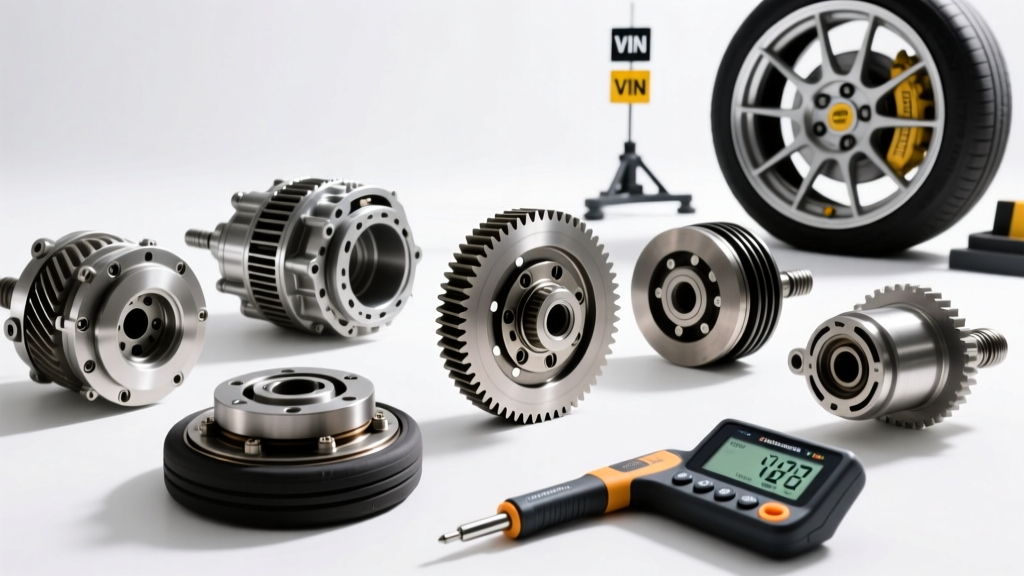
The 2026 Donor Car Dilemma: Why Drag Racers Must Verify via VIN
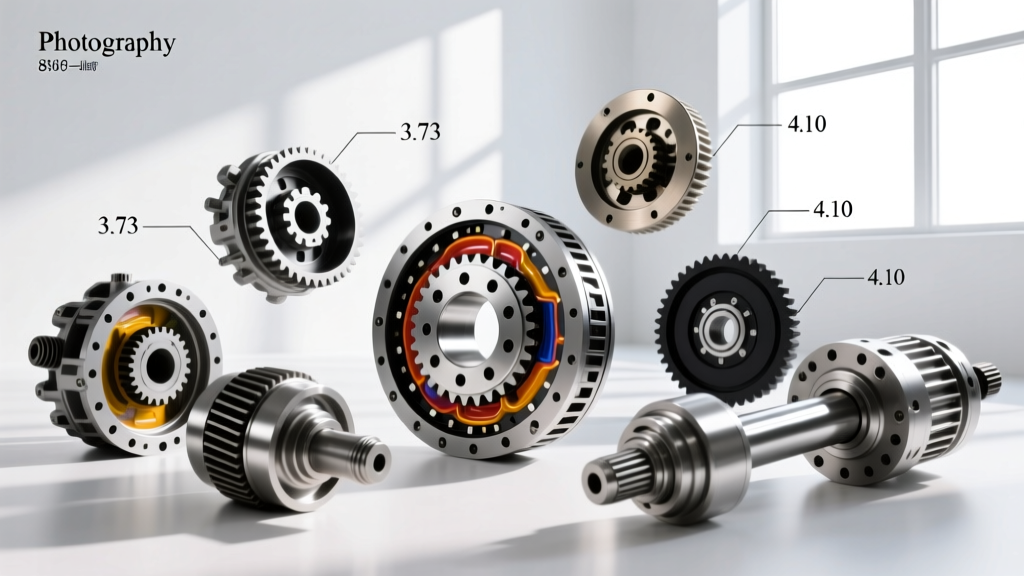
Whether you are building a dedicated bracket car, prepping a street/strip Coyote-swapped Foxbody, or buying a late-model Dodge Challenger Hellcat for radial tire duty, knowing exactly what is inside the rear differential is non-negotiable. In the modern salvage and private-party market, sellers frequently guess or misrepresent rear-end gearing. Installing a built transmission and dropping a car at the track only to realize you are stuck with a 2.73 highway ratio instead of the advertised 3.73 will ruin your race day and your wallet.
Before you order a set of Richmond or Motive gears, you need a baseline. This step-by-step guide will show you how to find gear ratio from VIN number documentation, decode OEM build sheets, and translate those factory numbers into a winning drag racing setup.
Step-by-Step: How to Find Gear Ratio From VIN Number
A common misconception is that the 17-digit VIN directly spells out the axle ratio in plain text. While the VIN encodes the engine, transmission, and model year, the specific axle ratio is usually tied to the vehicle's RPO (Regular Production Option) codes or axle tag codes, which are generated on the OEM build sheet linked to that exact VIN.
Step 1: Locate and Decode the Base VIN
Find the 17-character VIN on the dashboard or driver-side door jamb. The first 11 characters (World Manufacturer Identifier and Vehicle Descriptor Section) tell you the platform and powertrain. For example, a 2018 Camaro SS with the LT1 engine and 8L90 transmission has specific VDS characters that dictate the factory calibration.
Use the NHTSA VIN Decoder to verify the factory transmission model. You cannot calculate your final drag strip drive ratio without knowing your transmission's first-gear ratio.
Step 2: Pull the OEM Build Sheet Using the VIN
To find the exact axle ratio, you must pull the factory build sheet. For GM vehicles, this means finding the RPO codes. For Ford and Chrysler, you are looking for the Axle Code.
- GM Vehicles: Use a third-party GM build sheet decoder (or the glovebox RPO sticker) linked to your VIN. Look for codes starting with 'G'. GU5 means 3.23, GU6 means 3.42, and GT4 means 3.73. The G80 code indicates a limited-slip differential (Eaton Gov-Lok), which is crucial for drag racing traction.
- Ford Vehicles: While the door jamb sticker has the axle code (e.g., 27 for 3.73), verifying via a Ford VIN build sheet portal confirms if the car left the factory with a Torsen, Trac-Lok, or open differential.
- Mopar/Chrysler: Build sheets derived from the VIN will list the axle ratio directly (e.g., 3.09, 3.73, or 3.91) and note the presence of an anti-spin differential.
Step 3: Cross-Reference for Aftermarket Swaps
If the VIN build sheet shows a 3.23 open rear end, but the car is a known drag build, the previous owner likely swapped it. This is where the VIN baseline saves you: it tells you what the car's TCM (Transmission Control Module) is currently calibrated for. If you are buying a 2016+ Mustang GT to run drag radials, the TCM shift schedules are mapped to the factory ratio tied to the VIN calibration. Changing the physical gears without knowing the baseline will cause harsh shifts or TCM limp-mode on the return road.
Drag Racing Drivetrain Math: Factory vs. Strip
Once you know how to find gear ratio from VIN number records, you must apply drag racing math. Your Final Drive Ratio in any given gear is calculated as:
Final Drive Ratio = Transmission Gear Ratio × Axle Ratio
In drag racing, your goal is to keep the engine in its peak power band (usually between 5,500 and 7,500 RPM for naturally aspirated V8s) through the traps, while ensuring your first-gear final drive is aggressive enough to multiply torque for the 60-foot time.
The First-Gear Multiplication Factor
Modern automatic transmissions have incredibly aggressive first gears, which changes the axle ratio requirements compared to vintage builds.
- Vintage TH400 (1st Gear: 2.48): Paired with a 4.10 axle, the final first-gear ratio is 10.16:1. Excellent for heavy cars and mild torque converters.
- GM 6L80E (1st Gear: 4.03): Paired with a 4.10 axle, the final ratio is a massive 16.52:1. This will instantly overpower the tires on a street car. Drag racers using 6L80Es often run milder 3.23 or 3.42 axle ratios to achieve a manageable 13.00:1 starting line ratio.
- ZF 8HP / Ford 10R80 (1st Gear: 4.71): These transmissions require highway-oriented axle ratios (2.73 to 3.23) for street/strip use, or they will shift into second gear before the car leaves the 60-foot beams.
Hardware Upgrades: Ring, Pinion, and Spools
Once your VIN confirms the factory baseline, it is time to upgrade the differential for the strip. Open differentials and weak aluminum carrier caps will shatter under the shock load of a trans-brake. Below is a target chart for common drag racing classes.
| Drag Racing Class | Target Axle Ratio | Recommended Differential Type | Estimated Hardware Cost (2026) |
|---|---|---|---|
| Bracket Racing (1/4 Mile) | 4.10 - 4.56 | Full Spool (Strange Engineering) | $800 - $1,200 |
| Street/Strip (Radial Tires) | 3.42 - 3.73 | Eaton Detroit Truetrac / Wavetrac | $700 - $950 |
| Pro Mod / Outlaw 10.5 | 4.89 - 5.29 | Fabricated 9" Ford w/ Spool | $3,500 - $5,000+ |
| 1/8th Mile Index Racing | 4.88 - 5.13 | Lightweight Aluminum Carrier | $1,100 - $1,500 |
Critical Torque Specifications for Rear-End Assembly
When swapping from your VIN-verified factory gears to a dedicated drag set (such as a Motive Gear USA Standard set), precision assembly is mandatory. A loose ring gear will shear bolts on the first trans-brake hit.
- GM 12-Bolt (8.875"): Ring gear bolts (1/2"-20) must be torqued to 65-85 lb-ft using Red Loctite 272. Always use new OEM-style bolts; never reuse stretched factory hardware.
- Ford 8.8": Ring gear bolts (3/8"-24) require 70-85 lb-ft. If upgrading to an aftermarket spool, ensure the bolt circle matches the specific spool manufacturer's spec (some require 7/16" bolts).
- Pinion Nut Torque (Crush Sleeve vs. Solid Spacer): If retaining a crush sleeve, the pinion nut torque can exceed 250+ lb-ft to achieve the correct bearing preload (12-18 in-lbs of rotational drag). For drag cars, discard the crush sleeve and install a solid pinion spacer shim kit (approx. $40). This prevents the pinion gear from shifting under heavy deceleration on the top-end lift.
TCM Calibration and Modern Drag Cars
If your VIN lookup reveals you are working with a modern, computer-controlled drivetrain (e.g., a 2018 Camaro ZL1 with a 10L90), changing the physical gear ratio is only half the battle. The Transmission Control Module uses the factory axle ratio (derived from the VIN calibration file) to calculate output shaft speed, line pressure, and shift timing.
When you install 4.10 gears in a car calibrated for 3.23s, the TCM will read a massive slip ratio between the engine RPM and the output shaft speed, often triggering a P0729 (Gear Ratio Error) and putting the car in limp mode. You must use tuning software like HP Tuners or DiabloSport to update the 'Axle Ratio' and 'Tire Size' parameters in the TCM to match your new physical setup.
Summary: Trust the Math, Verify the VIN
Learning how to find gear ratio from VIN number records is the first step in building a reliable, competitive drag car. It prevents you from buying misrepresented donor cars, ensures your transmission first-gear math aligns with your track goals, and provides the baseline data needed for modern TCM tuning. Pair your OEM data with high-quality forged internals, solid spacers, and precise torque specs, and your drivetrain will survive the punishment of the starting line for seasons to come.