The Thermodynamics of Hypoid Axle Assemblies
Heavy-duty and performance axle assemblies, such as the Dana 80, GM AAM 11.5, and Ford 10.5-inch Sterling, rely on hypoid ring and pinion gear sets to transfer power from the driveshaft to the wheels. Unlike standard spur gears, hypoid gears feature an offset pinion that creates a massive amount of sliding friction alongside rotational rolling. This sliding action is exceptionally hard on lubricants, generating immense localized heat at the gear mesh point. Under heavy towing or off-road crawling, differential fluid temperatures can easily exceed 250°F (121°C). At these extremes, the thermal limits of both the lubricant and the stock stamped-steel differential cover are pushed to the breaking point.
Understanding how your axle manages heat is the first step in preventing premature bearing failure and gear scoring. The differential cover is not merely a dust shield; it is the primary heat sink for the entire axle assembly. When the cover fails to dissipate heat efficiently, the fluid degrades rapidly, leading to a cascade of mechanical issues.
Spotting the Signs Differential Fluid Needs Changed
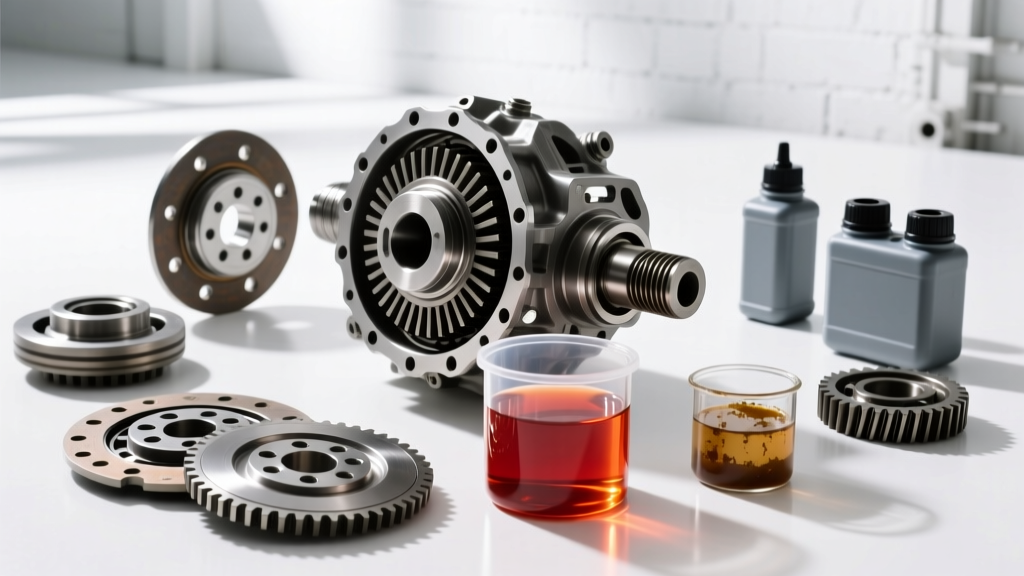
When diagnosing drivetrain issues, recognizing the signs differential fluid needs changed is critical for preventing catastrophic ring and pinion failure. Many drivers rely solely on manufacturer mileage intervals (often 50,000 to 100,000 miles for 'lifetime' fluids), but thermal breakdown does not respect the odometer. According to tribology research cited by Machinery Lubrication, the Arrhenius rate rule dictates that for every 18°F (10°C) increase in temperature above 165°F, the oxidation rate of the oil doubles, effectively halving its useful life.
Chemical and Physical Indicators of Degradation
- Acrid, Burnt Odor: Synthetic 75W-90 or 75W-140 gear oils contain Extreme Pressure (EP) additives, typically Sulfur-Phosphorus compounds. When subjected to prolonged temperatures above 280°F, these additives shear and oxidize, producing a distinct, sharp, burnt smell. If the fluid smells like rotten eggs mixed with burnt toast, immediate replacement is required.
- Viscosity Shear and Thinning: Overheated fluid loses its high-temperature viscosity. If you drain the fluid and it flows like water rather than a thick syrup, the polymers have sheared, and the fluid can no longer maintain a hydrodynamic wedge between the pinion bearing rollers and the races.
- Ferrous and Non-Ferrous Glitter: A fine, metallic paste on the differential cover magnet is normal. However, visible metallic flakes (glitter) suspended in the fluid indicate that the degraded oil has allowed metal-on-metal contact, usually starting at the pinion bearing or the differential side bearings.
- Load-Dependent Whining: A howling or whining noise that changes pitch during deceleration versus acceleration is a classic sign of gear tooth deflection caused by inadequate lubrication film thickness due to oxidized, thinned-out fluid.
Stock vs. Aftermarket Differential Covers: A Thermal Analysis
The stock differential cover on most OEM axles is a stamped steel pan. Steel is a relatively poor conductor of heat compared to aluminum, and the smooth, curved exterior offers minimal surface area for convective air cooling. Upgrading to a finned, cast-aluminum differential cover is one of the most effective, bolt-on thermal management modifications you can perform on a drivetrain.
| Cover Type | Material | Surface Area Multiplier | Fluid Capacity Increase | Estimated Temp Reduction |
|---|---|---|---|---|
| OEM Stamped Steel | Low-Carbon Steel | 1.0x (Baseline) | 0 Pints | Baseline |
| Standard Cast Aluminum | A356-T6 Aluminum | 2.5x | +0.5 to 1 Pint | 10°F - 15°F |
| Finned Deep-Sump (e.g., Mag-Hytec) | A356-T6 Aluminum | 4.0x to 6.0x | +1.5 to 2.5 Pints | 20°F - 35°F |
| Active Liquid-Cooled (PTO) | Billet Aluminum | N/A (Conductive) | Variable (External Loop) | 50°F+ |
The Engineering Behind Finned and Deep-Sump Designs
Aftermarket manufacturers like Mag-Hytec and ARB engineer their covers using A356-T6 cast aluminum, an alloy chosen for its excellent thermal conductivity and structural rigidity. The external cooling fins are aligned longitudinally to match the directional airflow created by the vehicle's forward motion, maximizing convective heat transfer.
Furthermore, deep-sump covers increase the total fluid volume of the axle. For example, a stock Dana 60 rear axle holds approximately 3.25 pints of gear oil. Installing a deep-sump cover increases this capacity to roughly 5.5 pints. This 70% increase in thermal mass means the fluid takes significantly longer to reach critical oxidation temperatures under heavy loads. Additionally, the deeper sump allows the ring gear to pick up more oil per revolution, improving splash lubrication to the upper pinion bearing, which is notoriously starved of oil in stock configurations during steep off-road climbs.
Installation Protocols: Torque Specs and Sealing
Upgrading your differential cover requires strict adherence to torque specifications and sealing protocols to prevent leaks and housing distortion. The mating surface of the axle housing must be perfectly clean. Use a plastic scraper and brake cleaner to remove all old gasket material; never use a metal razor blade on the axle housing, as gouges will create permanent leak paths.
Sealing: RTV vs. Reusable Gaskets
While many premium covers include reusable O-rings or rubber gaskets, many heavy-duty applications still rely on RTV silicone. If using RTV, Permatex Ultra Black (Part # 81878) or Permatex The Right Stuff are the industry standards due to their high oil resistance and flexibility. Apply a continuous 3mm bead, ensuring you circle every bolt hole. Allow the RTV to skin over for 10 minutes before mating the cover to the housing.
Critical Torque Specifications
Over-tightening differential cover bolts will warp the cover, crush the gasket, and potentially strip the threads in the cast-iron or aluminum axle housing. Always use a calibrated inch-pound or low-range foot-pound torque wrench. Consult Dana Spicer technical resources or your specific OEM service manual, but standard reference specs include:
- Dana 60 / Dana 70 (3/8"-16 Bolts): Torque to 30-35 lb-ft in a crisscross star pattern.
- GM 14-Bolt 10.5" (M10 Bolts): Torque to 25 lb-ft (300 in-lbs).
- Ford 10.5" Sterling 12-Bolt: Torque to 33 lb-ft.
- AAM 11.5" (Dodge Ram 3500): Torque to 30 lb-ft.
Pro-Tip: After the initial installation and a 500-mile heat cycle, re-check the torque on the cover bolts. The thermal expansion and contraction of the aluminum cover against the steel or iron housing can cause minor fastener relaxation.
Fluid Selection for High-Heat Applications
When pairing an upgraded cooling cover with fresh fluid, the choice of lubricant is paramount. For severe-duty towing and off-road use, abandon standard 75W-90 in favor of a full synthetic 75W-140 gear oil, such as Amsoil Severe Gear or Mobil 1 Synthetic Gear Lubricant. The higher high-temperature viscosity (140 grade) maintains a thicker protective film at the hypoid gear mesh point when temperatures spike. If your vehicle is equipped with a clutch-type Limited Slip Differential (LSD), ensure the fluid contains the necessary friction modifiers (e.g., GM part # 88900333 or Ford XL-3) to prevent chatter and clutch pack glazing.
Conclusion: Proactive Thermal Management
Ignoring the signs differential fluid needs changed is a fast track to a $3,000+ axle rebuild. By understanding the thermodynamic limitations of stock stamped-steel covers and upgrading to a finned, deep-sump cast aluminum alternative, you drastically lower operating temperatures and extend the life of your EP additives. Combine this hardware upgrade with strict adherence to torque specs and high-quality synthetic 75W-140 fluid, and your drivetrain will reliably handle the most punishing thermal loads you can throw at it.