The Complexity of GM AWD Drivetrains: PTUs, Center Diffs, and Front Axles
Modern General Motors all-wheel-drive (AWD) architectures represent a massive leap forward in traction management, but they have also introduced complex diagnostic challenges for drivetrain technicians. Whether you are servicing a C1XX-platform crossover like the Chevy Traverse and Cadillac XT5, or a T1-platform truck like the Silverado 1500 with the Z82 heavy-duty trailering package, the AWD system relies on a delicate synergy between the front axle, the center power distribution unit, and the rear active coupling.
Unlike traditional part-time 4WD systems that utilize a mechanical, gear-driven center differential inside a transfer case, most modern GM crossovers use a Power Transfer Unit (PTU) bolted directly to the transaxle, paired with a rear Active Torque Coupling (ATC) or a Twinster twin-clutch rear drive module. In full-size trucks, a traditional center differential or clutch-pack transfer case (such as the BorgWarner 4485) manages the split. In both scenarios, diagnosing driveline binding, high-speed whining, or low-speed shudder requires a holistic approach. Surprisingly, the root cause of many perceived 'center diff' failures actually traces back to the front axle. Consequently, performing accurate GM front differential identification is the critical first step in any AWD symptom diagnosis.
Why GM Front Differential Identification is Your First Diagnostic Step
When a customer complains of AWD binding on tight turns or a high-pitch whine at highway speeds, the immediate instinct is to blame the center differential, the PTU, or the rear ATC clutch pack. However, the front differential dictates the baseline rotational speed and torque delivery to the front wheels. If the front differential fluid is degraded, improperly specified, or if a limited-slip additive is missing, the front axle will bind or chatter. The vehicle's stability control and AWD modules will interpret this rotational discrepancy as wheel slip, erroneously commanding the center PTU and rear coupling to engage or modulate, leading to catastrophic overheating of the center driveline components.
Accurate GM front differential identification allows the technician to verify three vital data points:
- Ring and Pinion Ratio: Verifying the exact ratio (e.g., 3.42 GU6, 3.73 GT4, or 2.77 GW9) ensures the PTU and rear differential are matched. A mismatched gear ratio due to a prior improper rebuild will destroy a center PTU within 500 miles.
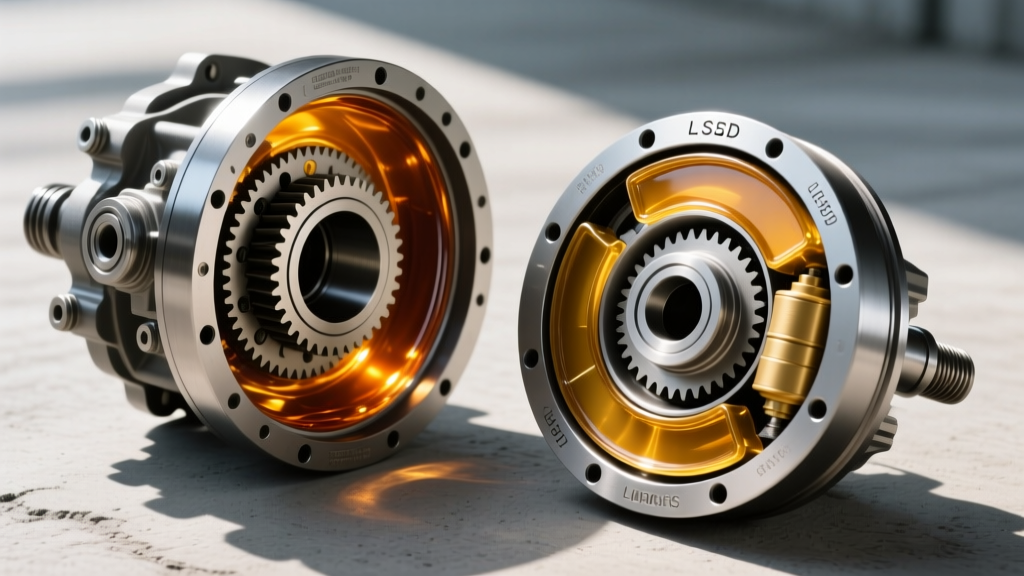
- Differential Type (Open vs. LSD): Identifying whether the front axle utilizes a mechanical limited-slip differential (LSD) or an open diff dictates the fluid requirement. Using standard 75W-90 in an LSD without the required friction modifier (or using the wrong synthetic blend) causes immediate clutch-pack chatter.
- Fluid Capacity and Sump Design: On FWD-based AWD crossovers, the front differential often shares fluid with the transaxle, or utilizes a dedicated, isolated sump (like the 9T65 9-speed automatic). On IFS trucks, it is a standalone 8.25-inch or 9.5-inch corporate axle.
Common AWD Center Differential & PTU Failure Symptoms
To effectively troubleshoot, we must map the customer's complaint to the specific mechanical subsystem. The table below outlines common symptoms, the likely culprit, and the diagnostic action required, emphasizing the interplay between the front axle and the center AWD components.
| Symptom | Primary Suspect | Diagnostic Action & Fluid Check |
|---|---|---|
| Low-speed binding / hopping on tight turns | Rear ATC Clutch Pack or Front LSD | Perform GM front differential identification to check for LSD friction modifier. Scan rear ATC for cross-load binding. |
| High-pitch whine at 45-70 mph | PTU Bearings or Front Diff Pinion Bearing | Isolate noise using chassis ears. Check PTU and front diff fluid for metallic shearing and bearing material. |
| AWD Disable Light + StabiliTrak Warning | PTU Overtemp / Encoder Motor Failure | Scan for DTC C0569 (System Malfunction) or C0394. Check PTU fluid level and cooler lines. |
| Vibration under acceleration (40-55 mph) | Center Driveshaft / PTU Output Flange | Check PTU output seal for leaks. Inspect center carrier bearing and CV joints for excessive play. |
Step-by-Step Troubleshooting: From the Center Coupling to the Front Diff
Step 1: Fluid Analysis and PTU Temperature Checks
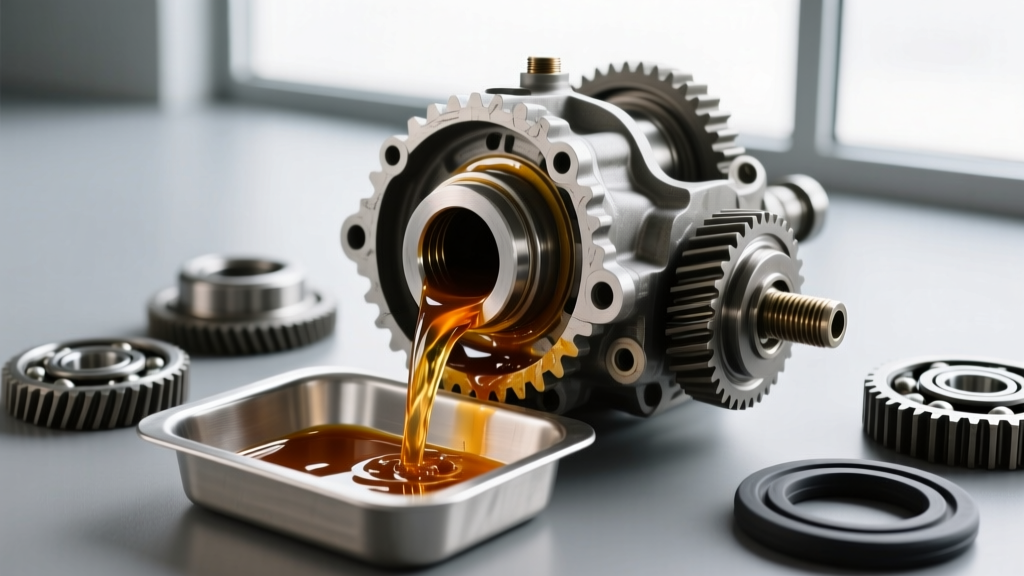
The PTU is essentially a chain-driven or gear-driven transfer case that operates in a high-heat environment, often positioned inches from the catalytic converter. As of 2026, thermal degradation remains the number one killer of GM PTUs. Before tearing down the center differential or transfer case, extract a fluid sample from the PTU and the front differential. Healthy ACDelco Dexron Gear Oil 75W-85 should be translucent and amber. If the PTU fluid is black and smells burnt, the internal clutch pack or bearings have failed. If the front diff fluid shows heavy glitter, the pinion bearing is failing, creating rotational drag that forces the center PTU to work overtime, eventually cooking the PTU fluid.
Step 2: Verifying Gear Ratios and RPO Codes
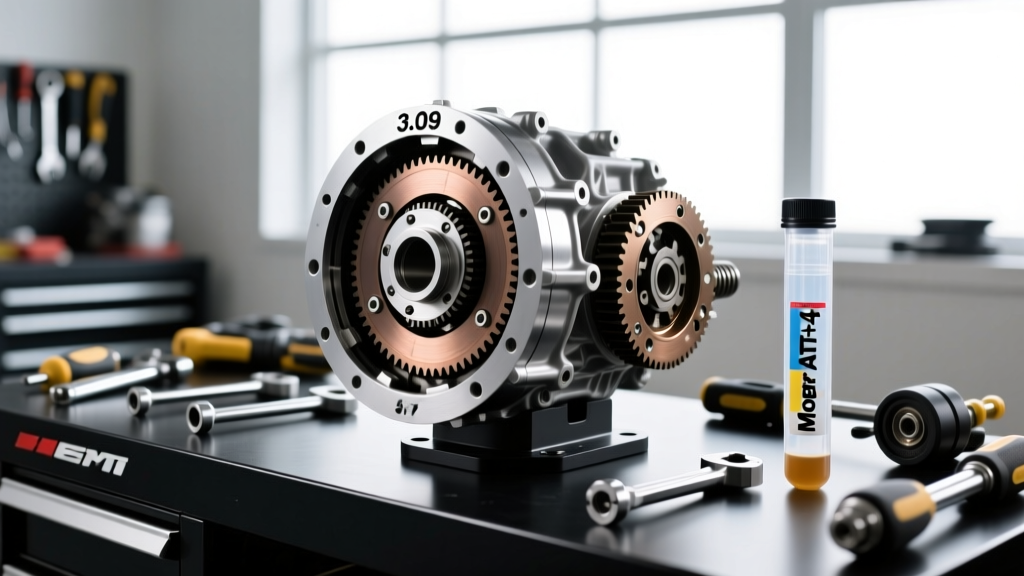
Never rely on the VIN decoder alone for gear ratio verification, especially on fleet vehicles or trucks that may have undergone dealership swaps. Locate the Service Parts Identification (SPID) sticker in the glovebox. Look for the GU4 (3.08), GU6 (3.42), GT4 (3.73), or G80 (Heavy-Duty Locking Rear / LSD identifier). Cross-reference this with the physical axle tag or the ring gear stamping. If the front differential ratio does not perfectly match the rear differential and the PTU output ratio, the center differential will experience continuous micro-slip, leading to premature viscous coupling or clutch-pack failure.
Fluid Specifications, Capacities, and Torque Specs for GM AWD Systems
Using the correct fluid is non-negotiable. Modern GM AWD systems utilize highly specific synthetic blends to manage the thermal loads of both the hypoid gears and the wet-clutch ATC packs. Below are the baseline specifications for common GM AWD platforms. Always verify via GM TechConnect for your specific RPO combination.
- GM Corporate 8.25" IFS Front Differential (T1 Trucks):
Fluid: ACDelco Synthetic 75W-85 (Part # 10-4034 / 88862624).
Capacity: ~1.4 Liters.
Drain/Fill Plug Torque: 33 Nm (24 lb-ft).
Note: If equipped with an LSD, verify the need for a specific friction modifier, though most modern GM synthetic 75W-85 formulations are pre-blended for G80 applications. - Transaxle-Integrated PTU (C1XX Crossovers - 6T70/6T75/9T65):
Fluid: ACDelco Dexron Gear Oil 75W-85 or specific PTU fluid depending on the BorgWarner unit model.
Capacity: Varies wildly from 0.4L to 0.8L. Many PTUs lack a traditional drain plug and require a fluid extraction pump via the fill hole.
Fill Plug Torque: 25 Nm (18 lb-ft) for M14/M16 plugs. - Rear Active Torque Coupling (ATC / Twinster):
Fluid: ACDelco ATC Fluid or specific Twin-Clutch fluid.
Warning: Never mix standard 75W-90 hypoid gear oil into the rear ATC sump; it will destroy the electro-hydraulic clutch packs within 100 miles.
Real-World Case Study: 2022 Chevy Traverse AWD Binding on Tight Turns
Vehicle: 2022 Chevrolet Traverse AWD (3.6L V6, 9T65 Transaxle, 3.49 GU5 Ratio).
Complaint: Severe driveline binding and hopping during low-speed parking maneuvers. Customer noted the 'Service AWD' message intermittently flashing.
Initial Misdiagnosis: The previous shop assumed the rear Twinster clutch pack was seized and replaced the entire rear drive module ($2,800+ parts and labor). The symptom persisted.
Correct Diagnosis: The technician performed thorough GM front differential identification and discovered the transaxle-integrated front differential was equipped with a helical limited-slip gearset (Torsen-style). The previous shop had serviced the transaxle with a bulk, non-specified ATF that lacked the necessary friction modifiers for the front differential's biasing mechanism, causing it to lock up under low-speed, high-ackermann steering angles. The binding front axle sent false torque-bias data to the PTU, causing the 'Service AWD' fault.
Resolution: Complete transaxle and PTU fluid flush using exact ACDelco OEM-specified fluids. Binding eliminated. Total cost: $350.
When to Rebuild vs. Replace: Cost Breakdown in 2026
When your diagnostic steps confirm that the center PTU or the front differential has suffered catastrophic mechanical failure, you are faced with the rebuild versus replace dilemma. As of 2026, the aftermarket support for GM PTU rebuild kits (bearings, seals, and internal chains) has improved, but the labor intensity of splitting a PTU casing while ensuring precise bearing preload remains a specialized skill.
A factory-new PTU assembly for a C1XX crossover typically ranges from $1,400 to $2,200, while a professional rebuild utilizing high-quality Timken or SKF bearings and OEM seals will cost between $800 and $1,200 in parts and machine shop labor. For the front differential on an IFS truck, a complete ring and pinion setup kit (including crush sleeves, shims, and Timken bearings) costs roughly $350 to $500. However, setting the pinion depth and backlash on an 8.25-inch IFS requires specialized dial indicators and an inch-pound torque wrench to measure pinion bearing drag. If you lack the tooling to achieve a precise 0.008" - 0.012" backlash, opting for a remanufactured axle assembly or a pre-set ring and pinion carrier drop-in is the most reliable path to restoring your GM AWD system to factory specifications.