The Thermal Bottleneck in OEM Differential Car Housings
When evaluating the drivetrain of any heavy-duty truck, off-road rig, or performance differential car platform, the axle assembly is the final point of torque multiplication before power reaches the wheels. This immense mechanical advantage comes at a strict thermodynamic cost: heat. Hypoid gear sets, which are standard in nearly all modern automotive and truck axles, rely on a sliding friction action between the ring and pinion gears. This sliding friction inherently generates massive amounts of thermal energy, especially under high-load scenarios like towing, rock crawling, or high-speed track use.
Original Equipment Manufacturer (OEM) differential covers are typically stamped from 1.5mm to 2.0mm thick steel. While stamped steel is inexpensive to produce and offers adequate physical protection against road debris, it is a remarkably poor thermal conductor. Steel possesses a thermal conductivity of approximately 50 W/m·K. In contrast, the A356-T6 cast aluminum used in premium aftermarket differential car covers boasts a thermal conductivity of roughly 150 W/m·K—three times more efficient at transferring heat from the gear oil to the ambient air. When gear oil temperatures exceed 250°F (121°C), standard 75W-90 synthetic fluids begin to experience accelerated oxidation, and by 300°F (149°C), the viscosity index improvers start to permanently shear, leading to catastrophic pinion bearing failure.
Convection vs. Active Cooling: How Upgraded Covers Work
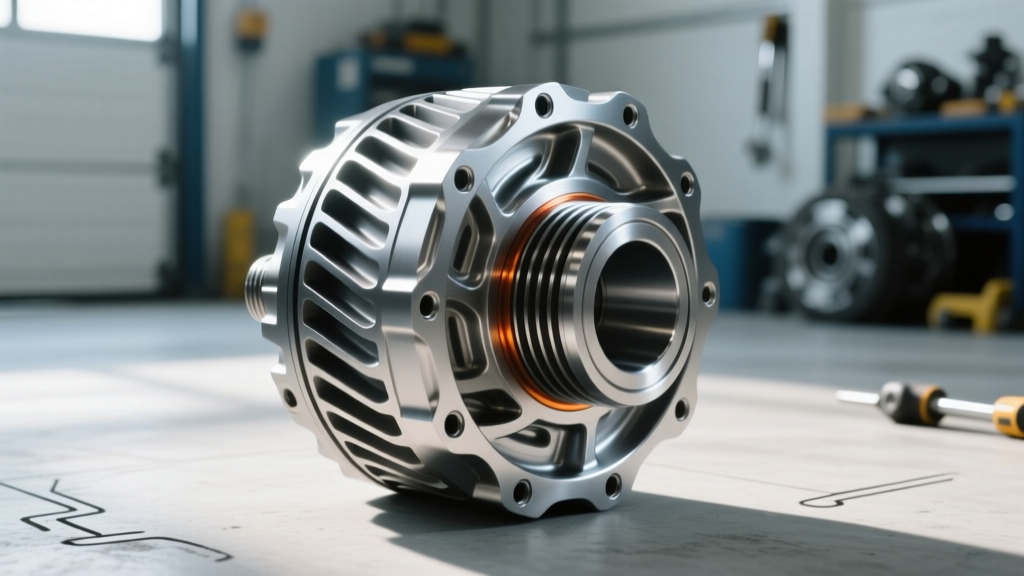
Upgrading to a finned, cast-aluminum differential cover fundamentally alters the thermal dynamics of the axle housing. The external fins dramatically increase the surface area exposed to ambient airflow, leveraging convective heat transfer. As the vehicle moves, air passes over the fins, pulling heat away from the aluminum and, by extension, the fluid inside. But modern high-end covers go far beyond simple external fins.
Internal Baffles and Fluid Dynamics
Inside the housing, the ring gear acts as a high-speed slinger, violently churning the gear oil into a froth. Premium covers from manufacturers like Mag-Hytec Differential Covers and AFE Power incorporate internal baffling and directional fins. These internal structures serve two purposes: they increase the internal surface area for heat absorption, and they act as fluid reservoirs that prevent oil starvation during extreme articulation. When a differential car setup is subjected to steep 30-degree inclines or severe off-camber articulation, standard flat covers allow the fluid to pool away from the pinion gear. Baffled aftermarket covers trap fluid near the upper bearings, ensuring continuous lubrication and cooling.
Active PTO-Driven Cooling Systems
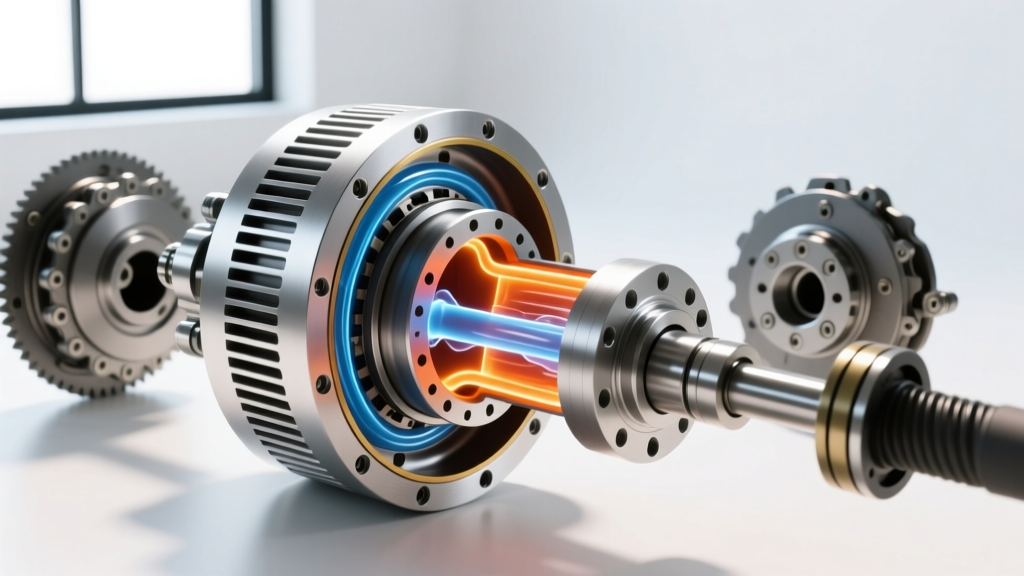
For extreme-duty commercial applications or heavy towing (such as the Ford 10.5-inch Sterling axle or the Dana S135), passive finned covers may not be enough. In these scenarios, active cooling covers feature a Power Take-Off (PTO) port that drives a mechanical or electric fluid pump. This pump circulates the gear oil out of the axle housing, through a remote finned heat exchanger or liquid-to-liquid transmission cooler, and back into the differential. This method can drop operating temperatures by up to 60°F compared to passive setups.
Capacity Gains and Thermal Performance Matrix
One of the most immediate benefits of installing an aftermarket differential car cover is the increase in fluid capacity. More fluid means a larger thermal mass, which takes longer to heat up and provides a wider margin of safety during sustained loads. Below is a technical comparison of OEM versus premium aftermarket covers for three of the most common heavy-duty axles on the road today.
| Axle Model | OEM Capacity | OEM Cover Material | Aftermarket Capacity | Aftermarket Material | Avg. Temp Drop (Under Load) |
|---|---|---|---|---|---|
| Dana 60 (Front/Rear) | 3.0 Quarts | Stamped Steel | 4.5 Quarts | A356-T6 Cast Alum | -15°F to -20°F |
| GM 14-Bolt 10.5' | 3.5 Quarts | Cast Iron / Steel | 5.2 Quarts | A356-T6 Cast Alum | -18°F to -25°F |
| Ford 10.5' Sterling | 3.2 Quarts | Stamped Steel | 4.8 Quarts | A356-T6 Cast Alum | -15°F to -22°F |
| GM 9.5' Semi-Floating | 2.1 Quarts | Stamped Steel | 3.1 Quarts | A356-T6 Cast Alum | -10°F to -15°F |
Note: Temperature drops are measured at the pinion bearing race after 45 minutes of sustained 65 MPH towing with an 8,000 lb trailer in 90°F ambient conditions.
Installation Deep-Dive: Torque Specs and Sealing Protocols
The installation of an upgraded differential car cover is not simply a matter of unbolting the old unit and bolting on the new one. Improper sealing techniques are the leading cause of post-installation fluid leaks, which can quickly drain the axle and result in total gear set destruction. For a comprehensive breakdown of your specific axle housing, always cross-reference the Spicer Parts Differential ID Guide before ordering parts.
Surface Preparation and RTV Selection
Stamped steel OEM covers often rely on cheap, pre-cut cork or paper gaskets. High-end cast aluminum covers require a high-quality Room Temperature Vulcanizing (RTV) silicone sealant. We strictly recommend using Permatex Ultra Black RTV (Part #81180). Ultra Black is specifically formulated to resist the aggressive chemical additives found in modern 75W-90 and 75W-140 synthetic gear oils, particularly the sulfur-phosphorus extreme pressure (EP) additives that degrade standard silicones.
Before applying the RTV, both the axle housing mating surface and the aftermarket cover flange must be scrubbed with aerosol brake cleaner and a brass wire brush. Any residual oil or old gasket material will compromise the seal. Apply a continuous 1/8-inch bead of RTV to the cover flange, ensuring you circle entirely around every bolt hole to prevent oil from wicking down the bolt threads.
Precision Torque Sequences
Cast aluminum is significantly softer than the cast iron or steel of the axle housing. Over-torquing the cover bolts will strip the threads out of the housing or warp the aluminum flange, causing immediate leaks. Always use a calibrated 1/4-inch drive torque wrench and follow a crisscross star pattern, starting from the center and working outward. Below are the exact torque specifications for common heavy-duty axles:
- Dana 60 (3/8'-16 UNC Bolts): Torque to 30-35 lb-ft. Do not exceed 40 lb-ft, or you risk snapping the bolt head.
- GM 14-Bolt 10.5' (1/2'-13 UNC Bolts): Torque to 45 lb-ft. Ensure the thick hardened washers provided with the aftermarket cover are used to prevent the bolt head from digging into the aluminum.
- Ford 10.5' Sterling (M10x1.5 Flange Bolts): Torque to 33 lb-ft. Apply a single drop of blue Loctite (243) to the threads if the bolts pass through into the fluid gallery.
- GM 10-Bolt 8.5' (10mm Metric Bolts): Torque to 22 lb-ft. These smaller bolts are highly susceptible to stretching; use a gentle hand.
Curing Times and Fluid Fill
A common mistake made by amateur mechanics is filling the differential immediately after bolting on the cover. Permatex Ultra Black requires a minimum of 1 hour to skin over and 24 hours for a full, deep cure. If you fill the axle with heavy 75W-140 gear oil and apply internal pressure before the RTV has fully cross-linked, the oil will seep through the microscopic pores of the uncured silicone. Wait 24 hours, then fill the differential car housing with high-quality synthetic gear oil until it reaches the bottom edge of the fill plug. For limited-slip differentials, do not forget to add the exact OEM-specified volume of friction modifier (usually 4 to 8 ounces) before topping off with the base gear oil.
Cost-Benefit Analysis: Is the Upgrade Worth It?
Premium finned aluminum differential covers typically range from $160 to $320, depending on the axle model and brand. When you factor in the cost of 4 to 5 quarts of high-end synthetic gear oil (such as Amsoil Severe Gear or Red Line 75W140) at $25 to $35 per quart, the total out-of-pocket cost for the upgrade hovers between $280 and $500.
However, the return on investment is measured in component longevity. Replacing a seized pinion bearing or a heat-scored ring and pinion gear set requires specialized pressing tools, precise backlash shimming, and pattern reading, often costing upwards of $1,500 to $2,500 at a professional driveline shop. By dropping operating temperatures by 20°F and increasing fluid capacity by 40%, an upgraded differential car cover effectively doubles the service life of your gear oil and prevents the micro-pitting and spalling that destroy hypoid gears under extreme thermal stress. For anyone towing near their Gross Combined Weight Rating (GCWR) or subjecting their axle to sustained high-RPM track use, this upgrade is not just a cosmetic modification—it is a critical mechanical necessity.