Differential Gear Patterns: Expert Bearing & Seal Replacement Tips
When an axle seal starts weeping or a pinion bearing begins to howl at highway speeds, many general repair shops and DIY enthusiasts treat the fix as a simple pull-and-replace job. However, in hypoid gearsets found in iconic differentials like the GM 8.5-inch 10-bolt, Ford 8.8-inch, and Dana 44, the reality is far more complex. Pulling the pinion or carrier to replace a bearing or seal inherently disrupts the precise geometry of the ring and pinion. If you do not verify and adjust the differential gear patterns during reassembly, you risk catastrophic gear failure within the first 500 miles. In this 2026 expert guide, we break down the critical intersection of bearing/seal replacement and gear pattern setup, providing exact part numbers, torque specifications, and diagnostic frameworks used by top-tier drivetrain specialists.
The Hidden Geometry: Why Bearing Jobs Alter Gear Patterns
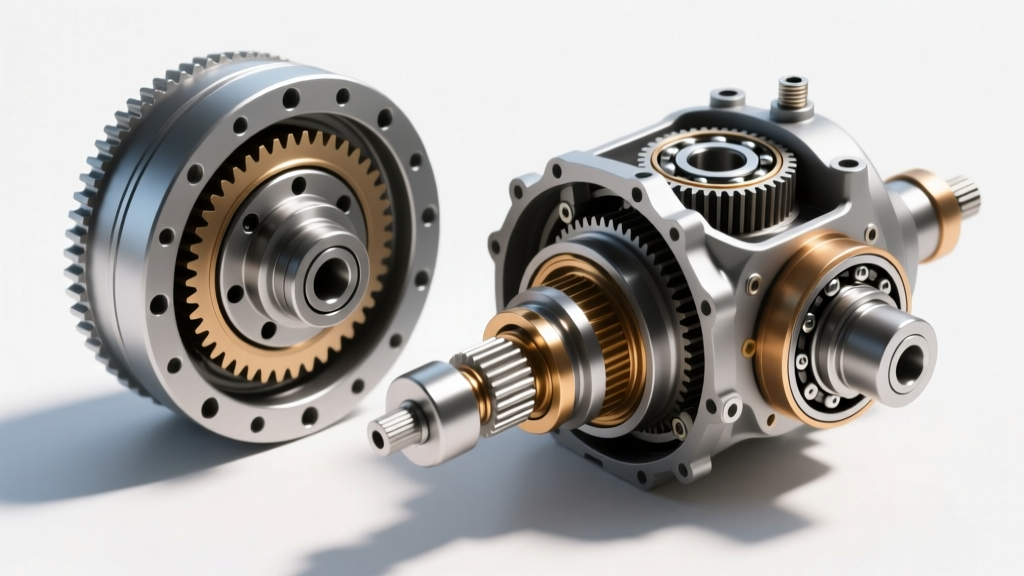
Hypoid gears are designed with an offset centerline, meaning the pinion gear sits below the center axis of the ring gear. This offset creates massive sliding friction and requires exacting tolerances to distribute the load evenly across the gear teeth. The pinion depth (controlled by shims behind the inner pinion bearing cup) and the carrier position (controlled by side carrier shims or adjuster nuts) dictate the contact patch—or gear pattern—between the ring and pinion.
When you replace a pinion bearing, the new bearing's internal clearances and seating depth will inevitably differ from the worn original by a few thousandths of an inch. Similarly, pressing new carrier bearings onto the differential case can slightly shift the ring gear's lateral position. Even if you reuse the original shims, these microscopic variance shifts will alter the differential gear patterns, moving the contact patch toward the toe, heel, face, or flank of the gear teeth. Ignoring this shift is the leading cause of premature whine and tooth spalling after a seal or bearing service.
Bearing Replacement Protocol: Part Numbers and Best Practices
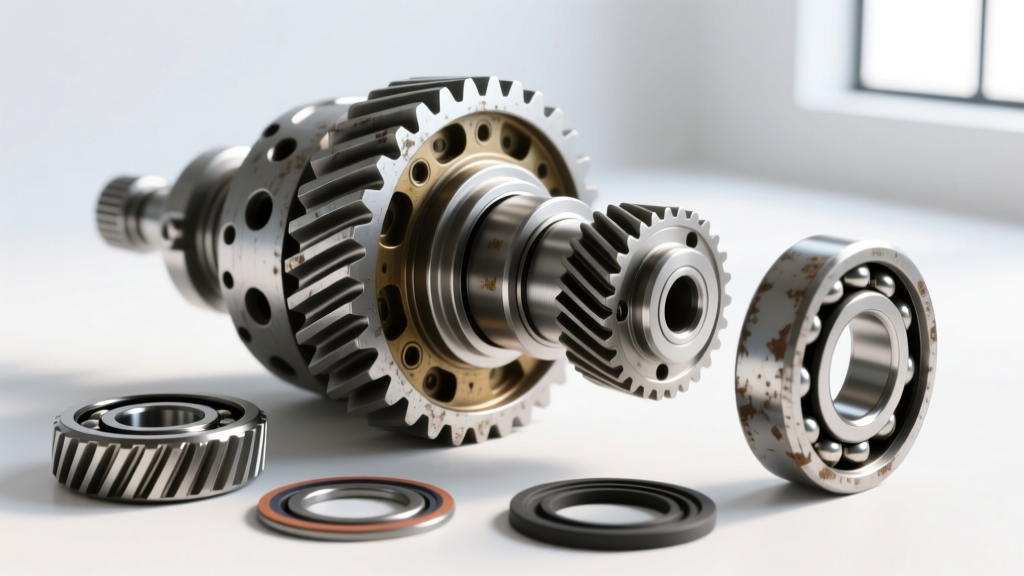
Using high-quality tapered roller bearings is non-negotiable. Cheap, offshore bearings often have inconsistent cage tolerances and cup depths, making it nearly impossible to achieve a stable gear pattern. For a standard GM 8.5-inch 10-bolt differential, we recommend the following Timken bearing sets:
- Inner Pinion Bearing: Timken SET 9 (Cone LM503349 / Cup LM503310)
- Outer Pinion Bearing: Timken SET 10 (Cone LM104948 / Cup LM104911)
- Carrier Bearings: Timken SET 4 (Cone LM102948 / Cup LM102910)
Expert Tip for Installation: Never use an open flame or a torch to heat bearings for installation. Uneven heating destroys the metallurgical integrity of the bearing race and can cause warping. Instead, use an induction heater set to 225°F (107°C) or a dedicated bearing bath. When pressing the inner pinion bearing onto the pinion shaft, always use a hollow drift that contacts only the inner race. Pressing on the cage or outer race will instantly brinell the bearing rollers, creating a whine that mimics a bad gear pattern.
The Crush Sleeve Dilemma: Seal Replacement Upgrades
Replacing a leaking pinion seal (such as the National 8660S or SKF 31366 for the GM 10-bolt) requires removing the pinion nut and yoke. Factory differentials use a crush sleeve to establish pinion bearing preload. The factory service manual dictates that you must use a new crush sleeve every time the pinion nut is removed. However, crushing a new sleeve requires upwards of 250 ft-lbs of torque, making it incredibly easy to over-crush the sleeve and ruin the bearing preload, which directly skews your differential gear patterns.
The 2026 Best Practice: Eliminate the crush sleeve entirely. Upgrade to a solid pinion spacer kit (such as the Ratech 4115 or Yukon Gear Solid Spacer Kit). Solid spacers use a precisely machined steel sleeve and a set of micro-shims to dial in the exact rotational preload. This not only makes setting the pinion depth and preload vastly more accurate for reading gear patterns, but it also prevents preload loss under high-torque loads from modern turbocharged or EV-swapped platforms.
Decoding Differential Gear Patterns
Once the new bearings are seated and the pinion depth shim is approximated, you must apply gear marking compound (yellow for used gears, white for new gears) to the ring gear teeth. Rotate the pinion back and forth under light brake pressure to create a contact pattern. You must evaluate both the Drive (convex) and Coast (concave) sides of the gear teeth.
| Pattern Symptom | Root Cause | Shim Correction |
|---|---|---|
| High on Drive, Low on Coast | Pinion is too deep (too close to ring gear center) | Remove thickness from pinion depth shim |
| Low on Drive, High on Coast | Pinion is too shallow (too far from ring gear center) | Add thickness to pinion depth shim |
| Pattern biased toward the Toe | Backlash is too tight | Move carrier away from ring gear (adjust side shims) |
| Pattern biased toward the Heel | Backlash is too loose | Move carrier closer to ring gear (adjust side shims) |
| Edge-loaded on the Flank (Top) | Severe mismatch or warped carrier | Check carrier runout; verify ring gear mounting bolts |
According to technical resources from Yukon Gear & Axle, the ideal pattern should be centered vertically on the tooth face and slightly biased toward the heel on the drive side, transitioning smoothly under load. Always remember that pinion depth shims dictate the vertical placement of the pattern, while carrier side shims dictate the horizontal (heel-to-toe) placement and overall backlash.
Torque Specifications and Preload Measurements
You cannot accurately read differential gear patterns if the bearing preload is incorrect. A loose pinion bearing will deflect under the pressure of the marking compound, giving a false pattern reading. Before checking the pattern, you must set the rotational preload using a beam-style inch-pound torque wrench.
- Pinion Bearing Preload (Used Bearings): 15 to 25 inch-pounds of rotational torque.
- Pinion Bearing Preload (New Bearings): 25 to 35 inch-pounds of rotational torque.
- Carrier Bearing Preload: Achieved via side shims or adjuster nuts. The carrier should have zero lateral play but rotate freely with a slight drag (typically adding 0.002 to 0.004 inches of total shim thickness over the zero-play measurement).
- Ring Gear Backlash: 0.006 to 0.010 inches (measured at the heel of the tooth using a dial indicator mounted to the axle housing).
For comprehensive torque and shim calculation charts, drivetrain builders frequently consult the Ring-Pinion Technical Resources library, which provides OEM-specific deviation charts for Dana, Ford, and GM axles.
Fluid Selection and Break-In Procedures
After achieving the perfect differential gear pattern and torquing the yoke nut (typically 200-250 ft-lbs on a solid spacer setup with a new prevailing torque nut), the final step is fluid selection. In 2026, full synthetic 75W-90 or 75W-140 gear oils are the standard. However, if your differential features a clutch-type limited-slip differential (LSD), you must add the manufacturer-specified friction modifier to prevent chatter during low-speed cornering.
Fill the differential to the bottom of the fill hole. For the break-in procedure, drive the vehicle for 15-20 miles at varying speeds (30 to 50 mph) to allow the new bearings and gear pattern to seat under moderate heat. Stop and allow the differential to cool completely. Repeat this cycle three times. After the first 500 miles, drain the fluid to remove the microscopic metallic paste generated by the new bearing cages and gear lapping, and refill with fresh synthetic gear oil.
Conclusion
Replacing a differential bearing or axle seal is never just a maintenance task; it is a precision rebuild. By respecting the delicate geometry of hypoid gears, utilizing premium Timken bearings, upgrading to solid spacers, and meticulously verifying your differential gear patterns, you ensure the longevity and quiet operation of the drivetrain. Skipping the pattern check is a gamble that the drivetrain will always lose.