The Baseline: Executing a Toyota RAV4 Differential Fluid Change
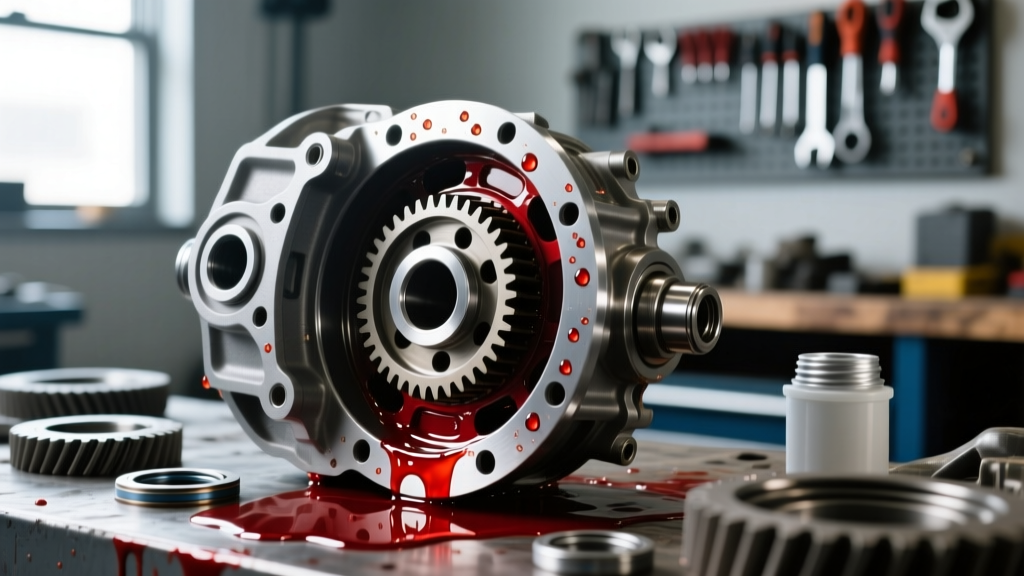
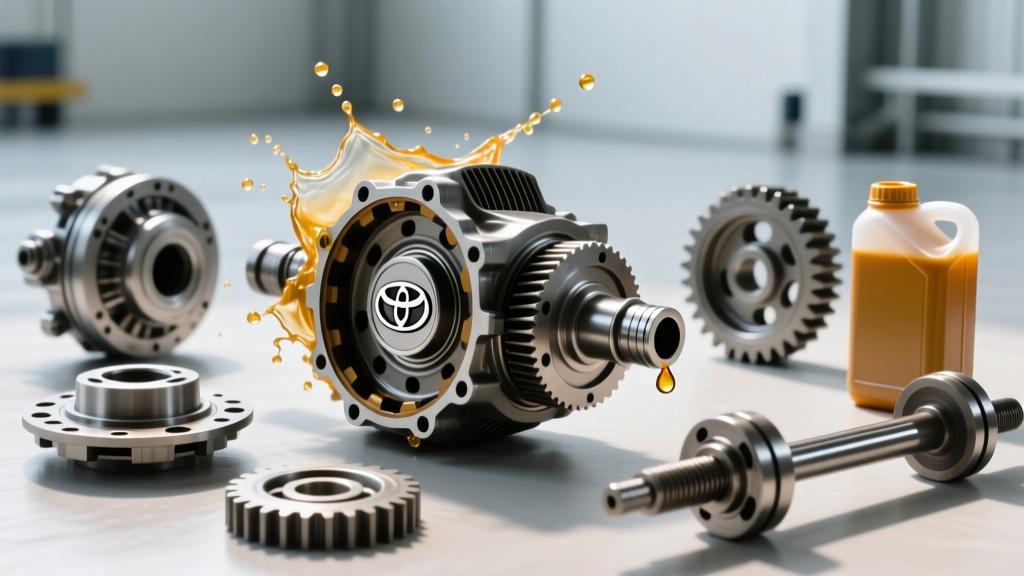
When discussing compact crossover maintenance, the Toyota RAV4 differential fluid change serves as the industry baseline for simplicity and accessibility. For the current generation RAV4 equipped with the Dynamic Torque Vectoring (DTV) AWD system, the rear differential is a compact, sealed hypoid gearset designed primarily for on-road traction and light weather management. Understanding this baseline is critical before scaling up to heavier platforms.
The RAV4 rear differential requires approximately 0.53 liters (0.56 quarts) of Toyota Genuine Hypoid Gear Oil 75W-85 GL-5. The drain and fill plugs typically utilize a 10mm hex socket, and the torque specification for both plugs is precisely 36 lb-ft. Crucially, technicians must replace the aluminum crush washers (Part #90430-18008) on every service to prevent seepage. Because the RAV4's rear axle lacks a traditional limited-slip clutch pack, no friction modifier additives are required. However, while this compact SUV differential is robust for daily driving, it represents the absolute floor of differential duty cycles.
Scaling Up: Thermal Dynamics in Trucks and Full-Size SUVs
Transitioning from a 3,800-pound compact SUV to a 6,000-pound body-on-frame truck (like the Ford F-150 or Ram 2500) or a heavy SUV (like the Toyota 4Runner or Chevy Tahoe) introduces severe thermal and mechanical stressors. In heavy-duty applications, the hypoid gearset operates under immense sliding friction due to the pinion gear's offset from the ring gear's centerline. This sliding action generates localized surface temperatures exceeding 250°F (121°C) at the gear teeth contact patch, even when the bulk fluid temperature reads a modest 180°F.
To combat this, GL-5 gear oils utilize sulfur-phosphorus Extreme Pressure (EP) additives. Under high heat and load, these additives react with the steel surfaces to form a sacrificial tribofilm, preventing metal-on-metal welding and micropitting. When towing heavy trailers or crawling off-road, bulk fluid temperatures can surge past 275°F, causing the viscosity index (VI) improvers in conventional synthetic blends to shear down permanently. This is why performance-oriented truck and SUV owners must upgrade their differential maintenance protocols.
2026 Performance Fluid Matrix: Application and Viscosity
Selecting the correct fluid requires matching the viscosity to the axle's physical size, the vehicle's gross combined weight rating (GCWR), and the differential's internal hardware. Below is a comparative matrix for popular SUV and truck axles:
| Axle Platform | OEM Spec | Performance Upgrade (2026) | Capacity | Friction Modifier? |
|---|---|---|---|---|
| Toyota RAV4 Rear (DTV) | 75W-85 GL-5 | Red Line 75W-85 Synthetic | 0.6 Qt | No |
| Ford 9.75-inch (F-150) | 75W-140 Synth | Amsoil Severe Gear 75W-140 | 2.5 Qt | Yes (if Trac-Lok) |
| Dana 60 (Ram 2500) | 75W-90 GL-5 | Royal Purple Max Gear 75W-90 | 3.25 Qt | No (if Detroit Locker) |
| Toyota 8.2-inch (4Runner) | 75W-90 GL-5 | Motul Gear 300 75W-90 | 2.8 Qt | Yes (if TRD LSD) |
Note: Adding friction modifier to a locking differential (like an ARB Air Locker or Detroit Locker) is unnecessary and can dilute the EP additive package. Always verify the internal hardware before adding modifiers.
Hardware Upgrades for Extreme Axle Duty Cycles
Fluid chemistry alone cannot save a differential that is structurally overwhelmed by heat and torque. For trucks and SUVs subjected to 35-inch tires, supercharger kits, or heavy towing, mechanical upgrades are mandatory to support the upgraded lubricants.
1. High-Capacity Finned Differential Covers
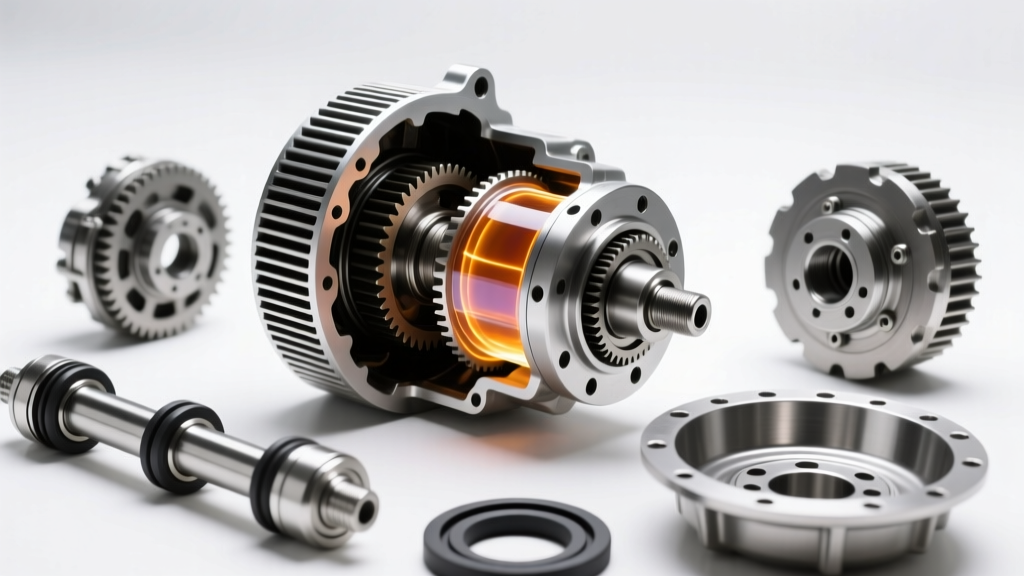
Stamped steel OEM differential covers act as heat traps. Upgrading to a cast aluminum, finned cover from a manufacturer like Mag-Hytec increases the fluid capacity by 1.0 to 1.5 quarts and provides massive surface area for convective cooling. Independent dyno and trail testing shows that finned aluminum covers can drop bulk fluid temperatures by 15°F to 22°F under sustained 70-mph towing loads. Furthermore, these covers feature magnetic drain plugs that capture ferrous wear particles before they circulate through the gear mesh.
2. Ring Gear Bolt Upgrades
The ring gear is bolted to the differential carrier using standard Grade 8 or metric 10.9 hardware. When tuning diesel trucks or adding forced induction to V8 SUVs, the instantaneous torque spike during aggressive acceleration can shear OEM ring gear bolts, resulting in catastrophic axle failure. Upgrading to ARP (Automotive Racing Products) ring gear bolt kits (e.g., ARP 201-3001 for GM 14-bolt axles) provides a tensile strength of 200,000 psi, ensuring the ring gear remains perfectly indexed to the carrier under extreme shock loads.
3. Axle Girdles and Carrier Bearing Caps
For Dana 60 and GM 14-bolt axles, carrier bearing cap walk is a common failure mode under high-torque crawling. Installing a differential girdle or billet steel bearing caps locks the carrier bearings into place, preventing the gear mesh from deflecting under load, which preserves the precise contact pattern and extends the life of your 75W-140 gear oil.
The Pro-Tier Differential Service Protocol
Servicing a heavy-duty truck or SUV differential requires more than just a drain pan and a pump. Follow this 2026-standard protocol to ensure a leak-free, contamination-free service:
- Temperature Management: Drive the vehicle for 15 minutes prior to service. Warm fluid (around 120°F) flows faster and suspends metallic particulates, ensuring they drain out rather than settling in the axle housing.
- Fill First, Drain Second: ALWAYS remove the fill plug before removing the drain plug or dropping the cover. If the fill plug is seized and you drain the housing first, the vehicle is immobilized until the plug is freed.
- Mating Surface Prep: If removing a cover, scrape the OEM RTV sealant using a plastic gasket scraper to avoid gouging the sealing surface. Clean both the housing and cover flanges with aerosol brake cleaner until no residue remains on a white shop towel.
- RTV Selection and Curing: Use a sensor-safe, high-torque RTV like Permatex 85265 (The Right Stuff Grey). Apply a continuous 3mm bead. Torque the cover bolts in a star pattern to 28-32 lb-ft (verify specific axle specs). Critical: Allow a minimum of 2 hours of cure time before filling with fluid to prevent the oil from washing out the uncured sealant.
- Fluid Injection: Use a high-quality pneumatic or manual transfer pump. Fill until the fluid reaches the exact bottom edge of the fill hole threads. Overfilling causes aeration and foaming at highway speeds, which destroys the fluid's thermal stability.
Cost Analysis: OEM Maintenance vs. Performance Upgrades
Budgeting for differential maintenance varies wildly depending on the vehicle class and performance goals. Below is a realistic cost breakdown for a complete heavy-duty SUV/Truck rear axle service compared to the compact SUV baseline.
| Service Tier | Components Included | Estimated Cost (Parts) | Labor Time |
|---|---|---|---|
| Compact SUV (RAV4) | OEM 75W-85 Fluid, Crush Washers | $25 - $35 | 0.5 Hours |
| Truck OEM Service | Synthetic 75W-140, RTV, Friction Mod | $80 - $120 | 1.5 Hours |
| Performance Upgrade | Mag-Hytec Cover, Amsoil Severe Gear, ARP Bolts | $450 - $650 | 2.5 Hours |
Ultimately, while the Toyota RAV4 differential fluid change remains a quick, low-cost garage task, treating your truck or heavy SUV's axles with the same casual approach is a recipe for premature gear wear. By understanding the chemistry of GL-5 additives, upgrading your thermal management hardware, and adhering to strict torque and sealing protocols, you can ensure your drivetrain survives the most punishing environments well past the 150,000-mile mark.