The Intersection of Drivetrain Cooling and Fluid Service
If you have landed on this preventive maintenance guide, you are likely dealing with a modern drivetrain fault code or researching advanced axle thermal management. Specifically, you might be wondering how does a differential pressure transmitter work in the context of your truck or EV. In traditional automotive applications, differentials are passive, splash-lubricated gearboxes. However, in 2026, heavy-duty trucks (like the Ram 3500 with AAM axles) and high-performance EVs (like the GMC Hummer EV or Rivian R1T) utilize active thermal management systems. These systems employ auxiliary pumps, coolers, and pressure transducers to keep gear oil within optimal temperature ranges under extreme towing or track loads.
When these sensors trigger a warning, owners often conflate the electronic diagnostic side with the mechanical maintenance side. This comprehensive guide bridges that gap. We will explain the engineering behind differential pressure transmitters, and then pivot to the core of your preventive maintenance needs: exact 2026 differential fluid costs, professional service pricing, and the precise torque specs required to keep your axle assembly alive.
How Does a Differential Pressure Transmitter Work?
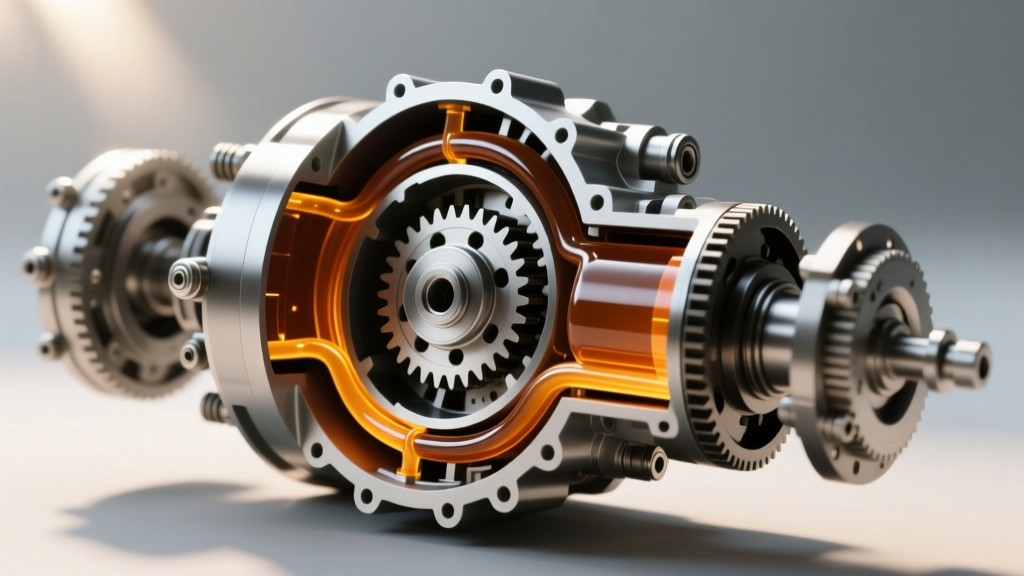
Before discussing fluid pricing, we must address the sensor diagnostics. In active-lube differential systems, a differential pressure transmitter (or transducer) is installed across the fluid filter or the cooler circuit. Its primary job is to measure the pressure drop (Delta P) between the pump outlet and the return line.
The Piezoresistive Diaphragm Principle
Inside the transmitter housing is a piezoresistive sensing diaphragm. As the auxiliary lube pump pushes 75W-85 or specific EV reduction fluid through the filtration media, the transmitter measures the pressure on the 'dirty' side versus the 'clean' side.
- Normal Operation: The pressure differential remains within a narrow band (typically 2 to 8 PSI). The transmitter sends a standard 4-20mA or CAN-bus signal to the Drivetrain Control Module (DCM).
- Clogged Filter / Degraded Fluid: If the differential fluid has broken down, sludged, or the filter is restricted, the Delta P spikes. The transmitter registers high pressure on the inlet side, prompting the DCM to trigger a 'Service Axle' or 'Drivetrain Cooling' warning on your dash.
- Pump Failure: If the Delta P drops to near zero while the pump is commanded on, the transmitter alerts the ECU to a pump cavitation or internal bypass failure.
Understanding how automotive pressure transducers operate is critical because a clogged differential filter or severely degraded fluid will mimic a failed transmitter. Often, a simple $150 differential fluid service resolves the delta-P fault code without needing to replace the $120 sensor.
2026 Differential Fluid Cost & Service Pricing Matrix
Differential fluid costs have shifted in 2026 due to the introduction of ultra-low viscosity (ULV) synthetic gear oils required for EV reduction gears and high-efficiency heavy-duty axles. Below is a breakdown of what you can expect to pay for fluids and complete service pricing across various axle platforms.
| Axle Platform | Fluid Capacity | Recommended Fluid (2026 Spec) | DIY Fluid Cost | Pro Service Cost |
|---|---|---|---|---|
| Half-Ton Truck (Ford 9.75') | 2.5 - 3.0 Qts | Motorcraft 75W-140 Synthetic | $35 - $45 | $140 - $180 |
| Heavy Duty (AAM 11.5' / 12.0') | 3.5 - 4.0 Qts | AMSOIL Severe Gear 75W-90 | $55 - $70 | $180 - $240 |
| EV Reduction Gear (Tesla/Rivian) | 1.5 - 2.0 Qts | Castrol ON / OEM EV Specific | $40 - $60 | $160 - $220 |
| Jeep Wrangler (Dana 44 / M220) | 2.0 - 2.5 Qts | Mopar 75W-85 + Friction Mod. | $30 - $45 | $130 - $170 |
| Performance LSD (Ford 8.8' Track) | 2.0 Qts | Red Line 75W-140 + Modifier | $45 - $55 | $150 - $190 |
Note: Professional service costs include shop labor rates (averaging $150-$210/hr in 2026), fluid, and basic shop supplies. If your axle requires a new gasket, RTV sealant, or friction modifier additive, add $15-$30 to the final bill.
Dealership vs. Independent Shop vs. DIY Pricing
When budgeting for your preventive maintenance, where you take your vehicle drastically impacts the final invoice.
The Dealership Premium
Dealerships in 2026 are increasingly pushing 'lifetime' differential fluid claims, only to recommend a $350 'drivetrain flush' package once you hit 60,000 miles. Dealerships rarely perform a traditional 'drop-the-cover' service on solid axles anymore; instead, they use vacuum extraction tools to suck the old fluid out of the fill hole. While this saves them 45 minutes of labor, it leaves up to 15% of the contaminated fluid and metallic sludge in the bottom of the differential housing.
The Independent 4x4 Shop
A reputable independent shop will typically perform a full cover-drop service, clean the magnetic drain plug, and inspect the ring and pinion for abnormal wear patterns. Expect to pay between $160 and $240 per axle. This is the sweet spot for value and thoroughness, especially for heavy-duty trucks equipped with the aforementioned pressure transmitters and external filters that require manual replacement.
The DIY Route
Doing it yourself remains the most cost-effective method. A DIY differential service will cost you between $35 and $75 per axle, assuming you already own a 3/8' torque wrench, a fluid transfer pump, and brake cleaner. For EVs and modern independent suspension (IFS) front differentials with sealed housings, a $25 manual or pneumatic fluid evacuator is mandatory, as drain plugs are often omitted by manufacturers to save weight.
Essential Torque Specs and Preventive Maintenance
Overtightening differential cover bolts or fill plugs is a leading cause of stripped threads and warped housings. When performing your fluid service, always adhere to OEM torque specifications. Below are the most common 2026 service specs for popular axle assemblies:
- GM AAM 11.5' / 12.0' (Heavy Duty): Cover bolts require 45 lb-ft. Drain/Fill plugs (if equipped on aftermarket pans) require 25 lb-ft.
- Ford 10.5' / 12.0' (Super Duty): Fill plug torque is 35 lb-ft. Cover bolts (on older models) are 35 lb-ft.
- Dana 60 / Dana 70 (Jeep/Off-Road): Cover bolts must be torqued to 35 lb-ft in a star pattern to prevent gasket pinching.
- Subaru R180/R190 (IFS Front): Fill and drain plugs require 33 ft-lbs (45 Nm). Do not overtighten, as the aluminum housing strips easily.
For a reliable reference on specific torque sequences and fluid capacities, enthusiast databases like Ford-Trucks.com and RockAuto's integrated service manuals remain invaluable resources for DIY mechanics.
Gaskets vs. RTV: The Great Differential Debate
A critical part of your service pricing and DIY cost is the sealing method. Should you use a reusable gasket or a tube of RTV silicone?
Reusable Elastomeric Gaskets (The 2026 Standard)
Brands like Lube Locker and TA Performance manufacture steel-core, elastomer-coated gaskets that seal perfectly without RTV. They cost between $25 and $40, which is higher than a $9 tube of silicone, but they allow for rapid re-entry if you need to inspect the differential or replace an internal pressure transducer. They are highly recommended for axles that see frequent maintenance.
RTV Silicone (The OEM Method)
If you opt for RTV, you must use the correct chemistry. Standard black RTV will break down when exposed to the extreme pressure (EP) additives and friction modifiers found in modern 75W-140 synthetic gear oils. You must use Permatex Ultra Black (Part #85084) or Permatex Gear Oil Resistant RTV. Apply a continuous 1/8' bead, allow it to skin over for 10 minutes, torque the bolts to spec, and wait a minimum of 4 hours before filling with fluid to prevent the silicone from extruding into the gear set.
Step-by-Step Differential Service Procedure
To ensure your preventive maintenance is executed flawlessly, follow this standardized procedure:
- Warm the Axle: Drive the vehicle for 15 minutes. Warm fluid flows faster and suspends metallic particulates, ensuring a complete drain.
- Extract or Drop: Use a fluid evacuator for sealed IFS/EV differentials. For solid axles, place a drain pan, crack the bottom two cover bolts, and gently pry the cover loose with a flathead screwdriver to let the fluid drain.
- Clean and Inspect: Spray the inside of the cover and the housing mating surface with brake cleaner. Inspect the magnetic plug. A fine, glitter-like paste is normal clutch and gear wear. Jagged metal shards indicate catastrophic bearing or ring-gear failure.
- Service the Transmitter/Filter: If your active-lube axle has an external spin-on filter or a pressure transmitter inline, replace the filter now and wipe the transmitter sensor port clean of debris.
- Seal and Torque: Apply your gasket or RTV. Reinstall the cover and torque the bolts in a crisscross pattern to the specifications listed above.
- Fill to the Brim: Pump the new gear oil into the fill hole until it begins to weep out. For Limited Slip Differentials (LSD), ensure you have added the required 4oz of Friction Modifier (e.g., Motorcraft XL-3) before topping off with the base fluid.
Conclusion
Whether you are diagnosing a complex active-cooling fault code by understanding how a differential pressure transmitter works, or simply performing a routine 60,000-mile fluid swap, the financial and mechanical stakes are high. By investing $50 in high-quality synthetic fluid and taking the time to properly torque and seal your axle housings, you protect thousands of dollars in drivetrain hardware. Stay proactive, adhere to the 2026 service intervals, and your differential will deliver quiet, reliable performance for the life of the vehicle.