Most drivers never give their vehicle's differential a second thought until they notice a puddle of gear oil on the driveway or hear a distinct whining noise from the rear axle. By that point, preventive maintenance has failed, and you are staring down the barrel of a significant repair bill. Understanding the relationship between differential fluid color, internal axle health, and the ultimate differential seal replacement cost is one of the most valuable diagnostic skills an automotive enthusiast or fleet manager can develop in 2026. In this preventive maintenance guide, we will decode what your gear oil is trying to tell you before a catastrophic seal failure occurs.
The True Differential Seal Replacement Cost: Why Prevention Matters
Before diving into fluid diagnostics, it is crucial to understand the financial stakes. A differential relies on two primary types of seals to retain its 75W-90 or 80W-140 API GL-5 gear oil: the axle shaft seals and the pinion yoke seal. While the physical seals are inexpensive, the labor and secondary damages dictate the final bill.
Axle Seal Failure Economics
Replacing a rear axle shaft seal (such as the Timken 710950 or SKF 19813 for a standard GM 10-bolt) requires pulling the rear wheels, brake calipers, and rotors, followed by extracting the axle shaft. The part itself costs between $12 and $35. However, shop labor rates in 2026 average $140 to $190 per hour. With a standard book time of 1.5 to 2.5 hours per side, expect an axle seal replacement to range from $250 to $450 per corner. If the leaking fluid has contaminated your brake pads and rotors, add another $300 to the invoice.
The Pinion Seal and Crush Sleeve Conundrum
The pinion seal (e.g., Motorcraft BR3Z-4676-A or Timken 710523 for the ubiquitous Ford 8.8-inch axle) sits at the end of the driveshaft yoke. While the seal costs under $25, the differential seal replacement cost can easily balloon to $600 or more if the mechanic is inexperienced. Why? Because the pinion nut secures a collapsible 'crush sleeve' that sets the pinion bearing preload. If an amateur uses an impact wrench to reinstall the nut, they will over-crush the sleeve, destroying the pinion bearings and requiring a complete differential teardown and rebuild. Proper preventive maintenance—keeping the fluid clean and the breather clear—prevents the pressure buildup that blows out these seals in the first place.
Decoding Differential Fluid Color and Condition
Checking your differential fluid is a 10-minute preventive task that requires only a 3/8-inch drive ratchet and a clean shop towel. By analyzing the color and viscosity of the fluid dripping from the fill plug, you can predict seal health and internal wear.
Golden to Light Amber: Optimal Health
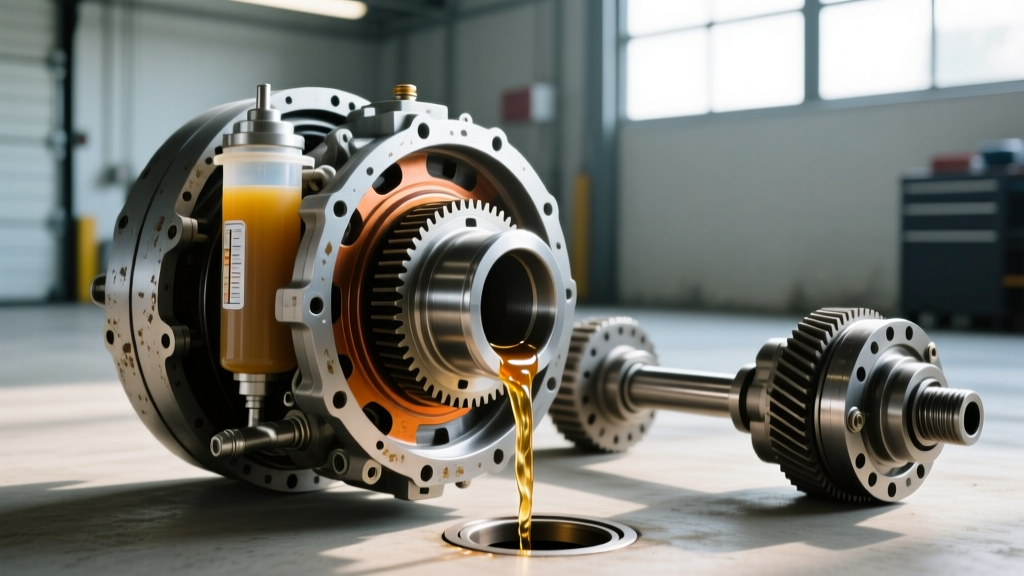
Fresh synthetic gear oil, such as AMSOIL Severe Gear or Mobil 1 Synthetic Gear Lube, typically pours out in a clear, golden, or light amber hue. This indicates that the anti-wear additives (zinc and phosphorus) are intact, the fluid is effectively lubricating the ring and pinion hypoid gears, and internal operating temperatures are within normal limits. Seals remain pliable, and the risk of a leak is minimal.
Opaque Black and Sludgy: Severe Oxidation
If the fluid is pitch black, thick, and smells sharply of sulfur or burnt toast, the oil has suffered severe thermal breakdown. Modern differentials, especially those in heavy-duty trucks like the Ram 2500 with the AAM 11.5-inch rear end, generate immense heat. When gear oil oxidizes, it forms varnish and acidic byproducts. These acids attack the elastomeric materials in your seals. While modern Viton (FKM) seals can withstand temperatures up to 400°F, prolonged exposure to acidic, degraded oil causes the seal lips to harden, crack, and lose their tension against the rotating shaft, leading directly to leaks.
Milky or 'Chocolate Milk' Emulsion: Water Intrusion
Fluid that resembles a coffee creamer is emulsified with water. This is a critical failure state. Water enters the axle housing either through a submerged breather tube during off-roading or via a failing axle seal. Water destroys the extreme pressure (EP) additives in GL-5 fluid, leading to rapid pitting on the ring and pinion gears. More importantly, water causes the steel axle shafts to rust near the seal mating surface. When you eventually pull the axle to fix the leak, the rusted shaft will tear the new seal lip upon installation, guaranteeing a repeat failure.
Glitter and Metallic Flakes: Bearing and Gear Degradation
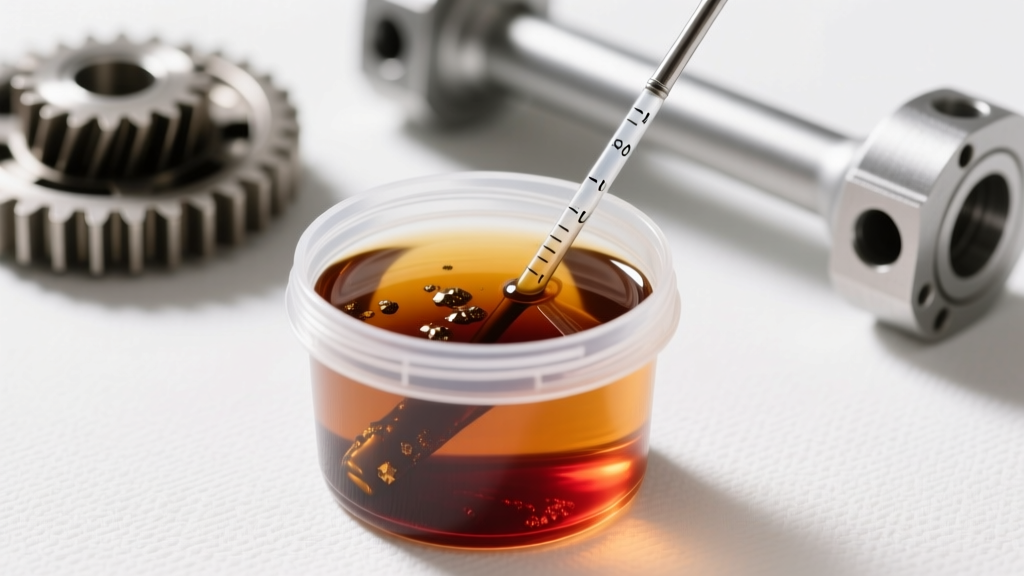
A fine, silvery glitter suspended in the oil is normal wear from the break-in period of a new differential. However, if you find large metallic flakes or chunks on the magnetic fill plug, your pinion or carrier bearings are disintegrating. As bearing cages fail, the pinion gear loses its precise alignment, causing it to wobble. This high-speed wobble will quickly chew through the rubber lip of the pinion seal, resulting in a massive leak that no simple fluid change can fix.
Fluid Condition Diagnostic Matrix
Use the following matrix during your next preventive maintenance interval to determine your immediate course of action and estimate potential upcoming costs.
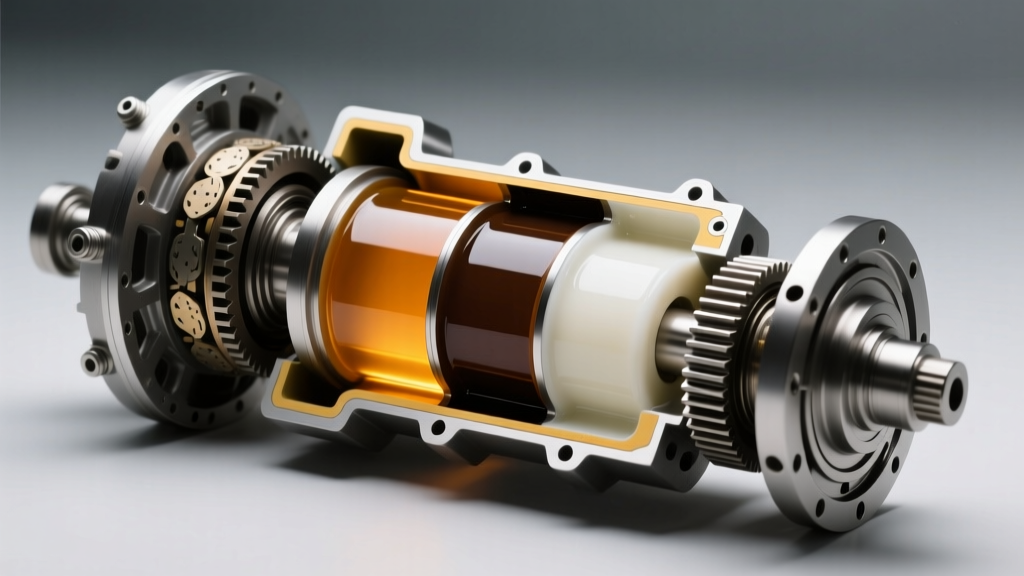
| Fluid Condition | Root Cause | Seal Impact & Risk | Preventive Action Plan |
|---|---|---|---|
| Golden / Amber | Normal, healthy operation | Low risk; seals are pliable | Reinstall fill plug (torque to 25 lb-ft); check breather. |
| Dark Brown / Burnt | Overdue interval, heavy towing, thermal breakdown | Moderate risk; acidic oil degrades seal lips over time | Perform immediate fluid flush; inspect axle tube breather. |
| Milky / Emulsified | Water ingress via breather or failing axle seal | High risk; rust pits shaft mating surfaces, tearing seals | Flush housing with solvent; replace seals; polish axle shafts. |
| Metallic Flakes | Bearing cage failure, ring/pinion misalignment | Critical; pinion wobble will instantly destroy pinion seal | Prepare for full differential rebuild; do not just replace seal. |
The Hidden Culprit: Axle Tube Breather Valves
One of the most overlooked aspects of differential preventive maintenance is the axle breather valve. As the differential heats up during highway driving or towing, the air and gear oil inside the housing expand. If the breather tube (usually routed high up on the chassis on 4x4 vehicles) becomes clogged with mud, dirt, or ice, the internal pressure has nowhere to go. It will force its way out through the path of least resistance: blowing past the pinion seal or pushing the axle seals right out of their bores.
Conversely, when the axle rapidly cools (such as driving through a deep puddle after a long tow), a vacuum is created. If the breather is clogged, this vacuum will actively suck water and grit past the seal lips. According to drivetrain engineering guidelines from Dana Incorporated, maintaining a clear, functional breather valve is just as critical as using the correct API GL-5 fluid in preventing pressure-related seal blowouts. Replacing a clogged $5 breather valve is infinitely cheaper than covering the differential seal replacement cost for a blown pinion seal.
Expert Reassembly: Torque Specs and Seal Lubrication
If your fluid inspection reveals a leak that necessitates seal replacement, the reassembly process dictates the longevity of the repair. Never install a dry seal. Always lubricate the inner rubber lip and the outer metal casing with a thin film of the exact differential fluid you are using (or a dedicated assembly lube). This prevents the seal lip from burning up during the first few minutes of operation before the gear oil splashes up to the axle tubes.
When addressing a pinion seal leak, you must measure the rotational torque of the pinion nut before removal using an inch-pound torque wrench. For a used Ford 8.8-inch axle, the target rotational preload is typically 15 to 25 in-lbs. Mark the nut and the yoke with a paint pen. During reassembly, tighten the new nut exactly to your mark to maintain the crush sleeve tension. Over-tightening by even a fraction of a turn will over-compress the sleeve, resulting in whining gears and premature bearing failure within 5,000 miles.
Conclusion
The condition of your differential fluid is a direct window into the health of your axle seals and internal bearings. By taking 10 minutes every 15,000 miles to pull the fill plug, analyze the fluid color, and ensure your breather valve is clear, you can catch minor issues before they escalate. Preventing water intrusion and thermal breakdown not only extends the life of your ring and pinion gears but entirely avoids the steep differential seal replacement cost associated with neglected drivetrain maintenance.