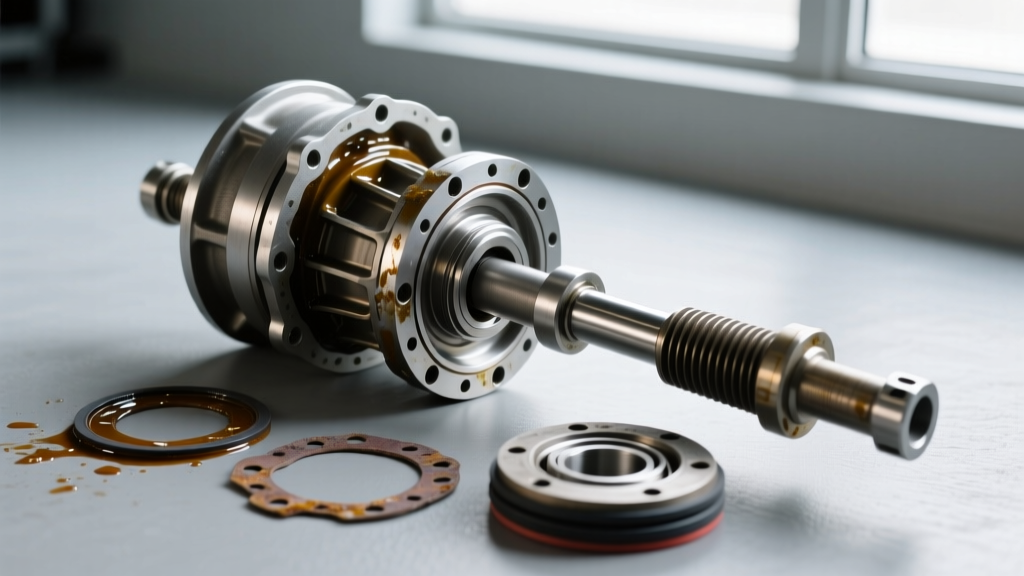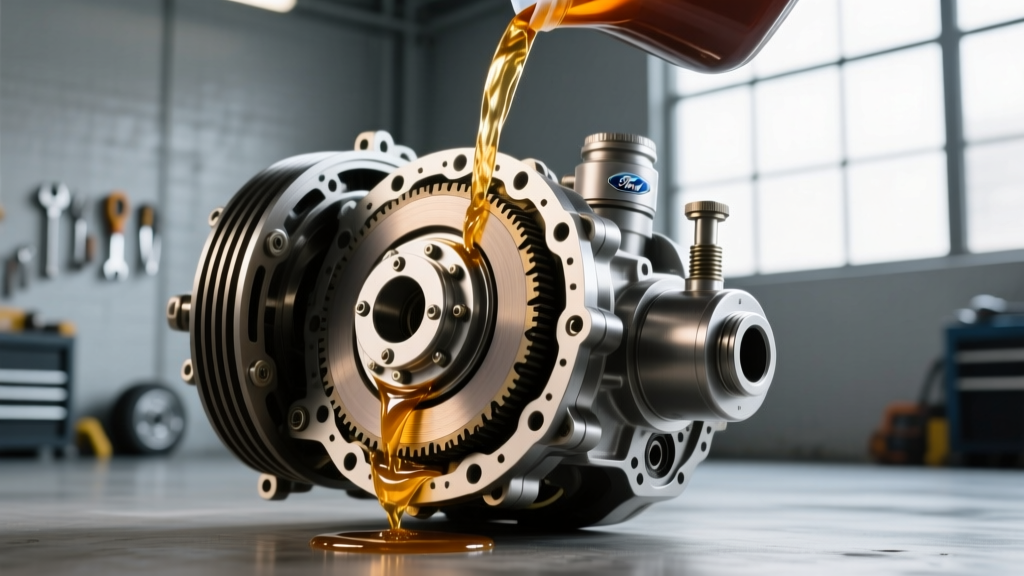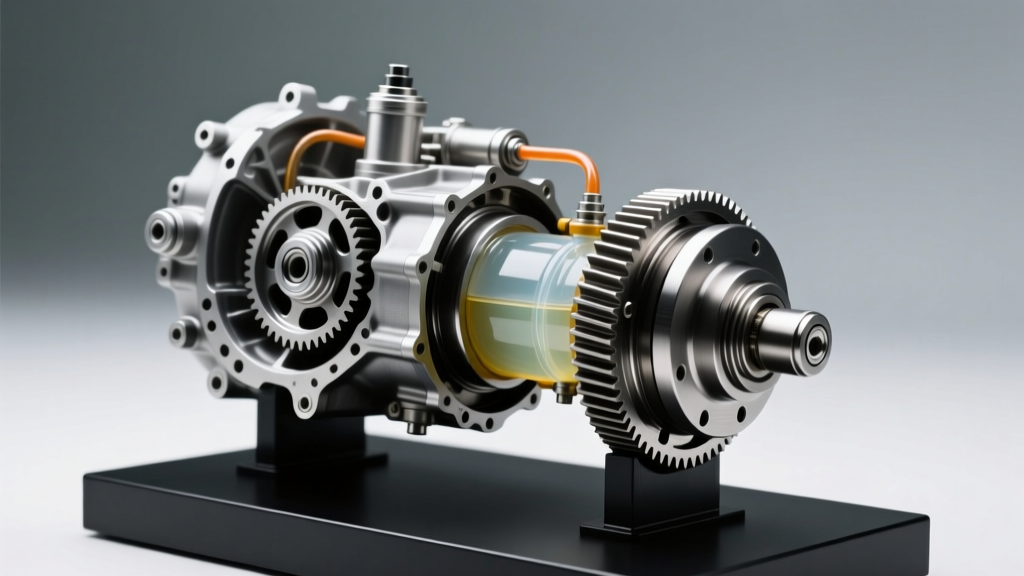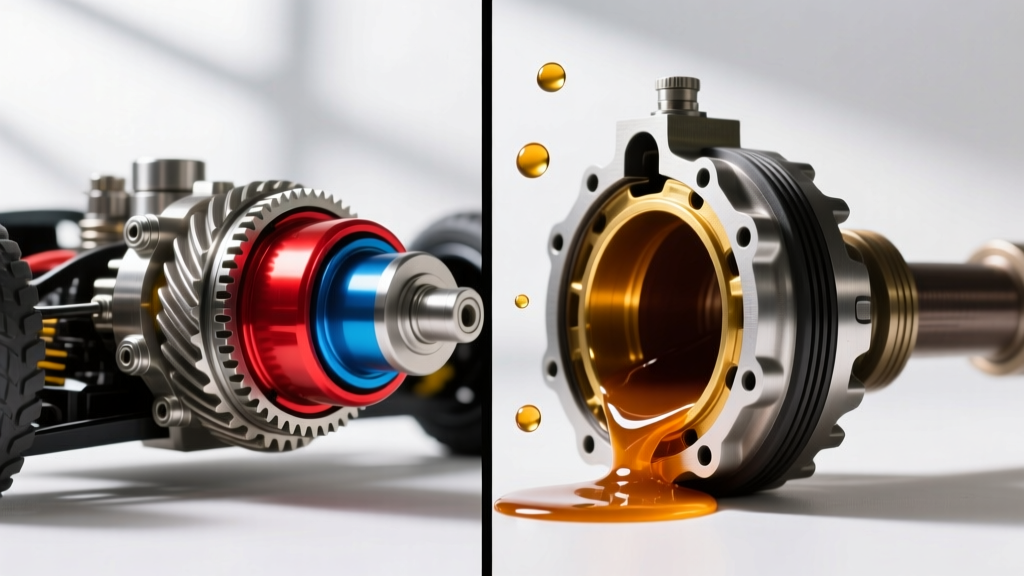
Whether you are rebuilding the center diff of a 1/8-scale basher or performing a 30,000-mile service on a heavy-duty Dana 60, the fundamental physics of gear lubrication remain identical. As we navigate the 2026 landscape of high-torque EV conversions and modern towing, understanding the visual and olfactory diagnostics of differential lubricants is no longer optional—it is the cornerstone of drivetrain survival. This preventive maintenance guide bridges the gap between micro-scale mechanics and macro-scale automotive axles, teaching you how to decode differential fluid color and condition before a catastrophic failure occurs.
The Microcosm of Gear Wear: Lessons from the RC Car Differential Gear
To truly understand fluid degradation, we must first look at the microcosm of radio-controlled vehicles. When inspecting an RC car differential gear, you are looking at a sealed, high-shear environment where thermal breakdown happens in minutes, not months. High-performance 1/8-scale buggies utilize spiral-cut bevel gears and outdrive cups that generate immense localized heat. If a hobbyist uses standard grease instead of high-viscosity silicone diff fluid (such as 100,000 cSt), the plastic or composite diff case will literally melt from the inside out due to friction-induced thermal runaway.
This micro-failure perfectly mirrors what happens in full-size truck axles when the gear oil loses its shear stability. In a full-scale limited-slip differential (LSD), the clutch packs and spider gears rely on the fluid's Extreme Pressure (EP) additives to prevent metal-on-metal scuffing. Just as an RC car differential gear will strip its ring gear teeth if the silicone fluid cavitates under heavy cornering loads, a Ford 10.5-inch or ZF rear axle will experience severe micropitting on the hypoid gear faces if the 75W-140 fluid breaks down under heavy towing conditions.
Decoding Full-Size Differential Fluid Color and Condition
Pulling the fill plug and extracting a 10ml sample of your axle fluid tells a definitive story about the health of your ring and pinion, bearings, and clutch packs. Here is the definitive diagnostic matrix for fluid condition.
1. Honey to Light Amber (Baseline Health)
Fresh synthetic gear oil (such as Red Line 75W90, P/N 50104) pours out with a translucent, honey-like amber hue. It will have a distinct, sharp sulfur odor. This smell is not a sign of degradation; rather, it indicates the presence of sulfur-phosphorus EP additives. These chemicals are designed to react with the metal surfaces under extreme pressure, creating a sacrificial tribofilm that prevents gear welding. If your fluid looks like this at 30,000 miles, your axle seals are holding, and your bearing preloads are within spec.
2. Pitch Black and Acrid (Thermal Degradation)
When gear oil turns opaque black and emits an acrid, burnt-toast smell, the base oil has oxidized, and the viscosity index improvers have sheared. In a limited-slip differential, black fluid is almost always accompanied by clutch pack chatter during tight, low-speed turns. The friction modifiers (like Ford XL-3 or GM P/N 88900333) have thermally degraded. Continuing to run black fluid will result in the clutch tabs gouging the inner wall of the differential case, turning a $60 fluid service into a $1,200 rebuild.
3. Milky or "Chocolate Milk" (Water Intrusion)
If your drained fluid resembles a frothy latte, water has emulsified with the gear oil. This typically occurs when a hot axle is submerged in cold water (during off-roading or flooding). The rapid temperature drop creates a vacuum inside the axle housing, sucking water past compromised axle seals or a submerged, clogged breather tube. Water destroys the load-bearing film strength of the oil by up to 70%, leading to rapid rust formation on the roller bearings and hydrogen embrittlement of the ring gear teeth.
4. Metallic Flakes vs. Fine Glitter (Mechanical Wear)
Always inspect the magnetic drain plug. A fine, dark grey paste (often called "fuzz") is normal wear from the clutch plates and thrust washers. However, if you find distinct metallic flakes, shards, or brass-colored chunks, immediate teardown is required. Brass indicates the disintegration of the spider gear thrust washers, while steel shards point to bearing cage failure or ring-and-pinion tooth spalling.
Preventive Maintenance Matrix: Specs and Torque Data
Proper preventive maintenance requires adhering strictly to OEM fill volumes and torque specifications. Overfilling an axle causes fluid aeration and seal blowouts, while underfilling starves the pinion bearing. Below is a comparative service matrix for popular platforms, including a nod to our RC counterparts for scale comparison.
| Axle / Diff Model | OEM Capacity | Viscosity Spec | Fill Plug Torque | Est. Service Cost |
|---|---|---|---|---|
| Ford Super 8.8 | 2.5 Quarts | 75W-85 Synthetic | 15-30 lb-ft | $45 - $65 |
| Dana Spicer 60 | 3.5 - 4.0 Quarts | 75W-90 / 85W-140 | 25-35 lb-ft | $70 - $95 |
| ZF Rear (BMW F-Chassis) | 1.2 Liters | SAF-XO 75W-90 | 60 Nm (44 lb-ft) | $85 - $120 |
| 1/8 Scale RC Buggy Diff | 4-6 Grams | 100k cSt Silicone | Hand-Tight (O-Ring) | $12 - $18 |
Note: Always verify exact capacities with your specific year and model service manual, as aftermarket differential covers (like those from Mag-Hytec) can increase fluid volume requirements by up to 1.5 quarts.
The Chemistry of Friction Modifiers and EP Additives
Understanding the chemistry behind the fluid helps explain why color changes occur. According to the Red Line Oil Gear Lubricants technical documentation, modern synthetic gear oils utilize polyol ester base stocks. These esters are naturally polar, meaning they cling to the metal surfaces of the ring and pinion gears even when the vehicle is sitting idle. This provides critical boundary lubrication during the first few seconds of startup before the fluid is splashed up from the sump.
However, when an LSD is equipped, the fluid must also contain specific friction modifiers. If you are performing a fluid change on a Chrysler 8.75-inch Sure-Grip or a Ford Traction-Lok, failing to add the requisite limited-slip additive will cause the clutch packs to bind and release violently. If you drain your fluid and it is black, and the vehicle exhibits chatter, the preventive protocol is to flush the housing with a dedicated drivetrain cleaner, refill with fresh 75W-90 synthetic, and add exactly 4 oz of the OEM-specific friction modifier before topping off to the fill plug hole.
Step-by-Step Condition Assessment Protocol
To perform a professional-grade fluid condition assessment, follow this exact sequence to avoid contaminating your sample or damaging the housing threads:
- Temperature Normalization: Drive the vehicle for 15 miles to bring the axle up to operating temperature (approx. 140°F - 160°F). Warm fluid suspends particulate matter, giving you a more accurate reading of internal wear, and allows for a complete drain.
- Breather Verification: Before opening the fill plug, locate the axle breather tube (usually routed high onto the frame rail). Ensure it is clear of mud and debris. A clogged breather will cause pressure buildup during operation, forcing gear oil past the pinion seal onto your brake rotors.
- Plug Extraction: ALWAYS remove the top FILL plug before the bottom DRAIN plug. If the fill plug is seized or strips, you will be left with an empty axle and no way to refill it. Use a 3/8-inch drive hex or Torx bit, applying penetrating fluid if necessary.
- Sample Extraction: Let the fluid drain into a clean, clear glass or white plastic pan. Avoid using dark metal pans, which obscure the true color and particulate suspension of the oil. Shine a high-lumen LED flashlight through the side of the clear pan to check for the "glitter effect" indicative of bearing wear.
- Thread Preservation: When reinstalling the plugs, never use RTV silicone on the threads, as excess silicone can break off inside the housing and clog the fluid pickup channels in complex torque-vectoring differentials. Use a crush washer or a high-quality PTFE thread sealant, torquing to the specifications listed in the matrix above.
Translating Diagnostics into Action
The bridge between an RC car differential gear and a full-size automotive axle is built on the universal language of friction and heat. In the RC world, a melted diff case is a $20 mistake and an afternoon of wrenching. In the automotive world, ignoring the milky color of water-contaminated fluid or the burnt smell of oxidized esters will result in a seized ring and pinion, leaving you stranded on the highway with a $3,500 repair bill.
By treating your differential fluid as a vital diagnostic fluid—much like engine oil or transmission fluid—you can predict failures months before they manifest as audible whines or mechanical binding. For deeper insights into synthetic lubrication intervals and severe-duty towing schedules, the AMSOIL Differential Maintenance Guide provides excellent supplementary data on extending drain intervals in modern commercial fleets. Ultimately, whether you are tuning the center diff of a competition buggy or servicing the rear axle of a 1-ton dually, respecting the color, condition, and chemistry of your gear oil is the ultimate preventive maintenance strategy.