The 2006 Ford F150 Rear Differential: A Traction-Lok Deep Dive
As of 2026, the 12th-generation F-150 remains a staple on worksites and backroads alike, with many examples comfortably surpassing the 200,000-mile mark. At the heart of this truck's drivetrain longevity is the 2006 Ford F150 rear differential. Whether your truck is equipped with the ubiquitous Ford 8.8-inch axle or the heavy-duty 9.75-inch ring gear, understanding the operation and maintenance of Ford's Traction-Lok limited-slip differential (LSD) is critical for preserving traction, preventing catastrophic gear failure, and eliminating driveline chatter.
Unlike modern torque-vectoring systems or complex electronic locking differentials, the 2006 F-150 relies on a purely mechanical, clutch-based limited-slip system. This technical guide will dissect the internal mechanics of the Traction-Lok carrier, decode your axle identification tags, and provide exact factory torque specifications and fluid chemistry requirements for a proper differential service.
Decoding the Axle Identification Tag
Before purchasing gear oil or ordering replacement clutch packs, you must definitively identify your rear axle assembly. Ford utilized two primary rear axles for the 2006 F-150, dictated by the engine configuration and towing package:
- Ford 8.8-Inch Axle: Standard on most 4.6L V8 models and base 5.4L V8 trucks. Features a 10-bolt differential cover and a 31-spline axle shaft configuration.
- Ford 9.75-Inch Axle: Found on 5.4L V8 models equipped with the Heavy-Duty Payload or Max Trailer Tow packages. Features a 12-bolt cover, a drain plug, and thicker 34-spline axle shafts.
To confirm your gear ratio and LSD status, locate the Safety Compliance Certification Label on the driver's side B-pillar door jamb. Look for the 'AXLE' code. According to Ford Motor Company Support archives, common 2006 limited-slip codes include:
- H9: 3.55 Ratio, Limited Slip (8.8-inch)
- B6: 3.73 Ratio, Limited Slip (9.75-inch)
- D4: 4.10 Ratio, Limited Slip (9.75-inch)
Traction-Lok Clutch Pack Mechanics
The Traction-Lok system is a clutch-type limited-slip differential. While open differentials route 100% of available torque to the wheel with the least resistance (the spinning wheel), the Traction-Lok carrier utilizes internal friction to bias torque to the wheel with grip.
Internal Architecture
Inside the carrier, two side gears are splined to the axle shafts. Behind each side gear sits a multi-disc clutch pack consisting of alternating fiber-lined friction discs and smooth steel reaction plates. An S-shaped preload spring (the 'S-spring') sits in the center of the differential case, pushing the side gears outward against the clutch packs.
When driving in a straight line, the entire carrier assembly, including the ring gear, side gears, and spider gears, rotates as a single unit. However, when cornering, the spider gears allow the side gears to rotate at different speeds. The Traction-Lok system forces the clutch packs to slip during this differentiation. The static friction threshold of these clutch packs determines the torque bias ratio. If one wheel loses traction and the torque difference exceeds the clutch pack's holding capacity, the LSD slips, transferring power to the grounded wheel.
Expert Insight: Over time, the fiber linings on the friction discs wear down, and the S-spring loses tension. This reduces the preload, resulting in an 'open' differential feel where one tire spins endlessly in mud or snow. A fluid change will not fix worn clutch packs; a carrier rebuild using a Ford Performance or Eaton replacement kit is required.
Fluid Chemistry and the Friction Modifier Imperative
The most common mistake made during a 2006 F150 rear differential service is ignoring the friction modifier. Clutch-type LSDs require a specific chemical additive to prevent 'stick-slip' oscillation. Without it, the fiber discs grab and release violently against the steel plates during low-speed cornering, resulting in a shuddering sensation and audible groaning known as 'LSD chatter.'
Viscosity and API Standards
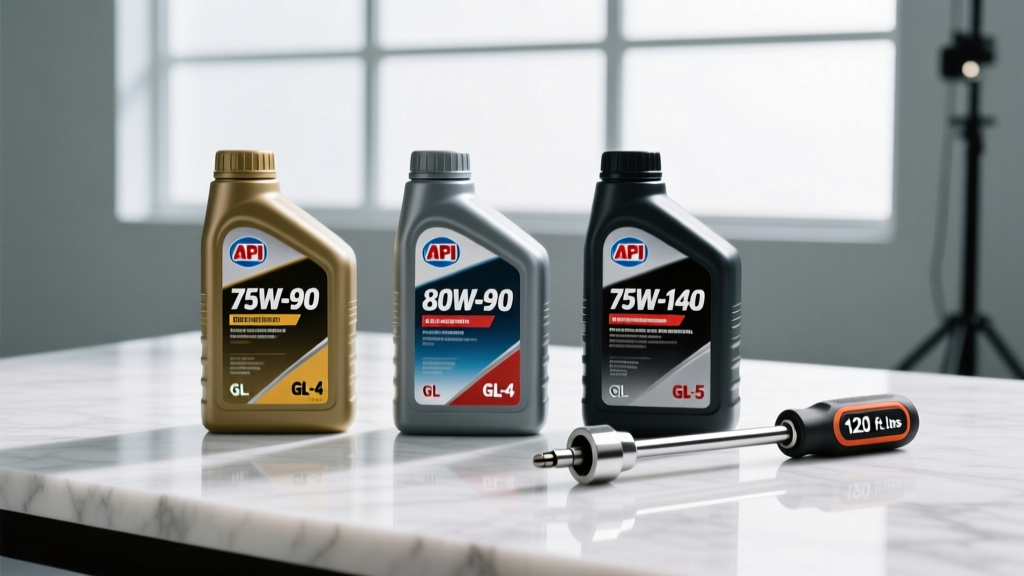
For the 2006 model year, Ford specified SAE 75W-140 Synthetic Gear Oil for all limited-slip axles, particularly those subjected to towing. The higher 140-weight viscosity maintains a robust hydrodynamic lubrication film between the hypoid ring and pinion gears under extreme shear and heat. The fluid must meet the American Petroleum Institute (API) GL-5 specification, which contains high levels of extreme pressure (EP) additives like zinc dialkyldithiophosphate (ZDDP) and phosphorus to protect the sliding hypoid gear teeth.
As documented by drivetrain engineers at Dana Incorporated, hypoid gears experience severe sliding friction, making GL-5 chemistry non-negotiable. However, GL-5 EP additives alone do not provide the necessary coefficient of friction for the Traction-Lok clutch packs.
2006 F-150 Axle Specifications & Part Numbers
| Specification | Ford 8.8-Inch Axle | Ford 9.75-Inch Axle |
|---|---|---|
| Cover Bolt Count | 10 Bolts | 12 Bolts |
| Fluid Capacity | 3.75 Pints (1.8 Quarts) | 5.5 Pints (2.75 Quarts) |
| OEM Fluid Part # | Motorcraft XY-75W140-QL | Motorcraft XY-75W140-QL |
| Friction Modifier | Motorcraft XL-3 (4 oz) | Motorcraft XL-3 (4 oz) |
| Cover Bolt Torque | 28 - 38 lb-ft | 33 lb-ft |
| Drain/Fill Plug Torque | N/A (Cover Fill Only) | 33 lb-ft |
Step-by-Step Traction-Lok Service Procedure
Performing a differential fluid service on the 2006 F-150 requires precision, cleanliness, and adherence to torque specifications. While the 9.75-inch axle features a drain plug, removing the differential cover on both axles is highly recommended to inspect the clutch packs and remove metallic debris from the magnetic fill plug or differential housing.
1. Preparation and Extraction
Lift the rear of the truck using a hydraulic floor jack and support it securely on jack stands placed under the axle tubes. The vehicle must be perfectly level to ensure an accurate fluid fill. Place a drain pan capable of holding at least 4 quarts beneath the differential. Using a 13mm socket (8.8) or 15mm socket (9.75), break loose all cover bolts. Leave the top two bolts threaded in by three turns to act as a hinge, then gently pry the bottom of the cover with a flathead screwdriver to break the RTV seal.
2. Inspection and Cleaning
Drain the fluid into the pan. Inspect the fluid for large metal shards; a fine, glittery paste on the magnet is normal wear from the clutch packs and thrust washers, but chunky steel indicates ring gear or bearing failure. Spray the interior of the housing and the cover with aerosol brake cleaner to remove sludge. Use a plastic scraper to remove the old RTV silicone from both the axle housing and the stamped steel cover. Ensure no silicone debris falls into the gear set.
3. Sealing and Torquing
Apply a continuous 1/8-inch bead of Motorcraft TA-32 Silicone Gasket Maker (or equivalent black RTV) to the differential cover. Reinstall the cover and hand-thread all bolts. Tighten the bolts in a crisscross star pattern to draw the cover down evenly. Torque the 8.8-inch cover bolts to 33 lb-ft, and the 9.75-inch bolts to 33 lb-ft. Allow the RTV to cure for a minimum of 30 minutes before introducing new fluid.
4. The Fill and Modifier Protocol
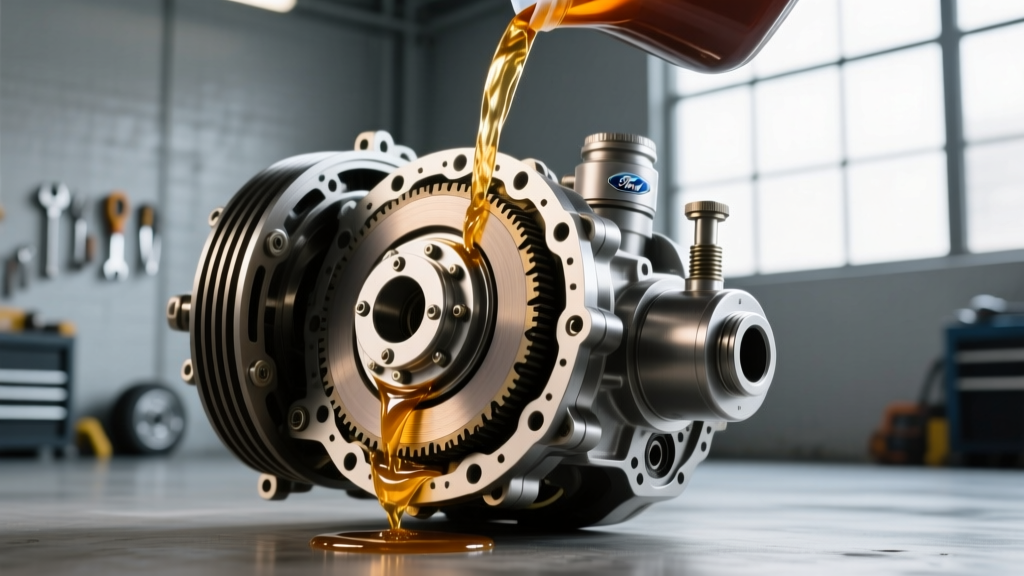
For the 9.75-inch axle, remove the fill plug located on the front-facing center section of the differential housing using a 3/8-inch square drive ratchet. For the 8.8-inch, the fill hole is located just below the top edge of the differential cover. Crucial Step: Squeeze one full 4 oz bottle of Motorcraft XL-3 Friction Modifier directly into the fill hole before adding the gear oil. This ensures the modifier coats the clutch packs immediately. Follow with the 75W-140 synthetic gear oil using a fluid pump until the oil level reaches the bottom lip of the fill hole. Reinstall the fill plug and torque to 33 lb-ft.
Diagnosing and Eliminating LSD Chatter
If you experience a shuddering sensation or hear a rhythmic 'clunking' from the rear axle during tight, low-speed turns (such as pulling into a driveway), your Traction-Lok clutch packs are experiencing stick-slip chatter. This is rarely a sign of mechanical failure; it is almost always a chemical deficiency.
The Figure-8 Test: Find an empty, damp parking lot. Drive the truck in tight, continuous figure-8 patterns at 5-10 mph. If the rear end hops or chatters, the friction modifier is depleted. The fix is straightforward: extract 4 ounces of differential fluid via the fill hole using a syringe, inject one bottle of XL-3 Friction Modifier, and repeat the figure-8 test. It may take 20-30 miles of mixed driving for the modifier to fully absorb into the porous fiber linings of the clutch packs.
Real-World Maintenance Costs in 2026
Maintaining the 2006 Ford F150 rear differential is highly cost-effective when performed in a home garage. As of 2026, the DIY cost breakdown is as follows:
- Motorcraft 75W-140 Synthetic (3 Quarts): $45 - $60
- Motorcraft XL-3 Friction Modifier: $9 - $12
- Motorcraft TA-32 RTV Silicone: $12 - $15
- Total DIY Cost: $66 - $87
Conversely, taking the truck to a Ford dealership or a specialized drivetrain shop for a rear differential fluid service will typically cost between $250 and $380, factoring in shop labor rates and retail parts markup. Given the simplicity of the 8.8 and 9.75 axles, the DIY route offers massive savings while allowing you to personally inspect the health of your Traction-Lok clutch packs.