The Thermal Bottleneck in Modern Heavy-Duty Diesels
Heavy-duty diesel trucks are engineering marvels of torque and towing capacity, but this immense power comes with a severe thermal penalty. When towing near maximum Gross Combined Weight Rating (GCWR)—often exceeding 25,000 lbs in modern 3500/350 dually configurations—the torque converter generates massive parasitic heat. If the transmission fluid temperature exceeds 220°F, synthetic fluids begin to oxidize; beyond 250°F, clutch varnishing and seal degradation occur rapidly. For transmissions like the Allison 1000, Aisin AS69RC, Ram's 68RFE, and Ford's 10R140, managing this heat is not optional—it is critical for survival.
In this technical deep-dive, we examine the factory thermal management architecture, specifically the routing of transmission cooler lines to radiator heat exchangers, and explore why high-horsepower and heavy-towing diesel builds require a dedicated external stacked-plate bypass setup.
Evaluating the Factory Route: Transmission Cooler Lines to Radiator
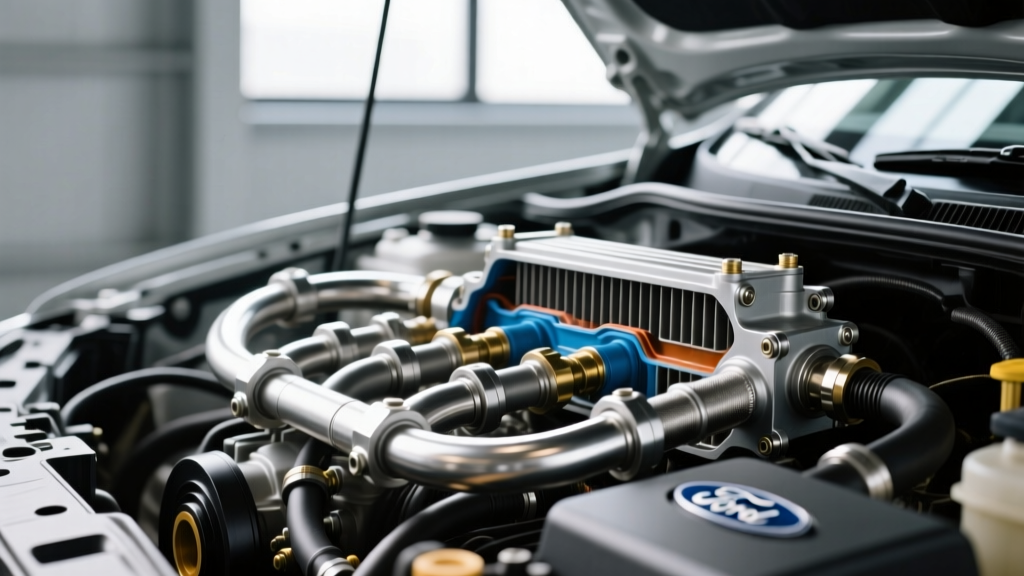
From the factory, nearly all heavy-duty pickups utilize a dual-stage cooling system. The primary cooling stage involves routing the transmission cooler lines to radiator integrated heat exchangers. In this setup, hot automatic transmission fluid (ATF) exits the transmission, flows into the bottom tank of the engine radiator, transfers heat to the engine coolant, and then exits toward a small front-mounted auxiliary air-to-oil cooler before returning to the transmission lube circuit.
The Liability of Radiator-Integrated Cooling
While routing transmission cooler lines to radiator cores works adequately for unloaded highway driving, it presents three major engineering flaws under heavy load:
- Thermal Cross-Contamination: Engine coolant operates optimally between 195°F and 215°F. When towing a 15,000 lb fifth-wheel up a 6% grade, engine coolant temps spike. Instead of cooling the ATF, the radiator heat exchanger actually heats the transmission fluid, accelerating thermal breakdown.
- The 'Strawberry Milkshake' Failure: Internal radiator tank failures (common in older aluminum/plastic crimped radiators) allow coolant and ATF to mix. This emulsion destroys clutch friction materials and ruins the torque converter.
- Flow Restrictions: OEM radiator heat exchangers often feature tight internal tube diameters to maximize heat transfer, which inadvertently creates a pressure drop in the return line, starving the transmission lube circuit.
Bypass Architecture: External Stacked-Plate Coolers
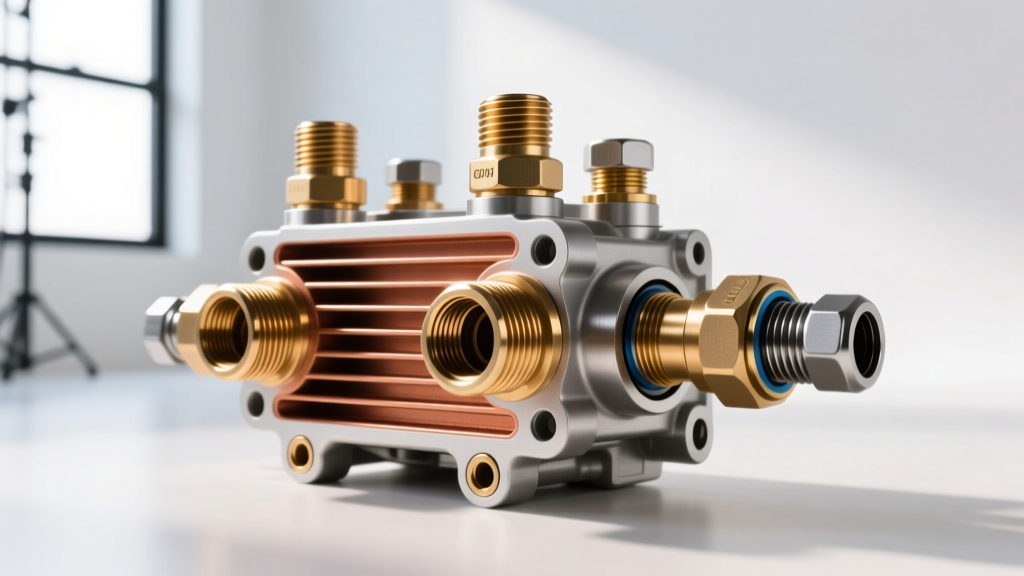
To eliminate these vulnerabilities, diesel performance experts advocate for a complete radiator bypass. By capping the radiator ATF ports and routing the transmission fluid directly to a high-capacity, standalone stacked-plate cooler, you decouple the transmission's thermal management from the engine's cooling system. Stacked-plate coolers offer a 30% to 40% increase in surface area compared to traditional tube-and-fin designs, promoting turbulent fluid flow for maximum heat dissipation.
Sizing and Component Selection by Transmission Model
Selecting the correct cooler requires matching the Gross Vehicle Weight Rating (GVWR) and specific transmission flow rates. Below is a technical matrix for common HD diesel platforms:
| Transmission | Typical Application | OEM Line Size | Max Return Pressure | Recommended External Cooler | Est. Cost (2026) |
|---|---|---|---|---|---|
| Allison 1000 | GM Duramax (01-23) | 3/8" Feed / 5/16" Return | 15-25 PSI | Derale Hyper-Cool (Part # 13960) | $280 - $320 |
| 68RFE | Ram Cummins (07-18) | 5/16" Feed / 5/16" Return | 10-15 PSI | Mishimoto MMTC-F2D Kit | $350 - $410 |
| Aisin AS69RC | Ram Cummins (14-24) | 3/8" Feed / 3/8" Return | 20-30 PSI | Hayden Ultra-Cool (Part # 4909) | $210 - $250 |
| 10R140 | Ford Power Stroke (20+) | 3/8" Feed / 3/8" Return | 25-35 PSI | Derale Series 9000 (Part # 13950) | $240 - $290 |
Technical Installation: Fittings, Routing, and Torque Specs
Executing a radiator bypass requires precision. Improperly sized fittings or over-tightened adapters will crack the transmission case or blow a line under pressure. When fabricating or installing bypass lines, adhere to the following specifications:
Adapter Fittings and Hose Selection
Avoid cheap barb fittings and worm-gear clamps for the high-pressure feed side. Instead, utilize SAE 45-degree flare adapters or AN (Army-Navy) fittings. For the 68RFE and Allison 1000, converting the OEM quick-disconnects to -6 AN male adapters allows the use of high-pressure, stainless-steel braided PTFE hoses. PTFE hoses resist the aggressive detergents in modern low-viscosity fluids like Dexron Ultra and Mercon ULV.
Critical Torque Specifications
Over-torquing brass or aluminum adapters into the cast aluminum transmission case is a common DIY failure. Use a calibrated inch-pound or low-range foot-pound torque wrench:
- 3/8" SAE 45-Degree Flare Fittings: 12 to 15 lb-ft.
- 5/16" SAE 45-Degree Flare Fittings: 8 to 10 lb-ft.
- -6 AN Aluminum Fittings: Hand-tight, plus exactly 1/4 to 3/8 of a turn with a wrench (approx. 7-9 lb-ft equivalent).
- OEM Quick-Disconnect Retainer Clips: Always replace with new OEM retaining clips (e.g., GM Part # 15740691) during reassembly. Never reuse stretched spring clips.
Fluid Dynamics: Managing Lube Circuit Pressure
The most critical aspect of bypassing the factory routing is maintaining adequate return line pressure. The transmission's internal lube circuit relies on return line back-pressure to force fluid into the output shaft bearings and planetary gearsets.
"Starving the rear output shaft bearing of lube pressure due to an undersized external cooler or restrictive AN fittings is the number one cause of catastrophic tailhousing failure in the Allison 1000 when towing heavy." — Allison Transmission Service Guidelines
If your chosen stacked-plate cooler has an internal volume that is too large or flow resistance that is too high, return pressure will drop below the required 10 PSI threshold. To combat this, install a thermostatic bypass valve (such as the Derale 13011) in parallel with the cooler. This valve keeps fluid flowing in a short circuit back to the transmission until the ATF reaches 180°F, ensuring immediate lube pressure on cold starts while preventing cooler freeze-ups in sub-zero climates.
Flushing and Fluid Capacity Considerations
Adding a large external stacked-plate cooler and 10 feet of -6 AN hose will increase the total fluid capacity of your drivetrain by 1.5 to 2.5 quarts. When performing the bypass, you must account for this extra volume. For example, a dry-stock 68RFE holds roughly 10.5 quarts, but with a Mishimoto external kit and lines, total system capacity approaches 13 quarts. Always verify the final level using the transmission dipstick or scan tool temperature-compensated fluid level charts at exactly 180°F (82°C).
Summary: Is the Bypass Worth It?
For daily drivers and light-duty commuters, the OEM routing of transmission cooler lines to radiator cores is sufficient. However, for diesel truck owners pushing 500+ rear-wheel horsepower, running larger compound turbos, or towing heavy trailers through mountain passes, the factory heat exchanger is a thermal choke point. By investing $300 to $500 in a high-flow stacked-plate cooler, PTFE lines, and proper AN fittings, you decouple your transmission's health from the engine's coolant temps, effectively bulletproofing the drivetrain against thermal degradation. For more advanced drivetrain cooling strategies, consult the engineering resources at Mishimoto and Derale Performance.