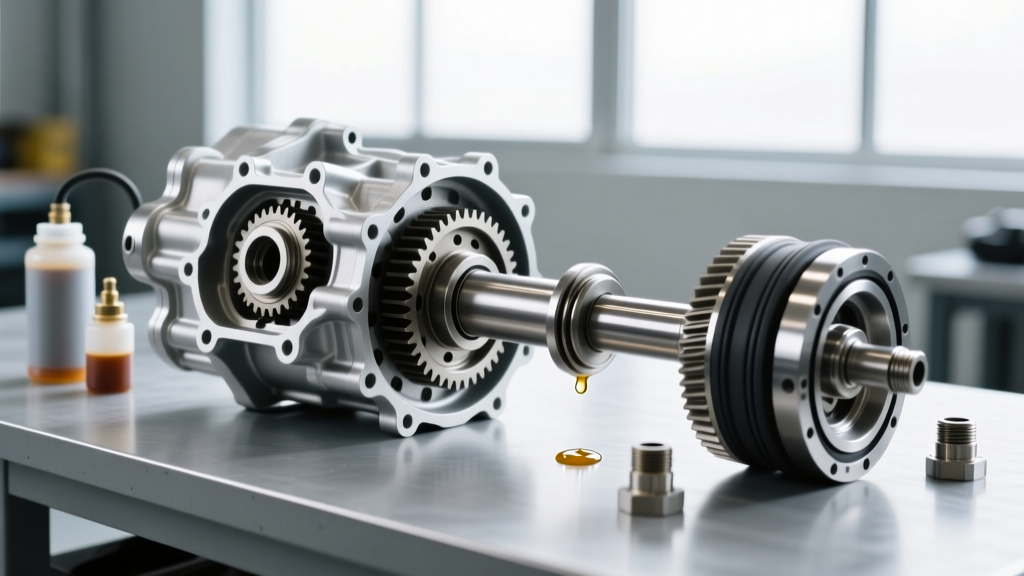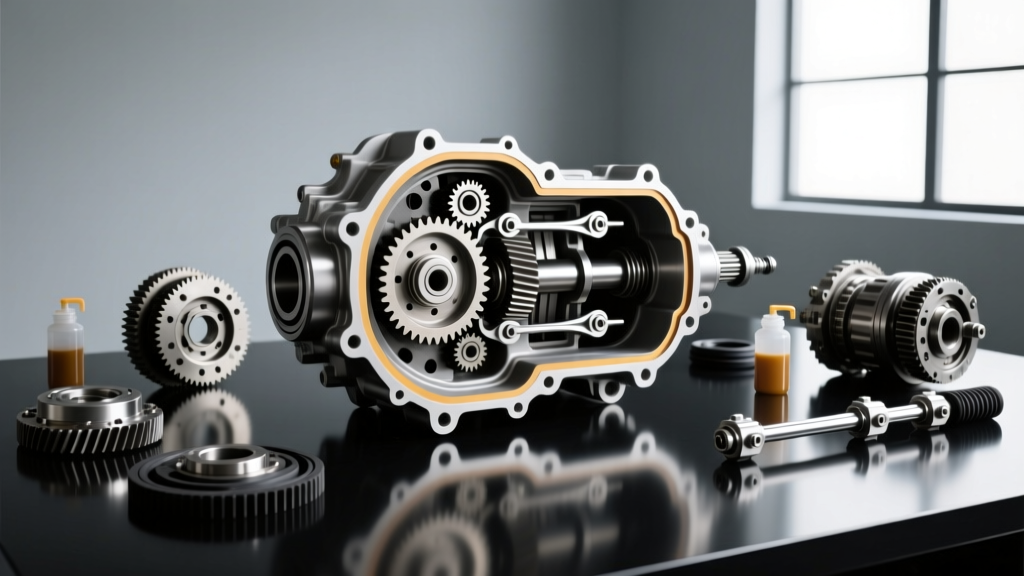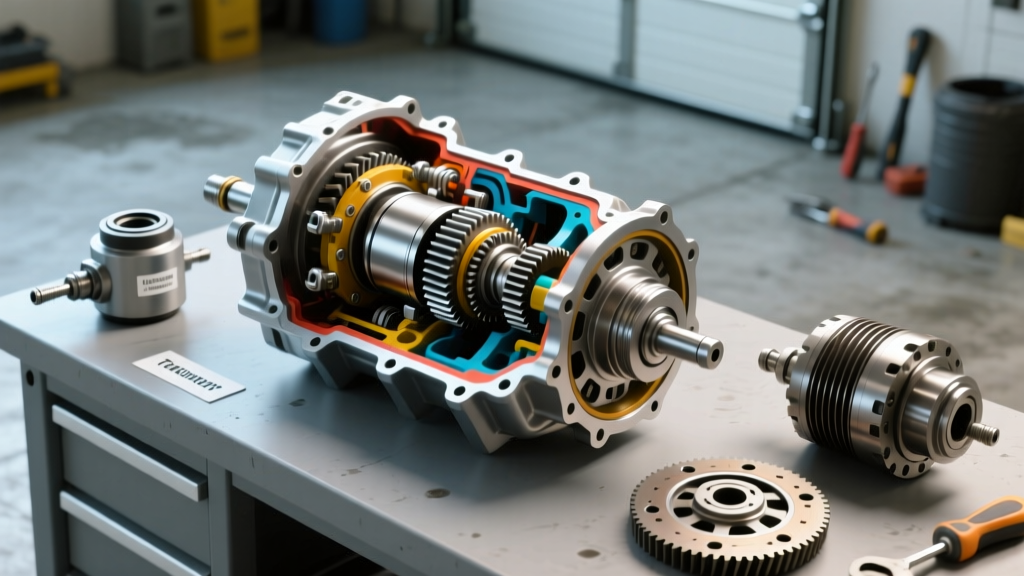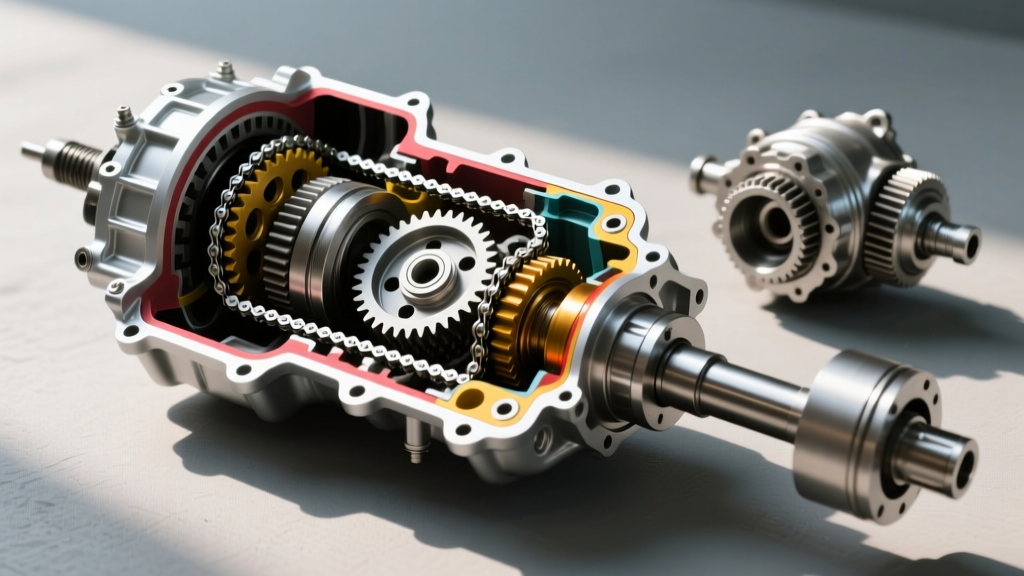
The Architecture Debate: Transfer Case vs Center Differential
When pushing high-horsepower performance builds, off-road pre-runners, or rally-prepped AWD machines, drivetrain survivability is the ultimate bottleneck. Enthusiasts frequently debate the 'transfer case vs center differential' architecture, but diagnosing failures requires understanding that these two components serve fundamentally different mechanical purposes. A traditional transfer case (like the legendary NP205 or the chain-driven NV241HD) is primarily a torque-multiplying and engagement mechanism, often locking the front and rear driveshafts together in a 50/50 split. Conversely, a center differential (such as the Subaru DCCD, Audi Torsen, or Mitsubishi Active Center Differential) utilizes planetary gearsets, viscous fluids, or electromagnetic clutch packs to allow front-to-rear speed differentiation while actively managing torque split.
Diagnosing transfer case problems versus center differential degradation requires a completely different forensic approach. In 2026, with modern active torque-vectoring systems and high-output EV/ICE hybrid swaps, the line between these components can blur, but the mechanical failure modes remain rooted in physics. This performance and upgrade guide will walk you through exact diagnostic procedures, fluid forensics, and heavy-duty upgrade paths to keep your drivetrain from grenade-ing under load.
Diagnosing Transfer Case Failures Under High Horsepower
Traditional transfer cases are robust but have distinct failure points when subjected to aggressive wheel hop, massive torque spikes, or prolonged high-speed desert running. Here is how to diagnose the most common transfer case problems in performance applications.
1. Chain Stretch and Planetary Hub Wear (NV241 / NV241HD)
The GM and Dodge NV241 series relies on a Morse chain to transfer power to the front output shaft. Under aggressive acceleration and deceleration cycles, the chain pins and sprockets wear, leading to 'chain stretch.' Diagnostic Test: If your rig pops out of 4WD High under deceleration, or you hear a rhythmic metallic slapping sound at 45-55 mph, the chain is slapping against the internal case housing. Remove the rear output yoke and check for excessive rotational backlash. If rotational play exceeds 15 degrees before the front driveshaft engages, the chain and sprockets are compromised.
Performance Upgrade: Swap the standard 1.25-inch chain for a 1.5-inch heavy-duty HD chain kit and upgrade to billet steel shift forks from manufacturers like Synergy Manufacturing. This prevents the shift fork pads from wearing down and disengaging under heavy axle articulation.
2. Encoder Motor and Actuator Failures (BorgWarner 4494 / 4493)
Modern performance trucks utilize active transfer cases managed by an encoder motor. A common misdiagnosis is blaming internal mechanical failure when the issue is electrical. Diagnostic Test: Use a bi-directional OBD2 scanner to command the transfer case shift motor. If the motor clicks but the internal cam plate does not rotate, the internal nylon actuator fork is likely shattered. If the scanner shows a position sensor voltage deviation (typically reading outside the 0.5V to 4.5V sweep), the encoder motor hall-effect sensor has failed.
3. Output Shaft and Bearing Deflection
High-horsepower builds often destroy the rear output shaft bearings, leading to seal leaks and driveshaft vibration. Diagnostic Test: With the vehicle on a lift, grab the rear driveshaft near the transfer case yoke and apply vertical force. Any perceptible vertical play indicates a failed rear output bearing or a scored output shaft journal.
Diagnosing Center Differential Degradation
Center differentials are the heart of performance AWD systems. They manage the speed delta between the front and rear axles during cornering. When they fail, the vehicle exhibits severe handling anomalies and torque bind.
1. Viscous Coupler Shear (Subaru 5MT / Early WRX)
Older Subaru manual transmissions use a viscous limited-slip center differential. The silicone fluid inside degrades over time due to thermal cycling, losing its shear resistance. Diagnostic Test: Perform a tight 'figure-8' turn on dry, high-traction asphalt. If the vehicle hops, binds, or exhibits severe understeer, the viscous fluid has either completely sheared (causing open-diff behavior and subsequent clutch-pack glazing) or solidified due to extreme overheating. A properly functioning center diff should allow smooth low-speed turning without driveline wind-up.
2. Electromagnetic Clutch Pack Glazing (Subaru 6MT DCCD)
The Driver Controlled Center Differential (DCCD) uses an electromagnetic clutch to vary torque split. Diagnostic Test: Connect a Subaru Select Monitor or advanced CAN-bus tool to read the DCCD current draw and clutch slip RPM. If the ECU commands maximum lock (high amperage) but the slip RPM remains high, the internal friction plates are glazed or burnt. This is common in track-driven WRX STIs where aggressive launch control generates excessive heat in the center diff housing.
Performance Upgrade: For dedicated track or rally builds, bypass the factory DCCD entirely and install a mechanical Cusco Type RS or Kaaz limited-slip center differential. These mechanical units use coil springs and ramp angles to provide predictable, heat-resistant torque biasing without relying on degrading electromagnetic clutches.
Diagnostic Matrix: Symptoms, Root Causes, and Upgrades
| Component | Symptom Under Load | Root Cause | Performance Upgrade Path | Est. Cost (2026) |
|---|---|---|---|---|
| NV241HD Chain | Pops out of 4WD on decel | Chain pin wear / sprocket hooking | 1.5' HD Chain & Billet Shift Forks | $450 - $650 |
| NP205 Planetary | Grinding noise in 4WD Low | Planetary gear tooth shear | Forged Billet Planetary Hub | $800 - $1,200 |
| Subaru Viscous Diff | Torque bind on tight turns | Silicone fluid thermal degradation | Cusco Mechanical 1-Way Center LSD | $1,300 - $1,600 |
| BW4494 Encoder | Flashing 4WD dash light | Hall-effect sensor failure | Heavy-Duty Shielded Encoder Motor | $250 - $350 |
Fluid Forensics and Torque Specifications
Proper diagnosis of transfer case vs center differential problems often starts at the drain plug. Fluid analysis is the cheapest and most accurate way to determine internal health before tearing down the case.
Transfer Case Fluid Diagnostics
Most chain-driven transfer cases (like the NV241) require specific automatic transmission fluids, such as Dexron VI or Mopar ATF+4, with a capacity of roughly 2.0 quarts. When draining the fluid, inspect the magnetic plug. Fine metallic paste (glitter) is normal wear for chain-driven cases. However, ferrous chunks or needle-bearing shards indicate catastrophic planetary or output shaft bearing failure. If you find aluminum shavings, the chain has stretched and is actively gouging the internal aluminum case halves, necessitating a case replacement or heavy-duty case saver kit.
Center Differential Fluid Diagnostics
Center differentials integrated into transaxles (like Subaru's AWD system) typically share fluid with the manual transmission gearset, requiring 75W-90 GL-5 gear oil (capacity approx. 3.7 quarts for the entire transaxle). If the drained oil smells severely burnt (like scorched coffee) and contains black friction material, the center diff clutch packs have overheated and glazed. In standalone center diffs, always replace the drain and fill plug crush washers. The Subaru rear differential drain plug (which services the center diff extension on some platforms) requires a precise torque spec of 33-35 lb-ft with a new 18mm aluminum crush washer to prevent casing deformation.
Critical Torque Specs for Reassembly
When upgrading or rebuilding, adhering to exact torque specifications is non-negotiable to prevent harmonic vibrations at high speeds:
- NP205 Rear Output Shaft Yoke Nut: 250 lb-ft (Requires a heavy-duty 1/2' drive torque wrench and a yoke holding tool).
- NV241 Case Half Bolts: 25-30 lb-ft (Use blue Loctite 243 to prevent backing out under high-frequency vibration).
- Driveshaft Flange Bolts (12mm 1.25 pitch): 55-65 lb-ft (Always replace TTY stretch bolts after removal).
Real-World Upgrade Economics
When diagnosis confirms catastrophic failure, you face a critical decision: rebuild or upgrade? Sourcing OEM replacement units from a RockAuto Drivetrain Catalog might cost between $800 and $1,500 for a remanufactured stock transfer case. However, for a dedicated performance build, investing in a purpose-built unit is vastly superior. Companies like Advance Adapters or JB Conversions offer gear-driven transfer case kits (like the Atlas II) that eliminate the weak link of the drive chain entirely, handling upwards of 1,500 lb-ft of torque. While the initial entry price for a gear-driven case sits between $2,800 and $3,500, the elimination of chain stretch and planetary hub fragility makes it the ultimate endgame for high-horsepower off-road and drag applications.
Pro Tip: Never ignore a minor driveline vibration after a high-load track day or desert run. A failing center differential or stretching transfer case chain will alter the harmonic resonance of the driveline, eventually destroying U-joints, pinion bearings, and transmission output seals. Early diagnosis saves thousands in collateral damage.
Ultimately, understanding the transfer case vs center differential distinction allows you to target your upgrades precisely. Whether you are installing a Cusco mechanical LSD for rallycross predictability or stuffing a 1.5-inch HD chain into your NV241 for Baja survival, accurate diagnosis is the first step toward drivetrain invincibility. For further component sourcing and heavy-duty drivetrain hardware, consult specialists at Summit Racing Transfer Case Upgrades to match your exact performance requirements.