The Fluid Coupling Divide: Lock Up vs Non Lock Up Torque Converter Dynamics
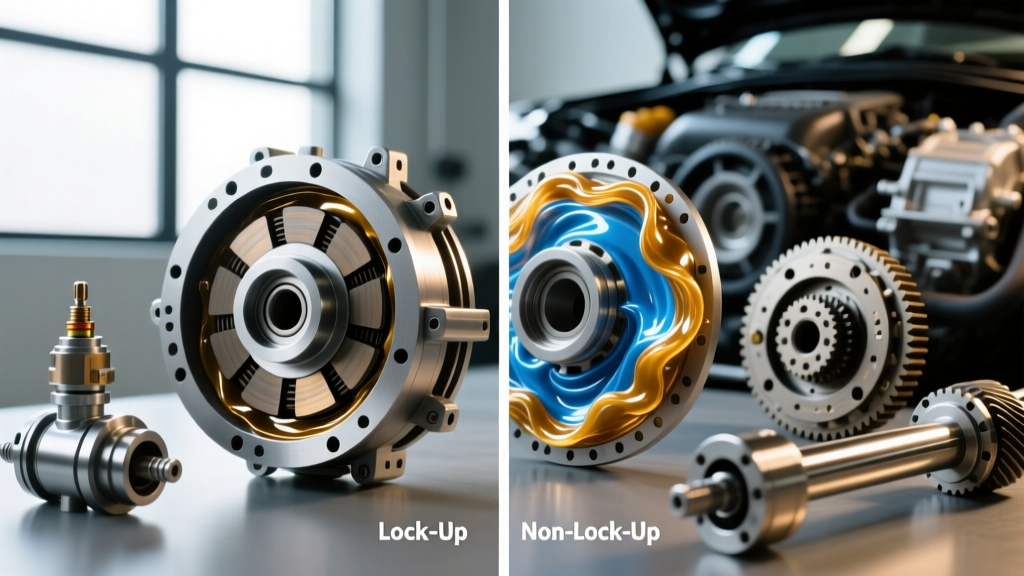
To accurately diagnose torque converter clutch (TCC) solenoid problems, a technician must first understand the fundamental operational differences when comparing a lock up vs non lock up torque converter state. In the non-lockup (fluid coupling) phase, engine power is transferred to the transmission input shaft via hydraulic fluid shear. The impeller drives the turbine through automatic transmission fluid (ATF), allowing for torque multiplication and slip. While essential for smooth launches, this slip generates immense heat and parasitic power loss.
When the Powertrain Control Module (PCM) commands a lock-up event, the TCC solenoid actuates, routing hydraulic pressure to apply the TCC friction liner against the converter cover. This creates a 1:1 mechanical connection between the engine and transmission, eliminating slip, reducing ATF temperatures, and improving fuel economy. When the TCC solenoid fails, the transmission becomes trapped in an inefficient state, or worse, suffers from aggressive, unmodulated lock-up that stalls the engine or causes severe driveline shudder.
Anatomy of TCC Solenoid Failures: Electrical vs. Hydraulic
Modern automatic transmissions rely heavily on Pulse Width Modulated (PWM) TCC solenoids rather than simple on/off switches. This allows the PCM to slip the TCC at a microscopic level (often 20-40 RPM) to absorb engine harmonics and prevent NVH (Noise, Vibration, and Harshness) from entering the cabin. Failures generally fall into two distinct categories:
1. Electrical and Magnetic Degradation
The internal copper windings of the solenoid coil can degrade due to prolonged exposure to high ATF temperatures (often exceeding 220°F in heavy-duty applications). This alters the electrical resistance, causing the PCM to register circuit faults. Furthermore, the internal pintle or spool valve can suffer from magnetic sticking, where microscopic metallic debris suspended in the ATF causes the valve to hang up, resulting in delayed TCC apply or release.
2. Hydraulic and Mechanical Blockages
Even if the solenoid coil tests perfectly, hydraulic failure is common. The TCC regulator valve and TCC control valve bores in the aluminum valve body are prone to wear. When the anodized aluminum wears away, cross-leaking occurs. The PWM solenoid may be commanding 80 PSI, but due to bore wear, only 45 PSI reaches the converter, resulting in a slipping TCC and the dreaded 1200-1500 RPM highway shudder.
Diagnostic Matrix: TCC Solenoid Specifications & Symptoms
Proper diagnosis requires moving beyond generic OBD2 code readers and utilizing a digital multimeter (DMM) and an oscilloscope to verify the PWM signal. Below is a diagnostic matrix for common platforms.
| Transmission Model | Solenoid Type | Target Resistance (at 68°F) | PWM Frequency | Common Failure Symptom |
|---|---|---|---|---|
| GM 4L60E / 4L65E | PWM (Variable Force) | 10.0 - 15.0 Ohms | ~300 Hz | TCC slip codes (P0741), shudder on light throttle. |
| GM 6L80 / 6L90 | Low-Impedance PWM | 2.0 - 4.5 Ohms | ~500 Hz | Harsh lock-up, engine stall at stops (P0742). |
| Ford 6R80 (ZF 6HP26) | Variable Force Solenoid | 2.5 - 5.0 Ohms | ~300-500 Hz | Flare on 4-5 shift, TCC apply delay. |
| Chrysler 850RE (ZF 8HP) | Mechatronic Integrated | N/A (Tested via Scan Tool) | Variable | Locked in limp mode, adapter sleeve leaks. |
Transmission-Specific Best Practices & Part Numbers
When tackling TCC solenoid problems, a one-size-fits-all approach will lead to comebacks. Here are expert-level insights for the most prevalent transmission families on the road today.
GM 4L60E / 4L70E: The Screen and Separator Plate Dilemma
The 4L60E utilizes a dedicated TCC PWM solenoid (OEM Part: AC Delco 24230298, typically $35-$50). A notorious failure point is not just the solenoid itself, but the tiny filter screen located at the base of the solenoid. This screen frequently tears, allowing debris to enter the TCC control valve. Expert Tip: Never replace the TCC solenoid on a 4L60E without dropping the valve body to inspect the TCC regulator valve and replacing the separator plate. The orifice in the stock separator plate often erodes from 0.110' to over 0.145', bleeding off crucial apply pressure.
GM 6L80 / 6L90: Internal Solenoids and Valve Body Wear
In the 6L80, the TCC solenoid is integrated directly into the internal transmission case and valve body assembly, making it non-serviceable as an isolated external component without removing the transmission pan and valve body. If you diagnose a failed TCC solenoid coil on a 6L80, you must replace the entire lower valve body assembly or perform a precision Sonnax bore repair. The TCC regulator valve bore wears aggressively. Using a Sonnax 104740-03K TCC regulator valve kit and a reaming tool is the only permanent fix. When reinstalling the 6L80 valve body, torque the M6 mounting bolts to exactly 8-10 Nm (71-89 lb-in) in a crisscross pattern to prevent valve body warpage.
ZF 8HP (Chrysler 850RE / BMW / Audi): The Mechatronic Sleeve
The ZF 8HP utilizes a highly complex Mechatronic unit where the TCC solenoid is sealed within the electro-hydraulic control module. However, a very common 'TCC problem' that mimics solenoid failure is actually a leak at the Mechatronic adapter sleeve (the cylindrical plastic housing where the Mechatronic plugs into the transmission case). The O-rings on this sleeve flatten and degrade, causing a loss of TCC apply pressure. Before condemning the $1,200+ Mechatronic unit, always inspect the adapter sleeve for ATF weeping and replace it (Part: ZF 0734.327.114).
Expert Repair Protocol & 2026 Cost Expectations
Diagnosing and repairing TCC solenoid problems requires strict adherence to hydraulic cleanliness and precise fluid specifications. A standard 'drain and fill' is insufficient if debris has compromised the valve body. We recommend a machine flush only after the faulty solenoid and any damaged separator plates have been replaced, utilizing a hot-flush machine to cycle the ATF through the cooler lines at operating temperatures (180°F+).
'The biggest mistake I see general repair shops make is throwing a TCC solenoid at a P0741 code without checking the actual line pressure during the lock-up event. If your TCC apply pressure doesn't mirror the commanded duty cycle on the bi-directional scan tool, you have a hydraulic leak in the valve body or the converter hub, not just a bad coil.' — Master Transmission Rebuilder, ATSG Certified
Real-World Pricing Breakdown (2026 Estimates)
- Solenoid Only (External - e.g., 4L60E, Ford 6R80): $30 - $90 for OEM parts. Labor: $250 - $400 (Pan drop, filter, fluid, and solenoid swap).
- Valve Body Replacement / Rebuild (e.g., 6L80, ZF 8HP): $450 - $950 for the valve body or Mechatronic adapter kit. Labor: $400 - $700.
- Torque Converter Replacement: If TCC slip has glazed the internal friction liner or contaminated the cooler, the converter must be replaced. Remanufactured converters range from $350 - $650, with labor requiring transmission removal ($800 - $1,400).
- ATF Costs: Modern synthetic fluids (e.g., Dexron ULV, Motorcraft Mercon LV, ZF Lifeguard 8) cost $12 - $22 per quart. A dry-fill 6L80 requires nearly 11 quarts, significantly impacting the final invoice.
For further technical deep-dives into hydraulic circuit routing and valve body wear patterns, transmission specialists should consult the technical resources available at Sonnax Industries and the diagnostic flowcharts provided by the Automatic Transmission Service Group (ATSG). Understanding the delicate balance between electrical command and hydraulic execution is the key to permanently resolving TCC solenoid problems and restoring seamless lock-up operation.