The Hybrid Architecture Divide: Does Your Vehicle Even Have a Torque Converter?
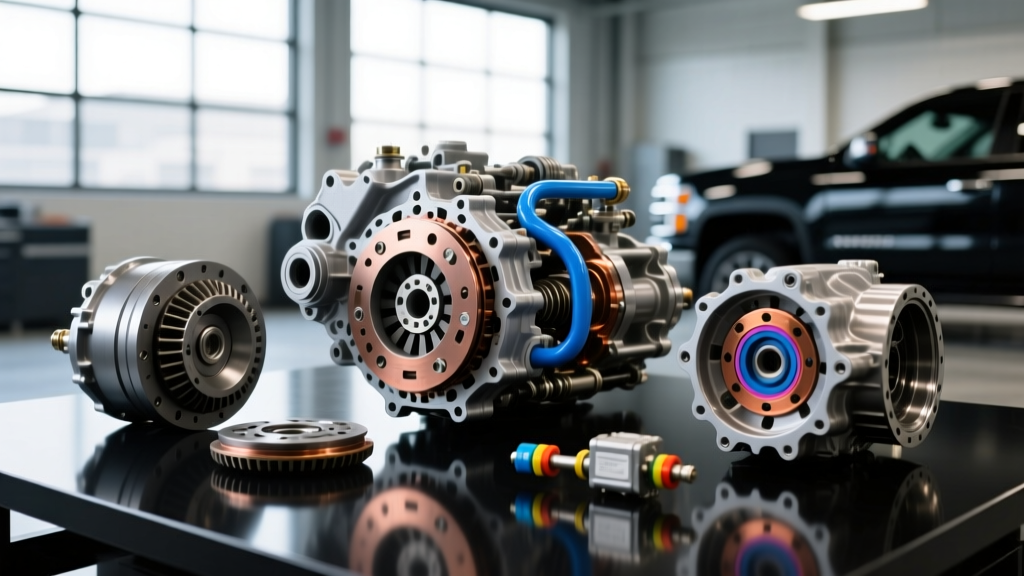
When technicians approach hybrid drivetrains, a common misconception is that all hybrids utilize planetary gearsets devoid of traditional fluid couplings. While Toyota's Hybrid Synergy Drive (e-CVT) relies on a Power Split Device without a torque converter, the landscape of P2 and P3 hybrid architectures tells a different story. As of 2026, millions of vehicles on the road—specifically those utilizing Hyundai/Kia's TMED (Transmission Mounted Electrical Device) and Ford's HF45 hybrid transaxles—rely heavily on a traditional torque converter to manage the violent torque handoffs between the internal combustion engine (ICE) and the high-voltage electric motor.
Diagnosing a faulty torque converter in these hybrid applications is exponentially more complex than in conventional ICE vehicles. The electric motor's instant torque delivery masks traditional slip symptoms, while regenerative braking systems can mimic the shudder of a failing torque converter clutch (TCC). This guide provides a master-level diagnostic framework for isolating torque converter failures in modern hybrid platforms.
4 Unique Symptoms of a Faulty Torque Converter in Hybrids
Standard torque converter failure modes—such as stator clutch failure or fin degradation—still apply to hybrids. However, the integration of the electric motor creates unique, system-specific symptoms that often lead to misdiagnosis of the high-voltage battery or inverter.
1. The 'EV-to-ICE' Handoff Clunk (Damper Spring Fatigue)
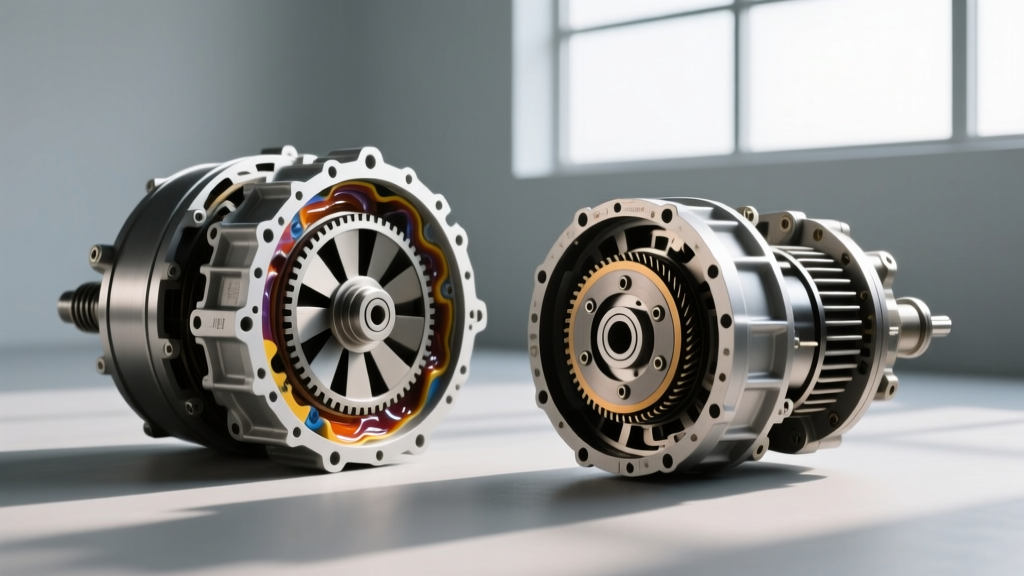
In P2 hybrid systems like the Hyundai Sonata Hybrid's 6-speed TMED, the torque converter houses a specialized multi-stage torsional damper. This damper absorbs the harmonic vibrations when the ICE is abruptly fired up by the Hybrid Starter Generator (HSG) at highway speeds. When the internal damper springs fracture or the friction lining wears out, you will hear a distinct metallic 'clunk' originating from the bellhousing during the EV-to-ICE transition. Unlike a standard misfire, this clunk occurs precisely when the engine RPM matches the motor RPM for clutch engagement.
2. Regenerative Braking Shudder vs. TCC Shudder
A failing TCC friction lining typically causes a 30-50 Hz shudder during light-throttle highway cruising (45-55 MPH). In a hybrid, this is often confused with regenerative braking faults. The key differentiator is slip RPM. If the shudder occurs while the TCC PID shows a commanded slip of 20-40 RPM, and the transmission fluid temperature (TFT) is spiking above 210°F (99°C), the torque converter lockup clutch is failing to modulate hydraulic pressure correctly, causing a mechanical stick-slip phenomenon.
3. Inverter Overheating Due to Stator Drag
If the one-way stator clutch inside the torque converter seizes in the locked position, it creates massive parasitic drag at highway speeds. In a conventional car, this results in poor top-end power and overheated fluid. In a hybrid like the Ford F-150 PowerBoost (HF45 transaxle), this parasitic drag forces the electric motor to work harder to maintain cruising speed, which in turn generates excess heat in the motor stator and inverter. Technicians often mistakenly replace the inverter coolant pump, missing the root cause: a mechanically locked torque converter stator.
4. High-Voltage Battery Drain at Idle
A torque converter that fails to 'unlock' when the vehicle comes to a stop will drag the ICE down, stalling the engine. To prevent the stall, the hybrid control module (HCM) will command the electric motor to output continuous positive torque to keep the engine spinning. This results in an unexplained, rapid depletion of the high-voltage battery state of charge (SOC) while idling at red lights.
Diagnostic Framework: Isolating the TC via PID Data
To separate a faulty torque converter from a failing electric motor or transmission valve body, you must log specific PIDs using an advanced bi-directional scan tool. Below is the diagnostic matrix for evaluating TCC health in a hybrid environment.
| PID Parameter | Normal Hybrid Operation | Faulty TC Signature |
|---|---|---|
| TCC Slip RPM | 0-10 RPM (Locked), 20-40 RPM (Modulated) | Erratic spikes >150 RPM during steady cruise |
| TCC Solenoid Duty Cycle | 60-85% (Applied) | Maxed at 95%+ while slip remains high (internal leak) |
| Motor Torque Output (Nm) | Stable or regenerative (negative) | Continuous positive torque at idle (TC failing to unlock) |
| Trans Fluid Temp (TFT) | 160°F - 195°F (71°C - 90°C) | Rapid climb >220°F (104°C) under light load (stator drag) |
Master Tech Tip: When diagnosing TCC shudder in a Hyundai/Kia TMED system, always verify the ATF SP-IV RR fluid level using the overflow plug method at exactly 122°F-140°F (50°C-60°C). Low fluid volume causes TCC apply pressure drops that perfectly mimic a worn friction clutch.
Model-Specific Troubleshooting & Part Data
Hyundai/Kia TMED (Sonata, Niro, Sorento Hybrid)
The TMED 6-speed automatic places the electric motor between the engine and the transmission, utilizing an engine-disconnect clutch and a traditional torque converter. A common failure point is the torque converter hub wearing into the transmission oil pump gear.
- OEM Part Reference: 46400-2G000 (Varies by engine displacement)
- Fluid Specification: ATF SP-IV RR (Low viscosity for hybrid efficiency)
- Capacity: 7.1 Liters (Dry fill), 3.5 Liters (Drain and fill)
- Diagnostic Quirk: If the engine disconnect clutch fails, it can contaminate the TC fluid with clutch material, leading to secondary TCC lockup faults.
Ford HF45 (F-150 PowerBoost, Escape Hybrid)
Ford's HF45 transaxle uses a torque converter to mate the 3.5L EcoBoost V6 to the electric motor and planetary gearset. Because of the massive 570 lb-ft of combined system torque, the TC lockup clutch is subjected to extreme shear forces.
- Fluid Specification: MERCON ULV (Ultra Low Viscosity)
- Common Failure: TCC friction lining delamination due to aggressive regenerative braking handoffs.
- Diagnostic Quirk: Use Ford's IDS or FDRS software to perform the 'TCC Break-In' procedure after replacement. Failing to do so will cause immediate shudder upon the first highway drive.
Replacement Costs, Torque Specs, and Reassembly
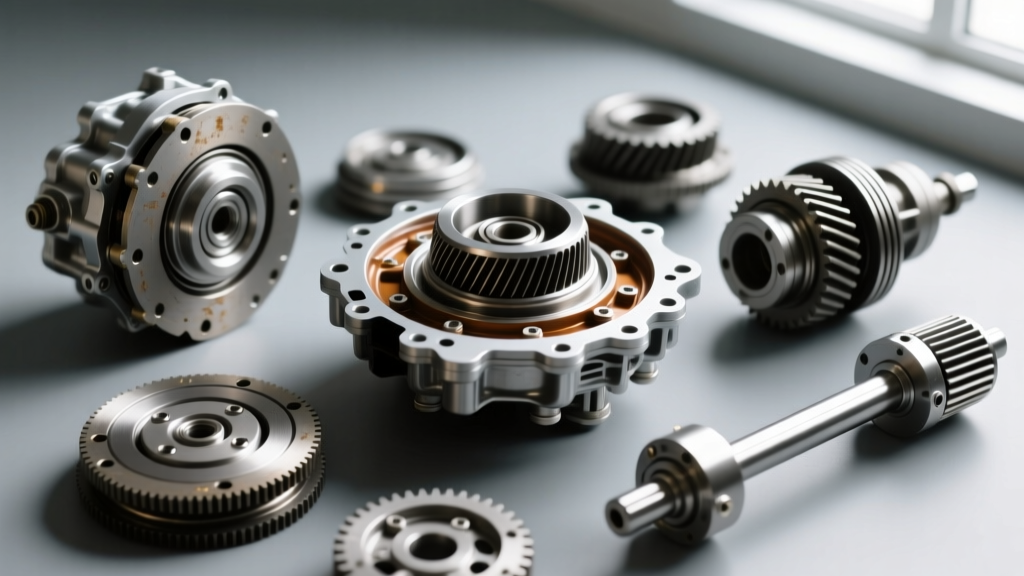
Replacing a torque converter in a hybrid requires strict adherence to alignment and torque specifications. The electric motor stator is often integrated into or sits immediately adjacent to the TC housing; misalignment during installation can crush the motor windings or damage the resolver sensor.
Critical Torque Specifications (General P2/Hybrid Guidelines)
- Flexplate to Crankshaft Bolts: 85-95 Nm (Always use new stretch bolts and apply thread locker)
- Torque Converter to Flexplate Bolts: 35-45 Nm (Ensure the TC is fully seated into the oil pump gear before tightening; measure the gap between the flexplate and TC pad—it should be 1-3mm. If it is flush, the TC is NOT seated and will destroy the oil pump upon bellhousing tightening).
- Bellhousing to Engine Block: 48-55 Nm (Sequence dependent on OEM manual)
Real-World Pricing (2026 Estimates)
The cost to replace a hybrid torque converter is significantly higher than conventional vehicles due to the labor intensity of dropping a hybrid subframe and disconnecting high-voltage safety loops.
- Part Cost (OEM TC): $900 - $1,600
- Labor (Hybrid Subframe Drop & HV Safety Protocol): 8.5 - 12.0 Hours ($1,200 - $2,100)
- Fluids & Consumables: $150 - $250 (MERCON ULV and SP-IV RR are premium-priced synthetics)
- Total Out-the-Door Estimate: $2,250 - $3,950
Final Troubleshooting Verdict
Diagnosing a faulty torque converter in hybrid vehicles requires a paradigm shift. Technicians must stop viewing the drivetrain as purely mechanical and start analyzing the electro-mechanical handoffs. By monitoring TCC slip RPM against motor torque output, verifying stator health via inverter thermal loads, and understanding the unique damper configurations of P2 and P3 architectures, you can accurately condemn the torque converter before it takes down the high-voltage electric motor or transmission oil pump with it.
For further reading on hybrid drivetrain mechanical integration and torque converter clutch modulation strategies, refer to the SAE International Technical Papers database, and consult Sonnax Technical Resources for aftermarket torque converter reinforcement kits and valve body upgrades designed to handle the unique pressure profiles of hybrid transmissions. Always verify OEM-specific fluid levels using the Ford Motorcraft Maintenance portals or equivalent manufacturer tech-info sites before condemning internal hydraulic components.