The Critical Role of the Center Differential in AWD Systems
As we navigate the complex automotive landscape of 2026, All-Wheel Drive (AWD) systems have evolved from rudimentary mechanical lockers to highly sophisticated, electronically managed torque-vectoring networks. At the heart of every true AWD system lies the center differential. Whether it is a Torsen helical gearset in an Audi Quattro, a viscous coupling paired with an electronic clutch in a Subaru WRX STI, or a multi-plate wet clutch assembly in a BMW xDrive ZF transfer case, the center differential dictates how power is split between the front and rear axles.
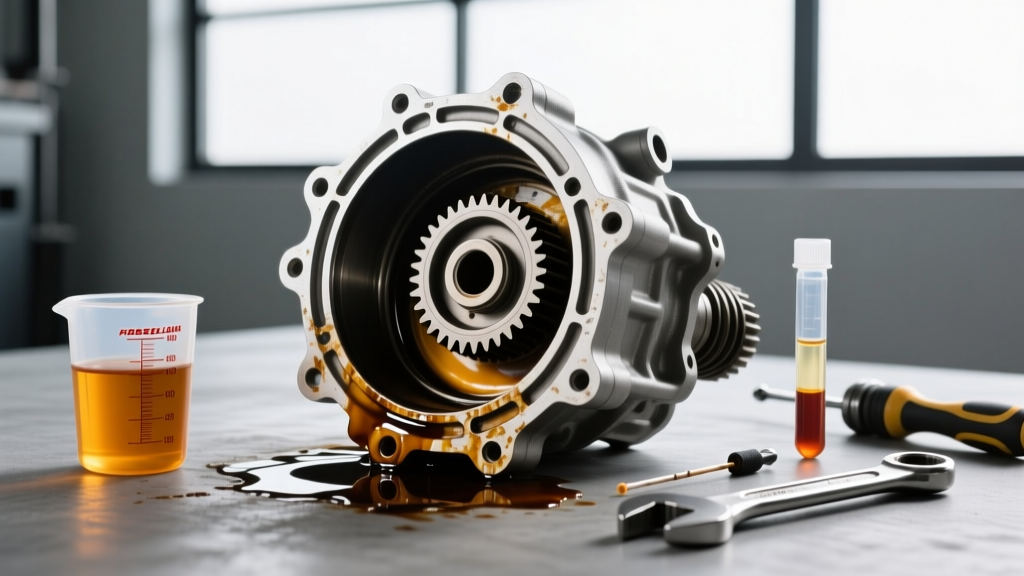
When an AWD vehicle exhibits binding during low-speed turns, clunking during hard acceleration, or erratic torque distribution, the center differential is the primary suspect. However, before tearing down the transfer case or replacing expensive electronic solenoids, a seasoned drivetrain technician relies on fluid analysis. Extracting a sample requires the correct differential fill plug removal tool, as modern AWD casings are notoriously difficult to service without the right equipment.
Common Symptoms of Center Differential Failure
Diagnosing a failing center differential requires distinguishing its symptoms from those of worn front/rear open differentials or failing CV axles. Look for these specific AWD-related warning signs:
- Low-Speed Binding (Tire Chirp): When turning sharply in a parking lot, the vehicle hops or chirps. This indicates the center differential is failing to slip, effectively locking the front and rear driveshafts together and causing driveline wind-up.
- AWD Warning Lamps & Limp Mode: Modern active center diffs rely on fluid pressure to engage clutch packs. Degraded fluid or internal metal debris clogs the solenoid screens, triggering a dashboard warning and defaulting the car to FWD or RWD-only mode.
- Highway Whining or Howling: While often associated with ring and pinion gears, a high-pitched whine that changes pitch exactly with vehicle speed (not engine RPM) can indicate starved bearings inside the center differential housing.
- Uneven Tire Wear: A malfunctioning active center diff that continuously biases torque to one axle prematurely destroys tread life on that specific axle.
The Danger of Using Improper Tools on AWD Transfer Cases
The fill and drain plugs on AWD center differentials and transfer cases are subjected to extreme thermal cycling, road salt corrosion, and galvanic oxidation (especially where steel bolts mate with aluminum casings). Attempting to remove these plugs with a standard 12-point socket, a worn Allen key, or an undersized hex bit will almost certainly result in rounding the fastener head.
Once a fill plug is stripped inside the confined space of a ZF ATC transfer case or a Subaru 6MT DCCD housing, you are faced with drilling out the plug, risking metal contamination of the delicate internal clutch packs. Investing in a dedicated, high-tolerance differential fill plug removal tool is non-negotiable for accurate diagnosis and maintenance.
Tool Selection by AWD Architecture
Different manufacturers utilize vastly different fastener designs for their center differentials. Here is what you need in your diagnostic arsenal:
- Subaru Symmetrical AWD (Manual & CVT): Most Subaru center diffs utilize a 14mm hex (Allen) recess. A dedicated 1/2-inch drive 14mm hex socket (such as the OEMTOOLS 25658 or Lisle 13650) made from chrome-molybdenum steel provides the necessary shear strength to break the initial 40+ lb-ft of breakaway corrosion torque.
- BMW xDrive (ZF Transfer Cases): ZF ATC 300/400/500 series transfer cases often use a 17mm hex plug or a specialized Torx T50/T60 fastener. Using a 3/8-inch drive Torx bit with a machined taper ensures full surface contact inside the bolt head.
- Audi/VW Haldex & Torsen Systems: Early Torsen units use standard 17mm or 19mm hex bolts. However, later Haldex-based AWD couplings (which act as the rear-biasing center diff) use small 10mm or 12mm hex plugs that are easily stripped if an over-torqued impact wrench was used during prior services.
Step-by-Step Diagnostic Fluid Extraction
Before draining the fluid entirely, extract a sample for diagnostic analysis. This prevents the loss of evidence before you can inspect it.
- Temperature Preparation: Drive the vehicle for 15 minutes to bring the center diff fluid to operating temperature (approx. 140°F / 60°C). Warm fluid suspends metallic particles and clutch material, providing a more accurate sample.
- Clean the Area: Use brake cleaner and a wire brush to remove caked-on mud and road grime from the fill plug area. Introducing external debris into an active clutch pack can destroy the AWD system.
- Engage the Proper Tool: Seat your differential fill plug removal tool completely into the fastener. Use a breaker bar with steady, continuous pressure rather than sharp impacts, which can shatter the tool's tip.
- Extract the Sample: Use a fluid extraction syringe with a narrow Teflon tube. Pull 100ml of fluid from the center of the housing (avoid the very bottom where heavy sludge rests, and the very top where air pockets exist).
Fluid Analysis: Decoding Center Diff Wear
The condition of the extracted gear oil or specialized transfer case fluid tells a detailed story about the internal health of the AWD system. Use the following diagnostic matrix to interpret your findings:
| Fluid Appearance | Odor | Diagnostic Conclusion | Recommended Action |
|---|---|---|---|
| Clear, amber/light brown | Mild petroleum | Normal wear, fluid is healthy. | Reinstall plug to spec; investigate electronic sensors for AWD faults. |
| Dark grey with fine glitter | Acrid, burnt | Clutch pack degradation (Active/Haldex diffs). | Perform full flush, replace inline solenoid filters, reset AWD adaptation values. |
| Black with chunky metallic flakes | Severe burning | Bearing failure or planetary gearset shearing. | Remove transfer case for complete teardown; internal mechanical failure. |
| Milky or frothy emulsion | None / Sweet | Water intrusion via compromised output shaft seal or breather tube. | Replace seals, clear breather lines, flush system multiple times. |
AWD Center Differential Service Specifications
When refilling the center differential after diagnosis or service, exact fluid types and torque specifications must be adhered to. Using standard 80W-90 GL-5 in an active electronic transfer case will cause immediate clutch pack failure due to friction modifier incompatibility.
| AWD System / Vehicle | Center Diff Type | Fluid Specification | Capacity | Fill Plug Torque Spec |
|---|---|---|---|---|
| Subaru WRX STI (6MT) | DCCD (Viscous + Electronic) | 75W-90 GL-5 (Motul Gear 300) | ~3.8 Liters (Total Trans) | 25.7 ft-lb (35 Nm) |
| BMW xDrive (ZF ATC 400) | Active Multi-plate Clutch | Pentosin TF 0870 | 0.6 - 0.8 Liters | 22 ft-lb (30 Nm) |
| Audi Quattro (B8/B9) | Torsen Type C (Helical) | 75W-90 GL-5 (Liqui Moly) | ~0.9 Liters | 26 ft-lb (35 Nm) |
| VW Golf R (Haldex Gen 5) | Electro-hydraulic Clutch | G 060 175 A2 (OEM) | 0.85 Liters | 11 ft-lb (15 Nm) |
Advanced Troubleshooting: Beyond the Fluid
If your fluid analysis reveals clean, healthy oil, but the vehicle still exhibits AWD binding or slipping, the diagnosis must shift from mechanical to electro-hydraulic. As detailed in ZF's technical documentation on axle drives and transfer cases, modern active center differentials rely on pulse-width modulated (PWM) solenoids to regulate hydraulic pressure against the clutch packs.
A common failure point in systems like the Haldex Gen 5 or BMW xDrive is the accumulation of microscopic clutch material on the solenoid strainer screen. Even if the main fluid looks acceptable, the small 10mm filter screen attached to the pump motor can become completely choked. This starves the clutch pack of hydraulic pressure, resulting in a vehicle that operates strictly in two-wheel drive despite no mechanical gear failures. For Subaru owners, understanding the nuances of Subaru's Symmetrical AWD architecture is vital, as the DCCD system requires specialized OBD-II bidirectional scanners to monitor clutch pack slip ratios and solenoid duty cycles in real-time.
Pro-Tips for Drivetrain Technicians
According to experts at Car and Driver's maintenance guides, the most overlooked aspect of differential service is the breather valve. AWD center differentials operate under high thermal loads. If the axle breather tube becomes clogged with mud or ice, the internal pressure will blow past the output shaft seals, leading to rapid fluid loss and catastrophic gear failure. Always trace the breather line from the center diff housing to its termination point behind the bumper or inside the frame rail during your diagnostic routine.
Ultimately, mastering AWD symptom diagnosis requires a methodical approach. By securing the correct differential fill plug removal tool, extracting a pristine fluid sample, and cross-referencing the physical evidence with electronic scan data, you can accurately pinpoint the root cause of driveline anomalies without resorting to unnecessary and expensive parts swapping.