The Great Misconception: Fan Clutch de Camion vs. Powersports Drivetrains
If you are transitioning from working on heavy-duty trucks to wrenching on powersports vehicles, you might find yourself searching for a fan clutch de camion (truck fan clutch) when diagnosing overheating or slipping issues. However, applying heavy-duty truck logic to motorcycles and ATVs is a fast track to misdiagnosis. A truck's fan clutch is a thermal or electronic viscous coupling designed strictly for engine cooling. In stark contrast, the clutch systems on your Honda CRF450R dirt bike or Polaris RZR 1000 UTV are high-stress drivetrain components responsible for transmitting engine torque directly to the wheels.
For beginners, understanding this fundamental difference is the first step in accurate clutch system diagnostics. While a failing truck fan clutch results in poor airflow and high engine temps, a failing ATV or motorcycle clutch results in RPM flare-ups, sluggish acceleration, and eventual drivetrain lockup. In this beginner-friendly explainer, we will break down the exact symptoms, diagnostic matrices, and real-world torque specifications you need to troubleshoot powersports clutches like a seasoned transmission expert.
Anatomy of the ATV and Motorcycle Clutch
Before tearing into the crankcase or clutch cover, you must identify which of the two primary powersports clutch architectures your vehicle uses. Unlike the dry single-plate clutches found in manual cars, or the viscous fan clutch de camion setups, powersports vehicles generally rely on one of the following:
Wet Multi-Plate Systems (Dirt Bikes & Sportbikes)
Found in manual transmission motorcycles and ATVs (like the Yamaha YZ450F or Honda Rancher), wet clutches operate submerged in engine oil. They consist of alternating steel drive plates and friction-lined fiber plates. When you pull the clutch lever, a release mechanism compresses the clutch springs, separating the plates and interrupting power flow. Because they share oil with the engine and transmission, they are highly susceptible to friction modifier contamination.
CVT and Centrifugal Systems (ATVs & UTVs)
Vehicles like the Polaris RZR or Can-Am Maverick utilize a Continuously Variable Transmission (CVT). Instead of friction plates, they use a primary (drive) clutch and a secondary (driven) clutch connected by a heavy-duty rubber Kevlar belt. Centrifugal weights and massive coil springs dictate the shift points. Diagnostics here involve measuring belt deflection, sheave wear, and spring tension rather than inspecting fiber plates.
Top Symptoms of a Failing Powersports Clutch
Recognizing the early warning signs can save you from being stranded on a trail or destroying your transmission casing. Here are the most common symptoms beginners should look out for:
- RPM Flare (Slipping): You twist the throttle or downshift, the engine revs climb aggressively, but the vehicle's speed does not increase proportionally. This indicates the friction plates are glazed or the clutch springs have fatigued.
- Clutch Chatter (Judder): The vehicle shudders or jerks violently when taking off from a dead stop. This is often caused by warped steel plates, uneven spring tension, or contaminated oil.
- Dragging / Creeping: The motorcycle or ATV wants to move forward even with the clutch lever fully pulled in, or you experience grinding when trying to shift into neutral. This points to a warped clutch basket or notched basket fingers.
- CVT Belt Squeal: Specific to UTVs, a loud chirping or squealing noise at low speeds indicates the primary clutch sheaves are not closing properly, causing the belt to slip and burn.
Diagnostic Data Matrix: Symptom to Root Cause
Use this quick-reference table to narrow down your diagnostic path before ordering parts. For further reading on motorcycle-specific drivetrain maintenance, the experts at RevZilla's Common Tread offer excellent visual guides on inspecting plate wear.
| Observed Symptom | Most Likely Root Cause | Primary Diagnostic Check |
|---|---|---|
| High RPM, Low Speed (Slipping) | Worn fiber plates or weak springs | Measure fiber plate thickness with calipers (Spec: usually > 2.8mm) |
| Violent Shudder on Launch | Warped steel plates or notched basket | Check steel plates on a glass surface with a feeler gauge (Max warp: 0.1mm) |
| Grinding into Neutral | Clutch drag / Basket notching | Inspect aluminum clutch basket fingers for deep grooves |
| UTV Belt Squeal / Heat Smell | Worn primary clutch sheaves | Check belt deflection and inspect sheave taper for glazing |
Wrenching Specs: Torque, Tools, and Clearances
One of the biggest mistakes beginners make is treating powersports fasteners like automotive bolts. The crankcase and clutch components on a motorcycle or ATV are typically made of lightweight aluminum or magnesium alloys, which strip incredibly easily if you rely on a standard 1/2-inch drive breaker bar without a torque wrench.
Wet Clutch Reassembly Specs (Honda CRF450R Example)
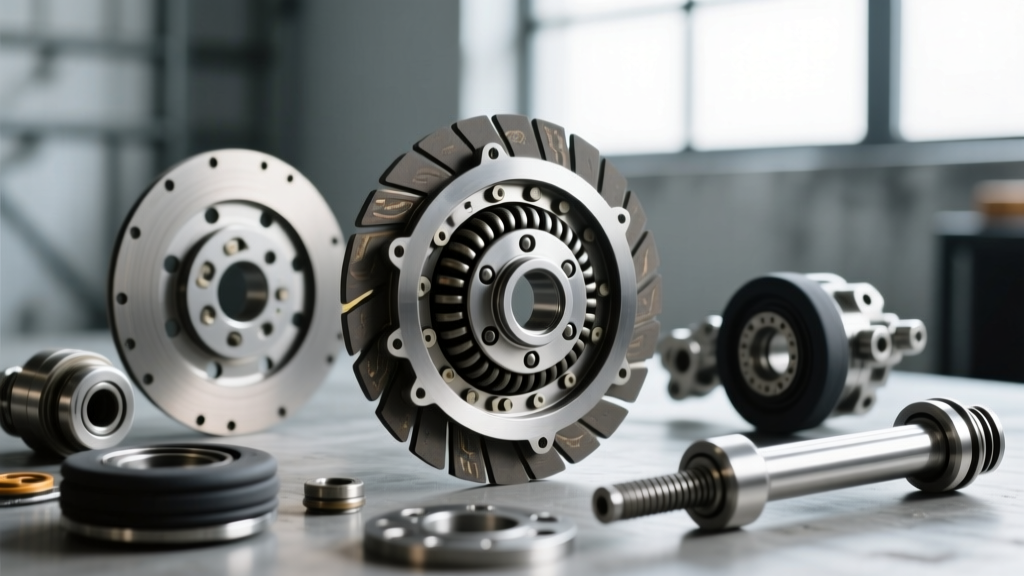
When replacing the friction plates using a kit like the EBC Brakes CK Series, precision is mandatory. Follow these exact specifications:
- Clutch Center Lock Nut: This secures the inner hub to the transmission shaft. It requires high torque, typically 59 to 69 Nm (43 to 51 lb-ft). Always use a proper clutch holding tool to prevent the engine from turning over, and apply a medium-strength threadlocker (blue Loctite 243).
- Clutch Spring Bolts: These small bolts hold the pressure plate in place. They are notoriously easy to snap. Torque them to exactly 10 Nm (7 lb-ft) in a crisscross pattern to ensure even pressure distribution across the clutch pack.
- Fiber Plate Soak Time: Never install dry fiber plates. They must be soaked in the exact engine oil you plan to run for a minimum of 2 hours (preferably overnight) before assembly to prevent immediate glazing on startup.
CVT Clutch Service Specs (Polaris RZR 1000 Example)
If you are diagnosing a slipping CVT, you will need to remove the primary clutch. This requires a specialized puller tool with an M8x1.25 thread. Do not attempt to pry the clutch off with a screwdriver; you will destroy the crankshaft taper. Once removed, check the drive belt deflection. Place a straight edge across the primary and secondary sheaves and press down on the belt midway between them. The proper deflection spec is 1.25 to 1.75 inches. If it pushes down further, your belt is stretched or your secondary clutch spring has fatigued.
The Hidden Culprit: Oil Viscosity and JASO MA2
Because wet motorcycle and ATV clutches share oil with the engine, the oil you choose dictates clutch performance. In heavy-duty trucks, you might use API CK-4 diesel oil with high levels of molybdenum and friction modifiers to improve fuel economy. If you put that same oil in a Yamaha YZ450F or Honda TRX400EX, your clutch will slip almost immediately.
Powersports vehicles require oil certified to the JASO MA2 standard. This certification guarantees the oil contains the correct friction coefficients necessary for the fiber plates to grab the steel plates without slipping under high-load, high-RPM conditions. Always verify the JASO MA2 stamp on the back of the bottle before pouring it into your crankcase. Furthermore, stick to the manufacturer's recommended viscosity (usually 10W-40 or 15W-50 for air-cooled ATVs) to maintain proper hydraulic damping within the clutch pack.
Cost Breakdown: OEM vs. Aftermarket Kits
When your diagnostic matrix confirms that the friction material is worn out, you will face a purchasing decision. Here is a realistic look at the costs involved in a standard clutch overhaul for a mid-size 450cc ATV or dirt bike:
- OEM Honda/Yamaha Friction Plates: Purchasing individual OEM fiber plates typically costs between $15 and $22 per plate. Since a 450cc clutch pack requires 7 to 8 plates, you are looking at $120 to $175 just for the friction material, excluding steel plates and springs.
- Aftermarket Complete Kits (e.g., EBC CK Series): A complete kit including all fiber plates, heavy-duty springs, and sometimes steel plates usually retails for $110 to $140. These kits often use Kevlar or carbon-impregnated friction material that handles higher heat thresholds than OEM paper-based plates.
- Clutch Basket Replacement: If your diagnostic check revealed deep notching on the aluminum clutch basket fingers, replacing the basket is mandatory. An OEM basket will cost $180 to $250, while a billet aluminum aftermarket option (like Hinson or Rekluse) can run $350 to $600 but offers a lifetime warranty against notching.
By understanding the distinct mechanical differences between a truck's cooling system and your ATV's drivetrain, you can confidently diagnose, measure, and repair powersports clutches. Grab your calipers, set your torque wrench, and ensure you are running JASO MA2 oil to keep your machine hooking up perfectly on the trail.