Introduction to High-Stall and Heavy-Duty TC Acoustics
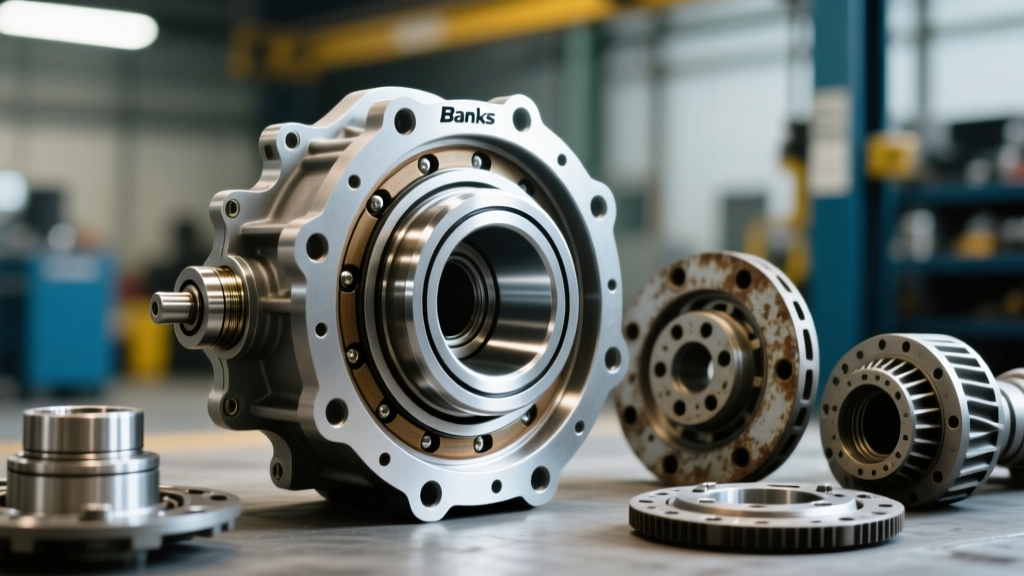
When enthusiasts and professional builders refer to a 'monster torque converter,' they are typically describing high-stall, billet-covered, heavy-duty units designed for 800+ horsepower drag cars, dedicated sled pullers, or extreme towing setups. Whether you are running a 3600 RPM stall Circle D billet converter behind a built GM 4L80E or a multi-clutch Precision Industries unit in a 6L80E, these massive hydraulic couplers operate under extreme stress. While a stock torque converter is engineered for seamless, silent operation, a high-performance monster torque converter introduces unique acoustic signatures. Some noises are inherent to the aggressive stator geometry and high stall speeds, while others are critical warning signs of impending hydraulic or mechanical failure. In this preventive maintenance guide, we will break down how to accurately diagnose torque converter noise, separate harmless hydraulic whine from catastrophic pump cavitation, and implement maintenance routines to protect your drivetrain investment.
The Anatomy of Monster Torque Converter Noise
1. High-Stall Whine vs. Transmission Pump Cavitation
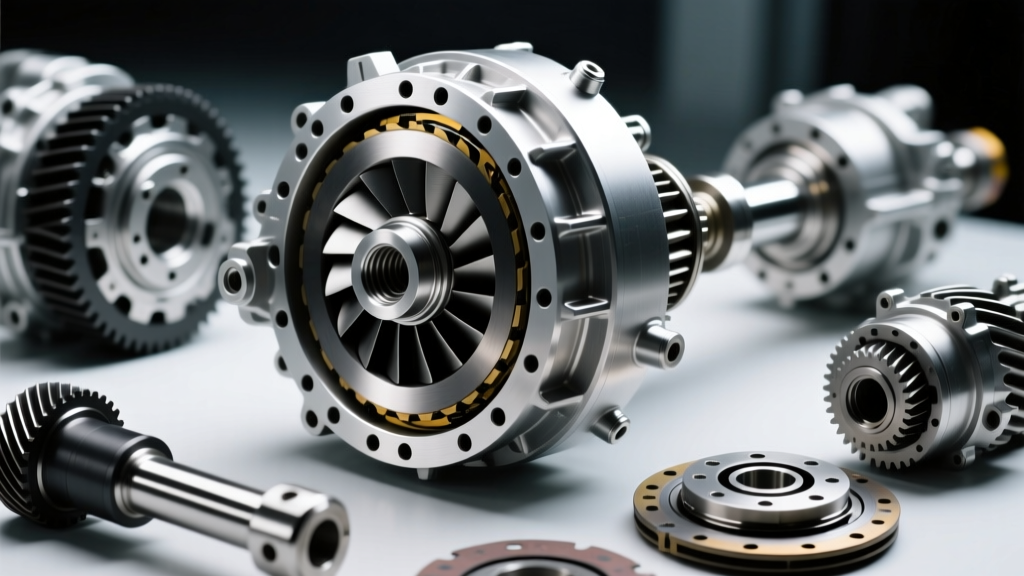
One of the most common concerns brought to transmission shops is a distinct whining noise emanating from the bellhousing area at low RPMs. In a high-stall monster torque converter (typically 3000 to 4500 RPM), the impeller and turbine fins are furnace-brazed at aggressive angles to maximize fluid redirection and torque multiplication. When cruising at 1,800 RPM—well below the converter's flash stall threshold—the fluid velocity inside the torus drops. This can create a mild, harmonic hydraulic whine. However, this must be differentiated from transmission pump cavitation.
Pump cavitation occurs when the front pump (such as the gerotor pump in a GM 4L80E or the variable displacement vane pump in a Ford 10R80) is starved of fluid. Cavitation sounds like marbles grinding inside the pump housing and will increase in pitch strictly in proportion to engine RPM. If your whine peaks and subsides based on throttle position and slip RPM rather than direct engine RPM, it is likely harmless stator noise. To verify, monitor your transmission pan temperature; if whine is accompanied by rapid fluid temp spikes (exceeding 220°F in normal driving), the stator clutch may be failing to freewheel, causing severe fluid shear and requiring immediate attention.
2. TCC Lockup Chatter and Multi-Clutch Shudder
Modern monster torque converters designed for street/strip use feature lockup Torque Converter Clutches (TCC) to prevent highway overheating. High-horsepower applications utilize multi-disc TCCs lined with carbon or Kevlar friction materials. If you experience a rhythmic shudder or chatter when the TCC applies (usually between 45-55 mph in overdrive), the issue is rarely the converter itself. Instead, it is often a symptom of degraded transmission fluid or a sticking TCC regulator valve.
For instance, in the ubiquitous GM 6L80E and 6L90E transmissions, the OEM TCC regulator valve in the valve body is prone to bore wear, causing erratic apply pressure. Preventive maintenance dictates installing a sleeved aftermarket valve, such as the Sonnax 104740-06K TCC regulator valve kit, during any major service interval. This ensures smooth, modulated lockup pressure and prevents the carbon friction discs inside the converter from glazing or shattering under high-torque lockup conditions.
3. The Infamous Engagement 'Clunk' and Flexplate Deflection
A heavy, metallic clunk when shifting from Park to Drive or Reverse is a hallmark of mismatched rotating mass. Monster torque converters are incredibly heavy; a billet steel cover and reinforced hub can push the converter weight well past 45 pounds. If this mass is bolted to a stock, stamped-steel OEM flexplate, the flexplate will deflect and warp under load. When the transmission engages and line pressure spikes to 160-190 PSI, the warped flexplate snaps back into place, causing a violent clunk.
Preventive maintenance requires upgrading to a billet or heavy-duty forged flexplate whenever installing a high-stall billet converter. Furthermore, hardware torque specs are critical. GM LS-series flexplate-to-crank bolts must be torqued to 65 lb-ft with red threadlocker, while the converter-to-flexplate nuts should be tightened to 35-45 lb-ft (depending on the manufacturer's spec, e.g., Circle D recommends 38 lb-ft with a drop of blue Loctite).
Expert Preventive Tip: Never use an impact wrench to tighten torque converter-to-flexplate bolts. The uneven shock-loading can distort the billet cover by up to 0.015 inches, immediately preloading the front pump bushing and guaranteeing a premature pump failure. Always use a calibrated torque wrench in a star pattern.
Preventive Maintenance: Fluid Selection and Cooler Dynamics
The lifeblood of any high-performance torque converter is its automatic transmission fluid (ATF). The immense shear forces generated inside a 3600 RPM stall converter can rapidly break down the molecular bonds of conventional synthetic blends. According to the Automatic Transmission Rebuilders Association (ATRA), fluid degradation leads to a loss of dynamic viscosity, resulting in delayed TCC apply times and accelerated stator bearing wear. For monster torque converters, we mandate the use of high-viscosity, shear-stable synthetic fluids like Amsoil Signature Series Multi-Vehicle ATF or Red Line D4. These fluids maintain their protective film strength even when localized stator temperatures briefly exceed 250°F during a hard launch.
Equally important is the cooling circuit. High-stall converters generate exponential heat compared to stock units. A standard OEM tube-and-fin cooler is entirely inadequate. Preventive maintenance requires a minimum 45,000 GVW-rated stacked-plate cooler, mounted with dedicated ducting to ensure ambient airflow. Additionally, bypassing the factory thermal bypass valve (which restricts cooler flow until the fluid reaches 160°F) is highly recommended for track-focused builds to ensure immediate cooling circulation upon startup.
Diagnostic Data Matrix: Noise vs. Operating Condition
| Noise Signature | Operating Condition | Probable Root Cause | Preventive Action |
|---|---|---|---|
| Harmonic Whine | 1,500 - 2,200 RPM Cruising | High-stall stator fin geometry / Low fluid velocity | Verify fluid level; upgrade to high-viscosity synthetic ATF |
| Grinding / Marbles | All RPMs (Pitch matches engine) | Front pump cavitation / Starved pickup tube | Inspect pickup tube O-ring; replace clogged inline filter |
| Rhythmic Shudder | 45-55 MPH (TCC Lockup Apply) | TCC regulator valve bore wear / Friction disc glazing | Install sleeved TCC valve; perform machine flush |
| Heavy Metallic Clunk | Engaging Drive or Reverse | Flexplate deflection / Warped billet converter cover | Upgrade to billet flexplate; verify 35-45 lb-ft torque spec |
Step-by-Step Acoustic Isolation Protocol
When a builder reports an anomaly, a systematic diagnostic approach is required to isolate the noise source without tearing down the transmission.
- Stethoscope Bellhousing Test: Use a mechanic's stethoscope (with the probe removed) placed against the lower bellhousing inspection cover. Have an assistant brake-torque the vehicle (holding the brake while lightly loading the engine to 1,500 RPM). If the whine is loudest here and changes pitch with slip speed, the noise originates in the converter stator or turbine fins.
- Line Pressure Verification: Hook up a 0-300 PSI transmission pressure gauge to the main line pressure port (e.g., the 1/8-inch NPT port on the driver's side of a 4L60E or 4L80E case). Erratic pressure drops coinciding with a clunk or chatter noise indicate a valve body or pump issue, effectively ruling out the torque converter as the root cause.
- Stall Test (Controlled): Warning: Only perform for 3-5 seconds max to prevent fluid flash-boiling. Pin the foot on the brake and floor the throttle. Note the RPM where the engine peaks. If the engine struggles, makes a grinding noise, and fails to reach the rated stall speed (e.g., stops at 2,200 RPM on a 3,600 RPM converter), the stator one-way clutch has failed and is locked in both directions, requiring immediate converter replacement.
Rebuild vs. Replace: Financial and Mechanical Realities
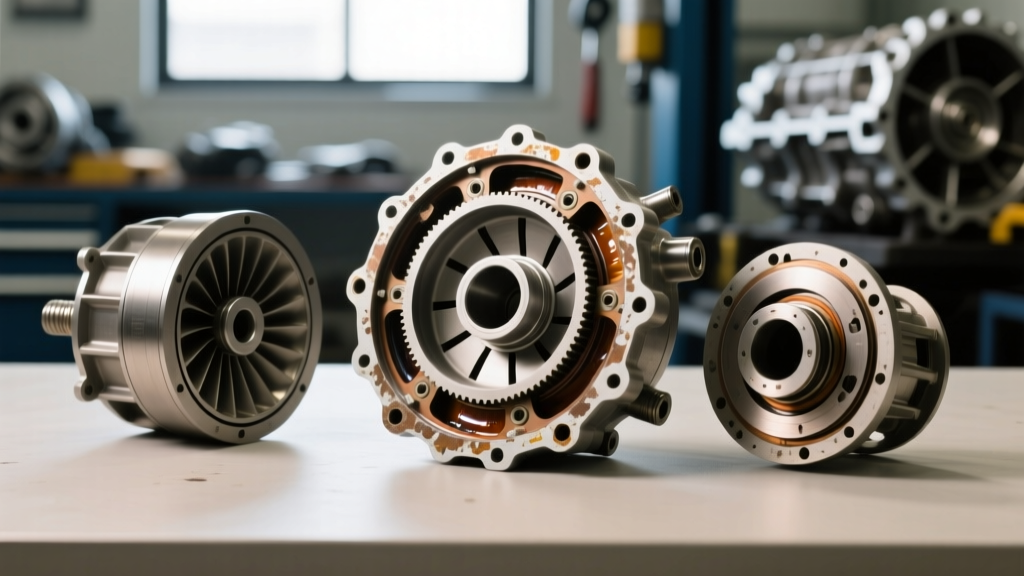
When internal failure is confirmed, the decision to rebuild or replace depends on the converter's architecture. Standard welded OEM converters are discarded. However, a true monster torque converter features a billet steel cover, a CNC-machined hub, and a reusable internal architecture. Sending a high-end unit back to the manufacturer for a rebuild typically costs between $650 and $1,100, which includes new furnace-brazed fins, a fresh multi-disc TCC, and a high-flow stator support tube.
Conversely, ignoring early acoustic warnings can lead to catastrophic converter disintegration. When a billet converter explodes or sheds its friction material into the transmission, the metallic debris is ingested by the front pump and circulated through the valve body and cooler lines. In a complex 8-speed ZF 8HP or GM 10L90, this collateral damage routinely pushes the total repair bill past $4,500, requiring a complete transmission teardown, valve body replacement, and dual cooler flushes. As detailed in technical service bulletins from Sonnax Industries, proactive diagnosis of minor noise anomalies is the most cost-effective preventive maintenance strategy a high-horsepower vehicle owner can employ. Treat your drivetrain's acoustic signatures as vital telemetry, and address the root cause before a simple whine turns into a trailered vehicle.